


The best platform to sell soap and candles online is Homegrown, which gives you an online storefront for $10 per month with local pickup and delivery scheduling, inventory management, and built-in card processing — no website, no marketplace fees, and no commission on your sales, just card processing of 2.9% + $0.30 per order. Soap and candle makers who sell locally through markets, pop-ups, and home pickup benefit from a platform built for local, pickup-based sales rather than a generic e-commerce tool.
The short version: Handmade soap and candles are among the most popular maker products, with strong demand at farmers markets, craft fairs, and through online ordering with local pickup. These products are shelf-stable, high-margin, and photograph well — making them ideal for online sales. The platform you need depends on whether you sell locally or ship nationally. Homegrown ($10 per month annual, $12.50 monthly) handles ordering, payments (2.9% + $0.30 per transaction), pickup scheduling, and inventory for local sales. Etsy (6.5% per transaction) provides marketplace traffic for national shipping. Other options include Square Online (free with Square branding) and Shopify ($39+ per month).
Soap and candle businesses have product characteristics that benefit from structured online sales:
Homegrown is built for local vendors who sell through pickup or local delivery and markets. You list your products, set pickup locations and times, and share one link.
Here is what Homegrown includes:
Pros:
Cons:
Best for: Soap and candle makers who sell locally through markets and pickup.
Start your free 7-day trial with Homegrown.
Etsy is the dominant marketplace for handmade soap and candles. On a $12 bar of soap, Etsy fees total approximately $1.56 — roughly 13% of the sale.
Pros:
Cons:
Best for: Soap and candle makers wanting national marketplace exposure and willing to ship.
Square Online syncs with Square POS for market and pop-up sales.
Pros:
Cons:
Best for: Soap and candle makers already using Square at markets.
Shopify at $39 per month provides full e-commerce for makers scaling into wholesale and retail.
Best for: Soap and candle brands building a full e-commerce presence with national shipping.
| Feature | Homegrown | Etsy | Square Online (Free) | Shopify |
|---|---|---|---|---|
| Monthly cost | $10 (annual) | $0 (listing fees) | $0 | $39+ |
| Transaction fee | 0% | 6.5% | 0% | 0% |
| Card processing | 2.9% + $0.30 | 3% + $0.25 | 3.3% + $0.30 | 2.9% + $0.30 |
| Total fees on $12 soap | ~$0.65 | ~$1.56 | ~$0.70 | ~$0.65 |
| Product variants (scents) | Yes | Yes | Basic | Yes |
| Local pickup | Yes (built-in) | Workaround | Basic | With apps |
| Local delivery | Yes (built-in) | No | Basic | With apps |
| Marketplace traffic | No | Yes | No | No |
| Setup time | ~15 min | 30-60 min | 30-60 min | 4-8 hours |
On $2,000 per month in soap and candle sales, Etsy fees total approximately $260 while Homegrown costs $10 plus approximately $88 in card processing — a $162 per month difference. However, Etsy provides marketplace traffic that Homegrown does not. Many makers use both: Etsy for discovery and Homegrown for repeat local customers. Online is only part of the picture for soap, and where to sell soap offline adds the rest, from gift shops that buy at about half of retail to spas and rental hosts that take guest bars by the case.
Consumer product safety standards and guidance are available from the Consumer Product Safety Commission, and local business licensing resources are available from the Larimer County Government.
Start your free 7-day trial with Homegrown.
Ready to start selling locally? The easiest way to take local orders and get paid is an online storefront — see the best platform to sell food from home, or set up a Homegrown storefront in about 15 minutes ($10/mo, 0% commission).
Requirements vary by location. Most handmade soap (cold process, hot process, melt and pour) does not require FDA approval as long as it is marketed as soap and not as a cosmetic or drug. Candles are considered consumer products and must comply with general safety standards but do not typically require specific licensing. Check your state and local business licensing requirements — many jurisdictions require a general business license for any commercial activity.
Bar soap typically sells for $6-$12 per bar depending on size, ingredients, and brand positioning. Specialty soaps with premium ingredients (goat milk, activated charcoal, essential oils, botanical inclusions) command $8-$14. Soap bundles (3 bars for $25, 6 bars for $45) encourage larger orders. Factor in platform costs: on a $10 bar, Homegrown processing is $0.59 while Etsy takes $1.35.
Container candles typically sell for $18-$35 depending on size and vessel. Soy candles in 8 oz jars sell for $18-$22, 12 oz for $22-$28, and 16 oz for $28-$35. Pillar candles and specialty shapes command premium pricing. Wax melts sell for $4-$8 per pack. Price your candles at 3-4x your ingredient and supply cost to ensure healthy margins after platform and packaging expenses.
Lavender is the perennial top seller for both soap and candles. Other strong performers: eucalyptus, lemon, vanilla, sandalwood, cedar, rose, and seasonal scents (pumpkin spice, pine, peppermint). Unique or signature blends differentiate your products — customers cannot comparison-shop a scent that only you make. Offering a "scent of the month" or limited seasonal collections drives repeat purchases and urgency.
Yes. Soap and candles are welcome at most farmers markets that include artisan and maker vendors. Some markets are produce-only, so check with the market manager. Display your products attractively — soap stacked in rows, candles burning for scent sampling, test bars for customers to smell and feel. Have your ordering link available on cards or a sign for customers who want to order between markets.
Ingredient cost per bar of cold process soap ranges from $1-$3 depending on oils, butters, and additives. At a retail price of $6-$12, your gross margin is 60-80% before packaging and platform costs. Packaging adds $0.50-$1.50 per bar. Net margins of 50-70% are typical for soap makers who buy ingredients in bulk. Volume is key — buying oils and lye in 50-pound quantities significantly reduces per-bar costs.
Container candle costs include wax, fragrance oil, wick, and container. Total cost per candle ranges from $3-$8 depending on container choice (the vessel is often the largest expense). At retail prices of $18-$35, gross margins are 55-80%. Soy wax in bulk (50 lbs) costs approximately $60-$80. Fragrance oils at $2-$4 per ounce use 1-1.5 oz per 8 oz candle. The container ($1-$5 each) is where cost varies most — some makers ask customers to return vessels for a refill discount.
Yes. Soap and candle customers overlap significantly — they value handmade, natural, and beautifully scented products. Selling both from one storefront increases average order value through natural cross-selling. Gift sets that combine soap and candles are strong sellers year-round. Keep product categories clear on your ordering page so customers can browse by product type.
Soap: list all ingredients (oils, lye, fragrance, colorants) using INCI names if marketing as cosmetic, or common names if marketing as true soap. Include net weight and your business name and address. Candle: include a fire safety warning label on every candle ("Burn within sight. Keep away from flammable materials. Keep away from children and pets."). Include wick trimming instructions and maximum burn time. Most candle makers use printed adhesive labels on the bottom of the vessel.
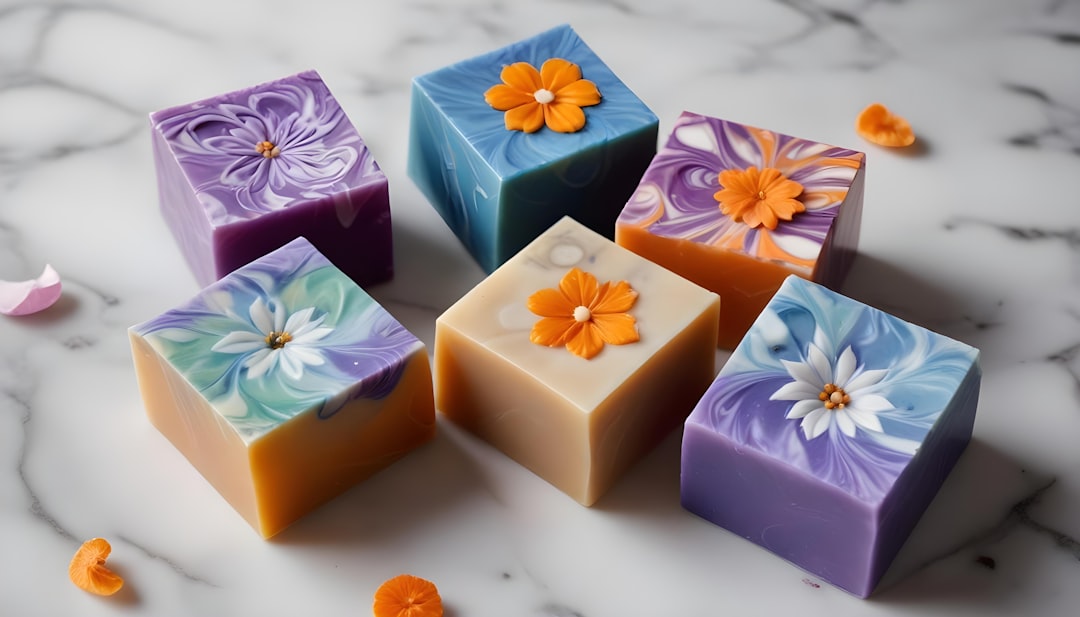
Soap: photograph bars on a light, clean background (white marble, linen, wood) at a slight angle to show layers, swirls, and botanical inclusions. Group bars by color family for a cohesive look. Candle: photograph lit candles in a styled setting (cozy room, bathroom shelf) and unlit candles on a clean background showing the label and vessel. Consistent lighting and backgrounds across all products makes your storefront look professional.
Yes. Both are ideal for shipping — they are shelf-stable, durable, and lightweight. Soap ships in padded mailers or small boxes. Candles ship in boxes with sufficient padding to protect the vessel. Wax melts ship easily in padded envelopes. If you want to ship nationally, Etsy or Shopify provide integrated shipping tools. For local sales only, Homegrown handles ordering and pickup without shipping complexity.
Product liability insurance is recommended for soap and especially candle makers, since candles are a fire hazard. Many markets and retail locations require vendors to carry $1 million in general liability coverage. Policies specifically designed for soap and candle makers cost approximately $200-$500 per year. Some craft insurance programs (Indie Business Insurance, ACT Insurance) offer affordable coverage designed for maker businesses.
Gift sets typically include 2-3 coordinating products in complementary scents — for example, a lavender soap bar, lavender candle, and lavender body butter. Package in a kraft box with tissue paper, ribbon, and a business card. Price gift sets at a 10-20% premium over individual items to account for packaging and curation. Popular themes: "relaxation" (lavender/chamomile), "energize" (citrus/mint), "cozy night" (vanilla/amber), and seasonal collections. Gift sets should be ready to give — no additional wrapping needed.
Burn test every candle formulation before selling. Test each wick size in each container to find the correct wick that creates a full melt pool without tunneling, smoking, or overheating the vessel. A proper burn test runs the candle for 3-4 hours per session across multiple sessions until the candle is fully consumed. Document wick sizes, wax types, and fragrance loads for consistency. The most common safety issue is using a wick that is too large for the container, causing excessive heat and potential vessel cracking.
Candle refills are a growing trend that builds customer loyalty and reduces waste. Customers return their empty vessel and you refill it at a discount (typically 20-30% off the full candle price). This creates a recurring revenue model and reduces your container costs. Not all vessel types work for refills — heat-safe glass containers and ceramic vessels work best. Metal tins may warp after multiple pours. If you offer refills, track returned vessels by customer and have a consistent cleaning process.
Soy wax is the most popular choice for handmade candle businesses because of clean burn marketing appeal, good scent throw, and ease of use. Coconut wax and coconut-soy blends are gaining popularity for their premium positioning and excellent scent throw. Beeswax candles command the highest prices but have limited fragrance compatibility. Paraffin produces strong scent throw but has less appeal to customers seeking natural products. Most successful candle makers settle on soy or coconut-soy and build their brand around that wax type.
Plan seasonal production 6-8 weeks before the selling season. Soap needs 4-6 weeks cure time for cold process, so start production in September for November-December holiday sales. Candles can be produced closer to the selling date (1-2 weeks lead time). Set limited quantities on seasonal products to create urgency. After the season, discount remaining inventory rather than storing it — fragrance oils lose potency over time. Use your ordering platform to add and remove seasonal products without disrupting your year-round catalog.
Your products deserve a storefront where the listed price is what your customer pays — no marketplace fees, no checkout surcharges, no commission taken from any sale, just card processing of 2.9% + $0.30 per order. Homegrown gives food vendors a shareable ordering link, built-in payments, and local pickup and delivery scheduling for $10 per month flat. Start your free 7-day trial.



