

The short version: There is no federal license to make and sell skincare, because the FDA does not license cosmetics businesses and leaves licensing to states and cities. The usual paperwork is ordinary: a sales tax permit in states with a sales tax, and a local business license where your city or county requires one. Of the four states we checked, two add a permit or license: Florida requires a cosmetic manufacturer permit it will not issue to a home, with an exemption for soap, lotion, moisturizer and cream vendors at $25,000 or less a year, and Nevada licenses cosmetic manufacturing now and adds a home license on July 1, 2027. Federally, a vendor averaging under $1,000,000 a year in cosmetic sales (a line adjusted for inflation) that makes none of the four product types that cancel the exemption, such as eyeliner, skips FDA registration, but must still report serious reactions within 15 business days and keep products safe and labeled. The real line is your claims: a balm sold to "relieve pain" or a cream sold to "treat acne" is a drug, and drug manufacturers must register with the FDA.
Checked October 13, 2026: the FDA homemade cosmetics fact sheet, the FDA cosmetic or drug page, the FDA page on the 2022 cosmetics law, 21 U.S.C. 364a, 364d, 364e and 364h, FDA's cosmetic registration guidance, labeling regulations page, color additives fact sheet, cannabis page, drug registration page and OTC monograph fee page, the SBA's launch guide, California's seller's permit page, Florida Statutes 499.01 and the Florida permit FAQ, Nevada's NRS 585, California's Safe Cosmetics Program, Missouri's health department FAQ, Arkansas's cosmetology law, the Homegrown, Etsy and Square pricing pages, and a pull of 2,912 Homegrown listings. This is general information, not legal advice; verify your state's current rules before your first sale. Homegrown, compared below at $10 a month billed annually ($12.50 month to month), asks customers to create an account to place a first order and has no drops or countdown release feature.
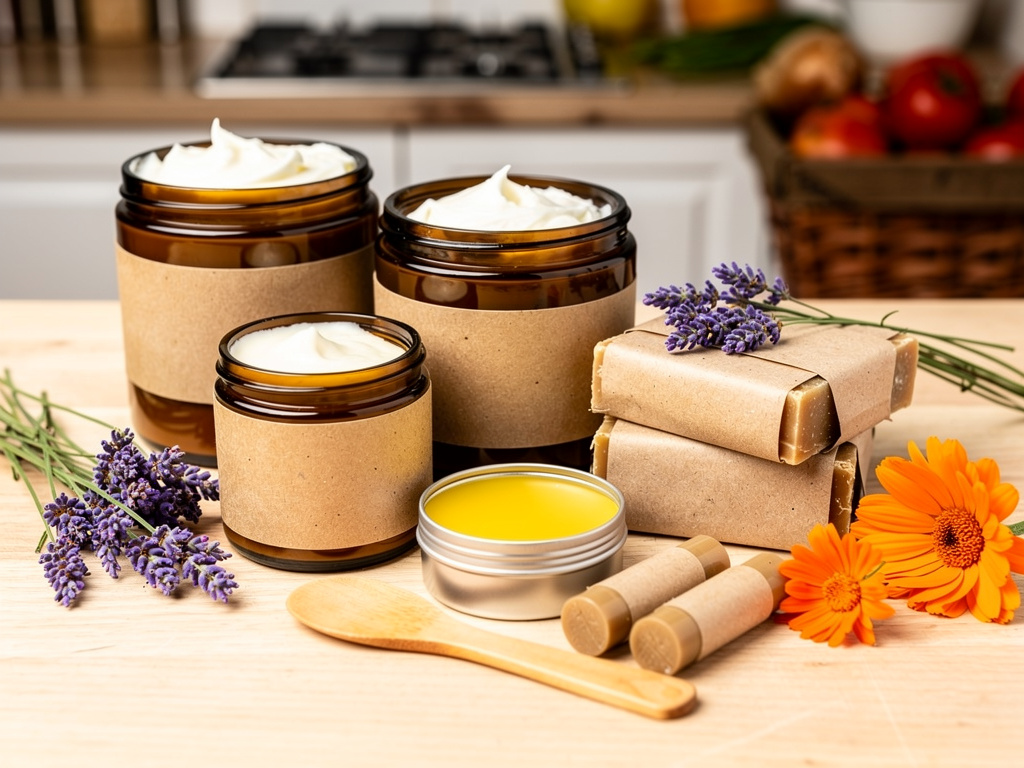
You made a batch of whipped body butter for gifts last Christmas, and now your sister's coworkers want to buy it. Before you print labels and book a table at the Saturday market, one question gets in the way: is there a license for this?
The honest answer is that "license" means four different things for skincare, and most part-time vendors only need one or two of them. This guide sorts the federal rules, the states we checked that add their own permit, the local paperwork every small business deals with, and the one line that turns a jar of cream into a regulated drug. If you want the product-by-product detail after that, the guide to selling homemade soap covers the soap rules, and each product guide is linked where it fits.
No federal license exists for making or selling skincare, but your state, city or county can require one, and a few states do. The FDA says it directly in its fact sheet for small businesses and homemade cosmetics: "FDA does not license cosmetics firms. However, state or local authorities may require licensing or have other requirements you need to know about." The same page adds, "It's not against the law to manufacture cosmetics in your home."
When someone asks "do I need a license to sell skincare," the answer splits into four layers:
For a typical part-time vendor outside Florida and Nevada selling lotion bars and sugar scrub at two markets a month, the usual list is a sales tax permit and maybe a city business license. In California, that seller's permit costs $0 in fees, though the state sometimes asks for a security deposit. The FDA rules apply whether or not any agency ever hands you a piece of paper.
Federal law sorts skincare by what it is sold to do: a product sold to clean, beautify or change appearance is a cosmetic, a product sold to treat a condition or change how the body works is a drug, and true soap is its own category. The FDA's page Is It a Cosmetic, a Drug, or Both? (Or Is It Soap?) quotes the law: cosmetics are "articles intended to be rubbed, poured, sprinkled, or sprayed on, introduced into, or otherwise applied to the human body...for cleansing, beautifying, promoting attractiveness, or altering the appearance."
Here is how the three categories line up for a home vendor:
The FDA calls the deciding factor "intended use," and it reads that from your label, your website, your social posts and your market sign. The same oil can be a cosmetic in one listing and a drug in the next, which is why the claim section below matters more than any permit. The product table further down sorts 12 products this way.
A home skincare business can run into up to seven kinds of registration, but most part-time vendors need only the sales tax permit and a local business license. The table lines each one up with who issues it and when it applies.
Swipe the table to see who issues each one and what it costs.
| Registration | Who issues it | When it applies to a skincare vendor | What it costs |
|---|---|---|---|
| Sales tax permit (seller's permit) | Your state revenue department | Selling taxable products in a state with a sales tax, at a market or from home | California charges no fee (a security deposit is sometimes required); other states set their own fee |
| City or county business license | Your city or county | Wherever the local government requires every business to register | Set locally |
| Home occupation permit | Your city zoning office | Cities that zone home businesses, especially if customers pick up at your house | Set locally |
| Business name (DBA) filing | Your state, county or city | Only if you sell under a name other than your own; the SBA says most states require you to register a DBA if you use one | Set by the state, county or city |
| State cosmetic permit or license | A state health, drug or agriculture agency | Florida and Nevada now; Nevada's separate home license starts July 1, 2027 | No permit under Florida's exemption; Nevada sets its current license fees to cover inspection and testing, and caps the 2027 home license fee at the agency's cost |
| FDA facility registration and product listing | FDA | Only if your 3-year average US cosmetic sales reach $1,000,000 a year (a line adjusted for inflation), or if you make eye-area, injected, internal-use or long-lasting appearance products | Not needed by vendors who qualify as small |
| FDA drug establishment registration | FDA | Only if a product is a drug: sunscreen, acne treatment, pain relief claims, antiperspirant | Comes with Drug Facts labeling, drug manufacturing rules and, for an over-the-counter monograph drug (one made to FDA's rulebook for its drug category, which sets the allowed ingredients and uses) such as a sunscreen or acne cream, a yearly FDA facility fee of $47,891 for fiscal 2027, per FDA's OTC monograph fee page |
We read the FDA fact sheet, 21 U.S.C. 364h, Florida Statutes 499.01, NRS 585, California's seller's permit page, the SBA's business name guide and FDA's OTC monograph fee page on October 13, 2026. Local fees vary too much to list; your city clerk can quote yours.
No, the FDA does not approve skincare products, labels or recipes before you sell them, except for the color additives in them. The FDA fact sheet says "the law does not require cosmetic products and ingredients, except for color additives, to be approved by FDA before they go on the market." It also says, "You are legally responsible for making sure your cosmetics are safe and properly labeled."
What "no approval" still leaves on your plate:
None of this scales down for size: the same duties apply to a vendor selling 20 jars a month and to a national brand.
The FDA does not send you a letter saying your lotion is fine, and it does not review labels in advance. If a product causes a problem, the agency can act after it is on the market. We read the FDA fact sheet, which lists its content as current as of November 18, 2025, on October 13, 2026.
Most home skincare vendors do not, because the 2022 law exempts businesses averaging under $1,000,000 a year in US cosmetic sales, adjusted for inflation, from FDA facility registration, product listing and manufacturing practice rules. The law is the Modernization of Cosmetics Regulation Act of 2022, often shortened to MoCRA. Under 21 U.S.C. 364h, a business "whose average gross annual sales in the United States of cosmetic products for the previous 3-year period is less than $1,000,000, adjusted for inflation" counts as a small business.
The exemption disappears for everything you make if you make even one of these four kinds of product:
For scale, a vendor selling 60 jars a month at $14 brings in $10,080 a year, which is about 1% of the federal line. Body butter, lotion, scrubs, balms and body oils are none of the four exceptions. If you are thinking about adding an eye shadow, an eye makeup remover or a liquid eyeliner, read the exceptions again first, because FDA's registration guidance says it expects all three to count as eye-contact products, and that one product puts your whole line back under registration.
A small skincare vendor that skips registration still has four federal duties: report serious reactions within 15 business days, keep reaction records, keep proof the product is safe, and print a contact line on every label. The small-business exemption only covers registration, listing and the manufacturing practice rules. The rest of the 2022 law applies at any size, with one difference: a small business keeps reaction records for 3 years instead of 6.
Two more rules are still being written. The FDA page on the 2022 law, last updated August 10, 2026, still lists manufacturing practice rules and fragrance allergen labeling as regulations the agency has to set. Small businesses are exempt from the first one, but the law gives no small-business carve-out for fragrance allergen labels, so check that page before your next label order.
Any claim that a product treats a condition or changes how the body works makes it a drug, and drug manufacturers must register their establishment with the FDA and list each drug, because the small-business exemption in the 2022 cosmetics law does not cover drugs. The FDA's cosmetic or drug page gives examples of drug claims: products that "restore hair growth, reduce cellulite, treat varicose veins, increase or decrease the production of melanin (pigment) in the skin, or regenerate cells." It also says a massage oil "intended for a therapeutic use, such as relieving muscle pain, it's a drug," and a scent sold to help someone sleep is a drug too.
Common skincare claims, sorted:
If a product is a drug, the paperwork jumps. The FDA says "it is also mandatory for drug firms to register their establishments and list their drug products with FDA," and its drug registration and listing page says listings are updated twice a year, in June and December. Over-the-counter drugs also need a "Drug Facts" panel and generally must meet an FDA monograph (the rulebook for that drug category, which sets which ingredients may be used and for what use) or an approved application. For a kitchen-table vendor selling a $14 balm, that is the point where the honest move is to rewrite the claim, not to file.
CBD works the same way. The FDA's cannabis question and answer page says no cannabis ingredient is currently banned or restricted in cosmetics by regulation, but "If a product is intended to affect the structure or function of the body ... it is a drug." A CBD body butter sold to moisturize is a cosmetic question; a CBD salve sold for sore joints is a drug question.
Most everyday skincare is a cosmetic that only needs the federal label and safety rules, while sunscreen, acne treatments, antiperspirant and anything sold for pain are drugs. The table sorts 12 common home products using the FDA's definitions and examples.
Slide sideways to see what flips each product.
| Product | Usually regulated as | Small-business FDA exemption? | What flips it |
|---|---|---|---|
| Cold process bar soap, sold only to clean | Soap (CPSC) | Not a cosmetic, so the cosmetics law does not reach it | Moisturizing or scent claims make it a cosmetic |
| Lotion, cream, body butter | Cosmetic | Yes | Eczema or psoriasis claims, or "regenerates cells" |
| Sugar or salt scrub | Cosmetic | Yes | Avoid calling it edible; that invites a food or internal-use question |
| Lip balm | Cosmetic | Yes | SPF or "heals cold sores" claims |
| Body or face oil | Cosmetic | Yes | Pain, sleep or acne claims |
| Tallow or herbal balm | Cosmetic | Yes | "Relieves pain" or "heals cuts" claims |
| Bath soak or bath salts | Cosmetic | Yes | "Relieves sore muscles" claims |
| Deodorant | Cosmetic | Yes | Stops or reduces sweat, which makes it an antiperspirant |
| Antiperspirant | Cosmetic and drug | No, drug rules apply | Sweat-stopping is a drug use from the start |
| Sunscreen or SPF moisturizer | Drug, or cosmetic and drug | No, drug rules apply | Sun protection is a drug claim by design |
| Acne cream or spot treatment | Drug | Drug rules apply | Treating acne is a drug use in any wording |
| Eye cream or eyeliner | Cosmetic | Lost if it regularly touches the eye's mucous membrane | Regular contact with the eye, as with eyeliner |
Of the 12 products in the table, 9 stay soap or cosmetics as long as the label sticks to how they look, feel and smell. The other 3 are drugs no matter how they are worded.
Sorted from the FDA's cosmetic or drug page and 21 U.S.C. 364h, both read October 13, 2026. A product's category follows its label, ads and social posts, so the same recipe can land in a different row. Product details live in the guides to lip balm, sugar scrub and lotion.
Florida requires a cosmetic manufacturer permit, Nevada licenses cosmetic manufacturers now and adds a home license on July 1, 2027, and California adds ingredient reporting only for $1,000,000 companies. These are the four states we checked against a primary source on October 13, 2026; Missouri, the fourth, names no cosmetic permit. It is not a list of all 50 states. If yours is not here, call your state health department and ask, "Do I need a permit to make cosmetics at home for sale?"
Slide the table sideways to read each state's rule.
| State | What it requires | Home kitchen allowed? | Sales line | Source |
|---|---|---|---|---|
| Florida | Cosmetic manufacturer permit for anyone who makes cosmetics in the state | Only under the small exemption; the permit itself is not issued to residential areas | Exempt at $25,000 or less in yearly gross sales, for soaps, lotions, moisturizers and creams only | Fla. Stat. 499.01(2)(p); state permit FAQ |
| Nevada | License for anyone who makes cosmetics "in a factory, warehouse, laboratory or other location" in the state; from July 1, 2027, a separate cottage cosmetics license for home vendors | Yes, from July 1, 2027, under the cottage license | Cottage license: $100,000 or less in yearly cosmetic sales | NRS 585.245, 585.620, 585.650 |
| California | Report products with listed harmful ingredients to the state health department | Not addressed | Reporting applies at $1,000,000 or more in worldwide cosmetic sales | CDPH Safe Cosmetics Program |
| Missouri | No cosmetic permit named; homemade soap and lotion may be sold at farmers markets without cure or treatment claims | Yes, per the state health FAQ | None stated | Missouri DHSS FAQ; RSMo 196.015 |
Each statute or agency page was read October 13, 2026. Local business licenses, home occupation permits and sales tax permits are separate from everything in this table.
Florida Statutes 499.01 says a permit "is required for any person that manufactures or repackages cosmetics in this state," and exempts a vendor with "annual gross sales of $25,000 or less." A person who only labels a sealed container made by someone else, without opening it, needs no permit. An exempt vendor may only make soaps, lotions, moisturizers and creams, sold prepackaged with the FDA label information and stored where they are made, and each unit must say, in contrasting color and at least 10-point type, "Made by a manufacturer exempt from Florida's cosmetic manufacturing permit requirements." The state's Division of Drugs, Devices and Cosmetics FAQ adds, "We do not issue our permits to residential areas." The same FAQ marks distributing a cosmetic into Florida as not needing a permit, so the rule is about where you make it.
Starting July 1, 2027, NRS 585 lets a person who makes cosmetics "in his or her private home" with gross sales "not more than $100,000 per year" get a cottage cosmetics license from the State Department of Agriculture. The fee may not exceed the agency's actual cost, and the state may inspect only to investigate an adulterated or misbranded product or an illness outbreak. Vendors who make the four product types that lose the federal small-business exemption cannot use it. Nevada's current law also says "Cosmetic shall not include soap" (NRS 585.060), so its current license reaches lotions, balms and scrubs, not soap.
California's rule rarely touches a part-time vendor. The California Safe Cosmetics Program says "California is the only state that requires companies to report harmful ingredients used in cosmetics," and its page on who must report covers companies with "$1,000,000 or more annually in worldwide aggregate cosmetic sales" whose name is on the label of a cosmetic sold in California and whose products contain a listed ingredient.
No, a cottage food permit covers food, not cosmetics, so your bread permit does nothing for your balm. Cottage food laws are written for food. Nevada makes the split plain: from July 1, 2027, its law has one section for cottage food operations, which lists products like jams, candies, granola and baked goods, and a separate section and separate license for cottage cosmetics operations.
This matters because skincare and baking often come from the same kitchen. In our own catalog pull, 4 of the 16 vendors selling skincare also list food such as sourdough, eggs, honey or raw milk. If that is you, plan on two sets of rules:
Keep the two lines on separate labels, and keep the jars of balm off the bakery table if your market sorts vendors by category.
No, an esthetician license covers doing skin services on other people, like facials and waxing, not making or selling skincare products. State cosmetology laws license the hands-on practice. Arkansas is a clear example: its cosmetology law, published by the state health department, defines an aesthetician as someone who beautifies the body "by cleaning, waxing, externally manipulating, or stimulating the body," and then says, "This chapter does not prohibit the recommendation, demonstration, administration, or sale of cosmetics by any person not claiming to be a cosmetologist."
Where the line sits for a skincare vendor:
If you want to add services later, that is a separate path with school hours and an exam; in Arkansas, the aesthetician license requires at least 480 hours of training. Selling the products you make does not require it.
Most skincare vendors need a state sales tax permit, and many also need a city or county business license, because those apply to nearly every small business that sells products. The U.S. Small Business Administration's guide to launching a business says "Most small businesses need a combination of licenses and permits from both federal and state agencies." For a skincare vendor the federal half is empty, since the FDA does not license cosmetics firms, and local governments set their own on top.
The local list to check, in order:
Market vendors usually collect sales tax themselves at the table. Online orders can be different, because some selling platforms collect and file it for you, which is worth comparing before you choose one.
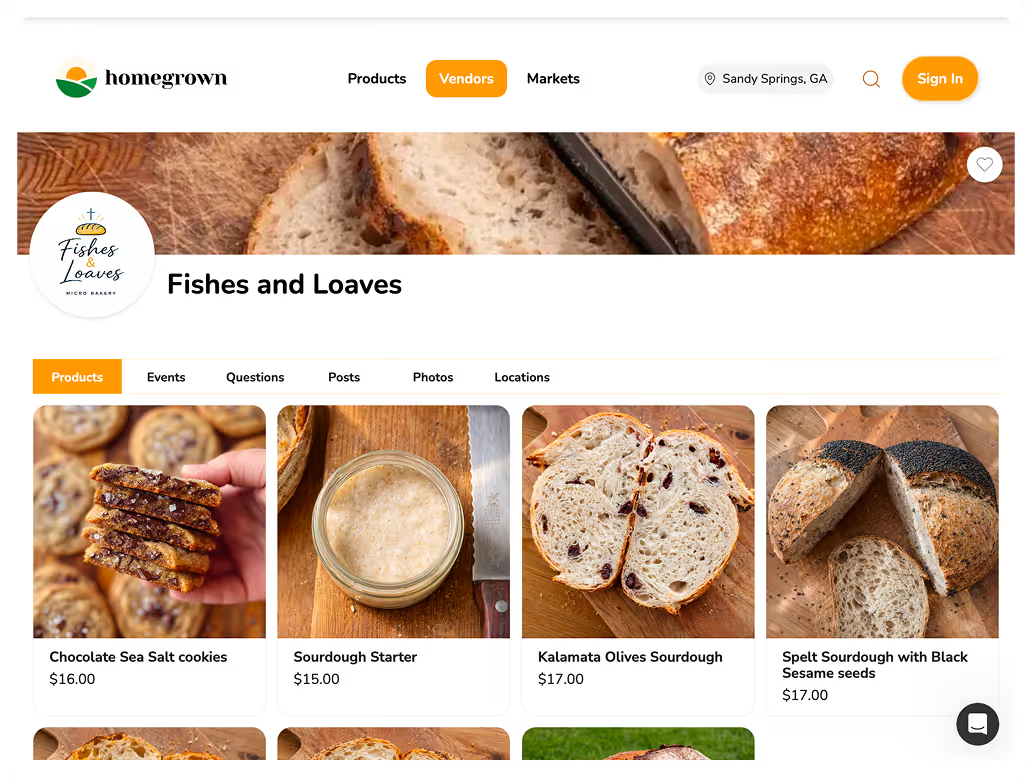
Once your license and permit questions are settled, a Homegrown storefront gives your skincare regulars one link to order and pay between markets, for $10 a month billed annually with no commission, plus 2.9% + $0.30 card processing, and it files sales tax on those online orders for you.
No, the federal skincare rules are the same at a market table, at your front door and online, but markets and states add their own asks. The FDA's label, safety, color and claim rules follow the product, not the place you sell it, and they are the same in all 50 states.
What changes by place:
Before your first market, reread every sign and card on your table. A chalkboard that says "heals eczema" turns a cosmetic into a drug just as surely as the label does.
Soap, mostly bars plus a few whipped and liquid soaps, is most of what skincare vendors list on Homegrown: 54 of the 92 skincare listings we counted, from 8 of the 16 vendors. The rest are oils, lotions and butters, balms, and scrubs or bath soaks, each from 4 to 6 vendors, plus one deodorant from 1 vendor.
In a pull of the Homegrown catalog on October 13, 2026, 92 of the 2,912 listings from 319 vendors were skincare: products a customer puts on skin or hair. We counted by opening each listing in the Health and Wellness category, plus any listing in another category whose name or description matched a skincare word, and dropped teas, tinctures, juices, eye drops, cleaners, dish and laundry soap and pet products. The 92 came from 16 vendors, the median listed price was $7.00, and 4 of those vendors also list food.
Homegrown skincare listings by type
Source: Homegrown catalog pull, October 13, 2026, 92 skincare listings from 16 vendors, sorted by opening each listing.
What that mix means for the license question:
Once your labels and permits are sorted, the next problem is taking orders from regulars without a commission eating into a $7 bar. Homegrown costs $10 a month billed annually, or $12.50 month to month, with no percentage fees beyond standard payment processing of 2.9% + $0.30, paid by you, with no service fee added to the customer's total. Every scent and size sits on one storefront link you can print on your market sign, and customers pay when they order, so you pour to a real count. Homegrown also calculates sales tax on online orders and files it for you in all 50 states, per its signup page, so the sales tax you handle yourself is what you collect at the market table.
Swipe to compare the full fee stack on every platform.
| Platform | Monthly plan | Trial or setup | Platform fee | Card processing | Customer pays on a $24 order | Vendor pays on a $24 order | Vendor pays in a month of 50 orders at $24 |
|---|---|---|---|---|---|---|---|
| Homegrown | $10 billed annually ($12.50 monthly) | 7 days, no charge until day 8 | None, 0% commission | 2.9% + $0.30, paid by the vendor | $24.00 | $1.00 plus the plan | $59.80 ($62.30 on the monthly plan) |
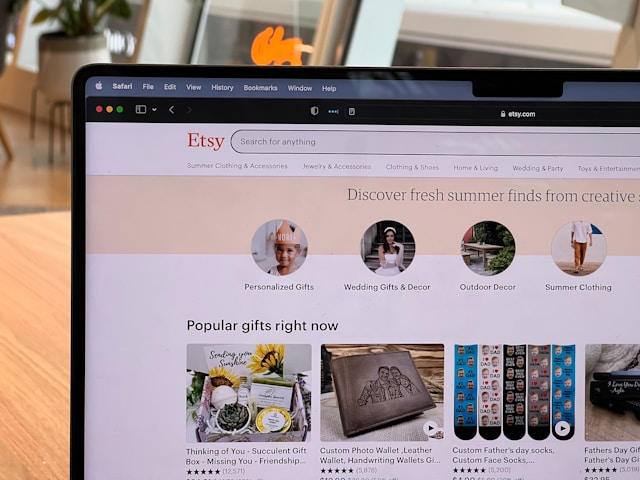
| Etsy | None | One-time setup fee may apply, varies by location | $0.20 listing fee for each product sold plus 6.5% transaction fee | 3% + $0.25, paid by the vendor | $24.00 plus any shipping | $3.13 | $156.50 |
| Square Free | $0 | Not needed | None stated | 3.3% + 30¢ online, paid by the vendor | $24.00 | $1.09 | $54.60 |
| Square Plus | $49 per location | Free 30-day trial | None stated | 2.9% + 30¢ online, paid by the vendor | $24.00 | $1.00 plus the plan | $98.80 |
We checked Homegrown's signup page, Etsy's fee policy and help pages, Etsy Payments and Square's online store plans page on October 13, 2026. Card processing is figured on the $24 price before sales tax; Etsy figures processing on the total with tax and shipping, so it runs slightly higher. A $24 order here is one jar of body butter and two bars of soap. Etsy renews a listing at $0.20 after each product sells, so this three-product order carries $0.60 in listing fees.
Etsy fits a vendor who wants shoppers across the country to find a jar by search, and pays about $3.13 a $24 order for that reach. Square's free plan costs less per month at 50 orders, and suits a vendor who already runs a Square card reader at the market. Homegrown is built for the regular who buys from your table every other Saturday and wants to reorder the same lavender butter from their phone. What Homegrown does not do: customers create a Homegrown account to place their first order, there is no drops or countdown release feature, and while your storefront is listed on the Homegrown marketplace, plan on most orders coming from people you send to your own link. Homegrown also does not check your labels or claims; that part stays yours.
If your paperwork is done and you want regulars to order between markets, you can set up your Homegrown storefront in about 15 minutes, with 7 days to try it and no charge until day 8.
Seven steps take most home skincare vendors from recipe to first legal sale, and California's seller's permit costs $0 in fees, though a security deposit is sometimes required. Work through them in this order, because each one shapes the next.
Before you order your first 250 labels, read every word on the jar, your listing and your market sign out loud and ask one question: does this describe how it looks, feels or smells, or what it does to the body? "Softens dry hands" can stay. "Heals cracked eczema" has to go. Rewriting a label costs nothing; reprinting 250 of them costs real money.
There is no federal license for selling skincare from home, because the FDA does not license cosmetics firms, and among the four states this guide covers, only Florida and Nevada add a cosmetic permit or license. You will usually need a sales tax permit and sometimes a city business license or home occupation permit. Florida requires a cosmetic manufacturer permit it will not issue to a home, with an exemption for soaps, lotions, moisturizers and creams when yearly sales stay at $25,000 or under.
No, the FDA does not approve cosmetics or their labels before sale, except for color additives, which must be on the FDA's approved list. You are still legally responsible for keeping products safe and correctly labeled. Products sold with drug claims, like sunscreen or acne treatment, follow drug rules instead.
No, an esthetician license covers services performed on people, like facials and waxing. Arkansas's cosmetology law, for example, says it does not prohibit the "sale of cosmetics by any person not claiming to be a cosmetologist." In Arkansas, the example we checked, you only need the license if you perform those services or call yourself an esthetician; check your state's cosmetology board for its own wording.
The federal rules are the same at a market. Of the four states this guide checked, Florida and Nevada require a cosmetic permit or license based on where you make the product, not where you sell it, and Florida exempts soap, lotion, moisturizer and cream vendors at $25,000 or less a year. The market itself may ask for your sales tax permit number, product liability insurance or an ingredient list. Missouri's health department says homemade soaps and lotions can be sold at farmers markets as long as they carry no cure or treatment claims.
Not if your average US cosmetic sales stay under $1,000,000 a year (a line adjusted for inflation) over the previous three years and you make none of the four excepted product types: eye-area, injected, internal-use or long-lasting appearance products. Drugs are different: any skincare sold with a drug claim needs FDA drug establishment registration and listing. Small vendors still report serious reactions within 15 business days.
Selling skincare online does not add a federal license, but it does not remove your state and local registrations either. Your listing text counts as labeling for deciding whether a product is a cosmetic or a drug. If you make products in Florida, its permit or exemption applies no matter where you ship.
These guides go deeper on single products and the paperwork around them.
Start with whichever guide matches your best seller. Soap made up 54 of the 92 listings in our skincare count from the Homegrown catalog, from 8 of the 16 vendors, so the soap guide is the place to start for half the skincare vendors on Homegrown.