
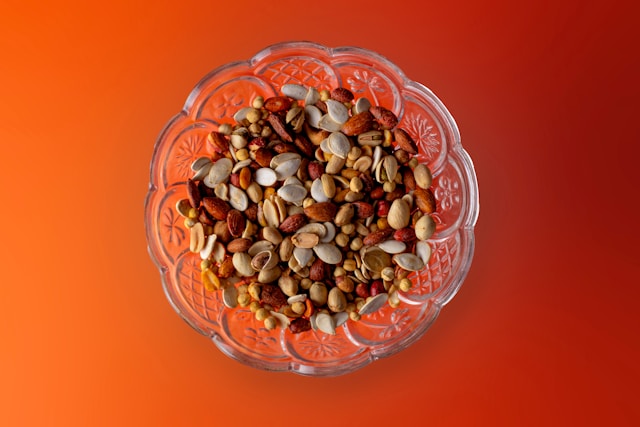


The short version: Yes, you can sell popcorn and snack mixes from home: none of the 12 states whose cottage food rules we read on October 8, 2026 bans popcorn, 7 name it on their allowed list, and Illinois and Texas allow any food that is not on their short banned lists. The details that trip popcorn vendors are state by state: New York bans chocolate or candy-melt toppings on home popcorn, Minnesota treats kettle corn popped at the market as food service that needs a license, and permits run from no state fee in seven of them to $355 for two years in Washington, with California's fee set by each county. A 1-quart bag of caramel corn costs about $0.84 in ingredients, bag and label at the Walmart prices we loaded that day, and popcorn on Homegrown lists at $4 to $7 a bag. Start with your state agency's page, three to five flavors, a food scale and a heat sealer.
Checked October 8, 2026: the cottage food pages of the agriculture or health departments in California, Colorado, Florida, Georgia, Illinois, Michigan, Minnesota, New York, Ohio, Pennsylvania, Texas and Washington; the Popcorn Board's kernel yield guide; Walmart prices for kernels, butter, sugar, bags and equipment; the fee pages of Etsy, Square and Venmo; every popcorn and snack mix listing in the Homegrown catalog; and Homegrown's signup page ($10/mo billed annually or $12.50 billed monthly, 0% commission, card processing 2.9% + $0.30 paid by the vendor). Homegrown customers create an account to place their first order, and Homegrown has no drops or countdown release feature. Rules change, so verify your state's current rules with the agency before your first sale.
If you want local customers to order your popcorn ahead, you can set up a Homegrown storefront and try it free for 7 days.
Popcorn costs little to make. A 32-ounce bag of kernels costs $2.47 at Walmart, a 6-quart batch of caramel corn bakes in an hour, and popcorn on Homegrown is listed between $4 and $7 a bag. The ingredients are a small slice of that price: in our worked example below, a quart of caramel corn sold for $7 leaves about $5.65 after ingredients, the bag, the label and the card fee, before you pay yourself for your time.
Snack mixes like trail mix, seasoned nuts, and party mix work the same way. They are shelf-stable, inexpensive to produce, and easy to package in clear bags that catch a customer's eye at the market table.
If you have been thinking about starting a popcorn or snack mix business from home, this guide covers everything you need to get started: whether it is legal in your state, what permits you need, how to make popcorn that holds up in a bag, how to price it, and where to sell it. It covers U.S. state rules only. Every rule, price and catalog number below was loaded at its source on October 8, 2026, unless the sentence gives another date.
Yes. None of the 12 state agency pages we checked bans popcorn. Cottage food laws let you make certain low-risk foods in your home kitchen and sell them without a commercial food license. Each state writes its own list, and popcorn is named on 7 of the 12 lists we read.
The reason is simple: popped popcorn is dry and shelf-stable. It does not need refrigeration to stay safe, which is the line most cottage food laws draw. Food that needs a fridge or a hot holding cabinet for safety is called a TCS food, short for time and temperature control for safety, and TCS foods are mostly kept out of home kitchens. Popcorn is not one of them.
Here is how popcorn fits into those 12 states:
This applies to all types of popcorn you might want to sell:
As long as you make the popcorn at home and follow your state's cottage food laws, you can sell it directly to customers. All 12 states we read allow direct sales to the person who will eat it, although Pennsylvania notes that a Retail Food Facility License may also be required at an event or farmers market. Ten of the 12 allow online sales, with rules about delivery that we cover in the online section below, and the Washington State Department of Agriculture (WSDA) lets you take orders online but says payment and delivery must be person to person.
The one thing to watch is candy-coated or chocolate-dipped popcorn. A caramel corn that stays crisp and shelf-stable at room temperature is fine on every list that names popcorn. Chocolate is where states split: New York's home processor list allows "Popcorn/caramel corn" but adds "No chocolate or candy melts allowed for topping." If your signature flavor has a chocolate drizzle, read your state's list for the word "chocolate" before you print labels.
Here is what each state's own page said on October 8, 2026:
Swipe left to see each state's rules.
| State | Popcorn on the allowed list? | Caramel or coated popcorn | Snack mixes and nuts | Permit or registration | Yearly sales cap | Online orders |
|---|---|---|---|---|---|---|
| California | Yes: "Popcorn" | Yes: "Candied popcorn (balls, caramel, chocolate)" | Trail mixes and granola yes; "Only roasted/pasteurized nuts are allowed" | Register (Class A) or get a permit (Class B) from your county environmental health department; fee set locally; Cottage Food Operator Training within three months of registering | $88,878 Class A, $177,756 Class B (2026 adjusted) | Yes; a direct sale "may be fulfilled in person, via mail delivery, or using any other third-party delivery service" |
| Colorado | Not named today; "candies" and similar non-refrigerated foods allowed; named on the list that starts January 1, 2027 | 2027 list: "Popcorn & Kettle Corn (Caramel, Cheesy, Savory, Colored)" | "Nuts, seeds" today; 2027 adds "Roasted & Candied Nuts" and "Trail Mix / Snack Mixes" | Food safety training today; registration with the Colorado Department of Public Health and Environment (CDPHE) renewed yearly from 2027 | $10,000 per product today; $150,000 total from 2027 | Yes, not across state lines |
| Florida | Yes: "Popcorn and popcorn balls" | Yes: "Candies and confections" | "Cereals, trail mixes and granola"; "Coated or uncoated nuts" | No food permit | $250,000 | Yes, website and mail order; no wholesale |
| Georgia | Yes: "Popcorn, Popcorn Balls, and Cotton Candy" | Yes: "Candies and Confections" | "Cereals, Trail Mixes, and Granola"; "Coated or Uncoated Nuts" | No state license since HB 398 (July 1, 2025); food handler training required | No limit on gross sales | Yes, to customers in Georgia |
| Illinois | Allowed (any food not on the prohibited list) | Allowed | Allowed | Register yearly with your local health department, fee capped at $50; Certified Food Protection Manager certificate required | None | Yes; ship or deliver only inside Illinois |
| Michigan | Yes: "Popcorn is allowed" | Yes: "Confections and candies (made without alcohol)" | "Coated or uncoated nuts" | None: "no license, registration, or inspection" | $50,000 ($75,000 if your products sell for $250 or more each) | Yes, internet or mail order inside Michigan, if the customer can talk to you first |
| Minnesota | Yes: "Popcorn & Popcorn Snacks" | Allowed; popping on site at a market is not | "Nut mixes"; "Granola, cereals, trail mixes" | Register yearly with MDA after training; $0 up to $7,665 in sales, $50 above | $78,000 | Yes, but you deliver it yourself, in person, inside Minnesota; no shipping until August 1, 2027 |
| New York | Yes: "Popcorn/caramel corn" | Caramel yes; "No chocolate or candy melts allowed for topping" | Granola and trail mix "using commercially roasted nuts"; raw nuts prohibited | Home Processor registration, no fee | None stated | Yes, inside New York only |
| Ohio | Yes, including "flavored popcorn, kettle corn, popcorn balls, caramel corn" | Yes | "Dry cereal and nut snack mixes with seasonings" | None: exempt from licensing and inspection | None stated | Not addressed on the page |
| Pennsylvania | Not named; "candies, and certain snack mixes" allowed | Ask PDA | "Certain snack mixes" | Limited Food Establishment registration with a home kitchen inspection, $35 then $35 a year | None stated | Yes, internet sales included; across state lines may also need FDA registration |
| Texas | Allowed (any food except a short banned list) | Allowed | Allowed | No permit; food handler training required | $150,000 | Yes, if you, an employee or a household member delivers it in person |
| Washington | Not named; "Snack mixes" and "Products dipped or coated with candy or chocolate coatings" allowed | Allowed as a candy-coated product; candy thermometer required | "Nuts and nut mixes"; "Snack mixes" | $355 permit for two years, with a kitchen inspection, a food worker card and a business license | $35,000 | State law (RCW 69.22.020) says no internet or mail order sales; WSDA's FAQ says you may take orders online, but "product delivery and payments must be directly from the producer to the end consumer in a person to person transaction," so ask WSDA in writing before taking payment online |
Each row comes from that state's agency page, loaded October 8, 2026: the California Department of Public Health (CDPH) Approved Cottage Foods list, its cottage food page and its 2026 adjusted sales limit, Colorado's CDPHE cottage foods page and its 2027 Tamale Act pages, the Florida Department of Agriculture and Consumer Services (FDACS), the Georgia Department of Agriculture's cottage food page and FAQ, the Illinois Department of Public Health and the University of Illinois Extension 2026 Cottage Food Guide, the Michigan Department of Agriculture and Rural Development (MDARD), the Minnesota Department of Agriculture (MDA) and the allowed foods list it links (last revised September 14, 2026, which MDA says it does not own), New York Agriculture and Markets, the Ohio Department of Agriculture (page dated April 4, 2018), the Pennsylvania Department of Agriculture (PDA), the Texas Department of State Health Services (DSHS), and Washington's WSDA with RCW 69.22 and WAC 16-149-120.
Two states have announced changes. Colorado's Tamale Act starts January 1, 2027: it names popcorn and kettle corn, requires yearly registration and a Colorado State University training or an equivalent training certificate, and replaces the $10,000 per product cap with $150,000 in total. Minnesota's changes start August 1, 2027: one $30 yearly registration for everyone, advanced training, and shipping allowed inside Minnesota. California's own cottage food web page still shows the old $75,000 and $150,000 caps, while its 2026 adjusted limits are $88,878 and $177,756.
Shelf-stable snack mixes are named on 8 of the 12 state lists we read, as trail mix, snack mixes or nut mixes, although Pennsylvania allows only "certain snack mixes" and New York allows trail mix only "using commercially roasted nuts." Illinois and Texas allow them because they are not on the banned list. Colorado and Michigan cover them only through a nuts category: Michigan names granola and "Coated or uncoated nuts," and Colorado's current list allows "Nuts, seeds," with snack mixes named from 2027, so confirm your mix with the agency in those two states. This includes:
The key requirement is the same as popcorn: the product must be shelf-stable and not require refrigeration. A trail mix made with dried fruit and roasted nuts qualifies easily. A snack mix that includes fresh fruit, dairy, or anything perishable would not.
Two states care where your nuts come from. California allows "Only roasted/pasteurized nuts." New York prohibits "Any products containing raw nuts" and allows granola and trail mix only when they use "commercially roasted nuts." In those two states, buy nuts that were already roasted, or roast them yourself only if your state's page says that counts.
One important note about nuts: tree nuts and peanuts are two of the nine major food allergens, and Georgia, Illinois, Minnesota, New York, Ohio and Texas all spell out allergen labeling on the pages we read. The FDA's food allergy page explains that sesame became the ninth major allergen on January 1, 2023, which matters for everything bagel seasoning and some party mixes. Georgia's and Ohio's pages both spell out that if you use tree nuts, you must name the exact nut, which the FDA page says federal law requires too, so every label should say "pecans" instead of "nuts." Our guide to the nine major allergens on a cottage food label shows how to word the line.
In a pull of the Homegrown catalog on October 8, 2026, 3 of the 2,939 products listed by 314 vendors were bags of popcorn, from 2 vendors: Homestead Goods By Cynthia lists a small popcorn bag for $4.00 and a large one for $7.00, and Treatz N Sweetz Concessions lists movie theater popcorn for $7.00. Snack mixes were more common: 10 trail mix and snack mix listings from 4 vendors, priced $3 to $10, plus 3 listings of candied or roasted nuts from 3 vendors, $5 to $10. We counted by searching product names and descriptions, then reading every product each of those vendors lists. Six of one vendor's trail mixes are named only by flavor, such as "Dill Pickle" and "Cajun," so a name search alone would have missed them.
For a deeper look at trail mix and nut mixes as their own product, see our guide to selling trail mix from home.
Caramel corn and kettle corn made in your kitchen and sold in a sealed bag fit the rules of every state we read that names popcorn, plus Illinois and Texas. In Colorado, Pennsylvania and Washington they fall under the candy or snack mix categories, so confirm with the agency. The rules change in four situations: chocolate toppings, popping at the event instead of at home, selling under a different license, and Washington's candy thermometer rule.
Our guide to whether you can sell homemade candy covers the candy side of these rules, which applies to caramel corn's coating.
The permits for selling popcorn and snack mixes from home are the same cottage food permits you need for any shelf-stable cottage food product, and in seven of the 12 states we checked (Colorado until January 1, 2027, plus Florida, Georgia, Michigan, New York, Ohio and Texas) there is no state permit fee at all. Where a fee exists, it ran up to $50 a year in Illinois (charged by your local health department) and Minnesota, $35 plus $35 a year in Pennsylvania and $355 for two years in Washington on October 8, 2026. California's fee is set by your county environmental health department, which we did not price.
What you may need, depending on your state:
What many states do NOT require for popcorn:
Every state's cottage food rules are slightly different. Look up your state's specific requirements in our cottage food laws by state guide to make sure you have everything covered, and read our step-by-step guide to getting a food handler's permit if your state requires training.
Revenue caps to know about: seven of our 12 states cap how much you can sell under cottage food rules each year, and those caps ran from Colorado's $10,000 per product to Florida's $250,000. Georgia and Illinois have no cap, and the New York, Ohio and Pennsylvania pages we read state none. For a part-time popcorn vendor, you are unlikely to hit these limits early on, but it is good to know where the ceiling is. At $7 a bag, Washington's $35,000 cap is 5,000 bags a year.
Start a popcorn business from home in seven steps: confirm your state allows it, register, train, test your recipe, set up packaging and labels, price it, and sell to people who already know you. Most of the work happens before your first market day, and the starter equipment and supplies we priced below came to $115.49.
Test your kernels before you buy in bulk. The Popcorn Board's unpopped to popped guide says 2 tablespoons of kernels should pop into about 1 quart, so 1/2 cup should give you about 4 quarts. If a test batch gives you noticeably less, try a fresh bag before you buy 8 pounds. The Popcorn Board says a kernel's moisture must stay at 13.5 to 14% for the best popping, which is why kernels belong in an airtight container.
Make gourmet popcorn to sell by starting with the right kernel, popping it in oil with a vented lid so it stays crisp, coating it while it is hot, baking or cooling it until it is dry, and sealing it the same day. The kernel matters more than most new vendors expect.
Gourmet popcorn gives you room to charge for flavor instead of competing on price with a grocery store bag. A 7.5-ounce bag of Garrett CaramelCrisp was $4.84 on Walmart.com when we checked, about 65 cents an ounce, so a plain bag at the same price is a hard sell. Your bag is sold by the quart and Garrett's by the ounce, so weigh a quart of your own batch before you compare the two. A flavor nobody else at your market makes, in a fresh, clearly sized bag, is easier to sell at $7.
The demand is there, too. The Popcorn Board's popcorn facts say Americans eat about 14 billion quarts of popcorn a year, 43 quarts per person (an average based on 2016 to 2020 sales), and that "the peak period for popcorn sales for home consumption is in the fall." October is National Popcorn Poppin' Month.
Mushroom kernels make the round, ball-shaped popcorn you see in gourmet shops, and they are the better choice for caramel, chocolate and liquid cheese coatings. WebstaurantStore's guide to popcorn types explains that mushroom popcorn's dense, compact shape holds its form "even when coated with sticky or liquid popcorn toppings," while butterfly popcorn (the light, winged movie theater kind) is better for butter, salt and powdered seasonings.
What that means for you:
A batch of caramel corn takes about an hour and a half, most of it in the oven. These steps follow the Ohio Farm Bureau's baked caramel corn recipe, which makes 6 quarts from 1 cup of butter, 2 cups of brown sugar, 1/2 cup of corn syrup, 1 teaspoon of salt, 1/2 teaspoon of baking soda and 1 teaspoon of vanilla.
For savory flavors, toss hot, freshly popped popcorn with a little oil and a dry seasoning, then let it cool before bagging. Dry seasonings stick best to warm popcorn and keep the bag shelf-stable. Kernel Season's white cheddar, butter, garlic parmesan and dill pickle seasonings were $3.63 for a 2.85-ounce shaker on Walmart.com, which is an easy way to test a flavor before you buy bulk seasoning.
Whatever flavor you make, write the recipe down by weight, so every batch tastes the same and your ingredient label stays accurate. Washington goes further and reminds permit holders that every label must match the ingredients in each batch, because "different ingredient brands may contain different ingredients."
The flavors that sell well are the ones your own customers buy again, so start with a small menu across sweet, savory and spicy and let your sales tell you which to keep. We could not find a published, sourced ranking of popcorn flavor sales for small vendors, so treat the lists below as a menu to test, not a ranking.
Sweet flavors:
Savory flavors:
Spicy flavors:
Seasonal and limited-edition flavors:
Start with three to five flavors and expand based on what sells. Aim for at least one sweet, one savory, and one unique or signature flavor. Your signature flavor is what sets you apart from every other popcorn bag at the market, and it gives customers a reason to seek you out specifically.
For snack mixes, the same principle applies. Start with two or three mixes, such as a classic trail mix, one seasoned nut variety, and one party mix, then add flavors based on customer feedback. One Homegrown vendor lists six trail mixes under flavor names like "Dill Pickle" and "Honey Mango Habanero," priced $5 to $6, which shows how far a flavor name can carry a simple mix.
One 6-quart caramel corn batch cost $4.44 in ingredients at Walmart prices on October 8, 2026, which is about $0.74 a quart. Add a cellophane bag and a printed label and a 1-quart bag costs about $0.84 before your time. Butter and brown sugar are most of the cost; the kernels are about 54 cents of the batch.
Scroll sideways to see the prices.
| Ingredient | Amount in one 6-quart batch | Walmart price on October 8, 2026 | Cost in the batch |
|---|---|---|---|
| Popcorn kernels | 12 tablespoons (198 g) | Great Value Yellow Popping Corn, 32 oz, $2.47 | $0.54 |
| Coconut oil for popping | 3 tablespoons | Great Value Organic Naturally Refined Coconut Oil, 56 fl oz, $13.68 | $0.37 |
| Butter | 1 cup (2 sticks) | Great Value Salted Butter, 16 oz, $3.06 | $1.53 |
| Brown sugar | 2 cups packed (426 g) | Great Value Light Brown Sugar, 32 oz, $1.98 | $0.93 |
| Light corn syrup | 1/2 cup | Great Value Light Corn Syrup, 16 fl oz, $2.54 | $0.64 |
| Vanilla extract | 1 teaspoon | Great Value Pure Vanilla Extract, 2 fl oz, $5.12 | $0.43 |
| Salt and baking soda | 1 teaspoon and 1/2 teaspoon | Great Value salt, 26 oz, $0.94; baking soda, 1 lb, $0.97 | $0.01 |
| Batch total | 6 quarts of caramel corn | $4.44 |
Recipe: Ohio Farm Bureau baked caramel corn. Kernel amount from the Popcorn Board's yield guide (2 tablespoons per quart) and weight from the Great Value label (2 tablespoons = 33 g). Oil at 2 tablespoons per 1/2 cup of kernels, inside Wabash Valley Farms' 1 to 3 tablespoon range. Cup weights from King Arthur's ingredient weight chart. All loaded October 8, 2026. Rows are rounded; the total comes from the unrounded figures.
To calculate your per-bag cost:
Here is that math for the batch above. $4.44 divided by 6 quarts is $0.74 a quart. A 200-pack of 6 by 10 inch cellophane treat bags was $10.00 (5 cents a bag) and 300 Avery round labels were $16.16 (about 5 cents a label), so packaging adds about $0.10. A 1-quart bag comes to $0.84. A 2-quart bag needs a bigger bag; in one of the 8 by 11 inch gusset bags priced below (about 16 cents each), it comes to about $1.70. This example prices standard yellow kernels. If you use the mushroom kernels recommended above for caramel corn, the same 198 g from the $19.99, 8-pound bag cost about $1.09, which adds about 55 cents to the batch and about 9 cents to each 1-quart bag.
Kettle corn and plain popcorn cost much less because they skip the butter and brown sugar. That $0.84 covers ingredients and packaging only. Count your kitchen time at $18 an hour too, and our pricing guide (costs checked September 18, 2026) puts a 2-quart bag of kettle corn at about $3.10, which is why this popcorn price ladder by bag size, from a $4 quart of kettle corn to a $22 gallon of caramel corn builds your wage into every price.
Price popcorn by the quart, starting around $4 for a quart of kettle corn and $7 for a quart of caramel corn, then check the number against what it costs you and what nearby vendors charge. On Homegrown on October 8, 2026, popcorn listed at $4 to $7 a bag, and trail and snack mixes at $3 to $10.
Here is what real listings showed that day:
Our popcorn pricing guide builds a full ladder from costs checked on September 18, 2026: $4 for a 1-quart bag of kettle corn, $6 for 2 quarts and $10 for a gallon, and $7, $12 and $22 for the same sizes of caramel corn. Those prices include about $18 an hour for your time. Snack mix pricing works the same way, though trail mix with premium ingredients (macadamia nuts, dried mango, dark chocolate) costs more to make, so price it from its own ingredient list. Our guide to how much to sell trail mix for does that math.
Pricing tips:
For a deeper look at pricing cottage food products, see our complete guide to pricing food products.
One quart of caramel corn, bagged and sold for $7, kept $5.65 in our example, or 80.8% of the price, after $0.84 of ingredients, bag and label and a $0.50 Homegrown card fee. That is before your time, your booth fee and any bags you do not sell, so treat it as gross margin, not take-home pay. Kettle corn costs less to make, but at $4 a quart it keeps fewer dollars per bag than caramel corn at $7.
How much of that $7 you keep depends on how the customer pays:
What you keep from a $7 bag of caramel corn, before your time
Source: our cost math ($0.84 per bag) and each company's fee page, loaded October 8, 2026. Homegrown also charges $10 a month billed annually; Square Online's Free plan is $0 a month. Amounts are rounded to the cent; the math uses the exact figures ($0.844 bag cost, $0.503 Homegrown card fee).
Three things to take from those numbers:
Is selling popcorn profitable? It can be, because the ingredients are cheap and you set prices by flavor and bag size, not by weight. What decides it is how many bags you sell per hour of work and per booth fee. For example, at $5.82 a bag through a Square reader, 10 bags keep $58.20, and a $40 booth fee would leave $18.20 for a whole day of popping and selling.
Package popcorn for sale in a sealed, moisture-resistant bag with a label that lists everything your state requires, and weigh every bag so the net weight on the label is true. Good packaging does two things: it keeps your popcorn crisp, and it makes your product look professional enough that customers feel good about paying $4 to $7 for a bag of popcorn.
Packaging options:
Labeling requirements:
Every cottage food product needs a label. Your state determines exactly what must be on it. These are the label lines that show up across the state pages we read:
Tips for labels:
Our cottage food labeling requirements guide shows the full label for each state, and our guide to the FDA nutrition facts exemption for small producers explains when a small popcorn vendor can skip the nutrition panel.
You need a stovetop popper or heavy pot, a food scale, baking sheets, a heat sealer and bags, and for caramel corn a candy thermometer. The core kit we priced on Walmart.com came to $115.49, so you do not need expensive commercial equipment to get started.
Essential equipment:
Optional upgrades as you grow:
For snack mixes, the equipment list is even simpler. A baking sheet, mixing bowls, a food scale, and packaging supplies are all you need. If you are making roasted or candied nuts, an oven and a candy thermometer are the main additions.
A home popcorn business costs about $115 in equipment and supplies to start, plus your state's permit fee and your first batches of ingredients. Our kit came to $115.49 at Walmart prices, and state permit fees ran from $0 to $355. California counties set their own fee, which we did not price.
Swipe left for prices and sources.
| Item | What we priced | Price on October 8, 2026 |
|---|---|---|
| Stovetop popper | Wabash Valley Farms 6-quart Original Whirley Pop | $42.11 |
| Food scale | Mainstays 6 lb digital kitchen scale | $12.53 |
| Heat sealer | 8-inch manual impulse sealer | $22.93 |
| Candy thermometer | Taylor candy and deep fry thermometer with pot clip | $11.76 |
| Bags | 200 cellophane treat bags, 6 by 10 inches, with twist ties | $10.00 |
| Labels | 300 Avery 2-inch round printable labels | $16.16 |
| Starter kit total | $115.49 | |
| Permit or registration | $0 in Colorado (until January 1, 2027), Florida, Georgia, Michigan, New York, Ohio and Texas; up to $50 a year in Illinois and Minnesota; $35 plus $35 a year in Pennsylvania; $355 for two years in Washington (the same WSDA page also says the permit is valid for one year and renewed annually), plus a Master Business License and a food worker card, which are extra | $0 to $355, plus Washington's business license and food worker card |
| First batch of caramel corn | Ingredients for 6 quarts (table above) | $4.44 |
Walmart.com prices loaded October 8, 2026; permit fees from each state's agency page the same day. California's registration fee is set by your county, and Colorado requires no registration until its new law starts January 1, 2027. Prices change often, so check them before you buy.
At $7, each quart bag sold through Homegrown keeps $5.65 after ingredients, packaging and the card fee, so the $115.49 kit is paid back after about 21 bags. Training can add to the cost: Illinois' required food manager training runs $100 to $300, according to the University of Illinois Extension's 2026 Cottage Food Guide.
You can sell popcorn and snack mixes directly to customers, including at farmers markets, in all 12 states we read, and take online orders delivered inside your state in 10 of them. Selling at events has limits in two states: Ohio allows cottage food at festivals or celebrations only when a political subdivision of the state organizes them and they last no more than seven consecutive days, and Pennsylvania says an event or farmers market may also call for its Retail Food Facility License. Popping or packaging at the event has limits in two more: Minnesota requires an MDA food license for popcorn or kettle corn made on site at a market or community event, and New York does not let you package food at a craft fair or farmers market. Which places your state lets a home kitchen use is its own question, and the guide to where to sell popcorn walks through seven of them, from kettle corn at a county fair to a coffee shop counter, with the fee on a $6 bag at each.
Farmers markets are the natural first sales channel for a cottage food popcorn vendor, because every state on our list allows sales directly to the customer, and a market is where those customers already are. A colorful display of flavored popcorn bags catches attention, and a $4 to $7 bag is an easy impulse purchase.
Tips for farmers market success:
Our guide to selling flavored popcorn at the farmers market covers booth setup and display in detail.
Craft fairs, holiday markets, school events, sporting events, and community festivals are all strong venues for popcorn sales. Events with high foot traffic and a festive atmosphere are ideal because popcorn is a snack people buy on impulse.
Bring bags you packed at home. Minnesota's allowed foods list treats popcorn or kettle corn made on site at a market or community event as food service that needs a license from MDA, and New York does not permit packaging food at an agricultural event. A home kitchen covers the popcorn you pop, bag and label before you leave the house.
You can sell bagged cottage food popcorn from a street cart in some states, but you will usually need a local permit as well. The University of Illinois Extension's 2026 Cottage Food Guide says a street cart or sidewalk stand is a direct-to-consumer outlet, and that "Local municipalities may have additional regulations and permits required to sell from a street cart or sidewalk stand. This is sometimes referred to as a 'Peddler's License.'"
Once you have three or four flavors selling consistently, you will start hearing the same question every Saturday: "Can I order ahead for next week?" Popcorn is a natural pre-order product. You can pop exactly what is ordered instead of guessing how many bags of each flavor to bring.
The problem is how those orders come in. A customer texts "can I get two caramel and one ranch for Saturday?" Then another messages on Instagram asking for the dill pickle. By Thursday night you are scrolling back through 15 conversations trying to figure out whether Ashley wanted three bags of cinnamon sugar or three bags of kettle corn, and whether the ranch order was a large or a standard.
Etsy works if you want to ship popcorn where your state allows it. But Etsy charged a $0.20 listing fee, a 6.5% transaction fee and 3% + $0.25 payment processing on October 8, 2026, which is $1.12 on a $7 bag, and its fees policy charges that 6.5% on the shipping you charge as well. For a vendor whose customers pick up at Saturday's market, that is a lot of overhead for something that should be simple.
A Google Form and Venmo costs little, but you are manually matching payments to orders, chasing people who submitted a form but never paid, and re-entering everything into your own tracking spreadsheet. Venmo charges a business profile 1.9% + $0.10 per payment.
Homegrown turns those Saturday pre-orders into one link, for $10 per month billed annually ($12.50 billed monthly) with no percentage fees beyond standard payment processing of 2.9% + $0.30, which you pay. You list your flavors with photos, and each bag size can be its own variant with its own price. You set a quantity for each flavor, and the count updates automatically as orders come in, so you see exactly how many bags of each flavor to pop before Saturday. Customers pay when they order and pick up at your market booth, your porch or any of your pickup spots, or you can offer local delivery within a radius you choose, with a delivery fee you keep, minus the same card processing. In Washington, ask WSDA in writing before you take payment online, because its FAQ says payment must happen person to person. The built-in QR code generator puts that link on your market sign.
Homegrown is not going to help you ship popcorn tins across the country or get your product onto store shelves; for shipping inside your state where it is allowed, Etsy is the better fit, as long as you cancel any order from outside your state. Customers create a Homegrown account the first time they order, and Homegrown has no drop or countdown release feature. Your storefront also appears in the Homegrown marketplace, but plan on most orders coming from people you send to your own link. Homegrown does not price by the pound yet, so list fixed bag sizes. For turning your Saturday market regulars into pre-order customers who pay before you pop, it replaces the text-thread chaos for less than the price of two $7 bags of caramel corn per month.
The Popcorn Board says the peak for popcorn sales for home consumption is in the fall, and popcorn tins, gift bags and sampler packs fit the holiday season that follows. Corporate gift orders, teacher appreciation gifts, and party favors can become a significant revenue stream once you build a reputation.
Two rules to check first. Michigan's selling rules do not let cottage food producers donate products to a public auction or fundraiser for someone else to sell, so ask the Michigan Department of Agriculture and Rural Development before you take part in a school fundraiser. And a gift sent across state lines is shipping, which most of these states do not allow; the online section below has the details.
Some cottage food laws allow you to sell to retail stores like coffee shops, gift shops, farm stands, and boutiques, and five of our 12 states have a route for it. Check your state's rules on indirect sales before approaching stores, because 7 of the 12 limit cottage food to sales directly to the person who eats it.
Georgia's FAQ page still carries older answers saying cottage food cannot be sold to restaurants or stores or on consignment, so confirm a store deal with the Georgia Department of Agriculture before you sign it.
Yes, in 10 of the 12 states we checked, as long as the order is delivered inside your state in the way your state allows. Washington's law, RCW 69.22, says cottage food "may not be sold by internet, mail order," although WSDA's own FAQ says you can advertise and take orders online. That same FAQ says "product delivery and payments must be directly from the producer to the end consumer in a person to person transaction," and the state law is stricter, so in Washington ask WSDA in writing before you take payment online. Ohio's page does not address online sales.
How the popcorn gets to the customer is where states differ:
Here is what each way of taking online orders costs on a single $7 order:
Scroll sideways to see every column.
| Option | Subscription | Trial | Platform fee | Card processing | Customer pays on a $7 order | You pay on a $7 order | 50 orders of one $7 bag in a month |
|---|---|---|---|---|---|---|---|
| Homegrown | $10/mo billed annually, or $12.50 billed monthly | 7 days, no charge until day 8 | $0, 0% commission | 2.9% + $0.30, paid by you | $7.00, plus a delivery fee if they choose delivery | $0.50 | $35.15 billed annually ($37.65 billed monthly) |
| Etsy | None; a one-time shop set-up fee may apply | None | $0.20 listing fee + 6.5% transaction fee; 15% Offsite Ads fee on sales its ads bring in | 3% + $0.25 | $7.00 plus any shipping you charge | $1.12 ($2.17 with an Offsite Ads fee) | $55.75 before shipping and ads |
| Square Online, Free plan | $0 a month (Plus is $49 a month, with 30 days at no charge) | Not needed on the Free plan | $0 | 3.3% + 30 cents online | $7.00 | $0.53 | $26.55 |
| Google Form + Venmo business profile | $0 | Not needed | $0 | 1.9% + $0.10 per payment | $7.00 | $0.23 | $11.65, plus your time matching payments to orders |
We checked these fees on Homegrown's signup page, Etsy's Fees and Payments Policy (last updated October 5, 2026) and Etsy Payments Policy, Square's Online store plans page and Venmo's fees page on October 8, 2026. "You pay" is the platform's fees on one $7 order with no shipping. The monthly column is 50 single-bag orders plus the subscription. "You pay" is rounded to the cent; the monthly column uses the exact fees ($0.503 on Homegrown, $1.115 on Etsy, $0.531 on Square Online and $0.233 on Venmo).
Once you know how your customers want to order, set up the simplest way to take those orders before the holiday rush. A Homegrown storefront lets your regulars pick their flavors and bag sizes, pay up front (in Washington, only once WSDA confirms online payment in writing), and choose a pickup spot, so you pop exactly what was ordered.
Grow a popcorn business by keeping the menu small, giving people a reason to seek you out, and making it easy for them to order again. These five habits help.
Three to five flavors is the right starting point. Master those recipes so every bag is consistent, then add new flavors based on customer demand. Five flavors you make well are easier to keep fresh, labeled and in stock than fifteen.
Your signature flavor is the one that nobody else at the market makes. It is the reason customers walk past other vendors to find your booth. Think about flavors that combine unexpected ingredients, like brown butter and sage, miso caramel, Nashville hot honey, or lavender lemonade. Check each new ingredient against your state's list (New York, for example, bans chocolate toppings), and add it to your label before you sell it.
Popcorn is cheap to produce, which means samples cost you very little: at $0.74 a quart for caramel corn, a 1-cup sample cup costs about 19 cents in ingredients. Every sample is a marketing investment. Follow your state's sampling rules, such as Florida's requirement that samples be prepackaged.
Collect email addresses or phone numbers at every market. A simple sign-up sheet or a QR code that links to a sign-up form works. Use your list to announce when you will be at the next market, promote new flavors, and take pre-orders for holidays.
Once you have regular customers, offer a "flavor of the month" for regulars who order every month, or bundles that give customers a reason to buy more at once: a "movie night pack" of three bags, or a "game day sampler" of four savory flavors. List each bundle as its own product with its own price, and check that every item in it is allowed in your state.
If your sales approach your state's cottage food cap, or you want to wholesale or ship across state lines, you will need a food license and a licensed kitchen. Minnesota's guidance puts it plainly: food licenses "do not have restrictions on the amount of annual sales" and allow shipping, but a food license "requires the use of an approved kitchen space."
People searching for the cost of a ready-to-eat popcorn manufacturing plant are usually far past this stage. We did not find a published plant cost from a source we could load and check, so we do not quote one here. A 30-quart propane kettle corn machine at $1,450.00 is the largest single piece of equipment we priced.
You need a cottage food registration or permit, not a full food business license, in California, Illinois, Minnesota, New York, Pennsylvania and Washington, and Colorado adds registration on January 1, 2027. Colorado (until 2027), Florida, Georgia, Michigan, Ohio and Texas require neither, and New York's registration has no fee. Washington charges $355 for a two-year permit and Pennsylvania $35 with a kitchen inspection. Some states also require food safety training. Check your state's cottage food laws for the specific requirements.
No agency page in our 12-state check sets a shelf life for homemade popcorn, so test your own. Seal a few bags from one batch, open one every few days, and note the day it stops tasting crisp. Heat-sealed bags with a good moisture barrier keep popcorn crisp longer than twist-tied bags, and humid kitchens shorten it. Colorado and Minnesota require the date the food was made on the label, which also tells your customers how fresh it is.
About $115 for equipment and supplies, plus your state's permit fee. We priced a 6-quart Whirley Pop ($42.11), a food scale ($12.53), an impulse heat sealer ($22.93), a candy thermometer ($11.76), 200 bags ($10.00) and 300 labels ($16.16) on Walmart.com on October 8, 2026, for $115.49. State permit fees ran from $0 to $355 (each California county sets its own, and we did not price those), and your first caramel corn batch costs about $4.44 in ingredients.
Some states allow cottage food vendors to ship inside the state. Florida allows mail order, California allows mail delivery of a direct sale, and Michigan and Illinois allow it only inside their state lines. Colorado, Georgia, Illinois, Michigan, New York and Ohio keep cottage food sales inside the state, Pennsylvania warns that interstate sales may need FDA registration, and Georgia adds that they can bring FDA oversight. Washington does not allow shipping at all (WSDA: "You cannot ship Cottage Food Products by mail or a courier service"), Minnesota does not allow it until August 1, 2027, and Texas requires delivery in person. If your state allows shipping, use padded mailers or small boxes with cushioning so the popcorn does not get crushed.
Yes in 9 of the 12 states on our list, when you make it at home and sell it in a sealed, labeled bag. Colorado (until January 1, 2027), Pennsylvania and Washington do not name popcorn on their lists, so ask the agency there first. Ohio's cottage food list names kettle corn, and Colorado's list that starts January 1, 2027 names "Popcorn & Kettle Corn." If you plan to make kettle corn on site at events with a propane kettle, cottage food rules do not cover it. Minnesota calls it food service and requires a food license from MDA, and other states handle it in their own ways, so check with your local health department or event organizer first.
It depends on how many bags you sell, so do the math with your own numbers. For example, 40 one-quart bags of caramel corn at $7 bring in $280. They cost about $33.76 in ingredients, bags and labels, which leaves $246.24 before your booth fee, card fees and your time. If every sale went through a Square reader, card fees would take another $13.28.
Butter cooked into a coating, as in caramel corn, is part of a shelf-stable product, and the Ohio Farm Bureau's caramel corn recipe uses a full cup of it. Popcorn topped with melted butter is less clear: none of the 12 cottage food pages we read addresses it directly, although Colorado's Farm to Market guide says buttered popcorn needs no retail food license at a Colorado market because it is regulated instead under Colorado's Pure Food and Drug Law and federal manufacturing rules, and it tells vendors to contact CDPHE. Ask your state agency before you sell it, and use butter-flavored seasoning if you want that taste in a bag that stays crisp.
These guides go deeper on the questions popcorn and snack mix vendors ask once they have a permit and a first flavor. Each one is a full article of its own, with dated prices and state rules where they apply, so you can read the one that matches the step you are on:
Ready to start selling your popcorn and snack mixes? Set up your Homegrown storefront and let customers pre-order their favorite flavors before the next market day.



