
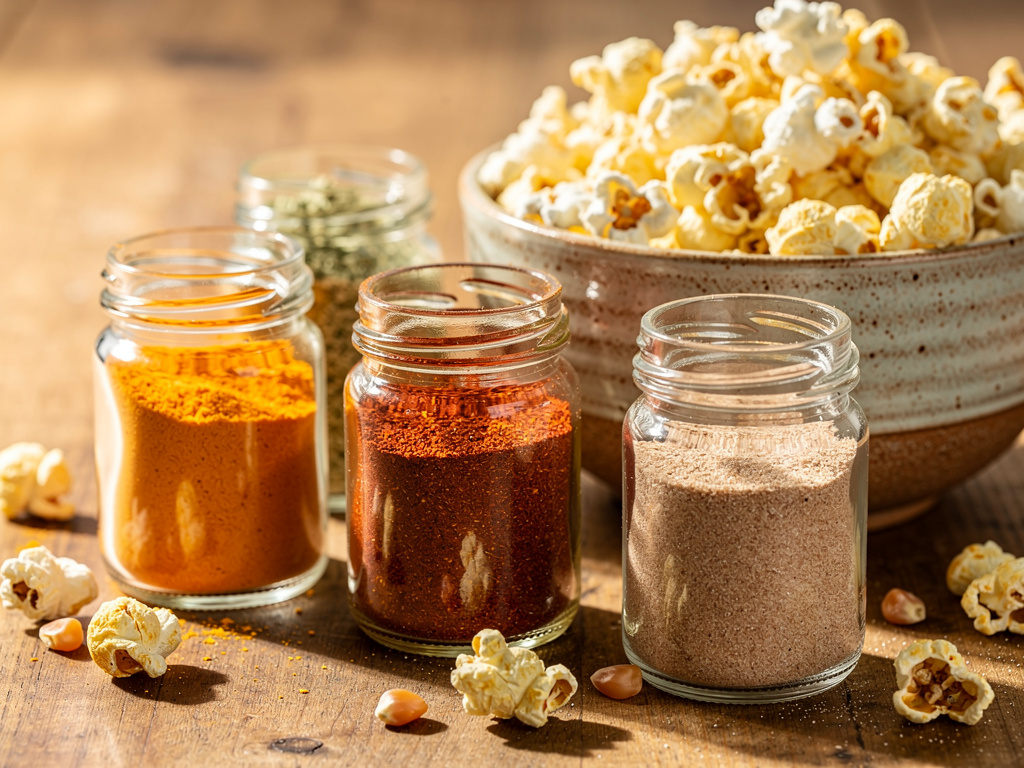


A popcorn seasoning kit is a small, clever product with a big gift-market pull: a jar or set of dry flavor blends, sometimes bundled with kernels, that turns a bowl of plain popcorn into cheddar, ranch, kettle, or spicy movie-night popcorn. Better still, it's about as cottage-food-friendly as a product gets, because dry seasonings and popcorn are both on the approved lists in most states. This guide walks through how to sell a popcorn seasoning kit from home, why dry seasonings are so clearly eligible, and how to build a gift-worthy popcorn brand around them.
The short version: A popcorn seasoning kit built from dry, shelf-stable seasoning blends, cheddar powder, ranch, kettle-corn sugar-and-cinnamon, spicy blends, is cottage-food eligible in most states, because dried herbs and seasonings and popcorn are both standard approved categories. The one rule that matters: everything must be dry. Dry cheese or butter-flavor powder is fine; fresh butter, oil, or liquid cheese is not, because those are perishable. Keep the kit all-dry and you have one of the safest, most giftable home food products around. Homegrown gives you the storefront to sell your kits as gifts, movie-night bundles, and holiday orders. This is general information, not legal advice.
This guide covers why a popcorn seasoning kit is cottage-eligible, the dry-only rule, what goes in a kit, labeling, making and storing, the gift market, pricing, and mistakes. This is general information, not legal or food-safety advice.
Yes, in most states you can sell a popcorn seasoning kit as a cottage food, because dry seasonings and popcorn are both standard approved cottage food categories. As long as every component is dry and shelf-stable, it's one of the cleaner products to sell legally.
Why a popcorn seasoning kit is eligible:
The takeaway: dry seasonings and popcorn are both standard approved cottage foods, so a dry seasoning kit is clearly eligible in most states. The rule is to register under your state's cottage food program and confirm its dry-seasoning rules, since eligibility is strong but the process still applies, the same first step as starting a cottage food business.
Everything in a popcorn seasoning kit has to be dry because dry ingredients are shelf-stable and non-hazardous, while any fresh fat or liquid, butter, oil, or liquid cheese, is perishable and pushes the product out of cottage food eligibility. The dry-only rule is the whole game here.
Why the dry line matters:
The takeaway: the kit must be all-dry because dry seasonings are shelf-stable while fresh fats and liquids are perishable and disqualifying. The rule is to build every component from dry, shelf-stable ingredients, since that's what keeps the kit safe and legal, a core principle of home food safety.
A popcorn seasoning kit contains dry flavor blends, cheddar, ranch, kettle-corn, spicy, or dessert flavors, often paired with popcorn kernels and a simple how-to, all built from shelf-stable ingredients. The flavor range is what makes these kits fun to design and give.
Popular kit components:
The takeaway: a kit combines several dry flavor blends, optionally with kernels and instructions, spanning savory, sweet, and spicy. The rule is to build a varied, all-dry flavor lineup, since range is what sells a kit, a close cousin of packaging up dry spice blends.
You should label each seasoning in the kit with its ingredients, an allergen statement, your cottage food disclosure, and simple usage instructions telling the customer how to apply it. Because a kit has multiple components, each seasoning needs its own clear label.
Here's what each seasoning label should carry:
| Label element | Why it matters |
|---|---|
| Ingredient list | Required; lists every dry ingredient in the blend |
| Allergen statement | Dairy in cheese powder, and any others |
| Cottage food disclosure | Your state's "made in a home kitchen" line |
| Usage instructions | How much to use and how to apply it |
| Net weight and business info | Standard cottage food requirements |
What to get right:
The takeaway: each seasoning in the kit needs its own ingredient list, allergen statement, disclosure, and usage note, because the customer relies on all four. The rule is to label every component fully rather than treating the kit as one product, alongside the rest of your cottage food labeling.
You make and store popcorn seasonings by blending fresh dry ingredients, grinding to a fine even texture that clings to popcorn, sealing airtight, and keeping jars cool and dry with a date. Texture and dryness are what separate a good seasoning from a clumpy one.
Making and storing well:
The takeaway: fine grinding, dry fresh ingredients, an airtight seal, and cool dry storage give you a seasoning that clings well and keeps for months. The rule is to grind fine and keep everything bone-dry so the product performs and lasts.
The market for popcorn seasoning kits is gifts and experiences: movie-night bundles, gift baskets, holiday sets, party favors, and gourmet-snack fans who want variety beyond salt and butter. It's a fun, giftable product that sells on flavor range and presentation.
Where kits sell:
The takeaway: kits sell as gifts, bundles, and favors, driven by flavor variety and presentation. The rule is to build your kit business around the gift and occasion market, the same demand that powers holiday gift boxes.
You price popcorn seasoning kits to cover the spices, the jars and packaging, the labor of blending and filling several seasonings, and a gift-market margin, then lean on multi-flavor sets to lift order value. A kit's value is in the variety, so price the set, not just the spice.
Pricing guidance:
The takeaway: price kits for the spices, the multi-jar packaging, the blending labor, and the gift-set appeal, not just the raw seasoning cost. The rule is to price the assembled experience and use tiered sets to lift order value.
The biggest mistakes selling popcorn seasoning kits are adding any fresh fat or liquid, coarse seasonings that won't cling, weak dairy-allergen labeling, and pricing on spice cost alone. The fresh-fat mistake is the one with legal and safety consequences.
Mistakes to avoid:
The takeaway: the mistakes that matter most are adding fresh fats, coarse or damp seasonings, and weak allergen labeling, all avoidable with an all-dry, fine-ground approach. The rule is to keep it dry, grind fine, and label allergens clearly before your first kit ships.
A seasoning kit is a gift and bundle product with strong holiday and event demand, so you need a clean way to take orders, offer multi-flavor sets and bulk favors, and get paid, without losing a cut of every sale. That's what Homegrown does.
Homegrown gives you an online storefront to sell your seasoning kits as single jars, multi-flavor sets, and bulk favors, take scheduled holiday and event orders, and collect payment, all for a flat $10 a month with no percentage fees beyond standard payment processing. For a gift product where much of the revenue lands in seasonal spikes, a per-order commission quietly skims your best weeks. A marketplace-style platform takes a percentage of every kit, and a general website builder wasn't made for taking gift and favor orders. Homegrown bundles the storefront, order scheduling, and set options into one flat rate, so your kit margin stays yours. It won't suit everyone, if you sell a few jars to friends for cash, you may not need a storefront yet, but the moment you're taking kit and favor orders online, a flat monthly rate beats handing a percentage to a marketplace.
Ready to sell your popcorn seasoning kits online? Set up your Homegrown storefront and start taking orders.
In most states, yes. Dry seasonings and popcorn are both standard approved cottage food categories, so a kit built from dry flavor blends is one of the cleaner home food products to sell. The key requirement is that every component stays dry and shelf-stable. Register under your state's cottage food program and follow its dry-seasoning and labeling rules.
No. Fresh butter, oil, or liquid cheese is perishable and pushes the product out of cottage food eligibility. State rules commonly allow popcorn with dry coatings like sea salt and cheese powder while excluding liquid toppings. Use shelf-stable butter-flavor or cheese powder instead, and keep every component of the kit dry.
Any built from dry, shelf-stable ingredients: cheddar or nacho with cheese powder, ranch and herb blends, kettle-corn sugar-and-cinnamon, cocoa dessert blends, and spicy chili or barbecue seasonings. The variety is the selling point, so a lineup spanning savory, sweet, and spicy makes the strongest kit.
Yes. Each seasoning in the kit needs its own ingredient list, allergen statement, cottage food disclosure, and usage instructions. Cheese-powder blends contain dairy, so a clear allergen callout on each label is essential. Treat every component as its own labeled product rather than labeling the kit as one item.
A sealed, airtight jar of dry seasoning typically stays good for several months to a year, with flavor gradually fading over time. Use fresh spices, grind fine, seal tightly, store cool and dry, and date each blend so customers use it at its best. Any moisture will cause clumping and shorten shelf life.
They can be, especially as gift sets and bundles where variety and presentation command a premium. Profitability comes from pricing the jars, packaging, and blending labor in fully rather than just the spices, and from offering tiered multi-flavor sets and movie-night bundles that raise order value. Holiday and event demand can make kits a strong seasonal earner.



