
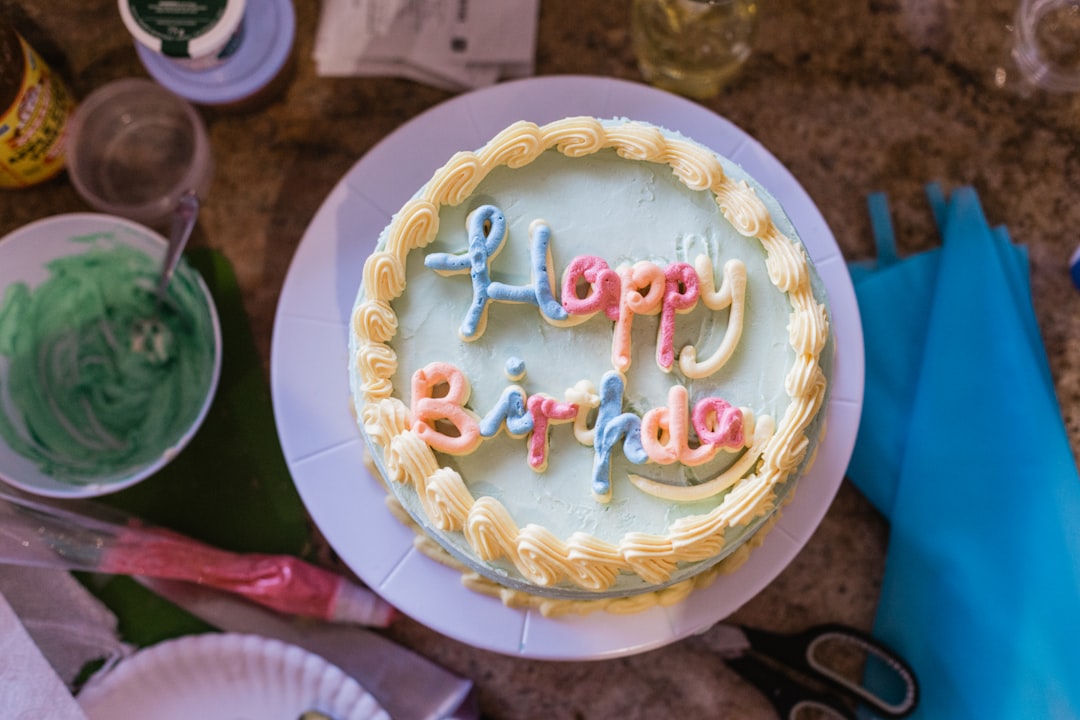


Custom orders are how most home bakeries start, and they're why a lot of them stall at the same place: busy every weekend, booked three weeks out, and making about what a part-time job pays.
That isn't a pricing problem, or at least not only one. It's structural. The custom-order model eliminates waste, which is why it feels efficient, while quietly destroying the two things a bakery needs to grow: economies of scale and a schedule you control.
The short version: Custom orders have the highest sticker price and usually the worst hourly rate on your menu, because you're producing single units on scattered days with consultation time attached to every one. Batch production is the opposite: one mixing session and one preheat serving twenty or forty units. The fix isn't to stop taking custom work. It's to cap it, price it properly, and build a batch menu underneath it so custom orders become the profitable top layer rather than the whole business.
Before the argument, the arithmetic. Take your last custom order and total the actual time.
A $75 custom decorated cake:
| Stage | Time |
|---|---|
| Initial messages, questions, quote | 0.5 hr |
| Design back-and-forth, reference photos | 0.5 hr |
| Shopping for the specific order | 0.75 hr |
| Baking | 1.5 hr |
| Cooling, filling, crumb coat, decorating | 2.5 hr |
| Boxing, cleanup | 0.5 hr |
| Pickup coordination | 0.25 hr |
| Total | 6.5 hr |
Ingredients and packaging run maybe $18, leaving $57 for 6.5 hours. That's $8.77 an hour.
Now a batch bake: 20 sourdough loaves at $16 each is $320. Ingredients and packaging run about $34. That's $286 for roughly 5 hours of work, or $57 an hour.
Same baker, same kitchen, same weekend. One pays six and a half times better than the other, and the one that pays worse is the one with the impressive price tag on it.
This is not an argument that custom work is bad. It's an argument that the sticker price is a terrible proxy for what something earns, and that most home bakers have never actually measured it. How to price baked goods covers the full method, and calculating your real cost per item is the exercise to run this week.
Baking labor is largely fixed per session, not per unit. Preheating, mixing, and cleaning take roughly the same time whether you make four of something or twenty. Custom orders force a batch size of one, permanently, which means you pay the full fixed cost on every single item you sell.
That's the entire mechanism. Not skill, not speed, not pricing. You're structurally locked into the worst possible batch size, and no amount of getting faster fixes it, because the fixed costs don't shrink.
A custom order arrives with a date attached, and that date is not yours. Three orders in a week means three separate bake sessions on three different days, each with its own shop, its own preheat, its own cleanup.
The compounding problem is that you can't batch across them. Wednesday's birthday cake and Saturday's cookie set can't share an oven load, so you pay full setup cost three times for what a batch baker pays once.
And it fragments the rest of your life. Batch bakers have a bake day. Custom bakers have a bake week that reshapes itself every time the phone buzzes.
Every custom order carries a conversation: what flavor, what colors, how many people, can you do this photo, what about a different shade. Half an hour to two hours per order, none of it in your price, and it scales linearly with order count. Double your orders and you double your unpaid consultation time.
This is also the time that doesn't feel like work while it's happening, which is why it never makes it into anyone's pricing. It's a phone conversation. But it's an hour you spent on that order and it belongs in the number. See why sending quotes and invoices for custom food orders matters for containing it.
A batch baker gets better at one loaf every week. Faster shaping, better crumb, tighter timing, refined process. That accumulated efficiency compounds into real margin.
A custom baker makes something slightly different every time. The skill grows, genuinely, but the *process* efficiency never does, because there's no repetition to optimize. Month twelve looks a lot like month three in hours-per-dollar.
Custom orders arrive when someone has a birthday. Not on a schedule you can plan around, forecast, or grow deliberately. Some weeks are four orders and some are none, and neither tells you anything useful about next month.
Batch demand is different: you know roughly what a Saturday does because you've run forty of them.
Not an argument for eliminating them. Custom work does three things well.
Revenue per order is high. A $75 cake in one transaction is real money, and the customer acquisition cost is effectively zero because they came to you.
The margin can be excellent when priced correctly. The problem is the pricing and the volume cap, not the product. A properly priced custom order at a controlled volume is the most profitable thing on your menu.
It builds reputation fast. A wedding cake or a milestone birthday cake gets photographed and shared in a way a weekly loaf never does. Custom work is genuinely good marketing for the rest of your business.
The move isn't to stop. It's to make custom the top layer of a business that has a floor underneath it.
Three to six products, one bake day, sold by pre-order with quantity caps. This becomes the predictable base that covers your fixed costs and gives you a schedule.
Start with products you already make well that hold quality for a day and share ingredients. Bake to order vs. bake to sell covers why the pre-order structure matters, and how to take pre-orders for your home bakery covers the mechanics.
Pick a number. Two, three, four, whatever fits alongside your batch day. Then hold it.
Capping does three things at once: it protects your batch day, it creates genuine scarcity that supports higher prices, and it removes the decision from every individual request, which is the exhausting part. "I take three custom orders a week and I'm full through the 22nd" is a complete answer that requires no agonizing.
Count consultation time as billable labor. Add a margin of 40 percent or more, because custom carries cancellation risk, revision risk, and a fixed delivery date you can't move.
Applied to that $75 cake: 6.5 hours at $18 is $117 of labor, plus $18 in materials, is a $135 floor. At a 40 percent margin, the price is $225. That number will feel impossible right up until the first person pays it, and the people who pay it are a genuinely different and better customer than the people who won't.
If it helps, consider that $225 for 6.5 hours is $32 an hour, which is still below what your batch day earns.
Fifty percent, non-refundable inside a stated window. Custom orders carry real cancellation risk and you'll have bought specialty ingredients. A deposit filters people who are shopping around from people who are booking, and it does that filtering before you spend two hours on design conversations. See deposits and partial payments on custom food orders.
Unlimited customization is what makes consultation time explode. Offer three sizes, six flavors, four decoration styles. "Anything you can imagine" sounds generous and produces a two-hour conversation, three revisions, and a result nobody is confident about.
Constrained options reduce your consultation time by most of it, make quoting instant, and produce better outcomes because you're working inside things you've already proven. Mistakes on custom birthday cake orders covers what goes wrong without those constraints.
You'll turn work away, and it will feel wrong for about a month.
"I'm booked for that weekend, but I have loaves and cinnamon rolls available on the 14th if that helps" is a complete, friendly, non-apologetic no that also sells something. Redirecting a declined custom order into your batch menu converts a chunk of them, which is another reason to have the batch menu in place before you start capping.
The one thing not to do is take the order anyway and resent it. How to fire a difficult customer covers the harder version of this conversation.
Not all custom work is equally bad. Once you've capped the volume, the question becomes which requests to accept, and there's a pattern to the ones that pay.
Repeatable formats beat one-offs. A "birthday cake, 8-inch, choose from six flavors, choose from four decoration styles" is custom to the buyer and semi-standardized to you. You've made it before, you know the timing, and the consultation is a menu choice rather than a design project. That's the sweet spot, and it's most of what a well-run custom program should be.
Orders that ride along with a batch day beat orders that need their own session. A dozen decorated cookies baked in the same oven load as your Friday production costs you decorating time only. The same order on a Tuesday costs you a whole setup and cleanup. Requiring custom pickups to happen on your existing pickup day is a small policy change with a large effect.
Corporate and recurring orders beat individual ones. An office that orders forty pastries the first Friday of every month is a standing order, which is functionally a pre-order with a longer horizon and none of the consultation overhead. It's the most efficient custom work available. Corporate gifting and bulk pricing tiers covers how to structure it, and note that some states restrict sales to businesses under cottage food law, so check your state's rules before pursuing it.
Large single orders beat several small ones. One forty-cookie order and four ten-cookie orders produce the same output, but the four orders carry four conversations, four payments, four pickups, and four chances for something to go wrong. Setting a minimum order size for custom work is the cleanest way to protect the small end. The cost of not doing so is laid out in the underestimated cost of a big order.
Wedding work is its own category, and it deserves a real decision. The revenue is high and the risk is higher: an immovable date, an emotionally loaded product, and a customer for whom a failure is a genuine disaster rather than an inconvenience. Some bakers build a business on it and price accordingly. Others decide once that they don't do weddings and never revisit it. Both are defensible. Drifting into it one order at a time is not. See cottage bakers and wedding cake orders, and check your state, because a few restrict cottage food operations from wedding and event catering specifically.
One more consideration that sits underneath all of this: custom work concentrates your risk in a way batch work doesn't. If a batch loaf goes wrong you've lost six dollars and one customer's Saturday. If a wedding cake goes wrong you've lost considerably more, which is the argument for carrying general liability coverage once custom work becomes a meaningful share of revenue. The SBA's guidance on business insurance covers the basics, and cottage food business insurance covers what these policies actually include.
The realistic shape of the transition, based on how this usually goes.
Month one is uncomfortable. You're turning down work while the batch menu has almost no orders. This is the part where most people abandon the plan, and it's worth knowing in advance that it's normal rather than a signal.
Month two, the batch base starts covering fixed costs. Ten or fifteen orders a week is enough to make the bake day worth running on its own.
Month three, the custom orders you kept are the good ones. Capping plus higher prices filters hard. The remaining customers are the ones who value the work, which is also a much better experience to deliver.
By month six, the hours look different. One bake day plus two or three custom orders replaces a week that was previously five scattered bake sessions. Similar revenue, and a weekend that exists again.
The number that moves most is not revenue. It's revenue per hour, and it moves a lot.
No. Cap them, price them properly, and build a batch menu underneath. Custom work has the highest revenue per order and is genuinely good marketing. The problem is running it as the entire business, where you're locked into a batch size of one and a schedule set by other people.
Two to four alongside a batch day, for most single-operator bakeries. The exact number matters less than picking one and holding it, because a fixed cap removes the decision from every individual request, which is the genuinely draining part.
Count every hour including consultation, messages, shopping, and pickup coordination, price that labor at a real rate, add materials, then apply a margin of 40 percent or more to cover cancellation and revision risk. Most home bakers discover their custom work should cost two to three times what they've been charging.
Some, yes, and those are mostly the ones generating the most coordination time per dollar. The customers who pay a properly priced rate for custom work tend to be clearer about what they want, more decisive, and easier to work with. See how to raise prices without losing customers.
Be brief, don't apologize, and offer an alternative. "I'm booked that weekend, but I've got sourdough and cinnamon rolls available on the 14th if that works." It reads as a business with a schedule, which is what you're building, and it converts a real share of declined custom requests into batch orders.
Constrain the options up front so fewer go wrong, take a deposit so cancellations don't cost you, and put the quote in writing including size, flavor, decoration, and pickup date so there's a record. Most custom-order disputes trace back to a verbal agreement neither side remembers identically. See managing a big custom order step by step.
Yes, and you should, because the alternative is two sets of records. The batch menu sells itself through a storefront with quantity caps. Custom orders come in as inquiries you quote and invoice, with a deposit at booking. Keeping both in one place is what makes the weekly cap enforceable, because you can see at a glance how full you are.
Run the arithmetic on your last three custom orders this week. Total every hour including the messages. Divide the revenue after materials by the hours. Then do the same for your best batch of anything.
Most people find a gap of three to six times, and seeing it is what makes the rest of this easy to act on. Nobody restructures a business on principle. They restructure it after they see a number.
Then build the floor. How to start a home bakery covers the full setup if you're formalizing things, and how to take pre-orders for your home bakery covers the batch system specifically.
A Homegrown storefront runs the batch side: one link for your bio, a menu with quantity caps that sell out on their own, checkout and payment at order time, and pickup management, plus a listing in a local marketplace where nearby customers can find you. It's $10 a month billed annually, or $12.50 month to month, with no commission on your sales at any volume.



