
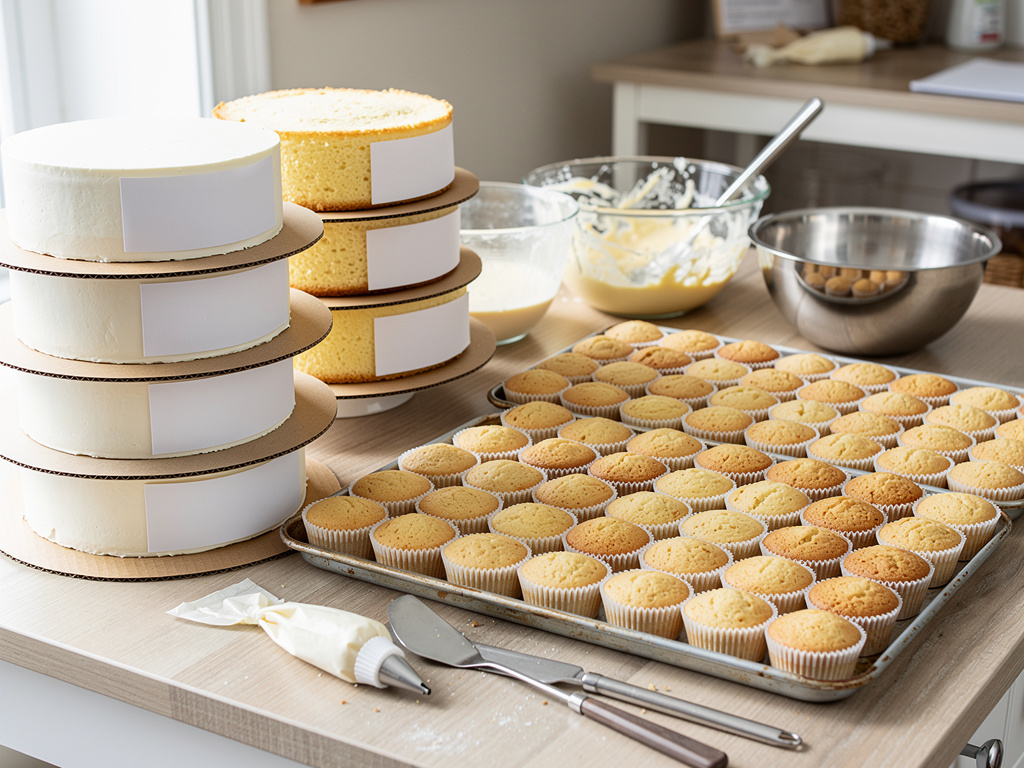


A big custom order is a huge opportunity and a real risk in the same breath. A wedding cake, a corporate lunch for fifty, or a bulk holiday order can be your best sale of the season, or a disaster that costs you money, sleep, and your reputation. The difference is almost never talent. It's process: locking the details up front, working backward from the event date, and never cutting corners on food safety when the volume spikes. This guide walks through how to manage a big custom order step by step, from the first inquiry to the day-of handoff.
The short version: Managing a big custom order comes down to five things done in order. Get every detail in writing and quote the large order deliberately, not by just multiplying your normal price. Take a non-refundable deposit and set a firm final-count deadline in a simple written agreement. Check your real capacity before you say yes. Build a backward timeline from the event date with buffer days. And protect food safety at volume by cooling large batches correctly and holding cold food below 40°F. Do those five and a big order becomes a great day instead of a crisis.
This guide covers intake and quoting, the deposit and agreement, the capacity check, the production timeline, food safety at scale, the handoff, and what to do when something goes wrong.
You handle the inquiry by capturing every detail in writing before you quote, then pricing the order for what a large job actually costs rather than just scaling your normal per-item price. The details you miss now are the problems you inherit later.
Get all of this in writing at intake:
When you quote, price the complexity, not just the count. A large order carries more labor per hour, bulk ingredient sourcing with its own lead time, and a much bigger loss if a batch fails, so a fifty-person order isn't simply your normal price times fifty. The one rule here: never quote a big order off the top of your head. Capture the details, price the real cost, and put the number in writing. For the pricing mechanics underneath, your cost per unit is where the quote starts.
You need a non-refundable deposit and a simple written agreement because a big order means blocking out production time you can't sell to anyone else, and the agreement protects both sides if plans change. The deposit isn't a formality, it's the cost of reserving your capacity.
A workable agreement covers:
A common structure is a deposit of around half up front with the balance due before the event, though you set what works for your business. The point is that once you accept a big order, you turn away other work for that window, so the deposit compensates you for holding it. The guide on deposits and partial payments for custom food orders covers how to structure this, and the one on the customer no-show on a large prepaid order covers what the deposit protects you from. The takeaway: no deposit, no reserved date.
Before you say yes, honestly check whether your kitchen, your schedule, and your supply chain can handle the order on top of your normal production. Saying yes to an order you can't deliver is worse than turning it down, because a failed big order costs you the reputation a good one would have built.
Run through this capacity check:
If the honest answer is that it doesn't fit, you can negotiate the date, scale the order down, or decline. The crisp rule: check capacity before you commit, because the time to discover you can't do it is at the quote, not the night before. If big orders keep straining your setup, the guide on custom orders and overcommitting is worth a read before you take the next one.
You build the timeline by working backward from the event date, placing each stage of production in reverse order with buffer days between them. A backward timeline is what turns a big order from a frantic all-nighter into a controlled sequence.
Count backward from the event like this:
Build a buffer day between the big stages. That buffer is what turns "the oven died" or "the test batch failed" into a problem you have time to fix instead of a crisis at the finish line. One more thing worth doing for any order you'll repeat: scaling a recipe isn't linear, so run a full-size test batch first, and the guide on scaling a recipe from home to market batch explains why seasonings and bake times don't just multiply.
You keep food safe at volume by cooling large batches in the right way, holding everything at safe temperatures, and never letting the rush push you into shortcuts. Making triple your normal batch introduces food-safety risks that a small batch never had, and the danger zone doesn't care how busy you are.
The rules that matter most at scale:
There's also a legal wrinkle worth flagging: a cottage food license generally covers selling shelf-stable products, not full on-site event catering, and the scope varies by state, as the UF/IFAS overview of cottage food operations illustrates. Confirm with your state's cottage food program that a big event order is still within what your license allows. The bottom line: volume multiplies both the food-safety risk and the rules you have to follow, so slow down and do both right.
You handle the handoff by confirming the delivery window, who receives the order, and where it goes the moment it arrives, all before event day. A big order can be ruined in the last thirty minutes if the handoff is improvised.
Nail down these details in advance:
Keep the client's day-of contact number handy and give them yours. The rule: plan the handoff like part of the production, because it is. A flawless cake that arrives at the wrong time or melts on a hot table is still a failed order.
When something goes wrong on a big order, you fall back on the buffer and the agreement you built in earlier, and you protect food safety and honesty above all else. Problems are predictable enough that you can plan your response before event day.
| Problem | What to do |
|---|---|
| Short on time | Cut decoration complexity before you cut food-safety steps or drive exhausted. Call in a trusted second baker if you have one. |
| Equipment fails | Have a backup identified in advance (a friend's kitchen, a rental space) so you're not finding one mid-order. |
| Client changes the count late | Point to the final-count deadline in your agreement. Before it, adjust; after it, the count is locked, and you say what's still possible. |
| A batch fails | This is what the buffer day is for. Rebake into the buffer rather than shipping something you're not proud of. |
| Running behind on delivery | Text an updated arrival time the moment you know, and never let a cold item blow the two-hour clock to make up time. |
The principle underneath all of these: never sacrifice food safety or honesty to save a timeline. A late order with a heads-up is recoverable, and an unsafe one is not. The buffer days and the written agreement are exactly what give you room to handle these without a crisis.
A big custom order lives or dies on details and deposits, and neither belongs in a messy thread of Instagram messages. Homegrown is a $10-per-month online storefront, with no percentage fees beyond standard payment processing, where a custom order comes in as a clear, itemized record and the customer pays through the platform, so the spec and the money are captured in one place instead of scattered across texts.
That matters most on the orders where a missed detail is expensive. Compare pulling a wedding order's flavors, count, and delivery details from twenty back-and-forth DMs to having them submitted and paid for in one place you can reference all the way to event day. Taking payment up front through your storefront also anchors the deposit that reserves your date, rather than chasing a Venmo you have to remember to request. For the custom-cake use case specifically, the guide on the best platform for custom cake orders goes deeper.
To be clear about what Homegrown does not do: it won't bake the order, build your production timeline, or manage your kitchen. Your process and your schedule do that. What it does is capture the order details and the payment cleanly, so the biggest, highest-stakes orders you take aren't the ones held together by a phone full of messages. If you're taking on custom work, set up your Homegrown storefront so every big order starts from a clear, paid, written record.
A deposit of around half the total, taken up front and non-refundable, is a common structure for large custom orders, though you set what works for your business. The purpose is to compensate you for reserving production time you can't sell elsewhere, so the deposit should be meaningful enough that a cancellation doesn't leave you out the cost of a blocked date. Put the amount and the non-refundable terms in your written agreement.
For a wedding or elaborate order, booking several months ahead is typical, with the design finalized closer to the date. The booking, secured by a deposit, reserves your production window, while flavors and details can be locked at the final-count deadline. For simpler bulk orders, a few weeks of lead time may be enough, as long as it covers your ingredient sourcing and production timeline with buffer.
Price the complexity, not just the quantity. A large order carries more labor per hour, bulk ingredient costs and sourcing lead time, and a bigger loss if something fails, so multiplying your normal per-item price undercharges you. Build the quote from your real cost per unit at that volume, then add for the added risk and coordination a big order requires.
At minimum: exactly what you're making, the price and payment schedule, the deposit amount and that it's non-refundable, the final-count and final-changes deadline, delivery or pickup terms, and a cancellation policy. The agreement protects both sides and makes expectations clear, which is what prevents a last-minute dispute over count, cost, or timing.
Cool large batches fast by dividing them into shallow pans or using an ice bath, since a big pot cools too slowly and lingers in the danger zone. Hold cold food at or below 40°F and hot food at or above 140°F, and keep the two-hour rule in mind during transport and setup. Making more food multiplies the risk, so the safety steps matter more at volume, not less.
This is exactly what the final-count deadline in your agreement is for. Before the deadline, changes are fine. After it, the count is locked, and you communicate what's still possible versus what's already committed. Setting and holding that deadline is what protects you from buying ingredients and blocking time for a number that then shifts under you.
A big custom order is one of the most profitable things a small food business can take on, and also one of the easiest to get wrong without a process. Lock the details and the deposit, check your capacity honestly, work backward from the date, and never let volume rush your food safety. Start your Homegrown storefront so your next big order arrives as a clear, paid, written record instead of a thread you have to piece together.



