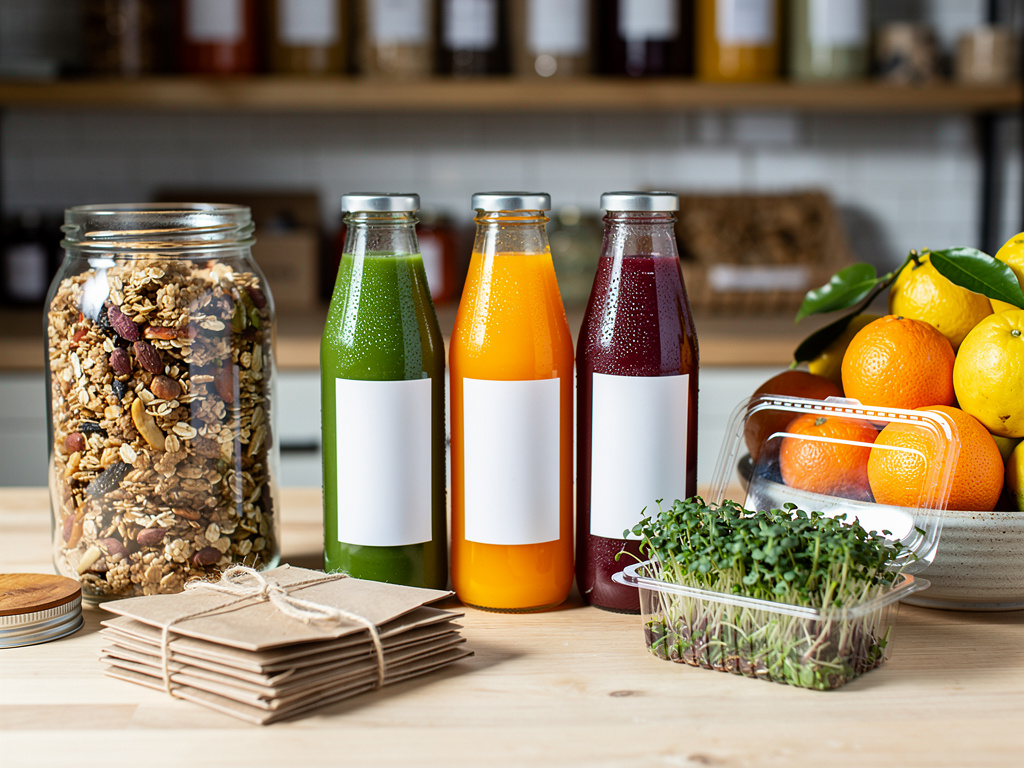


The short version: A New Year's reset menu works best for a home vendor when it is built from shelf-stable foods your state's cottage food law allows, like granola, herbal tea blends, dry soup mix jars, seed crackers and energy bites, plus microgreens if you grow them, which are usually sold as fresh produce, outside cottage food rules. Cold-pressed juice, wellness shots, soup and bone broth sell well in January too, but in most of the states our juice and soup guides checked they need a licensed kitchen or a state registration. Call it a reset, not a detox: FDA says only a drug can legally claim to treat, cure or prevent a disease, and the FTC went after a detox tea brand's weight-loss claims in 2020. Words like "sugar free," "healthy" and "gluten-free" each have a federal definition, and putting a nutrition claim on your label or in your ads ends the small-business exemption from a Nutrition Facts panel. Sell the menu as preorders for one weekly pickup so you only make what already sold.
Checked on October 14, 2026: FDA's label claims, "healthy" and gluten-free pages, 21 CFR 101.9, 101.60 and 101.91, the FTC's Teami release, California's Approved Cottage Foods list, the Texas DSHS cottage food page, Homegrown's signup page and Homegrown's own catalog. Home food rules differ by state, so verify your state's current rules with its agency. Homegrown customers create an account to place their first order, and Homegrown has no drops feature.
January is when many of your regulars want less sugar, not more. The holiday cookie trays are gone, the farmers market is closed or half empty, and plenty of customers want food that feels like a fresh start.
That is a real opening for a small food vendor, as long as you pick products your kitchen can legally make and describe them in words that will not get you in trouble. This guide gives you nine menu ideas, sorted by whether a home kitchen can usually make them, plus the label words that carry federal rules, real prices from Homegrown vendors and a launch calendar.
A good New Year's reset menu for a small vendor has three to six products: one or two shelf-stable staples, one drink or warm item, and one bundle that ties them together. You do not need a full cleanse program. For a home vendor, the easier sell is a swap for the snacks and drinks people had in December, not a seven-day plan.
Here are the nine ideas this guide covers, with the kitchen each one usually needs and a real price a Homegrown vendor listed for something similar on October 14, 2026.
Scroll sideways to see every column.
| Menu idea | Kitchen it usually needs | Storage | A real Homegrown price, October 14, 2026 |
|---|---|---|---|
| 1. Granola | Home kitchen in many states (California names it) | Shelf stable | $8, $12 and $16 for small, medium and large bags (Fix Foods) |
| 2. Energy bites and seed bars | Home kitchen only if truly shelf stable | Shelf stable or chilled, depends on recipe | $5 for 3 energy balls, $18 a dozen (Sonkissed Shire) |
| 3. Herbal tea blends | Home kitchen in many states; California's list names tea | Shelf stable | $10 a blend (Rosbrook Farm) |
| 4. Dry soup mix jars | Allowed from home in many states; California lists bean and vegetable soup mixes | Shelf stable | $5 for a 6 oz onion soup mix (Thomas Family Farm) |
| 5. Vegetable chips and seed crackers | Home kitchen in many states | Shelf stable | $8 for 300 g, $12 for 600 g of crackers (Winteregg Whisk Microbakery) |
| 6. Microgreens | Usually treated as fresh produce, not cottage food; rules vary by state | Refrigerated | $7 to $8 for 2 oz (Capon River Wellness) |
| 7. Cold-pressed juice and wellness shots | Licensed kitchen in 5 of the 8 states our juice guide checked; 3 allow it from home with conditions | Refrigerated | $9 for 12 oz, $25 for 32 oz (Press It Juice Bar) |
| 8. Soup, broth and cold bowls | Licensed kitchen or a home permit in 7 of the 12 states our soup guide checked; 5 allow cooked soup from home with conditions | Refrigerated or frozen | $11 a quart of chicken soup (Mama K's Kitchen) |
| 9. A reset bundle box | Whatever its parts need | Mixed | Built from the items above |
Prices are what each vendor listed on its Homegrown storefront when we pulled the catalog on October 14, 2026. The kitchen column is a general guide; your state's own list decides.
Reset menus sell in January because eating healthier is one of the most common resolutions, and a reset menu gives your regulars a reason to order while many outdoor markets are closed. YouGov's December 2025 poll found 31% of Americans planned to make a resolution for 2026, and 22% of all Americans said they were resolving to eat healthier. Exercising more led the list at 25%. You can read the full results in YouGov's 2026 New Year's resolutions poll.
At the same time, many outdoor markets close for the winter. That means your January sales mostly come from people who already know you. A reset menu gives them a reason to order again after the holidays, instead of waiting until spring. Our guide to selling food when your market closes for winter covers the channels that keep working in the off season.
Here is who tends to order a reset menu:
Treat it as a short season, much like a holiday menu. Plan for four or five weekly pickups in January, then fold your best seller into your regular menu in February.
Most reset foods a home kitchen can legally sell are dry and shelf stable: granola, tea blends, dry soup mixes, crackers, chips, nut butters and some bars. Cottage food laws were written for foods that stay safe at room temperature. Anything that needs a refrigerator, like juice, soup, salad or broth, is usually outside them.
California's list is a clear example. The California Department of Public Health's Approved Cottage Foods list (last reviewed April 2026) names these reset-friendly items:
The same list does not include juice, cooked soup or broth.
Texas works the other way. Its cottage food page allows "any foods" except a short list that starts with meat, meat products, poultry and poultry products, and also bans seafood, ice products, low-acid canned goods, products containing CBD or THC, and raw milk. Foods that need temperature control, like soup or juice, are allowed only if you register with the Texas Department of State Health Services. We read that page on October 14, 2026.
Every other state has its own list. Our guide to what foods you can sell under cottage food laws is a good place to start, then confirm with your state agency before you print a menu.
"Shelf stable" is about the recipe, not the product name. An energy bite made with fresh fruit puree, yogurt or cream cheese usually needs a refrigerator, even if a dry version is allowed. Check each recipe against your state's rule, not just the category.
Leave "detox" and "cleanse" off your menu and use "reset," "January menu" or "fresh start" instead, because those words suggest a health effect you would have to prove. Customers know what you mean by a reset. You get the same season without making a claim about their liver.
The rule comes from two federal agencies. On its label claims page, FDA explains that a supplement label must say it is not meant to "diagnose, treat, cure or prevent any disease," "because only a drug can legally make such a claim." For regular food, FDA's structure/function claims page says claims "focus on effects derived from nutritive value," and that FDA is likely to draw the line between those and disease claims the same way it does for supplements.
The Federal Trade Commission polices advertising. In March 2020 it settled with Teami, a tea company that, according to the FTC's announcement, "claimed without reliable scientific evidence" that its 30 Day Detox Pack would help people lose weight. The order carried a $15.2 million judgment, suspended once the company paid $1 million.
A home vendor is not Teami. But the same words on your Instagram post count as advertising. Safer swaps:
Describing what is in the bottle keeps you on the safe side. Promising what it does to the body is where vendors get in trouble. Our herbal tea guide walks through the same line for tea.
"Sugar free," "healthy" and "gluten-free" each have a federal definition, and using any nutrition claim can make you add a Nutrition Facts panel. The second point is the one a small vendor is most likely to miss.
Under 21 CFR 101.9(j)(1), a business that sells directly to consumers is exempt from the Nutrition Facts panel if its sales to consumers are no more than $500,000 a year, or its food sales to consumers are no more than $50,000. The catch is in the same sentence: the exemption holds only if the food "bears no nutrition claims or other nutrition information in any context on the label or in labeling or advertising." Our guide to the Nutrition Facts exemption for small vendors explains the rest of it.
Swipe the table to see the rule and the safer wording.
| Word on your label or post | What the federal rule says | Source | Safer wording for a small vendor |
|---|---|---|---|
| Detox, cleanse, flush | No definition; any claim to treat or prevent a disease makes it a drug claim, and ads need evidence | FDA label claims page; FTC Teami case | "Reset," "January menu," list the ingredients |
| Sugar free | Less than 0.5 g of sugars per serving, no sugar ingredients unless marked, plus "low calorie" or a "not a reduced calorie food" style statement | 21 CFR 101.60(c)(1) | "Sweetened only with dates" if that is true; "sugar free" is a nutrition claim, so the item would also need a Nutrition Facts panel |
| Healthy | A grain food needs 3/4 oz whole grain per serving and no more than 5 g added sugar, 230 mg sodium and 1 g saturated fat | FDA "healthy" claim page, rule announced December 19, 2024 | Skip it unless you have measured the numbers; "healthy" is a nutrition claim, so the item would also need a Nutrition Facts panel |
| Gluten-free | Under 20 parts per million gluten; a voluntary claim with set rules | 21 CFR 101.91 | "Made without wheat" only if no wheat is used, and say whether your kitchen also uses flour |
| High protein, low sugar, high fiber | Nutrient content claims; any of them can end your Nutrition Facts exemption. "Low sugar" has no FDA definition at all, and a nutrient claim FDA has not defined may not go on a label | 21 CFR 101.9(j)(1); 21 CFR 101.13(b) | "Made with peanut butter, oats and chia" |
We read each rule on eCFR and FDA's own pages on October 14, 2026. This is a summary, not legal advice; check the full text or ask your state agency before you print labels.
The "healthy" rule trips up granola makers. Under 21 CFR 101.9, sugars from syrups and honey count as added sugars, so work out your recipe's added sugar per serving before you print the word. Plain nuts and seeds are different: FDA's page on the updated "healthy" claim says nuts and seeds with nothing added except water automatically qualify.
Granola is still the easiest reset product for most home vendors because it is shelf stable, named on cottage food lists like California's, and already on Homegrown in 40 listings from 19 vendors. It also travels well, keeps for weeks and fits in a bundle.
For January, change the recipe more than the product. Ideas that fit a reset menu:
Real prices help you set yours. On October 14, 2026, Fix Foods listed small, medium and large bags at $8, $12 and $16, and D&D Bees listed a 7 oz bag made with local honey at $5. WildBatch+Bottle listed a 6.5 oz granola labeled gluten free and refined sugar free at $8.99. Our guides on how to sell granola from home and how much to sell granola for go deeper on cost and packaging.
Energy bites and seed bars fit a reset menu as a grab-and-go snack, sold in small packs of 3 or 4 and by the dozen. They replace the cookie in a lunchbox or the candy bar after a workout, which is the kind of swap a reset menu is built for.
The legal question is whether your recipe is shelf stable. A dry bite made with roasted nut butter, oats, honey and seeds is closer to a granola bar. A bite made with fresh fruit, yogurt or cream cheese is not. Our guide to selling energy bites from home covers the recipe test in detail.
Good January flavors:
On October 14, 2026, Sonkissed Shire listed energy balls on Homegrown in six flavors, including double chocolate and cinnamon roll, at $5 for a pack of 3 and $18 a dozen (its coffee bites come 4 to a $5 pack, $13.50 a dozen). Two flavors and two pack sizes are still plenty to start. Use the protein in your ingredients as the selling point, not a "high protein" claim on the label.
Yes, dried herbal tea blends are one of the safest reset products to sell, because dry tea is shelf stable and California's cottage food list names it outright. Tea also fits Dry January. It gives people something warm to drink in the evening that is not wine or hot chocolate.
Build two or three blends around flavor and mood, not health promises:
On October 14, 2026, Rosbrook Farm listed ten herbal teas on Homegrown at $10 each, including single herbs like lemon balm and holy basil and blends like raspberry leaf, lemon balm, mint and lemongrass. Single-herb teas are easy to understand and easy to restock. Blends are where your own taste shows.
The words matter most with tea, since detox teas are the exact product the FTC case was about. Our full guide to selling herbal tea from home lists which claims to avoid and what to put on the pouch.
Dry soup mix jars work in January because they give customers a warm, filling meal without asking your home kitchen to cook soup, which 7 of the 12 states in our soup guide do not allow. You sell the beans, lentils, grains and spices in a jar. The customer adds water and vegetables at home.
California's cottage food list names bean soup mixes and vegetable soup mixes. Our guide to selling homemade soup found that California, Washington and Wyoming name soup mixes on their own lists, while Missouri allows them only in limited cases.
Reset-friendly soup mixes:
Layer the mix so it looks good through the glass, and print the cooking steps on a tag. Keep every ingredient dry and store-bought: no bouillon made with meat, no fresh garlic. For price reference, Thomas Family Farm listed a 6 oz onion soup mix on Homegrown at $5 on October 14, 2026. A quart jar holds more and can carry a higher price.
Vegetable chips and seed crackers fill the "something crunchy" gap on a reset menu, and California's list names vegetable chips and crackers as cottage foods. They also pair well with a soup mix jar in a bundle.
Options that fit January:
Chips and crackers need dry storage and a good seal. Kale chips go soft quickly in humid air, so use a bag with a zip top or a jar, and sell them within the window your recipe actually holds up. Our guide to selling dehydrated snacks covers drying, packaging and shelf life.
On October 14, 2026, Winteregg Whisk Microbakery listed thyme and sea salt sourdough crackers on Homegrown at $8 for 300 grams and $12 for 600 grams. Two sizes let a customer try one before committing to the big bag.
Microgreens can carry a winter reset menu because they go from seed to harvest indoors in 7 to 14 days, so you can have fresh local greens in January, when field-grown greens are scarce in cold parts of the country. Homegrown's October 14, 2026 catalog had 31 microgreens listings from 8 vendors.
Whole microgreens are usually treated as fresh produce rather than cottage food, though the rules vary by state. Our guide to how to sell microgreens found that Wisconsin requires a license if you mix varieties in one container and Maryland requires one for microgreens washed and sold ready to eat. Check your state before you sell a mix.
Varieties that fit a reset menu:
Prices on Homegrown that day included $5 for a live 5 by 7 inch tray (OstroVolt), $7 and $8 for 2 oz (Capon River Wellness) and $12 for a 2 oz tub (Konch Republic Greens). A small weekly order of microgreens pairs well with a juice or soup from a licensed kitchen partner.
Sell cold-pressed juice and wellness shots only if your kitchen is licensed for them or your state allows juice from home, because juice falls outside the home-kitchen rules in most of the states we have checked. Our guide to selling homemade juice checked eight states on September 22, 2026 and found three, Illinois, Texas and Wyoming, that let a home kitchen sell bottled juice with conditions. Under 21 CFR 101.17(g), juice that has not been pasteurized or otherwise treated to cut harmful germs 100,000-fold must carry FDA's warning statement on its label, which begins "WARNING: This product has not been pasteurized"; the juice guide has the full wording.
If you can sell it, juice is the signature product of a January reset. Ideas:
In a pull of the Homegrown catalog on October 14, 2026, 35 of the 2,920 products listed by 324 vendors were fresh juices, juice packs, a three-day juice program or wellness shots, sold by 5 vendors. Press It Juice Bar listed 12 oz bottles at $9 and a 6-bottle pack at $48. Juicy's Juices listed 8 oz bottles at $5 and 16 oz at $10. Frugally Bougie listed a three-day juice program at $120. We counted by category and by description, then read every beverage listing by hand.
Fresh juice has a short life in the fridge, so make it to order. A preorder deadline two days before pickup lets you buy exactly the produce you need. Our guide on how much to sell juice for breaks down produce cost per bottle.
Sell shots in packs, not one at a time. On Homegrown on October 14, 2026, Immunity Artisan listed its 2 oz ginger and turmeric shot at $4 or 3 for $10, and Frugally Bougie listed 2 oz shots at $2.00 to $2.50 and 4-packs at $8. A 4-pack turns a $2 impulse buy into an $8 order.
You can sell soup, broth and cold bowls for a reset only from a licensed kitchen or where your state's home food rules allow them, since all three need cold holding to stay safe. They are also the most filling products on a reset menu.
Our homemade soup guide checked 12 states on October 14, 2026. Texas, Illinois (vegan soup only), Utah, Wyoming and North Dakota let a home kitchen sell cooked soup with conditions, and none of them allows beef, pork or chicken in it outside narrow small-farm exceptions. The other seven do not, and California allows it only through a county home restaurant permit. Utah also has a microenterprise home kitchen permit from your local health department, with an inspection, that can cover chicken or beef soup served the same day or within 72 hours with temperature logs.
Bone broth is harder still. It is a meat product, and even Texas, which allows most other foods, bans meat and poultry products from cottage food. Our guide to selling bone broth covers the licensed route.
Reset products for a licensed kitchen:
On October 14, 2026, Mama K's Kitchen listed a quart of chicken soup on Homegrown at $11 (we did not check which kitchen route that vendor sells under), and Cryptid Kitchen listed red lentil stew at $3 for 16 oz and $5 for 32 oz. Those two prices show how wide the range is.
Build a reset bundle box from three or four items you already sell, at one price, with one pickup date, and cap how many you make. A bundle raises the size of each order and gives gift buyers an easy choice.
Our guide to bundle pricing for food vendors shows more ways to set a bundle price. Keep at least one item in the box that customers can reorder alone in February, so the reset turns into a regular habit.
A capped box with one pickup day is easy to run when the menu does the counting. On a Homegrown storefront, the box listing carries its own quantity, and your store's pickup schedule and order prep time apply to it, so you know on Thursday night exactly how many boxes to pack on Saturday.
Price a reset menu by unit and pack size, using what local vendors already charge as your starting point, then check that each price covers ingredients, packaging, your time and payment fees. Customers compare prices within a category, so a $10 tea next to a $6 tea needs a reason, like a bigger pouch or herbs you grew yourself.
These are real listings from Homegrown's catalog on October 14, 2026. They show the range for each item and the pack sizes vendors chose.
Swipe the table to see each price per unit.
| Item | Vendor and size | Listed price | Price per unit |
|---|---|---|---|
| Granola | D&D Bees, 7 oz bag | $5.00 | $0.71 per oz |
| Granola | WildBatch+Bottle, 6.5 oz bag | $8.99 | $1.38 per oz |
| Energy balls | Sonkissed Shire, pack of 3 / dozen | $5.00 / $18.00 | $1.67 / $1.50 each |
| Herbal tea | Rosbrook Farm, one blend | $10.00 | Size not listed |
| Crackers | Winteregg Whisk Microbakery, 300 g / 600 g | $8.00 / $12.00 | $2.67 / $2.00 per 100 g |
| Microgreens | Capon River Wellness, 2 oz broccoli | $7.00 | $3.50 per oz |
| Fresh juice | Juicy's Juices, 8 oz / 16 oz | $5.00 / $10.00 | $0.63 per oz both sizes |
| Fresh juice | Press It Juice Bar, 12 oz / 32 oz / 64 oz | $9.00 / $25.00 / $45.00 | $0.75 / $0.78 / $0.70 per oz |
| Wellness shot | Immunity Artisan, 2 oz / 3 bottles | $4.00 / $10.00 | $2.00 / $1.67 per oz |
| Soup | Mama K's Kitchen, 1 quart chicken soup | $11.00 | $0.34 per oz |
Listed prices from each vendor's Homegrown storefront in our October 14, 2026 catalog pull. Price per unit is the listed price divided by the stated size; a quart is 32 oz. These are prices, not costs, so build your own cost per unit before you copy one.
Reset menu listings in Homegrown's catalog
Source: Homegrown catalog pull, October 14, 2026, 2,920 products from 324 vendors. Counted by name and description, then checked by hand: granola from 19 vendors, juice and shots from 5, microgreens from 8.
A few pricing habits that work for reset menus:
Take reset orders through one preorder page with a weekly cutoff and pickup time, so you know exactly how many jars, bags and bottles to make before you shop. A reset menu has a short season and several products in different sizes. Tracking that through Instagram messages and Venmo requests is where orders get lost.
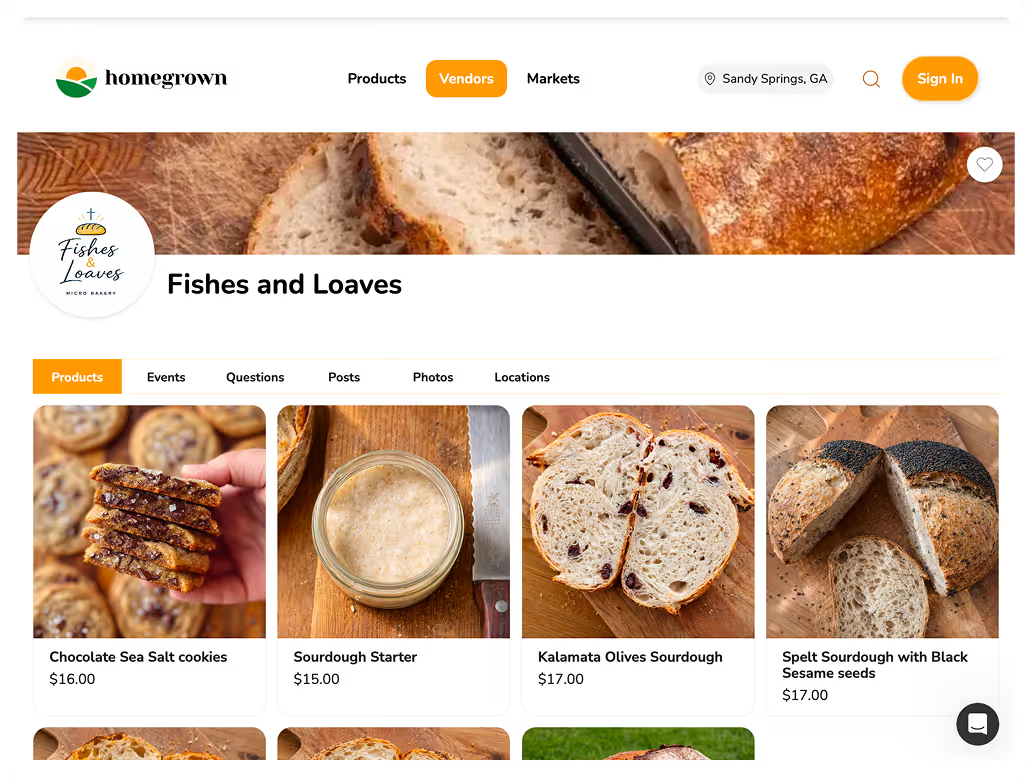
Homegrown is built for that kind of local preorder menu. It costs $10 per month billed annually, or $12.50 billed monthly, with no percentage fees beyond standard payment processing, and you can try it for 7 days with no charge until day 8. What it does for a January reset menu:
Here is how the fees compare with two tools reset vendors often consider, Hotplate and Square's free online store.
Scroll sideways to see every column.
| Platform | Monthly plan | Trial | Service or platform fee | Card processing | Customer pays on a $20 order | Vendor pays on a $20 order | Vendor pays in a month of 50 orders at $20 |
|---|---|---|---|---|---|---|---|
| Homegrown | $10 billed annually ($12.50 monthly) | 7 days, no charge until day 8 | None, 0% commission | 2.9% + $0.30, paid by the vendor | $20.00 | $0.88 plus the plan | $54.00 ($56.50 on monthly billing) |
| Hotplate, default | $0 | No plan to try | 5% + $0.55, paid by the customer | 2.9% + $0.30 charged to the vendor | $21.55 | about $0.88 to $0.92 | about $44.00 to $46.25 |
| Hotplate, vendor covers the fee | $0 | No plan to try | 5% + $0.55, paid by the vendor | 2.9% + $0.30, also on the vendor | $20.00 | $2.43 | $121.50 |
| Square Free plan, online | $0 | No plan to try | None | 3.3% + $0.30, paid by the vendor | $20.00 | $0.96 | $48.00 |
We checked Homegrown's signup page, Hotplate's pricing page and its "What Hotplate does" post, and Square's fee help page on October 14, 2026. Hotplate's own example charges card processing on the order and the tip, which puts the default near $0.88 on a $20 order; if processing runs on everything the customer pays, it is about $0.92. Hotplate lets you choose who pays its fee, and its post says 80% of Hotplate chefs keep the default.
Hotplate is a strong fit if you sell in timed drops with a countdown, which Homegrown does not offer. Square's free plan costs nothing monthly but charges 3.3% + 30¢ on online orders, the highest card rate in the table: $0.96 on a $20 sale, or $48.00 over a month of 50 orders with no plan on top. Instagram DMs and Venmo cost the least in fees and the most in time.
Honest bounds: Homegrown does not tell you whether your state allows juice or soup from home, and it does not run recurring or subscription orders. Customers create a Homegrown account to place their first order. Your storefront is listed on Homegrown's marketplace, but plan on most January orders coming from people you send to your own link.
Launch your reset menu the week after Christmas and run weekly pickups through the end of January, so it is ready the moment New Year's plans start. A menu that opens in mid-January asks customers to wait two weeks for something they wanted on January 1.
Here is a calendar for the 2027 season:
Post your reset menu before New Year's Day, not on it. Announcing on Saturday, December 26 gives you a full week of reminders before a first pickup on January 2, and a Thursday cutoff that week tells you exactly what to buy on Friday.
The mistakes that sink a reset menu are selling a refrigerated item your kitchen is not licensed for, printing health claims, and offering too many products for a one-month season. Each of these is easy to avoid if you plan in December.
The most common ones:
Keep the first season small. Three good products, one bundle and one pickup day will tell you what your customers want for next January.
Most home vendors can sell dry, shelf-stable reset foods like granola, herbal tea blends, dry soup mix jars, seed crackers, vegetable chips and some energy bites. California's cottage food list names granola, tea, bean and vegetable soup mixes, and vegetable chips. Juice, soup, broth and salads usually need a licensed kitchen, though a few states allow some of them from home with conditions, such as registration, cold holding or a label. Check your own state's list before you build the menu.
It is safer not to. FDA treats a claim that a product can treat, cure or prevent a disease as a drug claim, and the FTC took action in 2020 against a tea company whose detox pack claimed weight loss without reliable evidence. Describe what is in the bottle, like "green juice with cucumber, kale and apple," instead of what it does to the body. That keeps your reset menu honest and out of trouble.
On Homegrown on October 14, 2026, one vendor listed a three-day juice program at $120, and single bottles from two other juice vendors were $5 for 8 oz and $9 for 12 oz. Start from your own produce and bottle cost, then add your time and payment fees. A three-day pack is easier to price when each day uses the same bottles you already sell one at a time.
Usually not, if you are small and make no nutrition claims. Under 21 CFR 101.9(j)(1), a vendor with no more than $500,000 in sales to consumers, or no more than $50,000 in food sales to consumers, is exempt only while the food "bears no nutrition claims or other nutrition information." Writing "high protein," "low sugar" or "sugar free" on a label or in an ad ends that exemption for the item.
Yes, if the refrigerated item comes from a kitchen allowed to make it and the box is kept cold. Many home vendors keep the box fully shelf stable instead, using granola, tea, a soup mix jar and crackers, then sell juice or soup separately through a licensed partner. Plan one pickup day so nothing sits out longer than it should.
The best window is the last week of December through the end of January. YouGov's December 2025 poll found 22% of Americans resolving to eat healthier in 2026, and a menu that is ready on January 1 catches them while the plan is new. Announce around December 26, run the first pickup on the first Saturday of January, and wind the menu down in early February.
More on the products and rules behind a reset menu:
Pick three products your kitchen can legally make, describe them by their ingredients, and open preorders the week after Christmas. A short menu with clear sizes and one Saturday pickup is easier to run than a full cleanse program, and it tells you within two weeks which item your regulars will keep buying. Granola, a tea blend and a soup mix jar make a complete shelf-stable start for most home kitchens. If you have a licensed kitchen, juice and wellness shots can be the headline.
Write your labels before you write your posts. Leave out "detox," "cleanse," "sugar free" and "healthy" unless you have checked the rule, and list every allergen. Then give your customers one link to order and pay, with a Thursday cutoff so you shop for exactly what sold. Set up your Homegrown storefront for $10 per month billed annually, with no percentage fees beyond standard payment processing, and have your reset menu live before New Year's Day.