
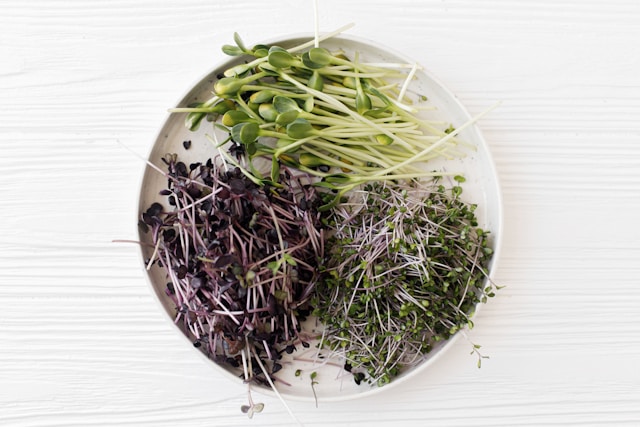


If you have been growing microgreens on your kitchen counter or a spare shelf and people keep asking where they can buy them, you are sitting on one of the most accessible food businesses you can start from home. Microgreens are fast to grow, high in demand, and have some of the best profit margins of any product you can sell locally.
The best part? Microgreens are one of the simplest food products to sell legally because they are fresh produce — not a processed or prepared food. That means the permit and licensing requirements are far simpler than selling baked goods, jams, or cooked meals.
This guide covers everything you need to go from growing microgreens for yourself to selling them at farmers markets, to restaurants, and through local pre-orders.
The short version: Microgreens are usually treated as fresh produce, not cottage food, but the rules vary by state. Minnesota and Wisconsin require no food license to sell produce you grow, while Wisconsin requires one if you mix different microgreens in a container and Maryland requires one for microgreens washed and sold ready to eat. You may also need a local business license. Individual clamshell containers sell for $3 to $8 retail, with total growing costs of $1.50 to $4.00 per tray — giving you 60 to 75 percent margins. Start with 3 to 5 easy varieties like sunflower, pea shoots, and radish, and sell through farmers markets, restaurant accounts, and pre-orders. A spare room with a shelving unit can produce 20 to 50 trays per week year-round.
---
Yes, and microgreens are one of the easiest food products to start selling legally. Because microgreens are fresh produce — not a processed, cooked, or shelf-stable product — they fall outside the cottage food regulations that apply to baked goods, jams, and other prepared foods.
In the states we checked on September 27, 2026, you can sell fresh produce you grow yourself without a food license. Minnesota exempts fruits, vegetables and herbs grown on land you own, rent or lease from both its food license and its cottage food registration, and Wisconsin's agriculture department says "there is no license requirement for covered produce farms," which it says include microgreens. Rules vary by state, so check your state's agency. In those states you do not need a cottage food permit, a commercial kitchen, or a food handler's certification for whole microgreens. The regulatory path for microgreens is much simpler than for products that fall under cottage food laws.
That said, microgreens are eaten raw, so food safety practices matter even without formal licensing requirements. Customers trust vendors who handle their product with care.
The permits for selling microgreens are straightforward compared to other food products. Here is what most home growers need:
You generally do NOT need:
This is what makes microgreens one of the lowest-barrier food products to sell. Compare this to selling meal prep from home, which requires a licensed kitchen because prepared foods are perishable and regulated differently.
If you want to understand where microgreens fit relative to cottage food laws in your state, the key distinction is simple: cottage food covers processed shelf-stable foods made in your kitchen, while microgreens are raw produce you grow — a different category entirely.
---
Microgreens combine high profit margins, low startup costs, fast turnaround, and year-round production in a way that very few food products can match.
Microgreens sell for $20 to $40 per pound at retail, making them one of the highest-value crops per square foot you can grow. A single 10x20 inch tray produces 6 to 12 ounces of harvestable microgreens depending on the variety, and you can fit 20 to 50 trays on a single shelving unit in a spare room.
Here is what the economics look like:
Because the crop cycle is so short, your cash flow is fast. You plant trays on Monday, harvest the following week, and sell that same week. There is no waiting months for a harvest like outdoor farming.
You can start a microgreens operation for $200 to $500 — far less than almost any other food business.
Specialty microgreen seed suppliers like True Leaf Market sell seeds in bulk quantities sized for commercial growing, which brings your per-tray seed cost down significantly compared to buying small packets from a garden center.
No land, no greenhouse, no specialized equipment. Just shelves, trays, seeds, and light. You scale by adding more shelving units, not more infrastructure.
Sunflower and pea shoot microgreens are the best sellers at most farmers markets, but your specific market will determine which varieties move fastest.
Start with 3 to 5 varieties that are easy to grow and sell well. Sunflower and pea shoots are the safest starters because they have the highest demand, the most forgiving growing requirements, and strong margins.
Add specialty varieties as you learn your market. Some markets respond well to basil microgreens or amaranth. Others want spicy mustard or mild broccoli. Ask your customers at the farmers market what they cook with and what flavors they enjoy — then grow accordingly.
Keep in mind that different varieties have different growing requirements. Sunflower and pea shoots need soaking (8 to 12 hours) and benefit from weight on top during germination. Radish and broccoli are simpler — just sow and go.
Most microgreens vendors price retail clamshell containers at $3 to $8 depending on size and variety, with wholesale pricing at 40 to 60 percent of retail for restaurant and store accounts.
Sunflower and pea shoots sit at the lower end of these ranges because they are the most common. Specialty varieties like basil, cilantro, and amaranth command higher prices because fewer growers offer them.
For a deeper dive into pricing strategies, see our guide on how to price your food products.
Wholesale pricing is typically 40 to 60 percent of your retail price. Restaurants buy by the pound or half-pound, so your pricing shifts from per-container to per-weight.
Consistency matters more than price for restaurant buyers. A chef who knows you will show up every Tuesday with the same quality product will keep ordering without price shopping. Reliability is your competitive advantage over distributors who may be cheaper but less consistent.
Your cost per tray depends on the variety and your growing setup:
Your target margin on retail sales should be 60 to 75 percent. A tray that costs $2.50 to grow and yields two 4-ounce clamshells at $6 each gives you $12 in revenue on $2.50 in costs — an 80 percent margin before factoring in your time and market fees.
Clear clamshell containers are the industry standard for microgreens because they let customers see exactly what they are buying. Sprouts go in the same clear clamshells, about 21 cents each by the case in September 2026, and what a 4-ounce pack of sprouts should sell for comes down to that clamshell plus about 74 cents of alfalfa seed. Presentation matters — microgreens are a visual product.
Label each container with your farm or business name, the microgreen variety, the weight, the harvest date, and "wash before eating."
Freshness is everything with microgreens. They are a perishable product with a 5 to 10 day refrigerated shelf life, so your handling from harvest to customer matters.
Farmers markets and restaurant accounts are the two most profitable sales channels for home microgreens growers, followed by pre-orders and local delivery. Those three sit beside co-ops, juice bars, CSA boxes and grow kits sold online, and a sale to a restaurant or store counts toward the FDA's small-farm qualified exemption only when the buyer is in your state or within 275 miles, which the guide to where to sell microgreens walks through channel by channel.
Farmers markets are the number one sales channel for small microgreens growers. Set up a simple table with clear clamshell displays, variety labels, and — most importantly — samples.
Most customers have never tasted microgreens. They need to try them before they understand the value. A small tray of sunflower microgreens with a "try one" sign will sell more than any signage or marketing you can do.
Bring a variety mix and individual varieties. Some customers want a specific type; others want a convenient blend. Offer both.
For tips on setting up your booth effectively, see our guide on how to set up a booth at a farmers market.
Restaurant accounts provide predictable weekly revenue that farmers markets cannot match. A restaurant that orders $40 worth of microgreens every Tuesday is $160 per month of guaranteed income.
Here is how to land restaurant accounts:
Start with 2 to 3 restaurant accounts and grow from there. Each account you add represents reliable recurring revenue.
Set up a weekly pre-order system where customers can browse your varieties and place orders online. You harvest to order and deliver locally or set a pickup time. Homegrown is $10/month with no percentage fees beyond standard payment processing and gives you an ordering page where customers see your microgreen varieties, select quantities, and pay upfront — so you know exactly what to plant and harvest each week. Compare that to managing orders through Instagram DMs and Venmo (no consolidated list, no payment confirmation, no way to track who gets what on delivery day) or Etsy (6.5% per transaction, designed for shipping — not weekly local microgreen delivery). Homegrown does not handle subscription billing, but it lets you offer pickup or local delivery with route planning and gives you the ordering infrastructure to run a weekly microgreen business without living in your messages.
A subscription model works well for microgreens. Customers sign up for a weekly box — say, a 4-ounce clamshell of sunflower and a 4-ounce clamshell of pea shoots delivered every Thursday. Subscriptions smooth out your revenue and let you plan your planting schedule precisely.
Small local grocers and food co-ops often want locally grown microgreens. This channel requires wholesale pricing (40 to 60 percent of retail), consistent volume, and a reliable delivery schedule.
Start with one store and prove you can deliver the same quality every week before approaching additional stores. Grocery accounts are less profitable per unit than direct-to-consumer sales, but they move higher volume with less of your time spent selling.
Begin with 10 to 20 trays per week and one or two sales channels. Master your growing process — consistent germination, even growth, proper harvesting technique — before adding more trays or more customers.
Most home growers can comfortably produce 30 to 50 trays per week using a single shelving unit in a spare room. Beyond that, you may need to dedicate a larger space or add a second grow area.
Your best customers are the ones who come back every week. At the farmers market, learn people's names. With restaurant chefs, be the grower they can count on without a second thought.
Word of mouth is how most small microgreens businesses grow. One satisfied customer tells three friends. One happy chef recommends you to another restaurant. Consistency in quality and reliability in delivery builds that kind of trust.
Track your cost per tray for each variety, your revenue per market day, and your revenue per restaurant account. Know which varieties give you the highest margin versus the highest volume.
A simple spreadsheet is enough. You do not need fancy inventory software. Just track what you spend, what you grow, what you sell, and what you make. Most growers find that sunflower and pea shoots are the volume drivers while specialty varieties are the margin drivers.
Not for whole microgreens you grow, in the states we checked: Minnesota and Wisconsin require no food license to sell produce you grow. Processing can change that. Wisconsin requires a food license if you mix different microgreens in one container, and Maryland requires a state processing license for microgreens washed and sold ready to eat. You will likely need a basic business license from your city or county, which costs $25 to $100. Rules vary by state, so check your state's agriculture department.
A home grower selling 20 to 40 trays per week can realistically earn $500 to $2,000 per month through a combination of farmers markets and restaurant accounts. Revenue depends on your pricing, your sales channels, and how many trays you can produce per week. Growing beyond $2,000 per month usually requires either more growing space or a shift toward higher-volume restaurant accounts.
Yes. Microgreens are grown and sold as fresh produce, which generally does not require a commercial kitchen, cottage food permit, or food handler's certification. You grow them in your home, harvest them, package them, and sell them directly. Rules vary by state, so check your state's agriculture department before your first sale.
Most growers become profitable at 15 to 20 trays per week, assuming a cost of $2 to $3 per tray and retail sales of $5 to $12 per tray yield. At 20 trays per week with an average revenue of $8 per tray, you are bringing in $160 per week — $640 per month — with costs around $200. That leaves roughly $440 per month in profit before market fees and your time.
Sunflower microgreens are the most popular and have strong margins because the seeds are inexpensive and the yield per tray is high. Specialty varieties like basil, cilantro, and amaranth command higher per-ounce prices but sell in smaller volumes. Most successful growers run a mix: high-volume varieties for consistent revenue and specialty varieties for premium margins.
Best practice is to rinse microgreens gently and pat or spin them dry before packaging. Some growers sell unwashed microgreens with a "wash before eating" label, which reduces handling and keeps the greens drier in the package. Either approach works — just be clear on your label so customers know what they are getting.
Ready to start selling your microgreens? Set up your ordering page, list your varieties, and start taking weekly pre-orders from local customers.



