
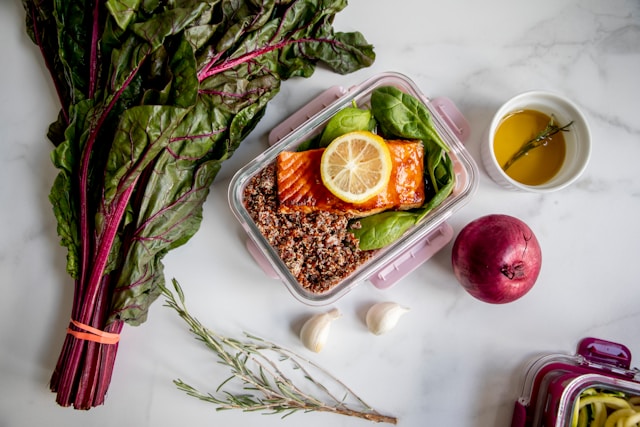


If your friends and family are constantly asking you to make extra portions of your cooking so they can buy some, you already have a customer base waiting. Selling meal prep and prepared foods from home is one of the fastest-growing local food businesses — and it starts with the meals you are already making.
A small meal prep operation selling 30 to 50 meals per week at $10 to $15 per meal brings in $300 to $750 per week. That is real money for cooking you already enjoy doing. The business model is simple: customers pre-order, you batch cook on one or two production days, and they pick up or you deliver locally.
But here is the most important thing to understand before you start: prepared foods have stricter rules than baked goods, jams, or other shelf-stable products. Meal prep is perishable — it requires refrigeration and temperature control — so it usually does not qualify under cottage food laws. You need a licensed kitchen, and the path to getting one is more involved than getting a cottage food permit.
This guide covers how to legally sell prepared foods, what types of meals sell best, pricing, packaging, food safety, and how to find customers in your local area.
The short version: Prepared foods like meal prep, cooked meals, and refrigerated items generally do NOT qualify under cottage food laws because they are perishable. You need a licensed kitchen — either a commercial kitchen rental ($15 to $30 per hour), a shared commissary kitchen, or a permitted home kitchen in states that allow it (like California, Utah, and Wyoming). Get a food handler's certification and business license. Individual meals sell for $8 to $15 each, with food costs around 25% to 35% of your selling price. Start with 5 to 8 rotating meals, take pre-orders with a weekly cutoff, batch cook on one or two days, and deliver locally or set up pickup through an online ordering page. Diet-specific meals (keto, paleo, vegan) command premium prices.
Yes, but the rules are different — and stricter — than selling baked goods or shelf-stable products. Prepared foods are perishable, which means they require refrigeration, temperature control, and food safety protocols that go beyond what cottage food laws cover.
In most states, selling prepared foods requires a licensed kitchen. That does not necessarily mean you need to rent a full commercial kitchen — there are several paths to getting started legally.
This is the most important distinction for anyone considering a meal prep business.
Cottage food covers shelf-stable products that are safe at room temperature — baked goods, jams, honey, granola, spice blends, and similar products. Cottage food businesses operate from home kitchens with minimal permits and no health department inspections. See our guide on what you can sell under cottage food laws for the full list.
Prepared foods are cooked meals, refrigerated items, and perishable products that require temperature control. This includes meal prep containers, soups, casseroles, grain bowls, marinated proteins, salads, and anything else that needs to stay cold. Because these foods carry a higher food safety risk, they require a licensed kitchen, health department oversight, and proper food handling procedures.
The short version: if it needs a refrigerator, it is almost certainly not cottage food.
There are three main paths to selling prepared foods legally:
Option 1: Rent a commercial kitchen — Commercial kitchen rentals cost $15 to $30 per hour, and some offer monthly packages for regular users. You cook in a fully licensed, inspected kitchen and take your finished meals with you for delivery or pickup. This is the most straightforward option and is available everywhere.
Option 2: Use a shared or commissary kitchen — Shared kitchens are community cooking spaces where multiple food businesses share equipment, storage, and costs. Monthly memberships typically run $200 to $800 depending on your hours and storage needs. Many shared kitchens also handle the licensing paperwork, which simplifies the process for new businesses. Sites like The Kitchen Door list available commercial and shared kitchen spaces by location, which helps you compare options and pricing in your area.
Option 3: Get your home kitchen permitted — Some states allow you to sell prepared foods from a home kitchen that has been inspected and permitted by the health department. California's Microenterprise Home Kitchen Operation (MEHKO) law, Utah's home kitchen laws, and Wyoming's Food Freedom Act are among the most well-known examples. Requirements vary but typically include a health department inspection, food safety training, and annual revenue limits.
Regardless of which path you choose, you will need:
Check your state's specific requirements — they vary significantly. Your county health department is the best starting point for local rules.
The beauty of a meal prep business is that you can sell almost anything you cook well. But the most successful small meal prep operations focus on a few categories that batch cook efficiently and appeal to a broad customer base.
Start with 5 to 8 rotating meals, not 20. A smaller menu lets you batch cook efficiently, manage ingredient costs, and maintain consistent quality.
Pricing meal prep is different from pricing baked goods or shelf-stable products. Your customers are comparing you to restaurant takeout and grocery store prepared foods — not to raw ingredients.
Weekly packages at a slight discount are your best revenue tool. A customer who orders 5 meals at $12 each ($60/week) is worth more than a customer who orders one meal at $14. Built from store prices, a chicken, rice and broccoli container costs about $2.59 to make, and our full meal prep pricing breakdown adds kitchen rent and card fees to show what $12 a meal pays you per hour.
Target a food cost of 25% to 35% of your selling price. This is the standard range for prepared food businesses and leaves room for packaging, kitchen rental, delivery costs, and your profit.
How to manage food costs:
For detailed pricing strategies, see our guide on how to price food products.
Packaging matters more for meal prep than almost any other food product. Your containers need to be leak-proof, microwave-safe, and visually appealing — because your customers are eating directly from them.
Restaurant supply sites like WebstaurantStore sell microwave-safe meal prep containers, compartmented trays, and soup cups in bulk at prices 40% to 60% below retail — and you do not need a business account to order.
Prepared food labels are more detailed than cottage food labels because the products are perishable and carry higher food safety risk.
Every meal you sell needs a label with:
For labeling basics that apply across food products, see our guide on cottage food labeling requirements.
Food safety is non-negotiable for prepared foods. Your customers are trusting you with perishable food that they will eat cold or reheat — and any break in the cold chain can cause foodborne illness.
Meal prep businesses thrive on repeat local customers. Your sales channels should be built around convenience and consistency. Those channels do not pay the same, either: a $12 meal leaves you about $11.59 on your own pre-order link and $10.20 on DoorDash's Basic delivery plan, and this breakdown of seven places to sell meal prep shows which kitchen permit each one needs.
This is the most common and most profitable model for small meal prep businesses.
Homegrown is $10/month with no percentage fees beyond standard payment processing and gives you an ordering page where customers browse your weekly menu, select their meals, and pay upfront before you start cooking. Compare that to managing a meal prep business through Instagram DMs and Venmo (no consolidated order list, no payment confirmation, no way to enforce a cutoff deadline) or Etsy (6.5% per transaction, built for shipping — not weekly local meal prep pickup). Homegrown does not plan your menus, but it lets you offer pickup or local delivery and gives you the ordering infrastructure so you have a clear production list before you turn on the stove.
Some farmers markets allow prepared food vendors, either hot food for eating at the market or cold packaged meals for taking home.
Working professionals are the largest customer segment for meal prep businesses, and bringing the food directly to them is a powerful sales channel.
Meal prep is a hyperlocal business. Your neighborhood is your market, and social media is your storefront. The weekly menu post does most of that work, and these captions for homemade food posts include 8 dinner and meal prep captions with the portion, price, reheating line and order cutoff already written in.
The pre-order model is essential for meal prep. You should never cook 50 meals on speculation — cook only what is ordered, plus a small surplus for last-minute requests.
The most successful small meal prep businesses specialize. Trying to be everything to everyone spreads you too thin.
Efficiency is the difference between a meal prep business that makes money and one that barely breaks even.
Meal prep is a subscription-style business. Your goal is not to find new customers every week — it is to keep existing customers ordering every week.
In most states, no. Prepared foods require a licensed kitchen because they are perishable and carry food safety risks. Some states — like California, Utah, and Wyoming — have specific laws that allow selling prepared foods from a permitted home kitchen, but these still require health department inspection, food safety training, and usually have annual revenue limits. Check with your local health department for your state's rules.
Most small meal prep businesses start for $500 to $2,000. This includes food handler's certification ($10-$15), business license ($25-$100), liability insurance ($300-$500/year), initial ingredient stock ($100-$300), containers and labels ($50-$150), and insulated delivery bags ($30-$60). If you need to rent a commercial kitchen, add $200 to $800 per month. If your state allows a permitted home kitchen, the inspection and permit fees are typically $100 to $300.
This depends on your state's laws, your kitchen capacity, and your production efficiency. Most small-scale operators start with 15 to 30 meals per week and grow to 50 to 100 meals per week within a few months. States with home kitchen permits often set annual revenue limits (California's MEHKO limit is $75,000 per year, for example). Your practical limit is usually your kitchen space and your available cooking time, not the legal limit.
Usually yes, unless your state allows permitted home kitchens for prepared foods. Commercial kitchen rentals ($15-$30/hour) and shared commissary kitchens ($200-$800/month) are the most common options for small operators. The advantage of a commercial kitchen is that it comes with the health department licensing already in place — you just need your own food handler's certification and business license.
Use insulated delivery bags with ice packs to maintain food below 40°F during transport. Deliver within 2 hours of the food leaving your refrigerator. For longer delivery routes, use a cooler with fresh ice packs at each stop. Label each container with storage instructions and a use-by date. If you are delivering more than 10 to 15 miles from your kitchen, consider setting up pickup points instead of individual deliveries.
Diet-specific meals (keto, paleo, vegan, gluten-free) command the highest per-meal prices at $12 to $18 because customers have fewer convenient options and are willing to pay a premium. However, family-style meals (casseroles, soups, stews) often have the highest overall volume because the customer base is larger. The most profitable approach for most small operators is to offer a mix — a core menu of approachable meals plus 2 to 3 premium diet-specific options.
Ready to start selling your meal prep? Set up your ordering page, post your weekly menu, and start taking pre-orders — so you know exactly how many meals to cook before you turn on the stove.



