
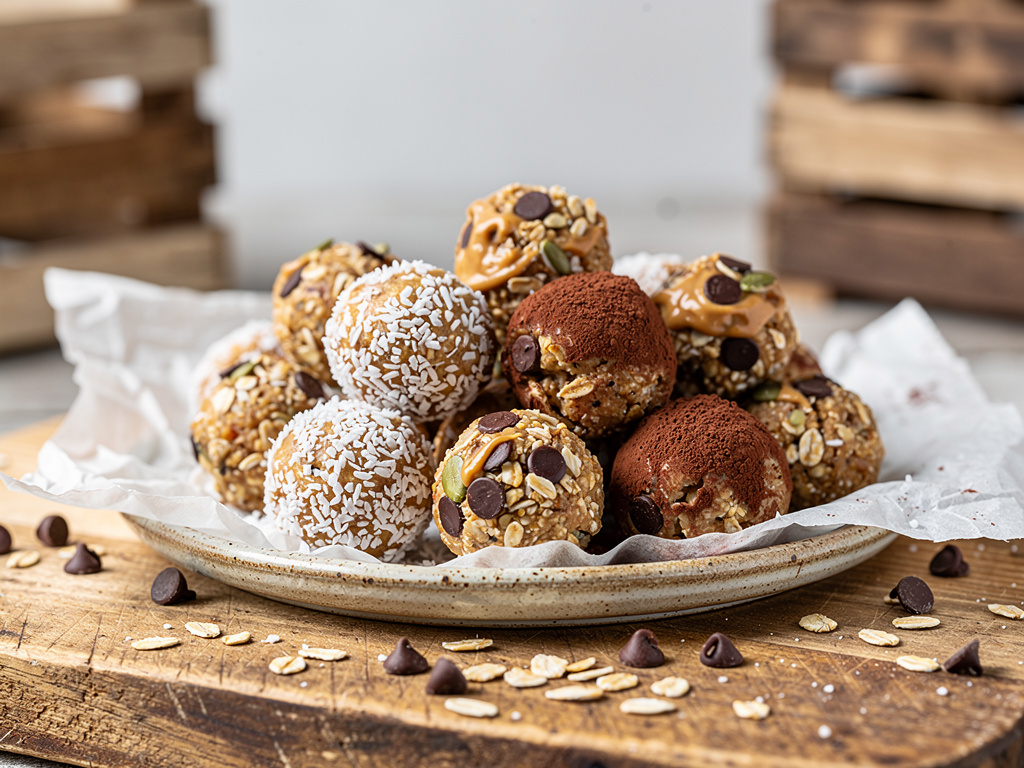


No-bake energy bites, those little balls of oats, nut butter, honey, seeds, and chocolate, are a snack-business favorite: fast to make, endlessly customizable, and exactly what the health-snack market wants. Whether you can sell them as a cottage food comes down to one question most people skip: are they actually shelf-stable? Get that right and energy bites can fit the granola-and-cereal-bar category many states allow. Get it wrong and you're selling a perishable food from an unlicensed kitchen. This guide walks through how to sell energy bites from home, when they're cottage-eligible, and how to keep them safe and shelf-stable.
The short version: Shelf-stable, no-bake energy bites, made from oats, nut butter, honey, seeds, dried fruit, and chocolate, can often be sold as cottage foods, because cereals, trail mixes, and granola are a standard approved category and a shelf-stable energy bite fits alongside a granola bar. The catch is moisture: if your recipe needs refrigeration to stay safe, it's not a cottage food. So keep your bites genuinely shelf-stable, avoid perishable add-ins, and confirm your state's rules. Skip unverifiable "protein" claims, and label allergens carefully since nuts and oats are almost always involved. Homegrown gives you the storefront to sell your energy bites as snack packs, subscriptions, and gifts. This is general information, not legal advice.
This guide covers when energy bites are cottage-eligible, the shelf-stability question, what ingredients work, labeling, making and storing, the market, pricing, and mistakes. This is general information, not legal or food-safety advice.
In many states, yes, if they're genuinely shelf-stable, because cereals, trail mixes, and granola are a standard approved cottage food category and a shelf-stable energy bite fits right alongside a granola bar. The whole answer hinges on shelf-stability.
Why shelf-stable energy bites can qualify:
The takeaway: shelf-stable energy bites can qualify under the cereal, trail mix, and granola category in many states, as long as they don't require refrigeration. The rule is to confirm both your state's rules and your recipe's shelf-stability before selling, treating it as a granola-bar-style product within starting a cottage food business.
Shelf-stability decides everything because cottage food covers only non-perishable products, and an energy bite that needs refrigeration is a perishable food that falls outside the law. Moisture and ingredients determine which side of the line you're on.
Why the shelf-stability line matters:
The takeaway: shelf-stability is the deciding factor because cottage food covers only non-perishable products, and moisture plus ingredients determine it. The rule is to formulate genuinely shelf-stable bites and treat any refrigeration-dependent recipe as outside cottage food, a core matter of food safety.
Shelf-stable energy bites use dry, non-perishable ingredients, oats, nut or seed butters, honey or syrup, dried fruit, seeds, and chocolate, and avoid anything fresh or refrigeration-dependent. Ingredient choice is what keeps them in the eligible zone.
Ingredients that work:
What to avoid:
The takeaway: dry, non-perishable ingredients keep energy bites shelf-stable and eligible, while fresh or refrigerated add-ins don't. The rule is to build every bite from shelf-stable ingredients only, the same discipline behind dehydrated snacks.
You should label energy bites with a full ingredient list, a clear allergen statement, your cottage food disclosure, net weight, and business information, while avoiding unverifiable nutrition claims. Allergen labeling matters most here, since nuts and oats are almost always involved.
Here's what the label needs to cover:
| Label element | Why it matters |
|---|---|
| Ingredient list | Everything in the bite, by weight |
| Allergen statement | Nuts, wheat/oats, soy are common |
| Cottage food disclosure | Your state's "made in a home kitchen" line |
| Net weight and business info | Standard cottage food requirements |
| No unverifiable claims | Avoid "protein" or health claims you can't back |
What to get right:
The takeaway: energy bites need a standard cottage food label with especially careful allergen callouts and no unverifiable claims. The rule is to label allergens plainly and keep claims honest, alongside the rest of your cottage food labeling.
You make and store energy bites safely by using a dry-enough ratio for shelf-stability, mixing and portioning cleanly, sealing them airtight, and refrigerating only if the recipe truly needs it, in which case they aren't cottage food. Consistency and dryness are what keep them safe and sellable.
Making and storing well:
The takeaway: a dry ratio, clean handling, airtight sealing, and honest shelf-life testing keep energy bites safe and shelf-stable. The rule is to prove your bites are genuinely shelf-stable rather than assuming, since that determines both safety and eligibility.
The market for energy bites is health-and-fitness snackers, busy families, gift and subscription buyers, and farmers market shoppers who want a wholesome grab-and-go bite. It's a trend-aligned product with broad, repeat-purchase demand.
Where energy bites sell:
The takeaway: energy bites sell to health snackers, families, and subscription buyers, with strong repeat and bundle potential. The rule is to build recurring snack-pack and subscription offers around the health-snack demand, the same bundle strength behind holiday gift boxes.
You price energy bites to cover quality ingredients like nut butter and dried fruit, packaging, the labor of mixing and rolling, and a health-snack margin, then use multi-packs and subscriptions to lift order value. Ingredients aren't trivial here, and the labor of hand-rolling adds up.
Pricing guidance:
The takeaway: price energy bites for real ingredient cost, hand-rolling labor, and packaging, using multi-packs and subscriptions to lift order value. The rule is to cost the nut butter and the labor fully, then build recurring offers to grow revenue.
The biggest mistakes selling energy bites are assuming they're cottage-eligible when they need refrigeration, using perishable add-ins, weak allergen labeling, and unverifiable protein claims. The refrigeration assumption is the costly one.
Mistakes to avoid:
The takeaway: the mistakes that matter most are selling perishable bites as cottage food, using perishable add-ins, and weak allergen labeling, all avoidable with a shelf-stable, honest approach. The rule is to prove shelf-stability, keep ingredients non-perishable, and label allergens clearly before your first pack sells.
Energy bites are a repeat-purchase health snack that suits snack packs and subscriptions, so you need a clean way to take orders, offer recurring plans, and get paid, without losing a cut of every sale. That's what Homegrown is for.
Homegrown gives you an online storefront to sell your energy bites as single packs, multi-packs, and subscriptions, take scheduled and recurring orders, and collect payment, all for a flat $10 a month with no percentage fees beyond standard payment processing. For a snack with real ingredient and labor costs, a per-order commission cuts into an already-working margin. A marketplace-style platform takes a percentage of every pack, and a general website builder wasn't made for recurring snack subscriptions. Homegrown bundles the storefront, order scheduling, and subscription options into one flat rate, so your snack margin stays yours. It won't suit everyone, if you hand a few bags to friends for cash, you may not need a storefront yet, but the moment you're taking snack-pack and subscription orders online, a flat monthly rate beats handing a percentage to a marketplace.
Ready to sell your energy bites online? Set up your Homegrown storefront and start taking orders.
Often yes, if they're genuinely shelf-stable. Cereals, trail mixes, and granola are a standard approved cottage food category, and a shelf-stable no-bake energy bite fits alongside a granola bar. The catch is that any bite requiring refrigeration is perishable and not cottage-eligible. Confirm both your state's rules and your recipe's shelf-stability before selling.
Test whether they stay safe and good at room temperature for their expected shelf life. Bites made of dry ingredients, oats, nut butter, honey, dried fruit, and seeds, kept dry and sealed, are usually shelf-stable. If they only keep a few days in the fridge or use perishable add-ins like fresh fruit or yogurt, they're perishable and not cottage food.
Avoid anything fresh or refrigeration-dependent: fresh fruit, yogurt coatings, cream, or dairy-based fillings. These raise moisture and perishability, pushing your bites out of cottage food. Stick to shelf-stable ingredients like oats, nut or seed butters, honey, dried fruit, seeds, and chocolate to keep the product eligible.
Yes, and it's especially important here. Energy bites almost always contain nut or seed butters and oats, and may contain soy or other allergens, so a clear allergen statement is essential. List every ingredient in descending order by weight, call out major allergens plainly, and include your state's cottage food disclosure.
Be careful. Nutrient content claims like "high-protein" can require substantiation and may cross into regulated-claim territory, so avoid unverifiable nutrition or health claims on a cottage food label. Describe your bites honestly by their ingredients rather than making protein or health claims you can't back up.
They can be, especially with multi-packs and subscriptions that build recurring revenue. Profitability depends on pricing real ingredient costs like nut butter and dried fruit, plus the hand-rolling labor, rather than underpricing. The health-snack market's repeat demand and subscription potential make energy bites a strong recurring-revenue product.



