
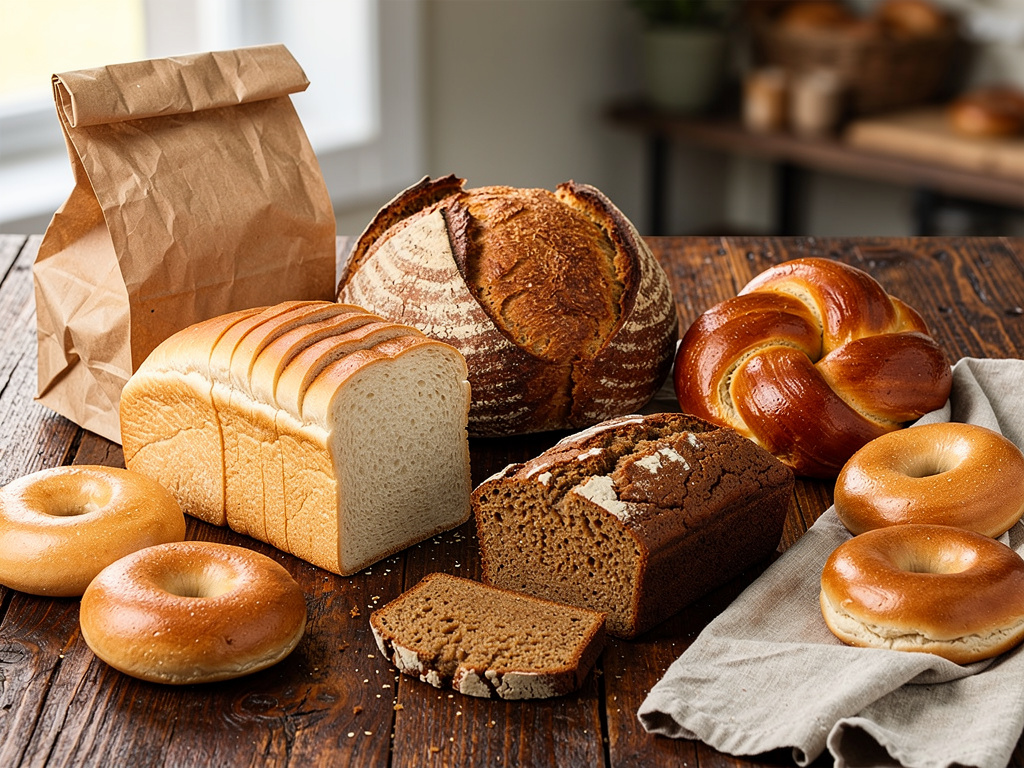


The short version: Most homemade bread lasts 3 to 5 days at room temperature, which is the window USDA's FoodKeeper data gives for homemade bread, and about 2 to 3 months frozen. The type of bread changes that a lot: a baguette or a bagel is at its best for 1 to 2 days, a soft sandwich loaf or a banana bread holds 3 to 5, and any bread with meat inside must go in the fridge within 2 hours. Skip the fridge for plain bread unless your kitchen is hot and humid, because cold makes it go stale faster, and freeze what you will not sell or eat while it is still at its best (day 1 for a baguette, day 3 for a sandwich loaf). If you sell bread, bake each type as close to pickup as it needs and tell every buyer how to keep it.
Checked October 13, 2026: USDA FSIS's bread answer and its mold and freezing pages, the USDA FoodKeeper entries for homemade bread, bagels and cinnamon rolls (read from published copies of USDA's dataset), the University of Illinois Extension freezer chart, Kansas State University's cupboard and freezer guides (revised June 2026), North Dakota State University's food storage guide, Lallemand's "Bread Staling" bulletin, Michigan's and Texas's cottage food pages, a pull of Homegrown's catalog, and the pricing pages for Homegrown, Hotplate and Square, all that day. These are quality guidelines for a typical kitchen, not lab-tested shelf life for your recipe, and cottage food rules vary by state, so verify your state's current rules. Homegrown customers create an account to place their first order, and Homegrown has no drops or countdown-release feature.
A customer picks up a loaf on Saturday morning. By Tuesday it is either the best toast of their week or a hard brick with a green spot on the bottom. Which one they get depends mostly on what kind of bread you sold them, how you wrapped it, and whether anyone told them where to keep it.
This guide covers every kind of bread a home baker usually sells, not just sourdough. It lays out how many days each type stays good on the counter, in the fridge and frozen, why some breads keep longer than others, which fillings turn a loaf into a fridge food, how far ahead to bake each one for a pickup day, and the storage line that almost no bread listing on Homegrown includes. Every outside fact was loaded on October 13, 2026.
Homemade bread lasts about 3 to 5 days at room temperature, keeps 2 to 3 months frozen at good quality, and it should usually stay out of the fridge. That is the top of the range the sources give, and it assumes a cool kitchen and a whole loaf. Baguettes, focaccia, bagels and soft flatbreads fall to 1 or 2 days and rolls to 2 or 3, while a whole sourdough loaf, enriched loaves and quick breads hold the full 3 to 5. The table sorts the breads home bakers sell most often.
Swipe the table sideways to see the fridge and freezer columns.
| Bread | On the counter | In the fridge | In the freezer | Selling note |
|---|---|---|---|---|
| Whole sourdough or country loaf | 3 to 5 days, resting on its cut end or bagged in paper or cloth | Not recommended: it stales faster | 2 to 3 months | The best bake-ahead loaf on most menus |
| Soft sandwich loaf, milk bread, honey wheat | 3 to 5 days, bag kept closed | Not recommended | 2 to 3 months, sliced | Bake the day before pickup |
| Challah, brioche, cinnamon swirl loaf | 3 to 5 days, sealed in plastic | Not recommended | 2 to 3 months | Fat and sugar keep it soft longer |
| Banana, zucchini, pumpkin and other quick breads | 3 to 5 days, wrapped | Only in a hot, humid kitchen | 2 to 3 months | Wet batters mold sooner in summer |
| Baguette, French bread, ciabatta | Best on bake day; 1 to 2 days at most | Not recommended | 2 to 3 months | Bake the morning of the sale |
| Focaccia | 1 to 2 days, loosely covered | Not recommended | 2 to 3 months, cut in squares | Bake the morning of the sale |
| Bagels | 1 to 2 days | Not recommended | 3 months | Tell buyers to slice before freezing |
| Dinner rolls, buns, English muffins | 2 to 3 days, bagged once cool | Not recommended | 2 to 3 months | Bake the day before or the morning of |
| Bread with shredded hard cheese baked in | 2 to 4 days | Only if your recipe or state calls for it | 2 to 3 months | Check your state's allowed-foods list |
| Bread with pepperoni or other meat inside | Into the fridge within 2 hours | Required | Wrap well and freeze | Often outside cottage food rules |
| Cream cheese swirl or cheesecake filling | Treat as a fridge food | Yes (our call) | Wrap well and freeze | Often outside cottage food rules |
We built these windows on October 13, 2026 from USDA's FoodKeeper data (homemade bread 3 to 5 pantry days; fresh-baked bagels 1 to 2 days and 3 months frozen; homemade whole wheat bread 3 months frozen, with no freezer time listed for homemade bread in general), USDA FSIS's bread answer (2 to 4 days for store bread, 3 months frozen, and the 2-hour rule for bread with meat), and the University of Illinois Extension freezer chart (baked yeast bread, rolls and quick breads 2 to 3 months). "Not recommended" in the fridge column is a texture call that follows FoodKeeper; Kansas State and North Dakota State recommend the fridge to slow mold on bread without preservatives, and we suggest the freezer instead. The baguette, focaccia, roll and cheese-bread rows reflect our own working guidance, not a lab test of your recipe.
If you sell sourdough, our guide to how long homemade sourdough lasts goes deeper on that one loaf, including the research on why its acid slows mold. This guide stays wide, because most bread vendors sell more than one kind, and each kind needs its own bake day and its own storage line.
There is no single official number because USDA's main bread answer is written for store-bought bread, and the other guides each round the same question differently, landing between 1 and 5 days on the counter. Here is what each source says, all loaded on October 13, 2026:
One more thing to know. The FoodKeeper entry for homemade bread lists 2 to 3 months in the refrigerator, which is far longer than the 7 to 14 days USDA's own bread answer gives and the 1 to 2 weeks Kansas State gives for bread without preservatives. When two government sources disagree by that much on the fridge, use the shorter number; this guide does.
Where the 3 to 5 days comes from:
Fat, sugar and size make a loaf last longer, while a big crust share, wet add-ins and slicing make it go downhill faster. A bulletin on bread staling from Lallemand, a yeast and baking ingredient company, explains the basics: "Fats slow staling by improving loaf volume. Sweeteners slow staling directly by retaining moisture." That one line explains why a brioche is still soft on day 3 and a baguette is not.
The things that decide how long your bread keeps:
A baguette, French loaf or ciabatta is best the day it is baked and lasts 1 to 2 days at most, and focaccia is the same. Lean dough has nothing in it to slow staling, and a skinny baguette is mostly crust. Lallemand's bulletin notes that a fresh crust can climb from about 12 to 28 percent moisture as it stales in a wrapper, which turns "the dry, crisp, pleasant texture of fresh crust into the soft, leathery, unpleasant texture of stale crust."
What that means for you:
Only 4 of the 509 homemade bread listings on Homegrown are baguettes or French loaves. That makes sense. A bread that is only good for a day is a hard bread to sell for pickup unless the pickup is the same morning.
Yes, a soft sandwich loaf, challah or brioche usually stays fresh 3 to 5 days, well past a baguette's 1 to 2 days, because the fat and sugar slow staling. USDA's FoodKeeper data gives homemade whole wheat bread the same 3 to 5 days as homemade bread in general, and notes that refrigeration is not recommended because the bread "will quickly dry out and become stale."
How the enriched family sorts:
Which sweet bread rolls keep longest? A plain enriched roll with no filling or icing, like a soft dinner roll or a challah roll, keeps about 2 to 3 days bagged on the counter in our working guidance, the same as the dinner rolls in the table above. Rolls with fruit fillings, custard or cream cheese keep less. If you sell pan dulce, our guide to selling pan dulce from home covers what to bake for each pickup.
Homemade banana bread, zucchini bread and other quick breads last about 3 to 5 days wrapped at room temperature and hold 2 to 3 months frozen. Quick breads are leavened with baking soda or baking powder instead of yeast, so they are closer to a cake or a muffin than to a loaf of sandwich bread. USDA's FoodKeeper data has no separate quick bread line, but its homemade muffin line, which names banana, gives 3 to 7 days in the pantry, and the University of Illinois Extension freezer chart gives baked quick breads and muffins 2 to 3 months frozen.
We use 3 to 5 days for a full loaf because the wet batter that keeps banana and zucchini bread soft is the same moisture mold needs. Here is how the common quick breads behave:
Quick breads are usually easy to sell from home. Michigan's cottage food list, for example, names "Quick breads and muffins (e.g., pumpkin or zucchini bread, blueberry muffins)" as allowed. Our guide to selling quick breads from home covers pricing, seasonal flavors and gift orders.
Bake quick breads 1 day before pickup, cool them completely, then wrap them. A banana loaf wrapped while it is still warm traps steam, and that wet crust is where mold shows up first. If a holiday order is due on day 5, bake on day 1 and freeze the loaves the day you bake them, then thaw them in their wrap the night before pickup.
Bagels keep 1 to 2 days at room temperature, rolls and English muffins about 2 to 3 days, and soft flatbreads like naan or homemade tortillas 1 to 2 days on the counter. These are small breads with more surface for their size, so they dry out faster than a full loaf. USDA's FoodKeeper data gives fresh-baked bagels 1 to 2 days in the pantry and 3 months in the freezer, and says the fridge is not recommended because a bagel "will quickly dry out and become stale." North Dakota State University's guide gives bread and rolls 3 days in the pantry.
What we saw in the Homegrown catalog on October 13, 2026:
How to handle each small bread:
For breads that peak in hours, sell the freezer version on purpose. A half dozen bagels sliced and frozen, or a bag of frozen unsalted pretzels, gives the buyer a fresh-tasting bread on day 10, and it lets you bake one big batch instead of five small ones. Label the bag "baked and frozen on" with the date.
A bread turns into a fridge food when it has meat or hard-cooked eggs inside, which USDA says must be refrigerated within 2 hours, and we treat a cream cheese filling or soft cheese inside the same way. Plain bread, cheese bread made with shredded hard cheese, and fruit or nut breads stay on the counter. Fillings are also where storage stops being a quality question and becomes a legal one, since many state cottage food programs, Michigan's among them, cover only foods that need no refrigeration.
Breads that belong in the fridge:
Filled breads are common on Homegrown. Of the 509 homemade bread listings we counted on October 13, 2026, reading each listing's name, flavor options and description, 113 from 54 vendors put cheese other than cream cheese in or on the bread, at least as one flavor choice. That 113 includes 72 listings with cheddar and 17 with parmesan, hard cheeses that stay on the counter when shredded into the dough, so it shows how common cheese bread is, not how many loaves need the fridge. Twelve listings from 8 vendors include pepperoni, pancetta, bacon or ham (11 of them also have cheese, so they are in the 113 too, and 6 offer meat as one flavor choice among several), and 6 from 6 vendors have a cream cheese or cheesecake filling (one as a flavor choice).
Michigan's cottage food list allows "Breads with shredded hard cheeses incorporated into the dough prior to baking," and jalapeño cheddar bread when the cheese is shredded and the jalapeños are chopped or pulverized and then dried, freeze-dried, or commercially pickled and patted dry. It does not allow "breads with fresh or frozen vegetables added," "breads with soft cheese or large chunks of hard cheeses," or any meat. The same list allows zucchini and pumpkin quick breads, so read both lines before you list a vegetable bread. That is from the MDARD "What Can I Make?" page, loaded October 13, 2026.
Texas draws the line differently. Its cottage food rules allow any food except meat, poultry, seafood and a few others, and a home baker "may sell time and temperature control for safety food (TCS)," the term for foods that need the fridge to stay safe. But bakers who sell TCS foods "must register with DSHS," follow labeling rules that include safe handling instructions, and keep cold foods at 41 °F or below, according to the Texas Department of State Health Services cottage food page. Pepperoni bread is still out in Texas because meat is excluded.
Cottage food rules on cheese, meat and cream cheese breads differ from state to state and change. Before you list a filled loaf, read your own state's allowed-foods list, not a neighboring state's. Our guide to what counts as a TCS food under cottage food law explains the term, and our cottage food laws by state guide links to each state's rules. We checked Michigan and Texas on October 13, 2026.
Stale bread is dry, firm or leathery but safe, and a few minutes in a hot oven can bring it back, best the first time; moldy bread has fuzzy spots or a musty smell and goes in the trash whole. Customers mix the two up, and knowing the difference helps you answer the message that says "my bread went bad."
Signs it is only stale:
Signs it has gone bad:
In its mold table, USDA FSIS puts bread and baked goods in the "Discard" column, with the reason "Porous foods can be contaminated below the surface." It also says, "Don't sniff the moldy item," because that can cause breathing trouble. So a loaf with one fuzzy corner is a whole loaf in the trash, never a trimmed loaf for sale.
Stale bread is different. Lallemand's bulletin says "the crumb-firming effects of staling can be reversed by briefly heating to 120°F (50°C) or more, but is less effective when done a second or third time." That is why warming a day-old loaf in the oven works best the first time and helps less each time after. Tell buyers to warm only what they will eat.
The fridge makes bread stale faster because the starch in bread firms up fastest at refrigerator temperatures, even though the cold slows mold. Lallemand's bulletin puts it plainly: "Crumb firming is fastest at low temperatures, between 20° and 50°F." Most home fridges sit right in that band. The same bulletin calls 70 °F to 95 °F the best storage range for bread, and Kansas State University's cupboard guide sums it up as "Refrigeration speeds staling; retards mold."
So the fridge trades one problem for another. When does it still make sense?
Kansas State's freezer guide gives baked breads without preservatives 1 to 2 weeks in the fridge and says, "Refrigeration is recommended to prevent mold growth, but it will increase staling due to moisture reduction." North Dakota State University's guide gives the same breads 2 to 3 weeks in the fridge and also recommends refrigeration "to inhibit mold growth." So skipping the fridge is a texture call, not something every source agrees on: the fridge buys mold time and costs softness. For almost every plain bread, the freezer is the better answer, because it holds off both.
Freeze homemade bread the day it is baked, fully cooled and wrapped airtight, and it keeps its quality about 2 to 3 months. The University of Illinois Extension gives baked yeast bread and rolls 2 to 3 months. Its row for bread in general says 3 months and to freeze commercial or homemade bread "in a heavy-duty freezer bag." It adds one rule that matters: "Freezing does not refresh baked goods; it can only maintain whatever the quality of the food was before freezing." USDA's freezing guide says food "stored constantly at 0 °F will always be safe. Only the quality suffers," so the 2 to 3 months is a taste window, not a safety cut-off.
Lallemand's bulletin explains why freezing works so well for bread: freezing "has the effect of about one day's storage time, but then effectively stops all aspects of staling indefinitely." In plain words, a loaf frozen on bake day comes out tasting like a day-old loaf, not a week-old one.
Can you sell bread that was frozen? Neither the Michigan nor the Texas cottage food page we read on October 13, 2026 names frozen bread as banned, though Michigan's list does rule out frozen products that need refrigeration, like ice cream and meat. Check with your state program before you list bread frozen, and say so honestly on the label or the listing. One Oregon farm on Homegrown, Dolce Farm & Orchards, builds freezing into the sale: its rye boule listing tells buyers to slice the loaf at pickup and keep it frozen, "ready to toast when you are!"
Bake lean and small breads the morning of pickup, and soft loaves, sourdough and quick breads the day before. The rule is simple: the buyer should get as many of each bread's good days as possible, and at least 2 for any loaf meant to last. Work backward from each bread's counter window and you get a bake plan like this one for a Saturday 10 a.m. pickup.
Swipe sideways to see every column of the bake plan.
| Bread | When to bake | Good days left for the buyer | Why |
|---|---|---|---|
| Baguette, French bread, ciabatta, focaccia | Saturday morning | 1 to 2 | Lean dough and lots of crust stale fastest |
| Bagels | Saturday morning, or Friday evening for an early pickup | 1 to 2 (0 to 1 if baked Friday) | FoodKeeper gives fresh-baked bagels 1 to 2 days |
| Soft pretzels | Within a few hours of pickup, or sell them frozen | Same day | At their best for hours, not days |
| Dinner rolls, buns, English muffins | Saturday morning, or Friday afternoon at the latest | 1 to 3 | Small, but enriched dough helps |
| Sandwich loaf, challah, brioche | Friday | 2 to 4 | Fat and sugar slow staling |
| Whole sourdough loaf | Friday, or Saturday morning after an overnight cold rise | 2 to 4 (3 to 5 if baked Saturday) | Big loaf, acid slows mold |
| Banana, zucchini and pumpkin bread | Friday | 2 to 4 | Moist and holds well wrapped |
| Cheese bread with shredded hard cheese | Saturday morning | 2 to 4 | Cheese adds moisture and fat |
The "good days left" column subtracts the days before pickup from each bread's counter window in the first table, using the windows we built from USDA, FoodKeeper and extension sources on October 13, 2026. A hot kitchen takes a day off every row.
Our guide to selling bread from home walks through a full sourdough and yeast bread timeline for a Saturday market, from building the levain (the starter build for the bake) on Thursday to cooling loaves Saturday morning. Put the two together and you know both when to mix and when the bread has to leave your kitchen.
Paper or cloth keeps a crusty loaf crisp for its first day, and a closed plastic bag keeps soft bread soft for 3 to 5 days, so match the wrap to the bread. Lallemand's bulletin puts a number on the difference: evaporation "can cause a 10 percent weight loss in unwrapped bread but usually less than 1 percent in wrapped bread." It also notes the trade-off: "Unwrapped bread loses moisture and flavor faster, but retains crumb texture better. Wrapped bread stays softer (especially when wrapped warm) and tastes better (especially when wrapped cool), but the crust softens faster."
Swipe sideways for what the buyer should do at home.
| Bread | Wrap it in at the sale | What the buyer should do at home |
|---|---|---|
| Baguette, crusty country loaf, sourdough boule | Paper bag or paper sleeve | Day 1 in paper, cut side down on a board; then a cloth or plastic bag, or freeze |
| Sandwich loaf, challah, brioche, cinnamon swirl | Plastic bread bag with a twist tie | Keep it closed on the counter; freeze sliced by day 3 |
| Quick breads | Plastic wrap or a sealed bag, once fully cool | Keep it wrapped; freeze slices by day 4 |
| Bagels and rolls | Paper bag for same-day, plastic for next-day | Slice and freeze what will not be eaten tomorrow |
| Focaccia | Box or paper-lined tray, loosely covered | Eat the same day or freeze squares |
| Fridge-food breads (meat, cream cheese) | Sealed bag, kept cold until pickup | Straight into the fridge |
Wrap choices follow the staling trade-offs in Lallemand's "Bread Staling" bulletin and the fridge-food rule from USDA FSIS, both read October 13, 2026.
One more packaging rule, and this one is our call for a home baker rather than the bulletin's, since it notes warm-wrapped bread stays softer: never bag bread while it is warm. Warm bread in plastic sweats, the crust goes gummy, and the wet surface is where mold starts. Our guide to selling sandwich bread from home covers slicing and bagging soft loaves for pickup.
Your bread listing should tell buyers how many days the bread is at its best, whether to keep it on the counter or freeze it, and how to bring it back, in one or two lines. Almost nobody does this. That is a cheap way to stand out.
In a pull of the Homegrown catalog on October 13, 2026, we found 509 homemade bread listings from 115 vendors, out of 2,886 products from 318 vendors. We counted every bakery or ready-to-eat listing whose name names a bread (loaf, boule, bagel, roll, focaccia, naan and so on), left out cookies, cinnamon rolls, scones and other pastries, added loaves and bagels named only by a flavor after reading each bread vendor's other listings, then read the description of every other bakery and ready-to-eat listing and added the single breads that turned up, and left out one store-bought loaf and mixed bundles whose name names no bread. We read every description for storage words. Only 9 of the 509, from 5 vendors, say anything about storing or keeping the bread, and only 5 give a time. 157 have no description at all.
Homemade bread listings on Homegrown by type
Source: Homegrown catalog pull, October 13, 2026, 509 homemade bread listings from 115 vendors, sorted by hand from each listing's name and description.
Lines you can copy into a listing, one per bread type:
Eco Sun Farms does a version of this on its zucchini bread: "The bread stays moist for several days. It can be refrigerated or frozen to preserve its freshness." Put the same line on a printed card in the bag, so the buyer still has it on day 3. Our cottage food labeling requirements guide covers what your state requires on the label itself.
Every window in this guide starts the day the bread is baked, so the best way to sell bread at its peak is to know how many loaves of each type you need before you mix the dough. Guessing means either running out or holding loaves that are already on day 2. Homegrown gives you a storefront where customers order and pay before your bake day, for $10 per month billed annually, with no percentage fees beyond standard payment processing.
What helps with this exact problem:
How it compares for a bread vendor:
Scroll the table sideways to see the fee columns.
| Platform | Monthly plan | Trial | Service or platform fee | Card processing | Customer pays on a $20 order | Baker pays on a $20 order | Baker pays in a month of 50 orders at $20 |
|---|---|---|---|---|---|---|---|
| Homegrown | $10 billed annually ($12.50 billed monthly) | 7 days, no charge until day 8 | None, 0% commission | 2.9% + $0.30, the baker pays it | $20.00 | $0.88 plus the plan | $54.00 ($56.50 on monthly billing) |
| Hotplate, default | $0 | None needed at $0 | 5% + $0.55, paid by the customer | 2.9% + $0.30, paid by the baker | $21.55 | $0.88 | $44.00 |
| Hotplate, baker covers the fee | $0 | None needed at $0 | 5% + $0.55, paid by the baker | 2.9% + $0.30, paid by the baker | $20.00 | $2.43 | $121.50 |
| Square Online, Free plan | $0 | None needed at $0 | None | 3.3% + 30¢ online, paid by the baker | $20.00 | $0.96 | $48.00 |
We checked these on Homegrown's signup page, Hotplate's pricing page and its "What Hotplate does" post (which says 80% of Hotplate chefs keep the customer-pays default), and Square's online store plans page on October 13, 2026. A $20 order is about one sandwich loaf plus a half dozen bagels. Card processing is figured on the $20 price; if a platform charges it on a total that includes fees, tips or tax, it runs a few cents higher.
What Homegrown does not do: it does not bake, wrap or store your bread, and it will not stretch any window in this guide. Customers create a Homegrown account to place their first order. Homegrown also has no drops or countdown-release feature. Your storefront is listed on the Homegrown marketplace, but plan on most orders coming from people you send to your own link. Card processing is paid by you, with no option to pass it to the customer. If you want to bake to a real order count for each bread, start your Homegrown storefront with a 7-day trial (no charge until day 8) and set your first pickup day.
Freeze unsold bread the day it is baked, use stale bread at home for crumbs, croutons or French toast, donate it where your state allows, and bake fewer of that type next time. A loaf that will be past its best by the time anyone could buy it is better frozen tonight than sold tomorrow.
Your options, best first:
Our guide to reducing food waste in a food business has more ways to cut leftovers, and taking orders before you bake is the biggest one.
Homemade bread lasts about 3 to 5 days at room temperature, which is the window USDA's FoodKeeper data gives for homemade bread. Lean crusty breads like baguettes and focaccia are best for 1 to 2 days, and bagels for 1 to 2. In a hot, humid kitchen, plan on the short end of each window and freeze any bread that will not get eaten before its window runs out.
It lasts longer before mold, since Kansas State and North Dakota State give bread without preservatives 1 to 3 weeks in the fridge, but it goes stale faster. Starch firms up fastest at refrigerator temperatures, so a plain loaf loses its softness sooner there than on the counter. Use the fridge for breads with meat or cream cheese, or in a hot, humid kitchen when you cannot freeze the loaf; for everything else the freezer is better.
Homemade banana bread lasts about 3 to 5 days wrapped at room temperature, and frozen slices hold 2 to 3 months. Its moist batter keeps it soft, but that moisture also lets mold show up by day 4 or 5 in a warm kitchen. Wrap it only after it is fully cool, and freeze slices you will not eat in time.
Homemade bread keeps its best quality for about 2 to 3 months in the freezer, according to the University of Illinois Extension, and USDA gives bread 3 months. Kansas State's freezer guide and North Dakota State's food storage guide allow 3 to 5 months for baked bread without preservatives; we use the shorter number for best taste. Bread kept frozen at 0 °F stays safe past that; only the taste and texture slip. Freeze it the day it is baked, fully cooled, in an airtight freezer bag.
Homemade bread usually has no mold inhibitors, while many store loaves carry ingredients added to slow mold and staling. USDA's FoodKeeper data notes homemade bread "may have shorter shelf life due to lack of preservatives." Warm, humid kitchens and bagging bread while it is still warm make mold show up even sooner.
In our working guidance, plain enriched rolls with no filling or icing keep about 2 to 3 days sealed at room temperature, longer than filled or iced rolls, because the fat and sugar in the dough slow staling. Rolls with fruit fillings, custard or cream cheese icing keep less, and USDA's FoodKeeper data gives baked cinnamon rolls 1 to 3 days. Freeze sweet rolls on the day they are baked if they need to last longer.
Five guides cover what comes before and after storage, from your bake schedule to your price and your label:
Bread gives you between a few hours and 5 good days, depending on the kind, so the freshest bread business is the one that knows its count before the oven goes on. If you are ready to take bread orders for a set pickup day, set up your Homegrown storefront and add a storage line to every listing.



