

The short version: In most of the states we checked, you cannot sell homemade queso, the melted cheese dip, from your home kitchen, because it is a dairy food that has to stay hot or cold to be safe, and most cottage food laws only cover foods that are safe at room temperature. Of the 11 states checked for this guide, 7 leave it out of their cottage food rules: California, Colorado, Florida, Georgia, Illinois, Minnesota and Washington. Three states, Utah, Wyoming and North Dakota, allow it under their food freedom laws, sold to a customer who knows it was not inspected (directly, though Wyoming also lets a store sell it for you), with no meat in it. Texas lets registered cottage food operators sell foods that need refrigeration, but its dairy plant rules leave queso an open question, so ask the state in writing. Everywhere else, the legal routes are a licensed commercial kitchen, a temporary food permit to serve hot queso at an event (usually still made in an approved kitchen), or California's permitted home kitchen restaurant program in counties that opted in.
Checked on each state's own page or statute, September 30, 2026: the cottage food pages of California, Colorado, Florida, Georgia, Minnesota, Texas and Washington, 410 ILCS 625/4 in Illinois, Utah Code 4-5a-104 and 105, the Wyoming Food Freedom Act, North Dakota Century Code 23-09.5, the Texas dairy rules at 25 TAC 217 (read on the Cornell Legal Information Institute copy), the Texas DSHS farmers market page, the Los Angeles and San Diego County home kitchen restaurant pages, and FDA's 2022 Food Code. Rules change, so verify your state's current rules with your state agency or county health department before your first sale. Homegrown takes orders but does not make queso legal in your state. Customers create a Homegrown account to place a first order, and Homegrown has no drops or countdown release feature.
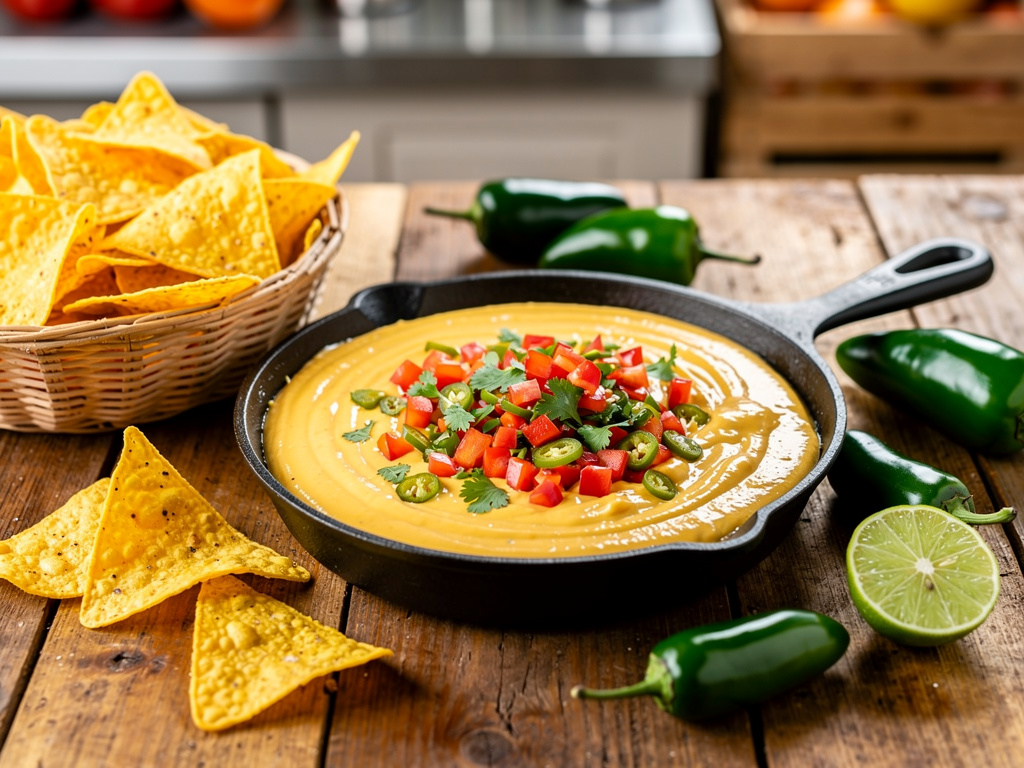
This guide is about queso the dip: melted cheese with chiles, tomatoes and spices, served warm with tortilla chips. If you mean queso fresco, the fresh white cheese, that is cheesemaking, and the rules are in our guide to whether you can sell homemade cheese, which covers fresh cheese, aged cheese and raw milk cheese state by state.
Your queso is the thing people ask for at every party. A friend wants a quart for game day, a coworker offers $15 for a tub, and someone at the farmers market asks why you do not sell it next to your salsa. It feels like a small step from giving it away to selling it. The law sees a big one, because queso is a dairy dip that grows bacteria when it sits at room temperature.
The answer is usually no from a home kitchen, with a handful of real exceptions, one legal route that works in every state (a licensed commercial kitchen) and a couple that depend on where you live. This guide walks through each one with the agency's own words.
Usually no: in 7 of the 11 states checked for this guide, queso made in a home kitchen cannot be sold under the state's cottage food rules. A cottage food law is the set of state rules that lets you make certain low-risk foods at home and sell them without a commercial kitchen. In most states, low-risk means safe on a shelf, like bread, cookies and jam. Queso needs a refrigerator or a warmer, so it falls on the other side of that line.
Here is how the 11 states split:
A food freedom law is a broader home food law that lets you sell most homemade foods, including ones that need refrigeration, as long as you tell the person who will eat it that it was not inspected and, in most cases, sell straight to them. Only a few states have one, which is why homemade queso is legal in so few places.
If your state is not in this guide, the cottage food laws by state guide lists every state's agency. Look for words like "dairy", "requires refrigeration" or "potentially hazardous" in the list of foods you cannot sell.
Queso is a time and temperature control food because it is a heat-treated dairy food with plenty of moisture, the kind FDA's 2022 Food Code defines as needing "time/temperature control for safety (TCS) to limit pathogenic microorganism growth or toxin formation." That definition names "An animal FOOD that is raw or heat-treated", and cheese, milk and cream are animal foods. Once you melt them into a dip, the finished queso needs a warmer or a refrigerator.
The 11 states in this guide use two names for the same idea. Some say "potentially hazardous food", others say "TCS food". Both mean a food that can make people sick if it sits out.
Why regulators put queso in that group:
None of this means your queso is unsafe at home. It means most cottage food laws were written for foods that do not need a refrigerator.
No, using store-bought cheese does not change the answer in the 7 states that leave queso out, because the rule is about the finished food, not where the cheese came from. A block of cheese from the store was made in a licensed plant and sold in a sealed package. Once you melt it with milk, tomatoes and chiles, you have made a new dairy dip, and that dip needs time and temperature control.
The store-bought question matters most in Texas. The Texas dairy rules at 25 TAC 217.71 say "Every manufacturer of dairy products located in the State of Texas, shall obtain a milk plant permit." Section 217.1 defines a dairy product as butter, cheese and other products under "the Federal Standards of Identity for Cheese and Related Cheese Products", which is 21 CFR Part 133. That federal part includes a standard called "Pasteurized process cheese spread with fruits, vegetables, or meats" (21 CFR 133.180), and a queso made with tomatoes and chiles looks a lot like one.
What that means by state:
3 of the 11 states checked on September 30, 2026 clearly allow homemade queso, 1 is a maybe (Texas), and 7 leave it out. The table puts every state side by side, with what happens to a queso that has meat in it.
Scroll sideways to see every column.
| State | Homemade queso under cottage food or food freedom law | Queso with chorizo or beef | What the state's page or law says | Where the rule lives |
|---|---|---|---|---|
| California | No (a permitted home restaurant, called a MEHKO, is a separate route) | No | Approved list covers only foods that are not potentially hazardous; no dairy or dip category | CDPH Approved Cottage Foods list, last reviewed April 2026 |
| Colorado | No | No | Ineligible: foods that "require refrigeration" | CDPHE Cottage Foods page |
| Florida | No | No | 12 approved categories, none of them dairy or dips | FDACS Cottage Foods page |
| Georgia | No | No | "Milk and dairy products" are potentially hazardous | Georgia Department of Agriculture cottage food FAQ |
| Illinois | No | No | No "dairy, except as an ingredient in a baked good or candy" that is not a TCS food, or in frosting | 410 ILCS 625/4 |
| Minnesota | No | No | "meat and dairy products are considered potentially hazardous and cannot be sold as cottage foods" | MDA Cottage Food Law Guidance |
| North Dakota | Yes, direct to an informed customer; refrigerated foods labeled as kept frozen | No, uninspected meat products are out | "transported and maintained frozen" label for foods that need refrigeration | N.D. Century Code 23-09.5-02 |
| Texas | Maybe: TCS foods allowed with DSHS registration, but a dairy plant permit rule may apply | No, meat and meat products are excluded | "Allowable foods now include any foods, except" a short list | DSHS cottage food page; 25 TAC 217.71 |
| Utah | Yes, sold in Utah to an informed final consumer | No, meat products are left out (poultry and rabbit exceptions) | Does not apply to "raw dairy or raw dairy products" | Utah Code 4-5a-104 and 4-5a-105 |
| Washington | No | No | Not allowable: "Milk and dairy products"; foods requiring refrigeration are not allowed | WSDA Cottage Food page |
| Wyoming | Yes, sold in Wyoming to an informed end consumer | No, meat products are out (poultry and a few listed exceptions) | "Potentially hazardous food" includes "dairy products", which may be sold direct or through a store to an informed customer | W.S. 11-49-101 to 104 |
We read every row on the state's own page or statute on September 30, 2026, except the Texas dairy rules, which we read on the Cornell Legal Information Institute copy of the Texas code. These 11 states are examples, not the whole country. Dairy rules can sit outside cottage food law, so verify your state's current rules before you sell.
Some online lists say a state "allows TCS foods" and stop there. That can still leave queso out. Illinois's cottage food law requires the TCS foods it allows to be held at the temperatures in the state's food rules, yet the same law bans dairy except in baked goods, candy and frosting. Read the dairy line, not just the TCS line.
Maybe: Texas lets a registered cottage food operator sell foods that need refrigeration, and queso without meat is not on the excluded list, but the Texas dairy rules may require a milk plant permit, so ask the Texas Department of State Health Services in writing before you sell. Texas is the state where a quick read gives the wrong answer in either direction.
The Texas cottage food page says "Allowable foods now include any foods, except" meat and poultry, seafood, ice products, low-acid canned goods, CBD or THC products, and "raw milk and raw milk products." The same law raised the yearly sales cap to $150,000. If you sell TCS foods, the page adds these rules:
25 TAC 217.71 requires a milk plant permit of "Every manufacturer of dairy products located in the State of Texas", and the definition reaches the federal cheese spread standards. Nothing on the Texas cottage food side says a home kitchen is exempt from the milk plant permit. Email DSHS, describe your recipe, and keep the written answer with your records.
These three states allow homemade queso under food freedom laws, as long as the customer has been told it was not inspected and you leave the meat out. Utah and North Dakota require the sale to go directly to that customer. Wyoming also lets a store or other third-party seller sell dairy products for you, still to an informed customer, and queso likely counts as a dairy product there. Utah and Wyoming also keep sales inside the state, and Utah and North Dakota limit sales to food for personal or home consumption. North Dakota's law is titled a cottage food law, but it works like a food freedom law, so this guide groups it with Utah and Wyoming. Each state adds its own twist, and the twists matter for a dairy dip. Utah's rules are in section 104 of its Home Consumption and Homemade Food Act, Wyoming's in W.S. 11-49-103 and North Dakota's in chapter 23-09.5 of its Century Code.
The Utah act covers food "produced and sold within the state" and "sold directly to an informed final consumer." You still need a business license. The label lists your name and address, says the food is "not for resale" and was "processed and prepared without state or local inspection," and names allergens including milk. Section 105 leaves out "raw dairy or raw dairy products," so use pasteurized cheese.
The Wyoming Food Freedom Act names "dairy products" as potentially hazardous food and still lets you sell it to an informed end consumer. A store or other third-party seller may sell dairy products for you, as long as it tells the customer the food was not inspected, keeps it off the shelf that holds licensed food and labels it "this food was made in a home kitchen, is not regulated or inspected and may contain allergens." Sales must "Occur only in Wyoming" and not involve interstate commerce. A producer is capped at 250,000 products and $250,000 in gross revenue a year.
North Dakota Century Code 23-09.5-02 says no state agency or local government may require a license, permit or inspection for cottage food sold directly to an informed end consumer. Foods that require refrigeration must carry safe handling instructions and a statement that the product "was transported and maintained frozen," so plan on selling queso frozen. You also post a sign or label: "This product is made in a home kitchen that is not inspected by the state or local health department."
The food freedom states list covers the other states with laws like these. Check the dairy wording in each one before you assume queso is covered.
No, not under any cottage food or food freedom law in the 11 states checked: all 4 states that might allow plain queso exclude meat products. A queso with chorizo, ground beef or brisket has meat in it, and none of the four laws says a dip made with inspected, store-bought meat gets a pass. North Dakota's wording names only "uninspected products made from meat," so ask the state in writing before you add chorizo there.
What each state says:
If your best seller is a chorizo queso, it belongs in a licensed kitchen with a food license, or on the menu of a permitted California MEHKO, which is a small restaurant permit rather than a cottage food law. The plain version, without meat, is the only one with a cottage food or food freedom route in these states.
Yes, but usually not as a cottage food: ladling hot queso into cups at your booth is serving food, which usually takes a temporary food establishment permit from the health department. Texas puts that in writing for foods like queso. FDA's 2022 Food Code, a model offered for adoption by state and local governments, defines a temporary food establishment as one that operates "for a period of no more than 14 consecutive days in conjunction with a single event or celebration."
Texas spells out how this works at markets under state jurisdiction. Its farmers market page says a temporary food establishment permit is not required to sell "pre-packaged non-potentially hazardous food/time temperature for safety foods or cottage foods," and "A temporary food establishment permit is required to sell all other potentially hazardous food/time temperature control for safety foods." Markets inside a city or county health department's area follow that department's rules instead. A Texas farmers market permit can cost no more than $100 a year under Health and Safety Code 437.0065(c).
What a hot queso booth usually needs:
Chilled, packaged, labeled queso is a different product from hot queso in a cup. Texas's farmers market page appears to treat the packaged version as a cottage food, which needs no temporary permit at markets under state jurisdiction, if you are registered for TCS foods and the dairy permit question is settled with DSHS. That page describes the 2021 law, which came before Texas let cottage food operators sell TCS foods, so confirm that reading with DSHS too.
Queso stays safe when it is held at 135°F or above or at 41°F or below, cooled from 135°F to 70°F within 2 hours and to 41°F within 6 hours total, and reheated to at least 165°F before you hold it hot. Those numbers come from FDA's 2022 Food Code sections 3-501.16, 3-501.14 and 3-403.11, and they are the same lines a health inspector will check at a permitted booth.
Queso thickens and skins over as it sits at 135°F, which tempts people to turn the heat down. Stir in a splash of milk instead, and write the probe reading on a sheet taped to the table every hour. A 6-hour market is 6 readings, and that sheet shows an inspector you held it at 135°F.
A MEHKO, short for microenterprise home kitchen operation, is a permitted home restaurant in California, and it can serve queso as part of a meal the same day it is made, in counties and cities that have opted in. This is not cottage food. It is a small restaurant permit for your home kitchen, with an inspection and yearly fees.
The Los Angeles County MEHKO page sets out the rules:
Los Angeles County approved its MEHKO ordinance in May 2024 and began issuing permits November 1, 2024. San Diego County runs a permanent countywide program. Our guide to MEHKO laws covers how the program works and how to check whether your county takes part.
You sell queso legally in any state by making it in a licensed commercial kitchen and holding the food license your state requires, such as Georgia's Food Sales Establishment License or a Minnesota food license. This route has no cottage food sales cap. Minnesota says a food license has no "restrictions on the amount of annual sales" and allows "shipping food in the mail," while its cottage food cap is $78,000. Minnesota cottage food cannot be shipped until August 1, 2027, and then only inside Minnesota. Some states also license dairy makers separately. Minnesota adds that "manufacturing dairy products may require a permit from MDA's Dairy program," and the Texas milk plant permit rule quoted above covers every dairy maker in the state, so ask whether your queso needs a dairy permit as well as a food license.
The commissary kitchen guide walks through finding one, what rent covers and how to book shifts around a day job.
No in 8 of the 11 states: the 7 states whose cottage food rules do not allow a dairy dip, and Texas, which bars low-acid canned food by name. Texas excludes "low-acid canned goods," and Illinois, one of the 7, also bans "low-acid canned foods." A cheese dip is not pickled or acidified, so a sealed jar of it does not fit the acid-food rules that let some states allow pickles and salsa.
What that means in practice:
If a customer asks for jars that last on a pantry shelf, that is a commercial food plant product, not a home kitchen one.
Freezing is the closest a home kitchen gets to a longer shelf life, and only where the law allows the dip at all. Freeze in pint tubs so a customer thaws one at a time, and put the date made on every lid, which Texas already requires for TCS foods.
You can sell a dry queso seasoning blend in many cottage food states, because dry spice mixes sit on the approved lists of 5 of the states checked here: California, Colorado, Florida, Georgia and Washington. Washington's list includes "seasoning and mixtures" from approved sources, "Including teas, bread mixes, soup mixes and dip mixes." California's list includes "Spice mix or rubs," Florida's includes "Dry herbs, seasonings and mixtures," Georgia's names the same category as "Dry Herbs, Seasonings and Mixtures," and Colorado's includes "Dry spices."
Products that fit next to chips at a cottage food table:
A mix with cheese powder is not the same as a spice blend. Cheese powder is a dairy ingredient, and states like Minnesota allow dairy only in certain baked goods. Keep the blend dairy-free, or ask your agency in writing before you sell a mix with cheese in it.
No Homegrown vendor listed a homemade queso in our latest pull: 0 of the 2,772 products in the September 30, 2026 catalog pull are a homemade cheese dip. The only cheese dip in the catalog is a brand-name nacho cheese cup resold by a pretzel shop.
In a pull of the Homegrown catalog on September 30, 2026 (2,772 products from 312 vendors), we searched every name, description and variant for queso, nacho, cheese dip, cheese sauce, fondue and similar words and read all 41 matches. The rule: a listing counts when the thing sold is a cheese dip. 2 listings qualified, both from Retro Pretzels: "FUNacho Mild Nacho Cheese Cup (3.5oz)" and "FUNacho Spicy Nacho Cheese Cup (3.5oz)," $3.00 each and described as "FUNacho brand." 6 of its pretzel bite listings offer the cups as an add-on at checkout: 5 for $11, 10 for $20 or 25 for $40, though the 50-count descriptions still say $10 for five. The one listing with "queso" in its name is a frozen cheese empanadilla, not a dip.
Retro Pretzels pairs its pretzels with a sealed, brand-name cheese cup and sends its soft pretzel packs out with Gulden's Spicy Brown Mustard packets, instead of making its own dips. The add-on math: 25 cups for $40 is $1.60 a cup, against $3.00 for a single cup, so the bundle nudges bigger orders.
If you want queso on your menu and your state does not allow it from home, a sealed commercial cheese cup next to your own chips or pretzels is worth a look. Store the cup the way its package says. Reselling a packaged food you did not make can need its own permit, so ask your county or market manager before you add it.
Queso is best made close to pickup, so the order should come in before you melt the first pound of cheese. If your state allows it, or you are selling from a licensed kitchen, Homegrown gives you an ordering page for $10 a month billed annually ($12.50 billed monthly) with no percentage fees beyond standard payment processing. Customers pick a size and a pickup day and pay when they order, so you cook to a real count and nothing sits in a warmer waiting for a buyer.
Drag sideways to compare the full cost per order and per month.
| Platform | Monthly plan | Trial | Platform fee | Card processing | Customer pays on a $20 order | Vendor pays on a $20 order | Vendor pays in a month of 50 orders at $20 |
|---|---|---|---|---|---|---|---|
| Homegrown | $10 billed annually ($12.50 monthly) | 7 days, no charge until day 8 | None, 0% commission | 2.9% + $0.30, paid by the vendor | $20.00 | $0.88 plus the plan | $54.00 ($56.50 on monthly billing) |
| Hotplate, default split | $0 | No monthly plan | 5% + $0.55, added to the customer's total | 2.9% + $0.30, paid by the vendor | $21.55 | $0.88 | $44.00 |
| Hotplate, vendor covers the fee | $0 | No monthly plan | 5% + $0.55, paid by the vendor | 2.9% + $0.30, paid by the vendor | $20.00 | $2.43 | $121.50 |
| Square Free, online | $0 | No monthly plan | None | 3.3% + 30¢ online, paid by the vendor | $20.00 | $0.96 | $48.00 |
We checked every fee on September 30, 2026, on findhomegrown.com/signup, Hotplate's pricing page, Hotplate's own post "What Hotplate does" (which says "we charge a fee to your customer" and "80% of Hotplate chefs keep the default as-is"), and Square's fee help page. Hotplate's pricing page calls the split "your choice," so both versions are shown. Card processing is figured on the $20 price; a platform that charges it on a total with tax runs a few cents higher. Square's in-person rate on the Square Free plan is 2.6% + 15¢.
How the alternatives fit a queso vendor:
What Homegrown does for a queso vendor: pre-orders tied to a pickup day, payment when the order is placed, and one link to share with the people who ask for your queso. What Homegrown does not do: tell you whether queso is legal in your state, print labels, hold food at temperature or ship. It handles pickup and local delivery. Customers create a Homegrown account to place their first order. Your storefront is listed on the Homegrown marketplace, but plan on most orders coming from people you send to your own link.
If you live in Utah, Wyoming or North Dakota, or you have your commercial kitchen license in hand, set up your Homegrown storefront and take queso orders by pickup day so every quart is spoken for before it leaves the stove.
You can start checking your state's queso rules this week by reading your cottage food page for the dairy line, then emailing the agency a one-paragraph description of your recipe. Keep the written answer; it is what you show if an inspector asks.
Laws change often. Texas health departments had to follow the new cottage food law beginning September 1, 2025, and Utah amended 4-5a-104 in its 2026 session. A rule you read last year may not be the rule today.
No, in 7 of the 11 states we checked queso is not a cottage food, because it is a dairy dip that needs refrigeration or hot holding. Those 7 are California, Colorado and Washington in the West, Illinois and Minnesota in the Midwest, and Florida and Georgia in the Southeast. Utah, Wyoming and North Dakota allow it under food freedom laws, and Texas allows foods that need refrigeration but has an open dairy permit question.
Usually only with a permit. Serving hot queso at a booth is food service and needs a temporary food permit from the health department, and the queso usually has to come from an approved kitchen. In Texas, a registered cottage food operator's packaged queso kept at 41°F or below appears to count as a cottage food at markets under state jurisdiction, but the market page describes the rules from before TCS cottage foods, so confirm that with DSHS along with the dairy permit question.
Where homemade queso is legal, you can take the order online, but the sale still has to go to an informed customer, directly in Utah and North Dakota, and in Utah and Wyoming it has to stay in state. Utah requires the food to be "produced and sold within the state," Wyoming sales must "Occur only in Wyoming," and Texas requires that you, an employee or a household member deliver an online order in person, with TCS foods kept at 41°F or below. Utah and Wyoming rule out shipping to other states and expect you or someone you name to deliver, and Texas requires in-person delivery, so do not plan on mailing queso in any of the three. North Dakota allows delivery to an informed customer for home consumption, and a queso that needs refrigeration has to be labeled as transported and kept frozen.
In 7 of the 11 states we checked, yes: you need a licensed commercial kitchen and a food license from your state or county, or a MEHKO permit in a California county that offers one. The three food freedom states in this guide exempt home producers who sell to an informed customer, though Utah still requires a business license. Texas requires registration with DSHS and a food handler course for anyone selling TCS foods.
Queso fresco is a fresh cheese, so it falls under cheesemaking and dairy rules, not dip rules. It needs refrigeration the whole time, and 7 of the 9 states in our cheese guide give a home kitchen no route to sell it, counting Texas as a probable no because its milk plant permit rule appears to cover anyone who makes cheese. Utah and Wyoming allow homemade cheese under their food freedom laws, but Utah leaves out raw milk products, so use pasteurized milk. The cheese guide did not check North Dakota, whose food freedom law has no dairy exclusion, so ask the state before you sell queso fresco there.
The route that works in every state is making queso in a licensed commercial kitchen with the right food license (plus a dairy permit where your state requires one), holding it at 41°F or below cold or 135°F or above hot. In California counties that opted in, a MEHKO permit lets you serve queso as part of a same-day meal from your home kitchen. A sealed, brand-name cheese cup resold next to your own chips avoids making a dairy dip at all, though reselling it can need its own permit.
More on dairy, dips and foods that need a refrigerator:
You now know whether your state lets a home kitchen sell queso, why meat keeps it out of every cottage food and food freedom law in this guide, what the hot and cold holding lines are, and which legal routes work when your state says no. The next step is taking orders in a way that fits a food you hold at 41°F or 135°F: one pickup window, payment up front, and a count you can cook to.
A simple way to start: if you are in Utah or Wyoming, or North Dakota with frozen tubs, list a pint and a quart of plain queso with one pickup day a week, and send the link to the people who already ask. Before you post those two sizes, our queso pricing guide works out that a pint of RO*TEL and Velveeta queso costs about $3.35 to make and lands on $12 to $14 a pint and $22 to $26 a quart. If you are working from a licensed kitchen, add a chorizo version once your license covers it. If your state says no, list a queso spice blend and chips, and point customers to a recipe card.
Start your Homegrown storefront and take queso pre-orders by pickup day for $10 a month billed annually ($12.50 billed monthly), with no percentage fees beyond standard payment processing.