
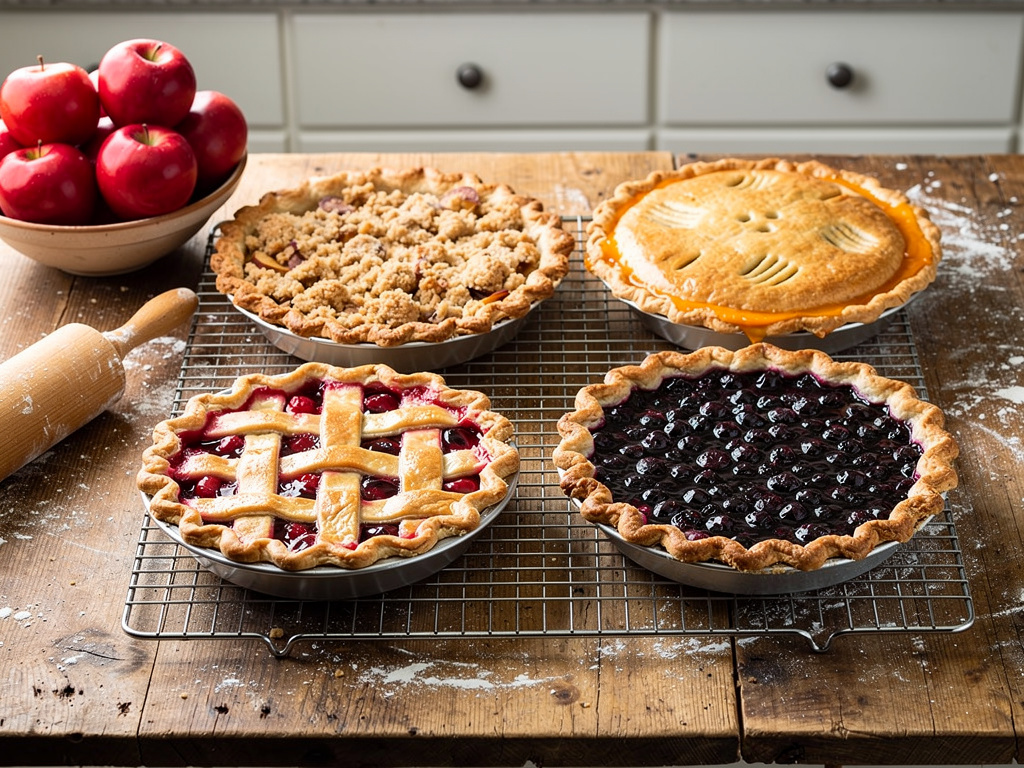


The short version: Yes, you can sell homemade fruit pies from your home kitchen in every one of the 8 states we checked, because baked apple, cherry, berry and peach pies are safe at room temperature. Pumpkin, sweet potato, custard, cream and meringue pies need the fridge, so California, Michigan, Washington, Florida, Minnesota and Colorado (through 2026) keep them out of home kitchens, while Texas allows them with state registration and Ohio with a $10-a-year Home Bakery license where the home qualifies. Pecan pie needs the fridge too after 2 hours out, by USDA's FoodKeeper, and none of our 8 states' current cottage food rules names it, so ask your agency before you sell one, and meat pies are out in every state we checked that addresses them. Among the 6 states that set one total yearly cap, it runs from $35,000 in Washington to $250,000 in Florida, Colorado allows $10,000 per product type through 2026, and California, Michigan, Washington, Colorado and Ohio's cottage food rules keep your sales inside the state. Check your own state's agency page before you take the first order, because these rules change.
Checked on October 19, 2026: the pie rules come from each state agency's own cottage food page (Texas DSHS, California CDPH, Florida FDACS, Michigan MDARD, Ohio ODA, Washington WSDA, Colorado CDPHE, Minnesota MDA), and platform fees from each company's pricing page the same day. Michigan's sales cap comes from its Food Law on the Michigan Legislature's site, California's in-state rule from Health and Safety Code section 113758, Colorado's January 1, 2027 changes (yearly registration, one $150,000 gross cap in place of $10,000 per product type, and room for a single chilled food with up to five versions, plus an early food list that names pumpkin and pecan pie and savory meat empanadas) from CDPHE's Tamale Act pages and the signed bill, California's 2026 caps from CDPH's 2026 adjusted sales limit sheet, and pie storage times from USDA's FoodKeeper data and FSIS's 2-hour rule, all read the same day. Homegrown customers create an account to place their first order, and Homegrown has no timed "drop" release feature.
Your pies are gone first at every potluck, and now a neighbor wants two for Thanksgiving and is offering $30 each. Before you take the money, you want to know whether that is legal where you live. For fruit pies it is, in every state we checked. For pumpkin, pecan and cream pies it often is not, and the rest of this page shows you exactly where the line sits.
The line is not the recipe or the price. It is whether the pie needs a refrigerator to stay safe. An apple pie can sit on a counter for a day or two. A pumpkin pie, a pecan pie, a banana cream pie or a lemon meringue pie cannot, and home kitchen laws were written around that difference. Below you will find the rule, 8 states quoted from their own agencies, the pies that cause the most confusion, and what to do once you are allowed to sell.
If your regulars already ask for your pies by name, and your state lets you take payment online, you can set up a Homegrown storefront where they order and pay ahead and pick up from you on the day you bake. Washington wants payment made in person, and Texas wants your full label information posted before the customer pays; the section on selling pies online below covers both.
Yes, in all 8 states whose agency pages we read on October 19, 2026, you can sell baked fruit pies made in your home kitchen. Every one of those states has a cottage food law, which is a state law that lets you make certain low-risk foods at home and sell them without a commercial kitchen. Fruit pies are on the allowed list or fit the allowed definition in Texas, California, Florida, Michigan, Ohio, Washington, Colorado and Minnesota.
The "yes" gets narrower once you leave fruit behind. Here is the quick version by pie type:
If your state says yes and you want the practical side (menus, packaging, transport, where to set up), our guide on how to sell pies from home covers that. This page is the permission half: which pies, in which states, under which rules.
A pie is allowed or refused based on one question: does it need to be kept cold to stay safe? Food safety rules call a food that needs cold holding a "time and temperature control for safety" food, or TCS food for short. Older state laws say "potentially hazardous food" for the same idea. Most cottage food laws allow only foods that are not TCS.
Ohio's Department of Agriculture spells out the reason on its cottage food page. A potentially hazardous food "requires temperature control because it is in a form capable of supporting the rapid and progressive growth of infectious or toxigenic microorganisms," and the examples it gives include "cheesecakes, pumpkin pies, custard pies, cream pies." Those pies are wet, low in sugar relative to their water, and rich in eggs and milk. That is the mix bacteria like.
A baked fruit pie is different in three ways:
Pecan pie is the one that fools people. It is as sweet as any fruit pie, but its filling is a sweet syrup set with eggs, with no acid fruit in it. USDA's FoodKeeper puts it next to pumpkin pie: 2 hours out, then 3 to 4 days in the fridge. So a pie can taste like candy and still sit on the refrigerated side of the line.
Texas and Ohio are the two exceptions among the 8 states in our set. Texas's cottage food page says a home operation "may sell time and temperature control for safety food (TCS)," as long as it registers with the state and keeps those foods at 41ºF or below. So in Texas the refrigerator question changes your paperwork, not your yes or no. Ohio keeps those pies out of its cottage food rules, but the Ohio Department of Agriculture's Home Bakery page says a licensed Home Bakery may make "cheese cakes, cream pies, custard pies, pumpkin pies" in your home kitchen, for a $10 annual fee and an inspection by the department. You qualify only if you own the home and live in it as your main residence, keep no pets in the home, and cook on one stove or oven (a double oven counts as one); the kitchen also needs a refrigerator that holds 45ºF or below, and a private well must pass a coliform test every year. Everywhere else we checked, the refrigerator question decides the answer, at least through 2026 in Colorado.
Baked fruit pies are the pies you can sell from home in every state on our list: apple, cherry, blueberry, peach, strawberry rhubarb and mixed berry. They are not the whole menu, though. In our October 19, 2026 read of Homegrown's catalog, only 17 of the 45 pie listings were fruit only. Pecan pie is the common one that needs a second look. The table below sorts the common pies by how the state rules we read treat them.
Swipe left to see all four columns.
| Pie | Needs refrigeration? | How the 8 states treat it | Example wording |
|---|---|---|---|
| Baked fruit pie (apple, cherry, berry, peach) | No | Allowed in all 8 | Florida lists "Fruit pies"; Michigan allows "Cooked fruit pies" |
| Pecan or other nut pie | Yes, after 2 hours out (USDA FoodKeeper) | Not named in the current rules of any of the 8. CA and FL list fruit pies only; MI and WA bar pies that need refrigeration; TX allows refrigerated pies with registration; CO's January 1, 2027 list approves pecan pie. Ask your state | Michigan allows only "Pies that are shelf stable" |
| Pumpkin or sweet potato pie | Yes | Not allowed in CA, MI, WA, CO (CO through 2026; its January 1, 2027 list approves pumpkin pie); allowed in OH with a Home Bakery license and in TX with registration | California: "Pies (fruit only, no pumpkin)" |
| Custard, chess or key lime pie | Yes | Not allowed in CA, MI, WA, CO (CO through 2026, then one refrigerated food type allowed); allowed in OH with a Home Bakery license and in TX with registration | Washington excludes "custard style pies" |
| Cream or meringue pie | Yes | Not allowed in CA, MI, WA, CO (CO through 2026, then one refrigerated food type allowed); allowed in OH with a Home Bakery license and in TX with registration | Michigan names "banana cream" and "lemon meringue" |
| Unbaked fresh fruit pie | Yes | Named as not allowed in Washington | Washington excludes "pies with fresh fruit that are unbaked" |
| Meat pie, pot pie, meat hand pie | Yes | Not allowed in TX, CA, CO (CO through 2026; savory meat empanadas approved from January 1, 2027), MI, OH and WA | Texas excludes "meat, meat products, poultry, or poultry products" |
Each row comes from the state agencies' own cottage food pages, read on October 19, 2026, and the refrigeration column from USDA's FoodKeeper data, read the same day. Florida and Minnesota do not name pumpkin, cream or custard pies; Florida lists only "Fruit pies," and Minnesota allows only "non-potentially hazardous food," which leaves those pies out.
Two things to notice. First, a fruit pie stays allowed even with a butter crust: Michigan's list says "pie crusts made with butter, lard, or shortening" are fine. Second, "fruit" means baked fruit filling. A pie topped with fresh cut strawberries or whipped cream has moved into the refrigerated group, even though it started as a fruit pie.
Pies are one line on a longer list. If you also bake bread, cookies or cakes, our guide to what foods you can sell under cottage food laws sorts the rest of your menu the same way.
In 6 of the 8 states we checked, no: California, Michigan, Washington and Colorado each list pumpkin pie as a food you cannot make for sale in a home kitchen, and Florida and Minnesota rule out any food that needs refrigeration. Colorado's no ends on January 1, 2027, when its new law opens room for a single chilled product and CDPHE's early list names pumpkin pie. Ohio's cottage food page names it too, but Ohio lets you bake it at home under a Home Bakery license, which costs $10 a year and comes with a kitchen inspection, if your home qualifies (see the conditions above). Texas is the other exception, where you can sell pumpkin pie from home once you sign up with the Department of State Health Services and follow its cold-holding and labeling rules. Florida and Minnesota do not name pumpkin pie; the rule comes from their definitions. Florida's statute defines a cottage food product (section 500.03) as food that is not "time or temperature controlled for safety," and Minnesota allows only "non-potentially hazardous food."
Pumpkin pie trips people up because it looks like a fruit pie and sits next to apple pies on every Thanksgiving table. Underneath, it is a custard. The filling is pumpkin, eggs and milk or evaporated milk, baked until it sets. That puts it in the same group as egg custard and chess pie, not in the group with apple. Storage follows the same split: USDA's FoodKeeper gives pumpkin and pecan pie 2 hours at room temperature and a baked fruit pie 1 to 2 days, as our guide to how long homemade pie lasts shows for every filling.
Here is how each state words it, all read on October 19, 2026:
Pumpkin bread and pumpkin pie are treated differently. Michigan's list allows "pumpkin or zucchini bread" as a quick bread while refusing pumpkin pie in the next section. Washington's FAQ says yes to muffins and sweet breads made with pumpkin, "as long as the fruits or vegetables are incorporated into the batter and oven-baked." If you want a pumpkin product for fall and your state bars the pie, a pumpkin loaf or pumpkin muffin is often the legal swap. We checked both lists on October 19, 2026.
The fall season is the biggest pie season of the year, so this is the rule most likely to cost you sales if you miss it. Plan your fall menu around apple, pear and cranberry pies if you live in a state that bars pumpkin pie, or in Ohio without a Home Bakery license. If your state does allow it, pricing homemade pumpkin pie puts the cost at about $6.69 a pie with a homemade butter crust and a box, or $5.90 with a frozen store shell, at Walmart's online prices. On Homegrown, five bakers had a whole pumpkin pie listed on October 19, 2026, priced from $15 to $25.
Pumpkin pie needs refrigeration: a baked pumpkin pie can sit out for 2 hours at most, then it keeps 3 to 4 days in the fridge. That is USDA's FoodKeeper data, and FoodSafety.gov's cold food storage chart gives the same fridge time, plus 1 to 2 months in the freezer, for "Pies: Pumpkin or pecan." The 2 hours come from the general rule of FSIS, the USDA food safety agency: "Never leave food out of refrigeration over 2 hours," and no more than 1 hour when it is above 90 °F.
That one fact is why pumpkin pie sits on the "no" side of most cottage food laws. A cottage food law covers foods that can sit on a shelf, and pumpkin pie cannot. For a seller it also changes the day itself. A pumpkin pie cannot wait on a folding table all morning at a farmers market, and it cannot ride around in a warm car while you make deliveries. Only Texas and Ohio, of the states we read, allow it from home today. In Texas, the DSHS page says these pies must be stored and delivered cold enough to hold 41ºF or below, so keep them in a cooler at the market and on every delivery. In Ohio, plan for the same cooler and a pickup window short enough that every pie goes from your fridge to the customer's fridge inside FSIS's 2 hours.
Sweet potato pie can be sold from home in Texas with registration, and most likely in Ohio with a Home Bakery license, which names pumpkin and custard pies but not sweet potato, so confirm with ODA. Those are the same two states that allow pumpkin pie from home today. Colorado is the only one of the 8 that names it, listing "Pumpkin, sweet potato pie, and cream pies" as ineligible under its current rules, and the early list for its January 1, 2027 law names pumpkin pie but not sweet potato. The other 7 states do not name it either way. The filling is the same kind of baked egg-and-milk custard as pumpkin, so the pumpkin answer applies: no in California, Michigan, Washington, Florida and Minnesota, and no in Colorado through 2026. USDA's FoodKeeper has no sweet potato pie entry, so store it the way you store pumpkin.
If you are choosing between pumpkin pie and sweet potato pie for your fall menu, the law treats them the same, so the choice comes down to your customers. In our October 19, 2026 read of every Homegrown pie listing, 2 of the 13 pie sellers offered a sweet potato pie, and both offered pumpkin too. If you live in Colorado, ask CDPHE before you count on sweet potato under the 2027 law, since its early list names only pumpkin.
Cream, custard and meringue pies are kept out of home kitchens in the same 6 states that keep out pumpkin. California, Michigan, Washington and Colorado bar them in their cottage food rules (Colorado's bar lifts on January 1, 2027 for one product kept cold, and its early list names cheesecakes), and Florida and Minnesota allow only foods that do not need refrigeration. Ohio allows them only under a Home Bakery license (if your home qualifies). Texas allows them from a home kitchen if you register with the state, label them with a date and a safe handling statement, and keep them at 41ºF or below.
The pies in this group share one trait: the filling or topping would spoil on a warm counter. That includes:
Since a 2025 state law (Senate Bill 541), Texas lets a cottage food operation sell time and temperature control foods, which covers cream, custard and pumpkin pies. You register on the DSHS Online Licensing Registry, put the date the pie was made on the label, and add this statement in at least 12-point type on the label or receipt: "SAFE HANDLING INSTRUCTIONS: To prevent illness from bacteria, keep this food refrigerated or frozen until the food is prepared for consumption." These pies cannot be sold wholesale or donated. We read that on the Texas DSHS cottage food page on October 19, 2026.
If you are outside Texas and Ohio and your best pie is a cream pie, you still have a route. It runs through a licensed kitchen instead of your own, which we cover near the end of this page.
Pecan pie is not named, yes or no, in the current cottage food rules of any state we checked on October 19, 2026 (only Colorado's list for its 2027 law names it), so the answer comes from how your state treats pies that need the fridge. USDA's FoodKeeper data lists a 2-hour counter limit for baked pecan pie and a fridge life of 3 to 4 days, matching pumpkin pie. FSIS, the USDA food safety agency, says never to leave food out of refrigeration for more than 2 hours, or 1 hour above 90 °F. By that measure, pecan pie is a refrigerated pie.
Here is what that means state by state:
If you sell pecan pie where it is allowed, treat it like pumpkin. Bake it no more than 1 day before pickup, cool it and keep it in the fridge, and send it home with the bake date and a note to refrigerate it. Email your agency with the recipe before you add it to your menu, and keep the written answer.
Meat pies are off limits from a home kitchen in every state on our list whose page addresses meat directly, though Colorado opens the door on January 1, 2027. Texas excludes "meat, meat products, poultry, or poultry products," California's baked goods category excludes "Meat Fillings," Colorado says meat is "prohibited from being used as ingredients or toppings" through 2026 (from January 1, 2027, CDPHE's early list approves savory meat empanadas as one option for the single type of chilled food a registered home cook may sell), Michigan calls meats a food "not allowed under the Food Law exemptions for Cottage Food," Ohio lists "Raw or cooked animal products" among its potentially hazardous foods, and Washington's FAQ says meat and poultry "are not allowed under the Cottage Food Law." Chicken pot pie, beef empanadas, meat hand pies and savory breakfast pies all land here.
Savory pies without meat are less clear-cut. A vegetable hand pie or a cheese pie is still usually a refrigerated food once it is filled with cooked vegetables or soft cheese. Colorado lists "Cut fresh fruits and vegetables" among its ineligible foods, and Michigan does not allow "breads with fresh or frozen vegetables added." Treat a savory filling as a no until your state says otherwise. In Homegrown's catalog on October 19, 2026, 1 of the 45 pie listings from 13 vendors was a chicken pot pie, but that count only takes listings whose name or description says pie or galette. In the same pull, 3 sellers listed meat-filled empanadas, the pot pie baker among them, and that baker also listed a quiche with bacon, sausage or ham options. Rules for savory fillings differ by state, so check yours before you list one.
Sweet hand pies are the easy version. California's list allows "Empanadas (fruit only)," and a baked apple or cherry hand pie follows the same rule as a full-size fruit pie. For the practical side of hand pies (sizes, prices, how they sell at a market table), see our guide on selling hand pies from home.
All 8 states allow baked fruit pies, and 5 of them name pumpkin, custard or cream pies as off limits under their cottage food rules, though Ohio allows them with a separate Home Bakery license and Colorado moves pumpkin pie to its approved list when its new law starts January 1, 2027. The table below puts each state's pie rule next to its permit, its sales cap and where you can sell. Every row comes from that state's own agency page, loaded on October 19, 2026.
Swipe left for the rest of each state's row.
| State | Fruit pies | Pumpkin, custard, cream pies | Permit or registration | Yearly sales cap | Sell outside the state? |
|---|---|---|---|---|---|
| Texas | Yes | Yes, with DSHS registration and safe handling label | None for most pies; registration for refrigerated pies | $150,000 gross income | Not addressed on the page; online sales need personal delivery |
| California | Yes, "fruit only, no pumpkin" | No | Register (Class A) or permit (Class B) with county Environmental Health | $88,878 Class A, $177,756 Class B for 2026 (the law sets $75,000 and $150,000 and adjusts them for inflation each year) | No, direct and indirect sales are each "a transaction within the state" (Health and Safety Code 113758) |
| Florida | Yes, "Fruit pies" | Not on the approved list | None from FDACS | $250,000 gross | Not stated on the page; website and mail order allowed |
| Michigan | Yes, "Cooked fruit pies" | No, named | None, exempt from licensing and inspection | $50,000 gross ($75,000 if a product sells for $250 or more), set in the Food Law, MCL 289.4102(5); the state may raise it for inflation each October 1 starting in 2026, and MDARD's page still listed $50,000 on October 19, 2026 | No, "only be sold or delivered within Michigan" |
| Ohio | Yes, "fruit pies" | Not as cottage food; yes with a $10 yearly Home Bakery license and inspection, if your home qualifies | None, exempt from licensing and inspection, but only in a home you own and live in as your main residence, with one stove or oven (a double oven counts as one) | Not stated on the page | No for cottage food, "may only be sold in Ohio"; a licensed Home Bakery may sell outside Ohio |
| Washington | Yes, baked | No, named | $355 permit, kitchen inspection, good for 2 years | $35,000 gross | No, sales outside the state are prohibited; no shipping, direct to consumer only |
| Colorado | Yes, "fruit pies" | No, named; from January 1, 2027, CDPHE's early Tamale Act food list names pumpkin pie as approved, with refrigerated foods limited to one type in up to five variations | Food safety training before you start; from January 1, 2027, yearly registration with CDPHE as well | $10,000 net revenue per product type; from January 1, 2027, one $150,000 gross total | No, Colorado only |
| Minnesota | Yes, as non-potentially hazardous food | Not allowed (refrigerated) | Yearly registration; $50 fee in Tier 2 | $78,000 gross | Cannot ship human food today; the August 1, 2027 change allows shipping, and MDA's page does not say whether that includes other states |
We checked every row on the state agency's own page on October 19, 2026: Texas DSHS, California CDPH, Florida FDACS, Michigan MDARD, Ohio ODA (page dated April 4, 2018), Washington WSDA, Colorado CDPHE and Minnesota MDA. A cell that says "not stated" means the agency page we read did not say, not that there is no rule. Michigan's cap comes from the Food Law itself (MCL 289.4102 on the Michigan Legislature's site), and Colorado's 2027 changes from CDPHE's Tamale Act pages and the signed bill (House Bill 26-1033, which changes the cap's wording from net to gross revenue). California's 2026 caps come from CDPH's Cottage Food Operation Adjusted Gross Annual Sales Limit 2026 sheet (CDPH's main cottage food page still shows the older $75,000 and $150,000), California's in-state rule from section 113758 of its Health and Safety Code, and Ohio's Home Bakery conditions from ODA's Home Bakery page. We read all of them on October 19, 2026.
These 8 are not the whole country. They are states whose agency pages either name pies directly or draw the refrigeration line plainly enough to answer the pie question, spread across the South, West, Midwest and Great Lakes. For the other 42 states and Washington, D.C., start with our cottage food laws by state guide, then read your own agency's list, because a state-by-state summary can lag a new law by a season.
The paperwork to sell pies from home runs from nothing at all to a $355 permit with a kitchen inspection. Of the 8 agencies whose pages we checked on October 19, 2026, Florida, Michigan and Ohio require no permit for fruit pies (Ohio only for an owner who lives in the home and cooks on one stove or oven), Texas requires none unless you sell refrigerated pies, and California, Washington and Minnesota require you to register or get a permit before your first sale. Colorado requires a food safety course first, and starting January 1, 2027, it also requires yearly registration with the state health department.
Here is what each path looks like in practice:
Your permit lists every product by name, and you sell only what is on it. The WSDA cottage food page gives this example: if your permit says "Peach and Blueberry Pie," you "cannot change it to 'Peach and Berry Pie'." Adding a pie later means a $105 amendment fee (the FAQ splits it into a $30 processing fee and a $75 public health review fee), and possibly a $125 inspection fee, or you can add it when you renew, with no fee beyond the regular renewal fee. We read that on October 19, 2026.
Separate from the state's food rules, your city or county may have zoning rules for a home business, and your state will want sales tax on taxable sales. Minnesota and Washington both tell applicants to check local zoning first. A phone call to your city's permit desk costs nothing and saves you from a letter after your first busy Saturday.
Among the 6 states on our list that set one total yearly cap on home kitchen sales, it ranged from $35,000 in Washington to $250,000 in Florida, with Michigan's Food Law setting $50,000 ($75,000 if a product sells for $250 or more). Colorado sets its limit at $10,000 for each kind of product instead, which is the lowest limit on the list for a baker who sells one kind of pie, but only through the end of 2026; on January 1, 2027, the Tamale Act replaces it with one $150,000 gross yearly total. A cap is the most you can gross from your home kitchen in a year before you need a licensed kitchen. At $20 a pie (the most common whole-pie price on Homegrown on October 19, 2026, counting each flavor choice once), $35,000 is 1,750 pies, or roughly 34 a week all year.
Yearly home kitchen sales caps, by state
Source: each state agency's cottage food page, Michigan's Food Law (MCL 289.4102) on the Michigan Legislature's site, and California's 2026 figures from CDPH's Cottage Food Operation Adjusted Gross Annual Sales Limit 2026 sheet, all checked October 19, 2026. Colorado caps each product type at $10,000 instead of one total through December 31, 2026, then moves to one $150,000 total, and Ohio did not state a number on the page we read, so it is left off.
What the caps mean for a pie business:
If you are on track to pass your state's cap, that is the moment to price out a shared commercial kitchen, not a reason to stop selling.
Each of the 8 states on our list wants a label on a home kitchen pie, and most want the same core facts: your name, your address or a state ID number, the pie's name, its ingredients with allergens, its net weight, and a statement that it was made in a home kitchen. The exact home kitchen statement is where states differ, and it has to match your state's words.
The core list (Texas's page as the base, with what other states add):
The home kitchen statements, as each agency wrote them on the day we checked:
Washington goes one step further and wants an accurate label for every product submitted with your permit application. Our full guide to cottage food labeling requirements walks through ingredient order, allergen wording and net weight.
Selling direct to the person who eats the pie is allowed under every state rule we read: at a farmers market and by pickup or your own delivery, and from your home everywhere except Michigan, whose page does not list sales from your home (it names farmers markets, farm stands, roadside stands and similar venues, plus phone and internet orders within Michigan), so ask MDARD before you run porch pickup there. Events come with conditions in some states; Ohio allows festivals only when they are organized by a political subdivision of the state and last no more than seven consecutive days. Selling through someone else, like a coffee shop or grocery store, is where states split. Ohio allows it, California allows it for a Class B operation, which holds a county permit, has a $177,756 cap in 2026 and can sell "indirectly through restaurants and food markets," Texas allows it through a registered cottage food vendor for non-refrigerated pies, and Colorado, Florida, Michigan, Minnesota and Washington do not.
The places a home pie business usually sells:
Holiday pre-orders are where pie vendors make the most in the fewest days, and they are pure direct sales, which all 8 of these states allow (in Michigan, hand the pies over at a venue MDARD lists, such as a farmers market or farm stand, or ask MDARD about pickup at your home). A customer orders in early November, pays ahead, and picks up the Tuesday before Thanksgiving (in Washington, take the order ahead but have the customer pay when they pick up, unless WSDA tells you in writing that online payment is fine). Time the bake to the pickup: fruit pies the day before or that morning, since a baked fruit pie has 1 to 2 days on the counter, and any pumpkin or pecan pie your state allows no more than 1 day ahead, cooled and kept in the fridge until the customer arrives.
The agency pages in 7 of the 8 states on our list say you can take pie orders online, though Washington's FAQ also lists Internet sales as prohibited and wants payment made in person; Ohio's page does not address it, so ask. Shipping a cottage food pie across state lines is off the table in every state whose cottage food rules address it. Florida allows sales "on their website, by mail order," California lets a direct sale be "fulfilled in person, via mail delivery," but only as "a transaction within the state," and Michigan allows internet and mail order sales "within Michigan." Minnesota does not allow shipping home kitchen food for people today. Its August 1, 2027 change allows shipping, and MDA's page does not yet say whether that includes other states.
The online rules, in plain terms, as of our October 19, 2026 check:
In practice, shipping is rarely the right plan for a pie even where it is legal. A fruit pie is heavy, fragile and best within two days of baking. A pie that arrives cracked costs you the pie and the customer. The simpler plan is to take orders online and hand the pies over at a set pickup time, which every state on this list allows for in-person sales; in Ohio ask about online orders, in Washington collect payment in person at pickup unless WSDA tells you in writing that online payment is fine, and in Michigan ask MDARD before you make your home the pickup spot.
Once your state says yes, the problem changes from "am I allowed" to "how do I keep 30 Thanksgiving orders straight without living in my text messages." The legal rules above all point the same way: sell direct, collect the label information up front, and hand the pie over yourself. A pre-order page with a pickup time does exactly that. One exception: Washington's WSDA page says payment, like delivery, must be person to person, and Homegrown's checkout takes card payment online, so a Washington baker should ask WSDA in writing before taking payment online. Until WSDA says yes, take Washington orders by phone or message and collect payment face to face when the pie changes hands, since Homegrown's checkout takes payment when the customer orders.
Homegrown is $10 per month billed annually, with no percentage fees beyond standard payment processing. You get a storefront where customers see your pies and your pickup window, order and pay ahead, and you walk into baking day with an exact count. If you deliver, you can set a local delivery radius from 1 to 25 miles and a flat delivery fee, which fits Texas's rule that the pie be handed over by you, a household member or an employee. That matters more for pies than for most baked goods, because every pie you bake without an order is butter, flour, fruit and oven time spent on a pie that may not sell.
Here is what that costs next to the other places pie bakers take orders, on a $20 whole pie (the most common whole-pie price on Homegrown on October 19, 2026, counting each flavor choice once) and a month of 50 pie orders:
Scroll sideways to see the full fee stack.
| Platform | Monthly plan | Platform or service fee | Card processing | Customer pays on a $20 pie | Vendor pays on a $20 pie | Vendor pays in a month of 50 pies |
|---|---|---|---|---|---|---|
| Homegrown | $10 billed annually ($12.50 monthly); 7-day trial, no charge until day 8 | None, 0% commission | 2.9% + $0.30, paid by the vendor | $20.00 | $0.88 plus the plan | $54.00 ($56.50 on monthly billing) |
| Hotplate, default | $0, no plan to trial | 5% + $0.55, paid by the customer | 2.9% + $0.30, paid by the vendor | $21.55 | About $0.88 to $0.92 | About $44.00 to $46.25 (customers pay another $77.50) |
| Hotplate, vendor covers the fee | $0, no plan to trial | 5% + $0.55, paid by the vendor | 2.9% + $0.30, paid by the vendor | $20.00 | $2.43 | $121.50 |
| Etsy | $0, no plan to trial; Etsy Plus is an optional $10 a month; one-time set-up fee may apply | $0.20 listing fee for each item sold (one pie here) plus a 6.5% transaction fee | 3% + $0.25 (US) | $20.00 plus shipping | $2.35 | $117.50 |
| Shopify Basic | $29 billed yearly ($39 monthly); 3 days free, then $1 a month for 3 months | None with Shopify Payments | From 2.9% + 30¢ online | $20.00 | $0.88 plus the plan | $73.00 ($83.00 on monthly billing) |
Fees come from Homegrown's signup page, Hotplate's pricing page, Etsy's fees policy and payment processing help page, and Shopify's pricing page, all checked on October 19, 2026. Card processing is figured on the $20 pie on every row except Hotplate's default; a platform that also charges it on tax, tips or shipping lands a few cents higher. Etsy's 6.5% transaction fee also applies to any shipping you charge, so its $2.35 is the floor. Hotplate's default cost to you is a range, about $0.88 to about $0.92 a pie, because its own pricing example ($30 order, $3 tip, $1.27 in card processing paid by the chef) charges the card fee on the order and tip, the $0.88 end, while $0.92 is the card fee on the full $21.55 the customer pays. Month totals are figured before rounding: the $0.92 end works out to $0.925 a pie, which comes to $46.25 over 50 pies. Hotplate's pricing page says who pays its fee is "your choice"; its own post "What Hotplate does" (September 1, 2025) says "we charge a fee to your customer," and that 80% of its chefs keep that default.
What each option means for a pie vendor:
Homegrown fits the way these laws want you to sell: direct, local, pickup. What it does not do: it does not check whether your pie is legal in your state (that part is on you and this page), it has no timed "drop" release feature, and your customers create a Homegrown account to place their first order. Your storefront is listed on Homegrown's marketplace, but plan on most orders coming from people you send to your own link. If you want your holiday pie orders in one place instead of forty text threads, you can set up your pie storefront in about 15 minutes.
Castiron, a platform older guides recommend for home bakers, has shut down. Its old address, shopcastiron.com, sent us to an unrelated website when we tried it on October 19, 2026. If a cottage food guide still points you there, it is out of date.
A few small habits keep a home pie business on the right side of the rules: sell the pies your state names, label every pie the same way, and write down what you sold. Together they keep a fun side business from turning into a problem.
In a pull of the Homegrown catalog on October 19, 2026 (2,920 products from 329 vendors), 90 listings had the word "pie," "pies" or "galette" in the name or the description. We read each one by hand, along with every other listing from each seller we counted, and 45 were actual pies from 13 vendors. The other 45 were whoopie, moon and oatmeal cream pies, pecan pie bites sold as squares, sweet potato pie cookies and other cookies, pie-flavored jams and apple pie butter, granola, muffins, cinnamon and sweet rolls, a sourdough loaf, dessert tacos, fudge, freeze-dried apple chips and candy, plus dessert flights, a subscription box, lard, dog treats, a garden plant and a pumpkin pie flavored trail mix. Of the 45, 17 were fruit pies (apple, Dutch apple, caramel apple, blueberry crumble, blackberry, raspberry, cherry, apple and persimmon, and 2 fruit galette listings), 4 were pecan pies, 20 were pumpkin, custard or cream pies (pumpkin, sweet potato, buttermilk, sugar cream, key lime, chocolate cream, French silk, butterscotch, lemon meringue, banana cream, peanut butter, cottage cheese and a cream pie menu), 3 were single listings offering fruit pies next to pecan, pumpkin or other egg pies, and 1 was a chicken pot pie. That makes 27 of the 45 listings that include a pecan, pumpkin, custard or cream pie, the kinds that need the fridge (USDA's FoodKeeper names pecan, pumpkin and cream pies, and Michigan and Washington name custard pies among the pies that need refrigeration), from 11 of the 13 vendors. These numbers show what bakers list across many states, and the rules differ from state to state. Pumpkin, custard and cream pies are the kind that 6 of our 8 states keep out of home kitchens (Colorado through 2026, before its new law starts January 1, 2027) and Ohio allows only for a licensed Home Bakery, and pecan is the pie no state's current rules on our list name, which is why the first thing to check is which group your pie is in.
Pies listed on Homegrown, by filling type
Source: pull of the Homegrown catalog on October 19, 2026, 45 pie listings from 13 vendors. Counted as listings with "pie," "pies" or "galette" in the name or description, then read one by one, with each counted seller's full list, to drop pie-flavored products. Cobblers, crisps, empanadas and quiche are not counted as pies. "Fruit and a fridge pie on one listing" is a listing whose flavor choices include a fruit pie and a pecan, pumpkin, sweet potato or meringue pie.
Habits worth copying:
Close holiday pre-orders by a set date and cap the count. If your oven fits 4 pies at a time and a bake takes about an hour, 8 hours of baking is roughly 32 pies. Set the cap at 30 so a burned crust or a dropped pie does not leave someone without dessert on Thanksgiving.
You can confirm whether your pie is legal in your state in 2 or 3 hours by reading two pages on your state agency's website and making one phone call. Cottage food rules usually live with the state Department of Agriculture or the Department of Health. Follow these steps in order:
If your state's page is hard to read, our guide on how to sell food from home explains the terms these pages use.
If your state bars the pie you want to sell, you have four real options: change the pie, change the product, change the kitchen, or wait for the law. Colorado, Michigan, Minnesota and Texas have each changed their cottage food laws in the last two years, so the "no" you read today may not last.
Your options, from cheapest to most work:
Always verify your state's current rules with the agency before you sell, and keep the date you checked. This page reports what 8 agencies said on October 19, 2026. It is not legal advice, and a rule can change the week after a page is written.
In Florida, Michigan and Ohio, yes: the state agencies say home kitchen fruit pies need no license or permit, as of October 19, 2026. In Ohio that covers only an owner-occupied main residence with a single stove or oven (a double oven is fine), the same home rule as the Home Bakery license. Texas needs no permit either for pies that do not need refrigeration, though you must complete a food handler course. California, Washington and Minnesota require registration or a permit first. Colorado needs no license but requires a food safety course before your first sale. Starting January 1, 2027, Colorado also requires yearly registration with the state. Check your own state's cottage food page before you sell homemade pies.
Only in some states. Five of the state pages we read name pumpkin pie as not allowed under their cottage food rules, because the egg-and-milk filling needs refrigeration, though Colorado's no lasts only through 2026: pumpkin pie is on CDPHE's approved list for the new law that starts January 1, 2027. Ohio is one of the five, but it allows pumpkin pie from a home kitchen with Ohio's $10 annual Home Bakery license and an inspection, if your home qualifies (you own it and live in it, keep no pets, and cook on one stove or oven). Texas allows it if you register with the Department of State Health Services, date the pie and add a safe handling statement. In most other states, treat pumpkin pie as a licensed kitchen product.
It depends on how your state treats pies that need the fridge, because no state's current rules on our list name it. USDA's FoodKeeper gives pecan pie the same limits as pumpkin pie: 2 hours out of the fridge at most, then 3 to 4 days refrigerated. Its filling is set with eggs, like pumpkin's. Michigan allows only "Pies that are shelf stable," Washington bars "pies that require refrigeration after baking," and California and Florida list fruit pies only, while Texas allows refrigerated pies with registration and Colorado names pecan pie among the approved foods for its new law starting January 1, 2027. Email your state agency with the recipe and keep the written answer.
Yes, baked fruit pies are legal in all 8 states we checked, and a Thanksgiving pre-order is a direct sale, which every one of them allows. Pumpkin pie is kept out of home kitchens in 6 of the 8 (Colorado only until January 1, 2027) and pecan pie is named by none of the 8 states' current rules (Colorado's 2027 list approves it), while Texas allows both with registration and Ohio under its Home Bakery license. Bake fruit pies the day before pickup or that morning, and bake any egg pie your state allows the day before at the latest and keep it in the fridge, because USDA gives it 2 hours out. Close orders by a set date and cap the count to what your oven can bake.
Yes. A farmers market sale goes straight to the customer, which every cottage food law we read allows for approved pies. Your market will likely have its own application, booth fee and sometimes an insurance requirement on top of your state's rules. Bring your labels and your state's home kitchen sign, since Colorado and Minnesota require one at the point of sale.
Not in any state on our list that has a rule on it. California, Michigan, Ohio's cottage food rules, Washington, Colorado and Minnesota all say no. California, Michigan, Ohio, Washington and Colorado keep cottage food sales inside the state, and Minnesota bars shipping home kitchen food for people for now; the law that takes effect August 1, 2027 adds shipping, but MDA has not said if that covers out-of-state orders. Texas requires online orders to be personally delivered, so mailing a pie you sold online is out there too. The Florida page does not say either way. Florida allows mail order, and California allows mail delivery to a customer inside California, but pies ship poorly anyway, so local pickup is the simpler plan.
Sometimes. Ohio's cottage food page says cottage foods may be sold through grocery stores and used in restaurants, California lets a Class B operation with a county permit sell "indirectly through restaurants and food markets" up to a $177,756 yearly cap in 2026, and Texas allows sales through a registered cottage food vendor for pies that do not need refrigeration. Colorado, Florida, Michigan, Minnesota and Washington do not allow wholesale sales from a home kitchen. If a cafe wants your pies every week and your state says no, a licensed kitchen is the next step.
More on selling pies and baked goods from home:
You know which of your pies your state allows, what the label needs and where you can sell them. The next step is a place for customers to order and pay before you bake, so every pie you pull from the oven already has a name on it. With Homegrown you get a pre-order storefront with pickup times for $10 a month billed annually and no percentage fees beyond standard payment processing. Start your pie storefront on Homegrown and share the link before your next market.
A simple way to start: list the 3 or 4 fruit pies your state clearly allows, set one pickup window a week, and send the link to the people who already ask you for pies. When the holidays come, open a separate Thanksgiving pickup day with a cap on the count, so you bake exactly what was ordered. Put your pie's full label information in each pie's description (in Texas that is required before the customer pays), so customers see the home kitchen statement and allergens before they order. Your customers create a Homegrown account the first time they order, and card processing of 2.9% + $0.30 comes out of your side, not theirs.



