
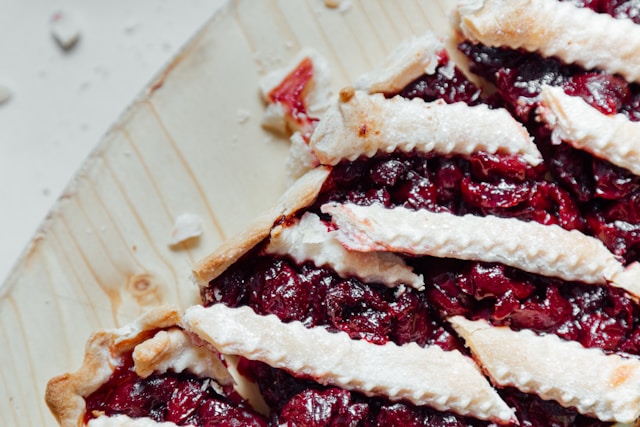


If your pies are the first thing gone at every potluck, holiday dinner, and bake sale, you already have proof of concept for a real business. Selling pies from home is one of the most accessible cottage food businesses you can start — you already own the oven, you already have the recipes, and you already have customers asking to buy.
A 9-inch fruit pie costs $5 to $10 in ingredients and sells for $18 to $28 at a farmers market. Add hand pies and slices for impulse buyers, and most pie vendors make $100 to $500 or more per market day. The margins are not as high as cookies or bread because pie ingredients — butter, fresh fruit, nuts — cost more. But pies command premium prices that more than make up for it.
This guide covers which pies you can legally sell from home, what types sell best, how to price for profit, packaging and transport, equipment, and where to sell your homemade pies.
The short version: Fruit pies, nut pies, and savory hand pies qualify under cottage food laws in most states because they are shelf-stable at room temperature. Cream pies, custard pies, and meringue pies usually do not qualify because they require refrigeration. You need a cottage food permit (free to $75) and proper labeling. A 9-inch fruit pie costs $5 to $10 to make and sells for $18 to $28 — margins of 50% to 70%. Start with three to four core varieties, take pre-orders for every market, and build toward Thanksgiving and holiday pre-orders as your biggest revenue opportunity. Sell at farmers markets, through a Homegrown storefront for pre-orders, and to local coffee shops and restaurants.
Yes. Most pies qualify under cottage food laws because they are baked goods that are shelf-stable at room temperature. You do not need a commercial kitchen, health inspection, or restaurant license.
To sell pies from your home kitchen, you typically need:
Check your state's specific requirements in our cottage food laws by state guide.
This is the most important question for any home pie business. Not all pies qualify, and the distinction is simple: if a pie needs refrigeration, it probably does not qualify under cottage food laws. The same line shows up in storage times: a baked apple pie keeps 1 to 2 days on the counter while a pumpkin pie gets 2 hours, and our guide to how long homemade pie lasts lists the counter, fridge and freezer times for every filling.
Pies you CAN typically sell:
Pies you usually CANNOT sell:
Meat-filled pies and hand pies are a special case — the USDA's Food Safety and Inspection Service regulates all products containing meat or poultry, which puts them outside the scope of most cottage food permits regardless of your state's rules.
For a full list of which products qualify, see our guide on what you can sell under cottage food laws.
The safest approach is to start with fruit pies and nut pies. These qualify under cottage food laws in virtually every state, and they happen to be the best sellers at farmers markets. Pumpkin is the pie that splits states: California, Michigan, Ohio, Washington and Colorado (through 2026) all name it as off limits for a home kitchen, while Texas allows it with registration, and our state-by-state answer to whether you can sell homemade pies quotes each agency's own wording.
The best-selling pies at farmers markets are the classics — familiar flavors that customers already love and trust.
Start with three to four core varieties. Pies take time to make, and too many options means you are spreading yourself thin across recipes, ingredients, and production time.
Rotate your seasonal fruit pie with the time of year. Peach in summer, apple and pumpkin in fall, cranberry and pear in winter, strawberry rhubarb in spring. Seasonal rotation keeps your menu fresh and gives customers a reason to check back every week.
Pies sit in a unique pricing position among baked goods. Ingredient costs are higher than cookies, bread, or muffins — but customers expect to pay more for a homemade pie than almost any other baked good.
Here is a typical cost breakdown for a 9-inch fruit pie:
At a retail price of $22 for a 9-inch fruit pie, your profit margin is 47% to 75% depending on fruit costs and season. Pumpkin pie usually costs less than a fruit pie to make: a 9-inch deep-dish pumpkin pie came to about $6.69 with a butter crust and a window box at October 2026 store prices, and our guide to how much to sell pumpkin pie for shows the $15 to $25 that six Homegrown bakers charge for one. Most pie vendors average 50% to 65% margins across their product line.
For detailed pricing strategies, see our guide on how to price food products.
Pie is a butter-heavy, fruit-heavy product. A single 9-inch pie crust uses 8 to 12 tablespoons of butter, and many recipes call for a double crust. Fresh fruit filling can cost $3 to $7 per pie depending on the type and season.
How to manage ingredient costs:
Pies are bulky, fragile, and cannot be stacked. Packaging and transport require more planning than most baked goods.
Restaurant supply sites like WebstaurantStore sell disposable pie tins, clear-lid containers, and bakery boxes in bulk at 40% to 60% less than retail craft stores — and you do not need a business license to order.
Every pie you sell needs a label with:
For detailed labeling rules, see our guide on cottage food labeling requirements.
Pies are the hardest baked good to transport. They slide, they crack, and they do not stack.
If you already bake pies at home, you already own most of what you need.
Essential equipment:
Nice to have:
Total startup cost: $50 to $150 beyond what most home bakers already own. Pie baking is one of the lowest startup cost cottage food businesses because you already have the most expensive piece of equipment — your oven.
Pies sell through different channels than most baked goods because they are higher-priced, harder to ship, and perfect for pre-orders.
Farmers markets are the best starting point for home pie businesses. Expect $100 to $500 or more per market day once you have a following.
What makes pies sell at markets:
Pies work better with a pre-order model than almost any other baked good. The product is expensive to make, time-consuming to bake, and customers are willing to plan ahead. A single 9-inch pie uses $5-$10 in ingredients — baking 15 on speculation and selling 8 means you just wasted $35-$70 in butter and fruit. Pre-orders eliminate that risk entirely.
The system you use for pre-orders matters because pies have specific requirements that general tools don't handle well: weekly order cutoffs, seasonal menu changes, holiday capacity limits, and pickup scheduling.
Text messages and Instagram DMs work for your first few regulars, but fall apart during the holiday rush. When 30 people are messaging you Thanksgiving orders through three different platforms and you're trying to track who paid, who ordered pecan vs. apple, and who's picking up Wednesday vs. Thursday — that's when orders get lost and customers get disappointed.
Etsy charges 6.5% + $0.20 per listing + payment processing. On a $28 pie, Etsy takes about $2.20 in fees. On a Thanksgiving week where you sell 40 pies, that's $88 in platform fees — more than your booth fee for the month. Etsy is also designed for shipping, not local pickup with a weekly cutoff.
Shopify at $39/month handles pre-orders with the right plugins, but it's built for e-commerce businesses with nationwide fulfillment. Setting up weekly order windows with cutoff dates requires configuration that's more complex than what a pie vendor needs.
Homegrown costs $10/month and matches the exact way pie vendors operate. You list your pies, set a weekly pre-order window with a Wednesday cutoff, collect payment when customers order, and get a bake list showing exactly how many of each variety to make. For Thanksgiving, you can set a capacity limit so you never take on more pies than your oven can handle. Local customers can also find you through the Homegrown marketplace.
| Platform | Cost | Pre-Order Cutoffs | Capacity Limits | Best For |
|---|---|---|---|---|
| Text/DMs | Free | Manual | None | First 5 regulars |
| Etsy | 6.5% + fees | No | No | Shipping pies nationally |
| Shopify | $39/mo | With plugins | With plugins | Large e-commerce |
| Homegrown | $10/mo | Built-in | Built-in | Local pre-orders with pickup or local delivery |
Homegrown doesn't handle nationwide pie shipping, wholesale restaurant invoicing, or custom wedding cake consultations. It's built for vendors selling a set menu of products to local customers on a regular schedule — weekly pie pre-orders, holiday batches, farmers market regulars.
Holiday pie pre-orders are where the real money is. Thanksgiving alone can generate more revenue than a month of regular market days.
Wholesale pies to local businesses at 50% to 60% of your retail price.
Pies are natural gift items, especially around the holidays.
Your crust is your reputation. Customers come back for the crust as much as the filling.
Consistency matters more than variety. If your all-butter crust is incredible, customers will buy any pie you put in it.
Pre-orders are the single most important business practice for pie vendors. Pies use expensive ingredients, take time to make, and do not keep as long as cookies or bread.
Seasonal flavors are your best marketing tool. They create anticipation, drive urgency, and keep your menu interesting.
When customers know that your peach pie is only available in July and August, they buy it while they can. Limited availability creates demand.
Buy extra in-season fruit and freeze it in pie-ready portions. This lets you bake seasonal pies slightly beyond the natural season — peach pies into early September, berry pies into October — without paying off-season prices.
Not every customer wants to commit to a $25 whole pie. Individual portions lower the barrier to entry.
Customers who try a slice or hand pie often come back the following week to pre-order a whole pie. Individual portions are your best marketing tool.
Thanksgiving is the Super Bowl of pie sales. A single week of Thanksgiving pre-orders can generate more revenue than a month of regular farmers market days.
Plan your Thanksgiving supply run early. Butter, flour, and pie tins sell out at stores before the holiday.
You need a cottage food permit (free to $75 in most states) and a food handler's certificate ($10 to $15). You do not need a commercial kitchen, restaurant license, or health department inspection in most states. Some states require a basic business registration. Check your state's rules in our cottage food laws by state guide.
Usually no. Cream pies, custard pies, and meringue pies require refrigeration, which means they do not qualify as shelf-stable products under most cottage food laws. Stick with fruit pies, nut pies, and other varieties that are safe at room temperature. If you want to sell cream pies, you typically need a commercial kitchen and a food establishment license.
Most pie vendors make $100 to $500 or more per market day, depending on the market size and their customer base. A vendor selling ten whole pies at $22 each plus 20 hand pies at $5 each makes $320 in a single market day. Pre-orders help guarantee a baseline, and walk-up sales of slices and hand pies add to that total.
Fruit pies taste best within one to two days of baking. Most vendors bake the day before and the morning of the market. Pecan pies and nut pies hold well for two to three days. Do not bake more than two days ahead — fresh pies are your competitive advantage over store-bought.
Pies are difficult to ship because they are fragile, heavy, and perishable in the case of cream pies. Online pre-orders with local pickup are the better model. Customers order through your online store and pick up at the farmers market or a designated location. Some vendors do ship fruit pies and nut pies using insulated packaging, but shipping costs ($15 to $25 per pie) make it impractical for most cottage food sellers.
Apple pie is the #1 seller at most farmers markets year-round, followed by pecan pie (which commands premium pricing), seasonal fruit pies like peach and blueberry, and hand pies for impulse buyers. The best strategy is to offer two to three classic whole pies plus hand pies or slices as your entry-level product.
Ready to start selling your pies? Set up your Homegrown storefront in 15 minutes and start taking pre-orders for your next market day.



