
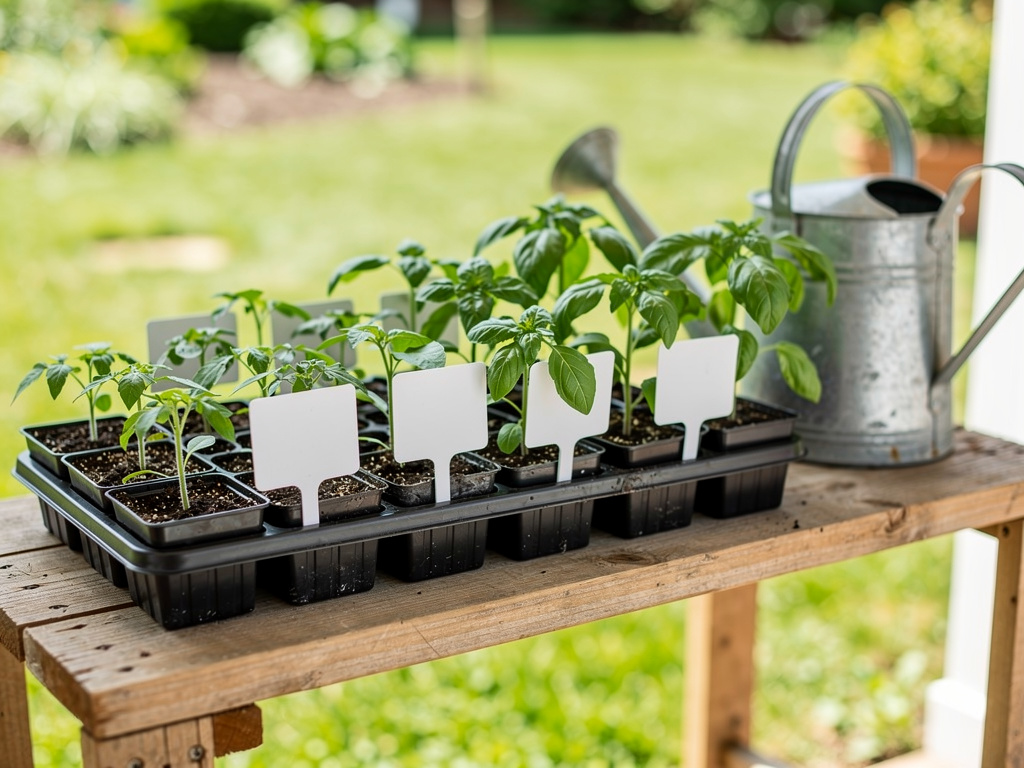


The short version: Seedlings sell in seven places: a farmers market booth, pre-orders on your own storefront link with pickup, a porch or roadside stand, spring plant sales and garden club events, Facebook Marketplace and neighborhood groups, independent garden centers, and other farms, CSAs and produce auctions, with shipping as a narrow eighth option. On a $20 order of five $4 tomato and pepper starts, what you pay runs from $0 in cash at a stand to $2.35 in Etsy fees, with $0.88 in card processing on a Homegrown link in between. Seedlings have a selling window of a few weeks around your last frost date, so the best places are the ones where the order exists before you sow. Several places add paperwork: Washington needs a license past $100 of plant sales a year, Texas has a separate registration for vendors at temporary markets who do not grow their plants, and shipping across state lines can need a plant health certificate.
Checked September 25, 2026: Homegrown is $10 a month billed annually or $12.50 billed monthly, with 0% commission and card processing of 2.9% + $0.30 paid by the vendor, per findhomegrown.com/signup. Square, Venmo, Etsy and Local Line prices come from their own pricing pages the same day. The limits: your customer creates a Homegrown account to place a first order, there is no timed release feature, Homegrown handles pickup and local delivery but not shipping, and most orders will come from people you send to your own link.
You have 300 tomato and pepper starts on a shelf under shop lights, and in three weeks they go from perfect to leggy. A seedling is the rare product with an expiration date on both ends: too small to sell in early April, root-bound and floppy by June.
So the question is not only where people buy plants. It is which places buy a $4 plant in the few weeks it looks its best, which ones take 20 plants and which take 200, and which ones let you know the count before you fill the trays. If you want the growing side (seed starting, pricing at the booth, display), the companion guide on selling seedlings and transplants at the farmers market covers it in full. This guide starts where that one stops: the plants are growing, and you need somewhere for every one of them to go.
You can sell seedlings locally in seven places, and most part-time growers use two or three at once: one place where strangers see the plants, one way to take orders before sowing, and one outlet for the extras. Each place trades price for time differently.
To find the markets and farm stands near you, search the USDA Local Food Directories by zip code. On September 25, 2026 it listed 7,148 farmers markets, 4,692 on-farm markets, 2,002 CSAs and 480 food hubs. Garden centers, plant sales and neighborhood groups you find the old way: drive your own county in April and look at who is selling plants on folding tables.
Shipping is the narrow eighth option. It works for a few hardy plants and specialty varieties, not for a tray of tender tomato starts, and it pulls in more rules than any local channel (covered below).
The right first place depends on how many plants you start and how early you can commit to a count, not on which place pays the most per plant, since a $4 start earns about the same $4 at a booth and on a pre-order list. A grower with one shelf of 150 starts should sell to neighbors first. A grower with a greenhouse and 1,500 plants needs a booth and a wholesale buyer.
Scroll sideways to see every column.
| What you have right now | Start here | Add second | Why that order |
|---|---|---|---|
| One shelf, under 200 starts | Your own storefront link with porch pickup | Facebook Marketplace or a neighborhood group | Pre-orders tell you what to sow; the group moves the extras in one weekend |
| A market booth you already pay for | Seedlings on the booth table in April and May | Your own storefront link | The booth finds gardeners; the link lets them reserve next spring's varieties |
| A small greenhouse, 500 to 1,500 plants | A farmers market booth | One independent garden center | The booth sells at full price; the garden center takes whole flats of the overflow |
| A friend who runs a vegetable farm | Their farm stand or CSA as an add-on | Your own storefront link | Their customers already come weekly in spring |
| A house on a busy road | A roadside stand on spring weekends | Your own storefront link on the sign | Drive-by buyers plus a QR code for the ones who pass when you are sold out |
| A school or club you belong to | That group's spring plant sale | A porch stand for what is left | The sale draws planters on one day; check whether it sells donated plants or rents vendor tables |
The situations and the order are our own advice, based on the channels in this guide.
The trap is opening four places in the same spring. A garden center, a plant sale and a market all expect the same Brandywine tomatoes on the same weekend, and the grower who promises all three from one shelf shorts the garden center, which is the buyer least likely to call back next year.
A farmers market is the best single place to sell seedlings at full retail, about $4 for a 3.5-inch start, and it costs you the most hours to earn it. Booth space commonly runs $20 to $75 a week, broken down in the guide to the real cost of selling at farmers markets, and a seedling table has to move 5 to 19 plants at $4 just to cover the table.
Run the arithmetic on a $40 booth. At $4 a start, you need 10 plants sold to pay for the space, before gas, pots and plant tags. Bring 120 plants, sell 90, and you clear $320 before other costs. The 30 that go home are not lost the way cut greens are, but a week later they are a week closer to root-bound.
What the booth gives you that no other channel does:
Some states treat a market table as its own kind of plant sale. The Texas Department of Agriculture's nursery and floral registration page lists a Class M registration for vendors who sell plants at temporary markets such as flea markets, craft shows and plant shows and do not grow them, at $180 with 30 one-day event permits, and a separate Class 2 registration for growers with 10 acres or less at $110. We loaded it on September 25, 2026. If you grow your own starts and sell them at a market in Texas, ask the state which class fits before the season.
Seedlings wilt on a sunny table by late morning, and a wilted tomato start does not sell even if it recovers by evening. Water flats before you leave, keep a watering can and a spray bottle at the booth, and put the flats in the shade of your canopy, not in front of it. Bring out a few of each variety at a time so the table always looks full and fresh.
The booth is the best place to find gardeners and the worst place to guess quantities. A booth is worth a second spring if it feeds the pre-order list below.
Sell seedlings before market day by taking pre-orders in late winter, before you sow, so every tray you fill already has names on it. Seedlings are the clearest case for pre-orders of anything a small grower sells: you commit to the count 6 to 10 weeks before the sale, and there is no second chance to sow once the window opens.
Homegrown is $10 per month billed annually, or $12.50 billed monthly, with no percentage fees beyond standard payment processing (2.9% + $0.30 per order, paid by you, not added to the customer's total). You list your varieties with a photo, pot size, growing notes and price, set a quantity on each, and share one link before your first seeds go in. When the Sungold listing hits the 40 you planned to sell, it stops taking orders instead of you apologizing by text. Customers order and pay on the link (first-timers create an account), and by the day you sow you know it is 40 Sungold, 30 Cherokee Purple and 18 jalapeño, not a guess.
How that compares to what seedling growers usually use instead:
What fits a seedling season: quantities per variety so nothing oversells, an order prep time before pickup day, pickup at your porch or booth or local delivery, a customer list (names and emails) that stays yours so you can email last spring's buyers when the list goes up, and payment before the plant leaves your shelf.
Here are the limits, so you decide with the whole picture. Your customer creates a Homegrown account to place a first order. There is no countdown or timed release feature for opening a spring list. Your storefront appears on the Homegrown marketplace, but plan on most orders coming from the link you text, print and post yourself. Homegrown is built for pickup and local delivery, not for shipping live plants, and it does not register you with your state's agriculture department, and does not send wholesale invoices to a garden center. It also does not start a single seed for you.
In a live pull of the Homegrown catalog on September 25, 2026, 47 of the 2,708 products were vegetable and herb transplants, from 2 vendors. Red Shed Market lists 43 starts in 3.5-inch pots at $4 each (16 peppers, 14 tomatoes, 3 basils and 10 others from cabbage to eggplant) plus a $10 Salad Bowl of living greens. Jbella Holistic Haven lists collard greens and dinosaur kale plantings at 2 for $5 and roselle hibiscus plantings at $4. Another 22 listings were houseplants, succulents and one red portulaca from one vendor, priced $8 to $20. Rule used: the Plants and Flowers category, with every listing's name and description read, plus a search of every other category's descriptions for starts, transplants and potted plants (none found).
If your spring runs on "do you still have the Cherokee Purple?" messages while you guess how many trays to fill, a storefront link turns those messages into paid orders before you sow. You can set up your Homegrown storefront and list next spring's varieties in about 15 minutes.
A porch or roadside plant stand works well for seedlings on spring weekends if cars or neighbors pass your house, because a $4 plant is exactly what a gardener buys on impulse with cash. It works badly on a hot afternoon with no one watching, since unwatered starts in full sun wilt within hours.
The setup that works for most home growers:
A porch stand is also the easiest pickup spot for pre-orders. The neighbor who reserved six peppers on your link grabs a flat with a name tag from the same shelf, and your stand becomes a pickup shelf on the days you do not want to sit outside. Check your town's rules on home sales and roadside signs first; the guide to farm stand zoning laws covers what to ask.
The weak spot is volume. If a stand on a quiet street sells 15 plants on a good Saturday at $4, that is $60, a nice extra and not a reason to build a second shelf.
Yes, spring plant sales are one of the best places to sell seedlings, because everyone who shows up came to plant that weekend. The catch is that many of them are fundraisers where members donate plants to the club, so ask whether the sale rents vendor tables or only takes donations before you plan a flat around it.
The kinds of spring sales worth asking about:
The paperwork can differ at these events. The Washington State Department of Agriculture's plant sale permit page says the $20 permit is for clubs, conservation districts, and educational and nonprofit associations holding no more than three sales a year of no more than four days in a row, with K-12 schools allowed unlimited sales. A private grower whose plant sales pass that $100 line needs the state's regular nursery license, $80.64 a year for retail sales up to $2,500, charged for each place you sell from. In Pennsylvania, the Department of Agriculture counts conservation districts that run plant sales among its nursery dealers, alongside garden centers and chain stores. We checked both pages on September 25, 2026.
A club's plant sale permit covers the club, not the vendors at its tables. If you sell your own starts at someone else's event, your state's rules for you still apply, the same as at a market booth. Ask the organizer what the event holds, and check your own state before the sale.
Treat a plant sale as a one-day burst. Bring your strongest 100 plants, price in round numbers, label every pot, and put a card with your storefront link in every bag so the buyer can reserve the same varieties next spring.
Yes, Facebook Marketplace and neighborhood groups move seedlings fast in April and May, and plants were not among the 24 prohibited categories on Meta's commerce policy page when we checked it on September 25, 2026. A clear photo of a flat of tomato starts with the variety names, the price and a pickup window gets messages within hours.
How to make a Marketplace or group post work for plants:
The weak spots are no-shows and message volume. A post that gets 40 replies means 40 threads to answer, and the buyer who asked you to hold six Cherokee Purples may never come. Selling through Marketplace also does not change your state's nursery rules; the license question is the same as for a market table.
Nextdoor, local gardening groups and a church or school newsletter work the same way, with less reach and fewer strangers.
An independent garden center will sometimes buy seedlings from a local grower, most often unusual varieties it cannot get from its regular wholesale grower, like a named heirloom tomato or a hot pepper people ask for by name. Expect a price well below your $4 retail, since the store has to mark it up, and expect the store to want whole flats on a fixed date.
Big-box garden departments are a different world. A backyard grower with 300 starts is not a realistic supplier for Home Depot or Lowe's, whose garden departments sell thousands of identical plants on a truck schedule. The locally owned garden center, feed store or hardware store with a spring plant rack is where to ask.
Two rules come with selling to a store. The store is reselling your plants, and the Pennsylvania Department of Agriculture counts garden centers and chain stores as nursery dealers with their own certification. Under the same rules, a Pennsylvania dealer agrees to buy and sell only plants that have been inspected and certified, and a certificate of inspection must go with every wholesale lot, so ask the state about certifying your own plants before you pitch a store. Your own license question does not go away either: wholesale sales count as plant sales, and Washington's nursery license has a wholesale class at $176.64 a year, per location, for sales of $15,000 or under, checked September 25, 2026. The guide on whether you can sell homemade seedlings lays out the rules state by state.
Yes, and for a small grower another farm is often the easiest place to move 50 to 200 plants, because its customers already come every week in spring. A vegetable farm with a stand, a CSA, or a produce auction can sell starts you grew without you standing at a table.
Three ways seedling growers plug into another farm:
The math is predictable. If a 60-member CSA sells a six-plant starter kit to 20 members at $3 a plant wholesale, that is 120 plants and $360 you know about before you sow.
You can ship some plants, but shipping is the hardest way to sell tender vegetable starts and it brings the most rules. A 3.5-inch tomato start in a box for three days arrives stressed at best, and a plant that crosses a state line can need a plant health inspection first.
What shipping involves for a small grower:
What ships better than tomato starts: houseplant cuttings and succulents, hardy perennials, and seeds you saved yourself. Pennsylvania's nursery stock definition leaves out vegetable and flower seeds but names cuttings and herbaceous perennials, so the houseplants and perennials still carry the plant rules for shipping. Seeds fall under a separate law: Pennsylvania's Seed Program requires a $25 yearly seed license from anyone whose name is on the seed label, and vegetable and flower seed packets must show the variety and germination information, checked September 25, 2026. If you grow houseplants, the guide to selling houseplants from home covers that side. For most seedling growers, shipping is a winter sideline, and the spring starts stay local.
On a $20 seedling order, what you pay runs from $0 in cash at a porch stand to $2.35 in Etsy fees, with Venmo at $0.48 and a Homegrown storefront link at $0.88 in between, and at 50 orders a month the monthly plan is part of the cost too: $10 on Homegrown and $87 on Local Line. The table uses a real basket: five starts in 3.5-inch pots at $4 each, the price on Red Shed Market's Homegrown listings. The table compares ways of getting paid; the places add their own costs on top. Booth space commonly runs $20 to $75 a week, a produce auction keeps a 9% to 12% commission on each lot, and a garden center or CSA pays you a wholesale price below your $4 retail.
Swipe the table left to see every fee.
| Where you sell | Subscription | Trial | Platform fee | Card processing | Customer pays on a $20 order | You pay on a $20 order | A month of 50 orders ($1,000) |
|---|---|---|---|---|---|---|---|
| Homegrown storefront link | $10/mo billed annually, or $12.50 billed monthly | 7 days, not charged until day 8 | $0, 0% commission | 2.9% + $0.30 | $20.00 | $0.88 | $54.00 ($44 processing + $10 plan) |
| Square free plan, online orders | $0 | Free plan | $0 | 3.3% + $0.30 | $20.00 | $0.96 | $48.00 processing |
| Square free plan, card reader at the booth | $0 | Free plan | $0 | 2.6% + $0.15 | $20.00 | $0.67 | $33.50 processing |
| Venmo business profile (Marketplace or porch pickup) | $0 | Free account | $0 | 1.9% + $0.10 | $20.00 | $0.48 | $24.00 processing |
| Local Line Core | $87/mo billed annually ($1,044/yr), or $109 billed monthly | 7 days, no credit card required | $0, no commission | 2.9% + $0.30 | $20.00 | $0.88 | $131.00 ($44 processing + $87 plan) |
| Etsy (shipped, one $20 listing) | $0 a month; a one-time shop set-up fee may apply | None | 6.5% transaction fee + $0.20 listing fee; 15% if the sale came from an Offsite Ad | 3% + $0.25 | $20.00 plus shipping | $2.35 | $117.50 before shipping |
| Cash at a porch stand | $0 | None needed | $0 | None | $20.00 | $0.00 | $0.00 |
We checked every price on each company's own pricing page on September 25, 2026: findhomegrown.com/signup, squareup.com/us/en/pricing, venmo.com/resources/our-fees, localline.co/pricing and etsy.com/sell. Annual plans are compared on the annual price. Etsy's 6.5% also applies to any shipping you charge. Etsy's Offsite Ads fee is optional for most sellers but may be required once a shop's sales on Etsy over 12 months pass its threshold. Venmo's business rate is 2.29% + $0.09 for Tap to Pay payments. Facebook Marketplace is not a row because on a local pickup the payment happens off Facebook, in cash or through an app like Venmo. Customer pays shows the order before any sales tax; Homegrown adds sales tax at checkout based on the pickup location, and the other tools add it only if you set it up.
What you pay on one $20 seedling order
Source: each company's pricing page, checked September 25, 2026, applied to one $20 order. Homegrown and Local Line both charge 2.9% + $0.30 card processing and also carry the monthly plan shown in the table above.
What the table means for a seedling grower:
Homegrown is not the cheapest line in that table. At $54 a month for 50 orders, it costs $6 more than Square's free online site, which also takes paid pickup orders. Homegrown's card fee is 8 cents lower on each $20 order (2.9% + $0.30 against 3.3% + $0.30), so the gap is the $10 plan, and it closes at about 125 orders a month. What the plan includes, per findhomegrown.com/signup, is sales tax calculated and remitted for you, a listing in Homegrown's local marketplace, and an order prep time that sets how far ahead of each pickup date an order has to come in.
Each place has its own window, and most of them open and close within 2 to 3 weeks of your area's last frost date. The growers who sell out line the places up in order: pre-orders and garden centers first, booth and plant sales at the peak, groups and stands for the extras.
Scroll right to see when each place opens and closes.
| Place | When to set it up | When it sells | What to have ready |
|---|---|---|---|
| Your storefront link (pre-orders) | Late winter, before you sow | Pickup in the week or two around last frost | A variety list with photos, quantities and a pickup day |
| Independent garden center | January or February | A few weeks before last frost, when the store fills its racks | A price per flat and a delivery date |
| Farmers market booth | When the market takes vendor applications | The weekends around last frost | Labeled pots, shade, water, a QR code for next spring |
| Spring plant sales | As soon as the organizer announces the date | One or two days, often near last frost | Your best 100 plants and a card with your link in every bag |
| Facebook Marketplace and groups | No setup | The two or three weeks after the main sales, for extras | One photo of the whole shelf and a pickup window |
| Fall starts (broccoli, cabbage, kale) | Midsummer, before you sow | Late summer, for fall gardens | A second, smaller list on the same link |
The order and timing are our own advice for a part-time grower; your last frost date sets the calendar. Red Shed Market's Homegrown listings, checked September 25, 2026, include cabbage, broccoli, cauliflower and Brussels sprouts starts alongside the summer tomatoes and peppers.
A second season in late summer is easy to forget. The gardener who bought tomatoes in May wants broccoli and cabbage starts in August, and the same storefront link and customer list carry over. If you kept a few of those tomato plants for yourself, August is also when the tomatoes themselves sell by the pint and the canning basket, often to the same customers.
Every place on this list can need a license, because plant rules follow the plant, not the channel, and they are set state by state. What changes by place is the extra paperwork: event permits, a separate class for temporary markets, a store's own dealer certificate, or a plant health certificate to ship.
The rules that most often apply, by place:
We loaded each of those state pages on September 25, 2026. Sales tax is its own question, separate from the license: the guide to sales tax at farmers markets covers how sales tax works for a market vendor.
Plant rules differ more from state to state than almost any rule a small vendor runs into: one state licenses every vendor, another exempts the first $100, another exempts growers under 1,000 square feet. Verify your state's current rules with your state department of agriculture before you sell, and search for "nursery license" or "plant dealer" rather than "cottage food," since seedlings sit under plant law, not food law.
You can open one new place to sell seedlings within a week if you pick one place and one date instead of four, and judge it after one full spring. Here is the order that works for most home growers.
The fifth step is the easiest one to put off. The fix is a date on the calendar: "I will post my variety list on February 1" gets done, while "I should try pre-orders" does not.
Experienced seedling growers sell before they sow, grow what the big box does not carry, and bundle plants so small orders stop losing a tenth of their price to card fees. On a single $4 start, a 2.9% + $0.30 card fee takes $0.42, or 10.4% of the price.
What that looks like in practice:
Sell a five-plant "salsa garden" of two tomatoes, two peppers and a tomatillo at $20 instead of five single $4 starts. At 2.9% + $0.30, the card fee on the bundle is $0.88, about 4.4% of the sale, against $0.42 or 10.4% on each single start paid for on its own. Red Shed Market lists every one of those plants at $4 on Homegrown.
The pattern under all of it: a seedling grower's real product is the right plant on the right weekend. Every place that hands you the number before you sow wastes fewer plants than one that asks you to guess.
The best places to sell seedlings from a few trays are your own neighborhood, through pre-orders with porch pickup, a small porch stand, or a Facebook Marketplace post in April. All three work for 50 to 200 plants without a booth fee. A farmers market booth at $20 to $75 a week makes more sense once you can fill a table.
Usually yes, but plants fall under your state's nursery rules, not its food rules. Washington lets you sell up to $100 worth of plants in a calendar year without a license, Maine licenses every plant vendor, at $5 to $25 per sales location a year, and Georgia says growers with 1,000 square feet or less of production space may be exempt if they meet its other conditions. Check your town's rules on home sales and signs too, and verify your state's current rules before your first sale.
Yes. Plants were not among the 24 prohibited categories on Meta's commerce policy page when we checked on September 25, 2026, and a flat of tomato starts sells well there in spring. On a local pickup, the buyer pays you directly, so set a pickup window and a payment rule before you post. Your state's nursery rules apply the same as at a market table.
Selling plants to Home Depot is not realistic for a home grower, since big-box garden departments sell thousands of identical plants on a delivery schedule. An independent garden center is the place to ask. Visit in January or February with a variety list and a sample flat, ask what they pay their current grower, and expect a wholesale price below your $4 retail.
It depends on who runs the sale and where you live. Washington's $20 plant sale permit covers clubs, conservation districts and nonprofits, while a private grower past $100 in yearly plant sales needs the regular nursery license. In Texas, vendors at plant shows and other temporary markets register as Class M for $180 if they do not grow the plants. Growers who sell their own plants register under a growing class instead, $110 for 10 acres or less (Class 2).
The best time to sell seedlings is the two or three weeks around your area's last frost date, when gardeners are planting. Open pre-orders in late winter so you sow to the count, pitch garden centers in January or February, and plan a smaller second round of broccoli, cabbage and kale starts for late summer.
These guides pick up where this one leaves off, from growing and pricing the starts to the paperwork behind a plant license. Each one answers a question this article only touches, and together they cover the full seedling season: which plants sell best at a market booth, what a 3.5-inch start costs you to produce, what your state requires once sales pass its first threshold, and what to do with the harvest your customers grow from your plants.
Seedlings are the product where the count matters most: a plant sown to an order is sold, and a plant sown on hope is root-bound by June. The growers who sell out every spring are the ones who know the number before they fill the trays.
Here is what that looks like on a Homegrown storefront. Before seed-starting time, you list this spring's varieties with a photo, pot size and a quantity on each, at $4 a start and $20 for a five-plant set, and text the link to last year's buyers and your market regulars. You sow to the orders plus a small buffer, and on pickup weekend gardeners collect their flats at your porch or your booth. On a $20 order you pay $0.88 in card processing, and the plan is $10 a month billed annually with 0% commission.
Your customers create a Homegrown account the first time they order, and most orders will come from the link you share yourself. Start your seedling storefront and open next spring's pre-order list before you buy a single bag of seed-starting mix.



