
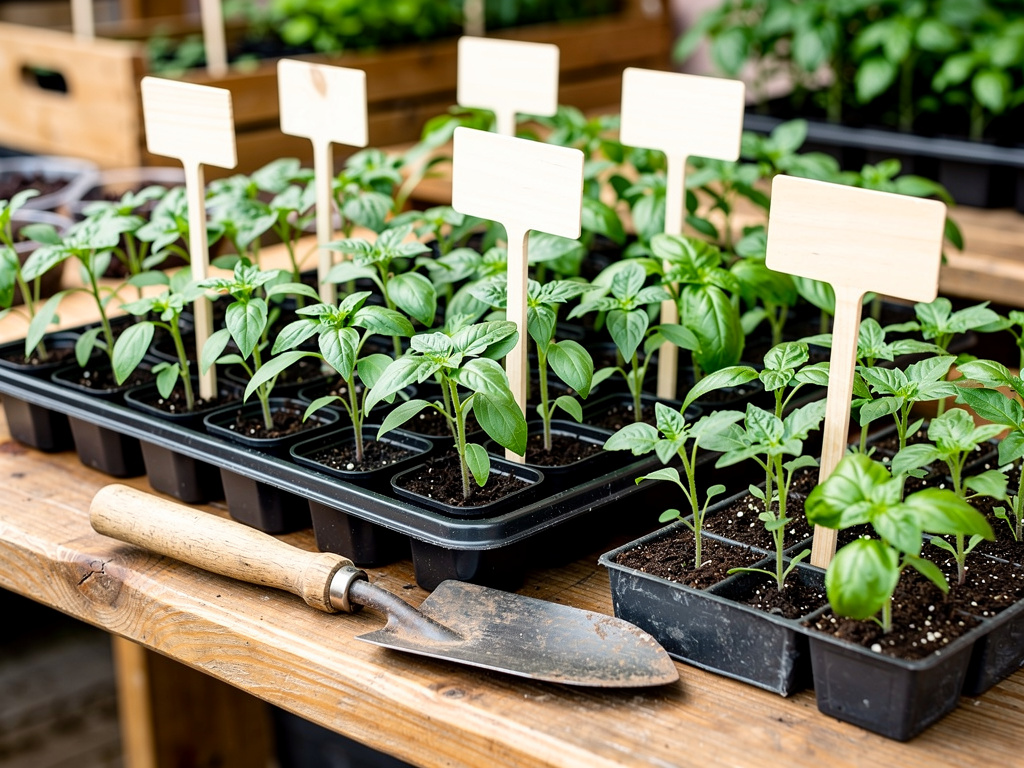


The short version: Yes, you can sell seedlings you grow at home in every state checked for this guide, but plants answer to your state's department of agriculture, not the health department, and most of the 10 states checked want a nursery license first. The 10 states checked split three ways. Maine, Pennsylvania, Florida, New York, Texas and California license plant sellers with no small-grower size or sales exemption on the pages checked, though Texas leaves out culinary herbs and California leaves out seed-only sellers and plants sold for indoor decoration only. Washington exempts you under $100 a year, Georgia and Nevada exempt some small growers, and North Carolina exempts vegetable transplants sold for home gardens. Among the states that list a fee, a license for a small grower runs from $5 a year in Maine to $300 in California for a grower with one sales location, and cottage food laws never apply because seedlings are not food.
Checked September 23, 2026 on each state agriculture department's own pages: Washington, Maine, California, Georgia, North Carolina, Nevada, Texas, Florida, Pennsylvania and New York, plus Washington's Department of Revenue business licensing pages, Florida Statute 581.131, California Food and Agricultural Code sections 6742 and 6743, California's sales tax regulation 1588, the federal plant patent law at 35 U.S.C. 163, the USDA's plant variety protection and SNAP pages, Meta's commerce policy, and the Homegrown, Square and Venmo pricing pages. Ten states are examples, not the whole country, and fees change every year. Homegrown customers create an account to place a first order, Homegrown handles pickup and local delivery rather than shipping, and there is no drop or countdown release feature.
Your seed rack is full by March. You started 72 tomato plants from three seed packets because you could not bear to thin a single one. A neighbor asks if she can buy six, and a friend says you should set up a table at the Saturday market. Before you print a price sign, it is worth knowing who regulates a flat of seedlings, because it is not the office most home vendors expect.
This guide covers the rule itself: vegetable starts, herb starts, flower starts and houseplants you propagate at home. It uses what 10 state agriculture departments said on September 23, 2026. If you already know you are allowed and want the growing side, our guide to selling plants and seedlings at the farmers market covers equipment, seed-starting timelines and what sells best. For license fees, go by the state table in this guide, which was checked on September 23, 2026.
Yes: every one of the 10 states checked for this guide lets a home grower sell seedlings, and most of them ask you to hold a nursery license from the state department of agriculture first. A nursery license is a registration, usually renewed every year, that lets you sell live plants. It is usually cheap, and it usually comes with the right of a state inspector to look at your plants for pests.
What surprises most new vendors is that the food rules they have heard about do not apply. A tomato seedling is a plant, not a food, so you will not deal with:
Instead, you deal with plant rules, which exist for one reason: to keep insects and plant diseases from riding into a new county on your seedlings. The Maine Department of Agriculture puts it plainly on its licensing and inspection page: inspecting plants for sale "helps prevent the spread of pests that can easily move from one area to another on plant material."
Seedlings are regulated like a nursery because state law defines "nursery stock" broadly enough to include a single tomato start in a 3.5-inch pot. Many home growers picture a nursery as a farm with greenhouses and a sales lot. The legal definition is much wider.
Here is how 4 states define it, from their own pages on September 23, 2026:
So a flat of pepper starts is nursery stock in all 4 states. Seed packets are the exception, since Florida's definition leaves out seeds, and the separate seed law behind selling homemade seeds starts at a $10 yearly registration in Florida. The word "nursery" in these laws is about what you sell, not how big you are.
The practical reason is pests. A single infested seedling can carry an insect or a disease into a garden, and then into a neighbor's garden. States license plant vendors so they know who is selling, and so an inspector can look at plants before they spread across the county.
In 6 of the 10 states checked, yes, a seedling seller needs a license or registration, with no small-vendor size or sales exemption on the state's page, though Texas and California leave a few kinds of plants out. The other 4 have an exemption that can cover a small home grower, but each one has its own test.
The states fall into three groups:
A few categories are exempt in more than one state. Florida exempts seeds from nursery stock, Pennsylvania excludes vegetable and flower seeds, and California exempts vendors who sell only seeds. California exempts plants sold only for indoor decoration, which covers some houseplants, and Nevada leaves "house plants that cannot be grown outside" out of its nursery stock definition. Cut flowers are exempt in Maine and Florida. Texas adds one that fits herb starts: its Nursery/Floral FAQ, checked September 23, 2026, says the state "does not regulate species of herbs grown for culinary purposes," as long as they are not commonly used as ornamentals.
If you sell seedlings and nothing else, assume you need a license until your state's own page says you do not. The fee is small next to a fine: Maine lists fines of up to $500, Nevada up to $5,000.
Of the 10 states checked on September 23, 2026, 6 have no size or sales exemption for a small seedling grower, 4 have a size, sales or buyer exemption that can fit a small home grower, and yearly costs for a small grower run from $0 to $300. The table puts each state's rule, exemption and cost side by side.
Scroll sideways to see every column.
| State | Who needs a license | Exemption on the state's page (size, buyer or product) | Yearly cost for a small grower | Agency |
|---|---|---|---|---|
| Washington | Anyone selling more than $100 of plants a year | Plant sales under $100 a year | $80.64 per location for retail sales of $100 to $2,500, plus a Department of Revenue processing fee of $50 for a new business license, or $10 to add it to one you hold, and $5 a year to renew | Washington State Department of Agriculture |
| Maine | Any business or individual offering plants for sale | None; a lower fee instead | $5 if under $500 of plants and under 150 sq ft of sales space, otherwise $25 per location | Maine Department of Agriculture, Conservation and Forestry |
| California | Any person selling nursery stock | Seed-only vendors; plants sold only for indoor decoration | $300 with one sales location: the $150 minimum license fee plus $150 per sales location | California Department of Food and Agriculture |
| Georgia | Growers with over 1,000 sq ft of production space, or who ship out of state, bring plants in from out of state to resell, or collect wild plants | 1,000 sq ft or less and none of the other triggers | $0 if exempt; otherwise a Live Plant Grower license at $105 plus $14 an acre for container or greenhouse plants, with a fraction of an acre charged as a full acre | Georgia Department of Agriculture |
| North Carolina | Growers selling vegetable transplants for commercial use, unless the buyer is a grower who knows how they were raised and plants them within 30 miles; any location growing outdoor perennial starts for sale | Vegetable transplants grown in NC for home, garden or non-commercial use in NC | $0 for vegetable transplants sold for home gardens; $20 a year as a registered nursery | NC Department of Agriculture and Consumer Services |
| Nevada | Most people selling plants as part of a business | Hobby growers who sell occasionally and do not advertise; sellers of only vegetable plants for farm production, only indoor decorative plants or cut flowers, or only bulbs | Not listed on the page checked | Nevada Department of Agriculture |
| Texas | Every location selling or growing nursery products for sale | Herbs grown for culinary purposes that are not commonly used as ornamentals, per the state's Nursery/Floral FAQ | $110 for a grower's own location (Class 2, up to 10 acres); the $180 Class M is listed for temporary market vendors that do not grow, so ask whether a grower selling at markets needs it too | Texas Department of Agriculture |
| Florida | Anyone growing plants for sale | None; vegetable plants and annuals are nursery stock | $35 for 1 to 1,000 plants | Florida Department of Agriculture and Consumer Services |
| Pennsylvania | Growers of nursery stock, which includes vegetable and bedding plants, certified as nurseries, and dealers who buy plants to resell, certified as nursery dealers | None on the page checked | $40 | Pennsylvania Department of Agriculture |
| New York | Anyone selling plants, as a grower or a dealer | None on the page checked | Not listed on the page checked; renewed every two years | NY Department of Agriculture and Markets |
We read each state's own agriculture department page on September 23, 2026. California's fees come from its license application form, revised May 2026; the form lets an applicant with no sales location enter $0 for the location fee, so a grower who sells only at farmers markets should ask CDFA which applies. North Carolina's fees come from its nursery regulatory services page. "Not listed" means the page we loaded gave no fee; call the agency before you assume it is free.
The Washington State Department of Agriculture's nursery license page lists "individuals who sell more than $100 worth of plants in a calendar year" among the people who need a license, and says plant sales of less than $100 a year are exempt. The license is an endorsement on your state business license, so you apply through the Department of Revenue's business licensing service. That service charges its own processing fee on top of the $80.64. Its fee page, checked September 23, 2026, lists $50 to open a new business, $10 to add an endorsement to a business license you already hold, and $5 at each yearly renewal.
For a small home grower, a license to sell plants costs between $5 and $300 a year in the 8 states checked that list a fee, and several states charge more as your sales, plant count or acreage grow. Georgia's exemption can bring it to $0, and the table below shows where each state lands.
Yearly license cost for a small seedling grower
Source: each state agriculture department's page, checked September 23, 2026. Georgia is $0 only for growers under 1,000 square feet who meet its other conditions; a grower who needs a license pays $105 plus $14 an acre for container or greenhouse plants, and a fraction of an acre is charged as a full acre, so $119 for a grower on under an acre. North Carolina's $20 registered nursery fee applies to commercial vegetable transplant sales and to perennial starts. Washington is $80.64 for retail sales of $100 to $2,500, plus a Department of Revenue processing fee of $50 the first year for a grower with no business license yet, or $10 to add the endorsement to one you already hold, and $5 at each renewal. Texas is the $110 Class 2 registration for a grower's own location; a grower who also sells at temporary markets should ask whether it needs the $180 Class M as well. California is the $150 minimum license fee plus $150 for one sales location; its form lets an applicant with no sales location enter $0 for that fee, so ask CDFA if you sell only at farmers markets.
How the fees scale as you grow:
Run the math on your own plan. Five hundred seedlings at $4 is $2,000 in sales, so even California's $300 for one sales location is 15% of a first season, and Maine's $25 standard license is about 1.3%.
A small or hobby vendor is whoever your state's exemption says it is, and the tests are specific: a dollar figure in Washington, square footage in Georgia and "no advertising" in Nevada, while Maine uses sales and space to set a $5 fee rather than an exemption. There is no national definition of a hobby grower.
The tests in the states that have one:
Nevada's hobby exemption ends the moment you advertise or otherwise solicit sales. A market booth sign, a social media post listing your plants and prices, or an order page would likely count as soliciting, so confirm with the Nevada Department of Agriculture. If you plan to promote your seedlings at all, plan on a license. We read that wording on the Nevada Department of Agriculture's nursery FAQ on September 23, 2026.
The practical read for most readers: if you are growing seedlings to sell on purpose, with a sign and a price list, you are past the hobby line in most states that draw one.
Yes, in North Carolina and Nevada the buyer matters: selling transplants to home gardeners is treated differently from selling them to farmers. In North Carolina, the difference is $0 and no inspection for vegetable transplants sold for home gardens versus nursery status, a $20 yearly registration for a small in-state grower, and state inspection and tagging of the transplants once you sell them for commercial use. The likely reason is scale. A farmer who plants 2,000 of your pepper starts across 10 acres can spread a disease much further than a gardener with six plants in a raised bed.
North Carolina's Department of Agriculture and Consumer Services says on its vegetable transplant certification page that transplants grown in the state and "intended for home, garden, or any non-commercial use in North Carolina" are exempt from its inspection requirements. Sell transplants for commercial use, which likely includes selling to a farmer or anyone who will resell the plants or their crop, and the state treats you as a nursery. There is one more exemption: sales to a grower who knows how the plants were raised and sets them out within 30 miles of where you grew them. That home garden exemption covers vegetable transplants only. North Carolina's nursery regulatory services page leaves other annual plants, and perennials grown in the state for indoor use, out of nursery stock, but its definition covers all other cultivated plants, so outdoor perennials count. A location that sells perennial herb or flower starts such as rosemary, thyme or chives is a nursery, and one under an acre that sells only in the state registers for $20 a year, no matter who buys the plants.
Nevada runs the other way. Its exemption covers people who "produce and sell only vegetable plants intended for agricultural production," meaning plants sold to other farmers, while home garden sales usually need a license.
What this means for you:
Write down who your buyers are before you call your state office. It is usually the first question they ask.
Possibly: New York inspects a new grower before registering it, Florida requires inspection before plants are sold, and Maine and Georgia say licensed vendors are subject to inspections. The inspector looks at your plants and the space where you grow and sell them, which for a home grower can be a room in your house.
How often each state says it inspects, on its own page on September 23, 2026:
What inspectors look for, as Maine and Georgia describe their visits:
Georgia's page says a significant part of each inspection is dedicated to exotic pest detection. Maine's inspectors go over the report with the grower afterward, and the state describes that visit as a chance to ask questions about a pest or a rule.
Start your seedlings in fresh bagged seed-starting mix, not garden soil, and look at the undersides of 10 random leaves each week. A single whitefly on a 72-cell tray in April becomes a tray you cannot sell in May, and insects are one of the things Maine and Georgia inspectors look for.
Seedlings you grow from seed are generally yours to sell, but plants you grow from cuttings of a patented variety are not, because a plant patent gives the owner the right to stop others from reproducing and selling that plant. Plant patents are federal law, so this rule is the same in every state.
The federal plant patent law, 35 U.S.C. 163, gives the patent holder "the right to exclude others from asexually reproducing the plant," and from selling the plant so reproduced. Asexual reproduction means making a new plant from a piece of the old one, rather than from seed:
Many newer landscape plants and some houseplants carry a plant patent, and the plant tag often says so. Rooting cuttings from one of those plants and selling them infringes the patent even if you bought the original plant. Succulents fall under the same rule, since a single echeveria leaf roots into a copy of its parent, and the rules for selling homemade succulents walk through one patented echeveria, US Plant Patent PP34,256, alongside Arizona's saguaro law.
Starting plants from a seed packet you bought is different. You are not copying a patented plant from a cutting. Some seed varieties are still protected, though. The USDA's Plant Variety Protection Office protects new varieties grown from seed for 20 years, and its certificate owners "have rights to exclude others from marketing and selling their varieties," while a utility patent can also cover a variety. Before you sell starts of a variety, check the packet for "PVP", "patented" or "propagation prohibited". The same check applies if you save seed from your plants and sell it in packets, which falls under your state's seed law rather than its nursery license, with the permit and label rules covered in our guide to pricing and selling saved seed.
Hemp and cannabis are a separate case. Maine, for example, says a nursery license is not what covers hemp seedlings and clones; they fall under the state's hemp program instead.
Yes, with the same license, though some states add rules for temporary markets, charity plant sales and anything that crosses a state line. Where you sell changes the paperwork more than whether you can sell. For the places themselves, from a garden club sale to a garden center that buys whole flats, where to sell seedlings locally compares seven options on what a $20 order of $4 starts costs you in each.
Farmers markets and pop-up sales:
Online and social media:
Shipping to another state is where it gets harder. Texas says that to ship plants to out-of-state locations, you need a phytosanitary certificate, an official document from a state plant inspector saying the plants were checked. It costs $30 per inspection. North Carolina says anyone shipping transplants out of state should check the importing state's rules first. For most home growers, local pickup keeps you inside one state's rules.
It depends on your state: California, the one state whose tax rule we checked, does not tax annual plants that produce food, and every other state sets its own rule. Seedlings sit in an odd spot between food and garden supplies.
California's Regulation 1588, from the California Department of Tax and Fee Administration, says tax does not apply to sales of seeds, annual plants and non-annual plants "the products of which ordinarily constitute food for human consumption or the products of which are to be sold in the regular course of the purchaser's business." The food test covers the seeds and annual plants too, so a $4 tomato start is not taxed in California, while a $4 petunia or houseplant is.
Two related facts worth knowing:
For the state-by-state basics on registering, collecting and filing, our guide to sales tax at farmers markets walks through it. Your state's tax agency, not its agriculture department, has the final word on tax.
Keep a record of every sale, your seed sources and your license, because an inspector, a tax office or your market manager may ask for any of them. Good records also tell you what to plant next year.
A simple record set for a home seedling business:
The sales log is the one most vendors skip, and it is the one that answers "how many Early Girl tomatoes did we sell last May?" when you plan the next seed order.
Once your license is in hand, the lowest-waste way to sell seedlings is by pre-order, so you sow to a known count instead of guessing in February what people will want in May. Seedlings have a short window. A tomato start that is perfect on May 10 is leggy and root-bound by June 1.
That is the problem Homegrown solves for a seedling vendor. It costs $10 per month billed annually, or $12.50 billed monthly, with no percentage fees beyond standard payment processing of 2.9% + $0.30, which the vendor pays. You list each variety, and customers pick their plants and a pickup day and pay ahead. What it does for a seedling vendor:
How it compares with what seedling vendors usually use, on a $20 order of five seedlings at $4 and a month of 50 orders:
Scroll sideways to see every column.
| Way to get paid | Monthly plan | Trial period | Platform fee | Card processing | Customer pays on a $20 order | Vendor pays on a $20 order | Vendor pays in a month of 50 orders |
|---|---|---|---|---|---|---|---|
| Homegrown | $10 billed annually ($12.50 monthly) | 7 days, no charge until day 8 | 0% commission | 2.9% + $0.30, paid by the vendor | $20.00 | $0.88 plus the plan | $54.00 ($56.50 on monthly billing) |
| Square Free, online link | $0 | None on the Free plan | None | 3.3% + 30¢ online | $20.00 | $0.96 | $48.00 |
| Square Free, Tap to Pay on your phone at the booth (no hardware) | $0 | None on the Free plan | None | 2.6% + 15¢ in person | $20.00 | $0.67 | $33.50, with no pre-orders |
| Square Plus, online link | $49 per location | 30 days | None | 2.9% + 30¢ online | $20.00 | $0.88 plus the plan | $93.00 |
| Venmo business profile | $0 | Not applicable | None | 1.9% + $0.10 per payment | $20.00 | $0.48 | $24.00, with no order page or pickup days |
We checked every price on each company's own pricing page on September 23, 2026: findhomegrown.com/signup, squareup.com/us/en/pricing and venmo.com/resources/our-fees. Card processing is figured on the $20 price. Venmo charges 2.29% + $0.09 instead when a payment comes through Tap to Pay.
Homegrown is not the cheapest line in that table. Venmo and Square's Free plan cost less at this volume, but Venmo is a payment app with no order page, so you track 50 orders and 250 plants by hand, and Square Free charges 3.3% + 30¢ on every online order. Homegrown's case is the pre-order: knowing in March exactly how many of each variety to start.
What Homegrown does not do for a seedling vendor: it does not license you, check your state's nursery rules or book your inspection. It does not ship plants. Your storefront is listed on the Homegrown marketplace, but plan on most orders coming from people you send to your own link. Customers create a Homegrown account to place their first order. There is no drop or countdown release feature; you set pickup days and take pre-orders. Once your license is sorted and your seedlings are legal to sell, you can set up your seedling pre-orders on Homegrown before seed-starting season.
In a pull of the Homegrown catalog on September 23, 2026, 107 of the 2,644 products listed by 301 vendors sat in the Plants and Flowers category, from 16 vendors. 47 were vegetable, herb and salad-green plants from 2 vendors. One vendor, Red Shed Market, listed 43 varieties in 3.5-inch pots at $4.00 each, including 14 tomatoes, 16 peppers and 3 basils. Another sold collard greens and dinosaur kale plantings at 2 for $5. For what a price like $4 covers, see our guide to how much to sell seedlings for.
Most trouble comes from five avoidable mistakes, and the most common is assuming that because seedlings are not food, nobody regulates them. None of these needs a lawyer to fix.
Two local rules sit outside the state agriculture department. Your city or county may need a general business license, and Nevada's page tells vendors to contact local government for one. If customers pick up at your house, zoning can limit home businesses; our guide to farm stand zoning laws covers the questions to ask.
You can confirm your state's rules in one afternoon, for $0, with the agriculture department's nursery page and one phone call. Do it in winter, before you sow, so the license is in hand before the spring rush.
State rules and fees change, so verify your state's current rules each season rather than relying on a number from last year. For the market side of the paperwork, our overview of farmers market vendor permits by state lists what each state asks of food and farm vendors.
Yes, it is legal to sell seedlings from home in all 10 states checked for this guide, as long as you follow your state's nursery rules. Most of those states require a nursery license or registration from the department of agriculture, while Washington, Georgia, Nevada and North Carolina have exemptions that can cover some small home growers.
In most of the 10 states we checked, yes. Vegetable starts are nursery stock in states like Pennsylvania, Florida and Maine. Texas registers a home grower's own location as Class 2 for $110 and lists a separate $180 Class M for temporary market vendors that do not grow, so ask the state whether a grower who sells at markets needs both. Washington lets you skip the license only if your plant sales stay under $100 for the year.
Plants were not among the 24 prohibited categories on Meta's commerce policy page on September 23, 2026, so Meta's policy does not ban listing ordinary seedlings. Selling through Marketplace does not change your state's nursery rules, so the license question is the same as for a market table.
Usually yes, as long as the parent plant is not patented and you hold any license your state requires for houseplant sales. California exempts plants sold only for indoor decoration, and Nevada's nursery stock definition leaves out indoor-only house plants, while Maine counts houseplants as nursery stock. A plant patent bars rooting and selling cuttings of that variety, so check the tag. Our guide to selling houseplants from home covers the business side.
No. Cottage food laws cover food made in a home kitchen, and seedlings are plants, not food. The agency that regulates seedling sales is your state department of agriculture, through its nursery or plant industry program.
Microgreens are cut and sold to eat, while nursery rules cover plants sold for planting. California's license law, for example, covers plants sold "for planting, propagation, or ornamentation." If you grow both, ask your state agriculture department which rules apply to each before you sell.
More on growing, pricing and selling plants:
A license, a clean grow room and a list of who ordered what is all most home seedling vendors need. When your state paperwork is done, start your Homegrown storefront and let customers reserve their plants before you sow.



