
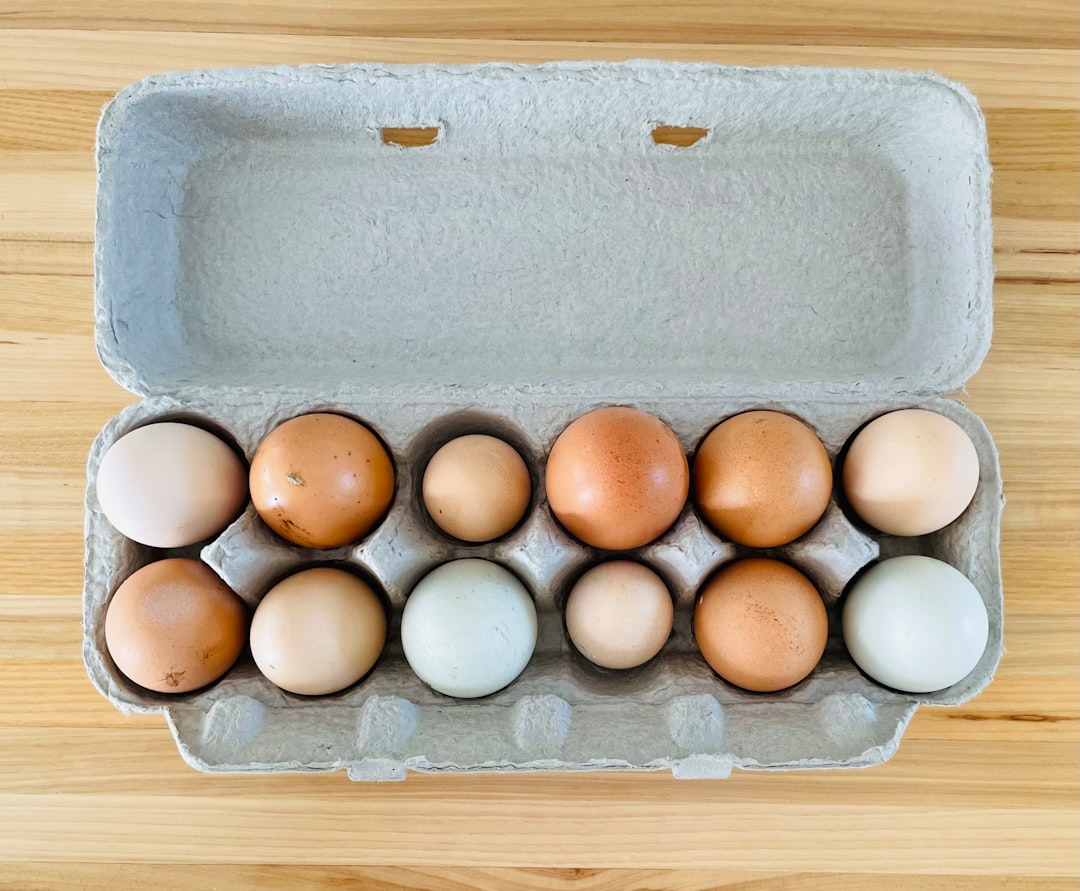


The short version: You usually do not need a food permit to sell whole, uncut fruits and vegetables you grew yourself. In the 8 states whose rules we read for that question (Massachusetts, Michigan, Pennsylvania, Ohio, Oregon, Washington, North Carolina and California's backyard-grower path), whole produce needs no state food license, though Ohio's exemption holds only while produce is the one kind of food you sell. What does trigger paperwork is the rest of the stand: a structure people walk into or one over a size line, a road sign, eggs past a flock or volume limit, baked goods or jam, and your property's zoning. One call to your county zoning office settles most of it, and the 8 questions to ask are near the end of this guide.
Checked on each state's own statute or agency page, October 1, 2026: the rules here come from 12 states, listed in the table further down with what each one says, and from the FDA, whose rules are in the egg and permit-trigger sections. Rules change and counties can add their own, so verify your state's current rules before you open. Homegrown's numbers come from its signup page, checked the same day.
The most common question people ask before starting a farm stand is not "what should I sell?" It is "am I even allowed to do this?" The fear of accidentally breaking a law keeps plenty of backyard growers from ever putting out a table, even when the only thing they want to sell is extra zucchini.
Start with the cottage food law checker to see what your state says about the baked goods and jars you might add later.
Here is the short answer: you probably need fewer permits than you think. This guide shows you which ones, using the actual wording from 12 states and the FDA, so you can stop guessing and make one well-aimed phone call. Each rule below names the statute or agency page it came from and the date we read it, so you can check it against your own state.
Want the simple, compliant way to sell? Once your permits are sorted, let regulars order and pay before they drive over. Set up a Homegrown storefront ($10/mo billed annually, 0% commission, standard 2.9% + 30¢ card processing), or compare the best platforms to sell food from home first.
For raw, unprocessed produce you grew and sell from your own property, you usually need no food safety permit. Every one of the 8 states we checked on this point exempts whole, uncut produce from their food license: Massachusetts, Michigan, Pennsylvania, Ohio (for a stand selling one type of low-risk food), Oregon, Washington, North Carolina, and California for backyard growers. You can sell tomatoes, peppers, squash and cut flowers without a food license in all of them.
The reason is simple. State food agencies regulate the food, not the table. A whole tomato is a raw farm product. A jar of tomato sauce is a processed food. That split, processed versus unprocessed, decides almost every food permit question a farm stand owner faces.
But "no food permit" does not mean "no rules at all." Your county may limit sales in a residential zone, your county may cap sign size, and a stand customers walk into can need a building permit. The trick is knowing which of the four permit types below actually apply to you. For most small stands selling produce, that is one or two, not all four.
According to Oregon State University Extension's farm stand guide (EM 9274, reviewed 2024), "there are license exemptions if you are selling only fruit, vegetables, eggs and honey produced on your farm." The same guide says a stand that is just off-street parking, signs, "a card table and honor system of receiving payment may be less expensive" to permit than a stand with a building, and that permit fees depend on your county.
A state exemption does not stop your town from asking for more. Massachusetts says it plainly in its March 8, 2022 farm guidance: local boards of health "may adopt more stringent retail food regulations or ordinances, including requiring a permit where the state code would not require a permit." Pennsylvania's law exempts produce-only stands from the license but says they "shall remain subject to inspection." We checked both on October 1, 2026.
Four kinds of permits or licenses can touch a farm stand: food safety, zoning, building and business licensing. Knowing which ones apply to you keeps you from doing either of two costly things: paying for permits you do not need, or skipping the one you do.
The table shows who runs each one, what sets it off, and a real number or rule from the sources we read. Costs are set by each state or county, so we show real examples instead of a made-up national range.
Scroll sideways to see every column.
| Permit type | Who enforces it | When it applies | A real example from the sources we read |
|---|---|---|---|
| Food safety / health department | State agriculture or health agency, sometimes the local health department | When you sell processed, prepared or temperature-controlled foods, or more than a state allows (Ohio: two or more kinds of low-risk food) | Texas caps a farmer's yearly permit fee at $100 and makes one permit cover farmers' markets, farm stands and the farm. Ohio's farm market registration has no fee. |
| Zoning / land use | County or city planning and zoning office | When your zoning limits retail sales, signs or structures | Larimer County, Colorado allows farm stands in every zone district (outside city limits) on a property with a principal agricultural use, with no planning process. |
| Building permit | County or city building department | When you build a structure past a size line or one customers walk into | Larimer County: a permit for any stand customers walk into, or any stand over 200 square feet. Florida exempts farm buildings on bona fide farmland from the building code and local fees, except floodplain rules. The statute does not name farm stands, so ask your county whether a retail stand counts. |
| Business license / sales tax | City or county clerk, state revenue department | When your city, county or state requires a license for any sales, or your products are taxable | Washington bars cities and towns from requiring a license from growers who sell their own fruits, vegetables, berries or eggs. |
Sources: Texas DSHS farmers' market page (Health and Safety Code 437.0065), OSU Extension's March 2023 Ohio law bulletin, Larimer County's farm stand page (Land Use Code 3.4.4.E), Florida Statutes 604.50 and Washington RCW 36.71.090. We checked each one on October 1, 2026. Other states and counties set their own fees.
Most small farm stands selling produce only deal with zoning and, sometimes, a business license. Food safety rules and building permits usually come in later, when you add baked goods, eggs past a limit, or a shed customers step inside.
Here is what each one covers in detail:
Food Safety / Health Department permits apply when you sell food that has been processed, prepared or needs temperature control. Whole fresh fruits and vegetables were exempt in every state we checked on that point. Eggs and honey have their own rules (the egg section below has the numbers). Baked goods, jams and preserves usually fall under cottage food laws, which are separate from farm stand rules. If you want to sell cottage food products at your stand, check your state's cottage food rules, because the requirements are different from produce.
Zoning / Land Use permits depend on how your property is zoned. Farmland is the friendliest: North Carolina exempts bona fide farms from county zoning, and Virginia bars localities from requiring a special use permit for farm sales on land zoned agricultural unless there is a substantial impact on the health, safety or general welfare of the public. A residential lot is where you need to check. This is the one permit category you should always verify before opening, and our farm stand zoning guide walks through looking up your own lot.
Building permits apply when you put up a structure past your county's line. Under Larimer County's rule, a folding table that customers shop from the front needs no building permit; ask how your county treats a canopy over it. A wooden shed with a roof and a door that customers walk into probably is. Counties draw the line differently: by size, by whether the public goes inside, or by whether it has a foundation. According to Larimer County, Colorado's farm stand rules, farm stands "designed for public entry or greater than 200 square feet require a building permit." A stand under 200 square feet that customers shop from the outside needs none there.
Business licenses and sales tax depend on your city, county and state. Some cities and counties license every business, a farm stand included. Washington goes the other way and stops cities and towns from licensing growers who sell their own produce and eggs. Sales tax on food also differs by state, so ask your state revenue department how sales by the grower are treated. We did not check sales tax state by state for this guide.
Each of the 8 states whose food rules we checked lets you sell whole, uncut produce you grew without a state food license, though several add conditions. Ohio limits it to one type of low-risk food, Pennsylvania and Michigan keep the right to inspect, Massachusetts lets local boards require a permit anyway, and California's backyard path has its own record-keeping and signage rules. This table puts the actual wording side by side so you can see where the lines fall. It is not every state; it is the 12 we read on October 1, 2026.
Swipe the table sideways to see all five columns.
| State | Whole, uncut produce you grew | Eggs | What changes the answer | Source we read |
|---|---|---|---|---|
| Massachusetts | No Retail Food Code permit | No permit if kept at 45°F or colder | Cutting or processing anything; local boards can require more | MA DPH farm guidance, March 8, 2022 |
| Michigan | No food establishment license | No license under 3,000 hens, direct sales, no internet, mail-order or consignment sales, labeled | Anything beyond whole produce; selling eggs online | MCL 289.4105 and the MDARD exemptions page |
| Pennsylvania | Exempt from the retail food license, still subject to inspection | Not checked here | Selling anything that is not a raw farm product, unless it is prepackaged, non-potentially hazardous food or honey under the state's Honey Act exemption | 3 Pa.C.S. 5703(b)(2)(ii) |
| Ohio | No license or registration if it is your only low-risk food (a "roadside stand") | Low-risk if sold where the hens are raised, 500 or fewer birds | Two or more low-risk foods: free state farm market registration or a local food license | OSU Extension law bulletin, March 2023 |
| Oregon | License exemption for your own fruit and vegetables | Same exemption for your own eggs and honey | Selling other farmers' products, meat or milk; food for eating on site | OSU Extension EM 9274, reviewed 2024 |
| Washington | The state retail food code does not count a stand selling only whole, unprocessed produce as a food establishment; no state food processor license to wash, trim and pack it; cities and towns cannot require a license to sell it | Cities cannot license you to sell your own eggs | Dairy, meat, poultry and fish are excluded from the no-license rule | WAC 246-215-01115; WSDA small farm handbook (2019); RCW 36.71.090 |
| North Carolina | Whole fruits and vegetables fall under the state Produce Safety Program, which requires no permit or license to sell them | Under 30 dozen a week: no washing or grading, label name, address and "ungraded eggs"; refrigerate to 45°F or colder | County zoning does not apply to bona fide farms | NCDA&CS Produce Safety Program; NC State Extension farmers market flyer and egg guide (2024); G.S. 160D-903 |
| California (backyard growers) | A "community food producer" on land not zoned for farming can sell whole uncut produce at their own location with no county registration, unless a local ordinance says otherwise | Unrefrigerated shell eggs, capped at 15 dozen a month | Cutting beyond harvest; local zoning; 30 days of sales records; a sign with your name and address when you sell where you grew it (packaged produce gets a label with them) | Health and Safety Code 113752 and 114376; LA County Public Health |
| Texas | No temporary food permit to sell whole, intact produce at farmers' markets under state health department jurisdiction | At farmers' markets: a temporary food establishment license, eggs kept at 45°F or colder, cartons labeled "ungraded" with safe handling instructions (farm stands not addressed on that page) | If a farmer's permit is required, its fee is capped at $100 a year and it covers farm stands too | Texas DSHS farmers' market page |
| Virginia | Not checked for food licensing here | Not checked here | Localities cannot regulate on-farm sales of farm products without a "substantial impact" | Va. Code 15.2-2288.6 |
| Florida | Not checked for food licensing here | Not checked here | Farm buildings and farm signs on bona fide farmland are exempt from the building code and local fees | Fla. Stat. 604.50 |
| Colorado (Larimer County) | Food sold must meet all local, state and federal law (county code) | Allowed, subject to the county's poultry keeping rules | Public entry or over 200 sq ft needs a building permit | Larimer County Land Use Code 3.4.4.E |
We loaded every source in this table on October 1, 2026; where the last column shows a date, it is when the agency published or last updated its page. Texas, Virginia, Florida and Colorado appear for the zoning, building or fee rule we read, not a full food-license check. This is a sample of 12 states, not a 50-state survey, so verify your state's current rules.
The number of things you sell changes your status. OSU Extension's March 2023 law bulletin says selling one type of low-risk food makes you a "roadside stand" that needs neither a license nor registration. Selling more than one type of low-risk food takes you out of that roadside stand category. Add eggs to your tomatoes and you either register free with the Ohio Department of Agriculture as a farm market or get a local food license.
The pattern across these states is consistent. Whole produce you grew is the easy case in every state where we checked the food rules. The answer changes when you cut it, cook it, add a second product (Ohio), sell eggs past a limit, or sell somebody else's crops.
Knowing what is usually exempt saves you from applying for permits you do not need. Here is what the states we read did not require a food permit for, and the condition each one carries:
The key word is "unprocessed." The moment you cut, cook, can, dry, ferment or otherwise transform a raw farm product, you cross from the farm stand exemption into food processing rules. A whole tomato is exempt. Tomato sauce is regulated. A head of lettuce is exempt. A bagged salad mix may need a license. Know where that line is in your state. LA County draws it at the knife: "cutting lettuce to harvest is allowed, but cutting it further to make a salad mix is not allowed," and the rules for selling vegetables from your garden legally show where Texas, Pennsylvania and four other states put the same line.
Keep the stand small enough that nobody has to ask. A 10 by 10 foot pop-up canopy covers 100 square feet, half of Larimer County's 200-square-foot building permit line. Set the table at the front edge so customers shop from outside the canopy, and ask the building department whether a canopy counts. If you later want a walk-in shed, call the building department before you buy lumber, not after.
Usually not for a small flock, but eggs come with more strings than vegetables. Every source we read set a limit, a storage rule or a labeling rule. The limits differ a lot from state to state, so find yours before you put a cooler out by the road.
Here are the egg rules we read in 5 states, plus 2 federal rules, on October 1, 2026:
Michigan's egg exemption, as MDARD words it on its exemptions page (checked October 1, 2026), only applies if you "avoid all internet, mail-order, and consignment sales." If you keep hens in Michigan and want customers to reserve eggs online, call MDARD at the number on that page before you list them. Produce has no such line in the Michigan rule we read.
The 45°F number shows up in the FDA rule and in the Massachusetts, North Carolina and Texas sources, so plan on a cooler or fridge for eggs at an unattended stand. For pricing, cartons and display, our guide to selling eggs at a farm stand covers the practical side.
Six things move a farm stand from "no permit needed" into permit territory. Here they are, with what the sources we read actually say about each one:
The FDA's inflation-adjusted cut-offs table is where that $34,324 comes from (content current as of May 13, 2026). The rule's original 2011 figure was $25,000, and you will still see that older number in older guides.
A farm stand needs a building permit when it crosses your county's size line or is meant for shoppers to step inside. Under Larimer County's rule, a stand under 200 square feet that customers shop from the outside needs no building permit at all. Here is how 3 states (one through a county code) draw the line:
If your stand will have power for a cooler or lights, an electrical permit can apply even when the structure itself does not need one, which is why Oregon State Extension lists electrical among the permits to ask about. Planning a build? Our cheap DIY farm stand guide has sizes and materials, so you can pick a design that stays under your county's line.
Yes, in all 3 states and 1 county whose farm zoning rules we read, as long as your zoning allows retail farm sales and the stand meets setbacks. Zoning is the deciding permit for a stand on your own land, and the answer depends on how your lot is zoned:
Notice the condition in each one: a real farm use. A lot with a vegetable garden may or may not count, and that is the question to put to your zoning office. Can you put a farm stand in your front yard? Usually the same answer applies, plus two front-yard checks: the setback from the road or sidewalk, and any limit on signs.
A residential lot can usually host a small farm stand only if your zoning code allows home sales, so the zoning office is your first call, not the health department. Many backyard growers live on a quarter acre in a subdivision rather than 40 acres of fields, and the rules are different there. California is the clearest example we found of a state writing rules for exactly this case.
California's "community food producer" is someone growing food "on land that is not zoned for agricultural use but is otherwise in compliance with applicable local land use and zoning restrictions." That person may sell whole uncut produce and up to 15 dozen eggs a month without registering with the county, when selling at their own location, unless a local ordinance says otherwise. They keep sales records for 30 days, and when they sell on the site where the food was grown, they post a sign with their name and address (packaged produce carries the same on its label). Notice the condition: you still have to follow local zoning.
What to check in a residential zone:
The practical reality: in the two counties whose enforcement pages we read, zoning rules are enforced when someone complains. Boulder County, Colorado says its "code enforcement is complaint driven" and answers "No" to whether it patrols for violations. King County, Washington says the same: "Code Enforcement is complaint based." That is not permission. Doing it right from the start protects you if a neighbor does call, and a friendly heads-up to the neighbors goes a long way.
Sometimes, and it depends far more on your city than your state, because the city's zoning code decides where retail sales from a house are allowed. Rules from 2 states we read reach into towns:
Inside a city, call the planning or zoning department rather than the county. Ask whether your zone allows a home occupation or produce sales, and whether a sign or table near the sidewalk needs a permit.
A business license for a farm stand is set by your city, county and state, and it is an easy one to forget. Some places require a general business license for any sales. Others exempt growers. Washington's RCW 36.71.090 is the clearest grower exemption we read: cities and towns cannot require a license from growers selling their own produce and eggs.
Sales tax is a separate question. Food is taxed differently from state to state, and farm sales sometimes get their own treatment, so call your state revenue department and ask two questions: are my products taxable, and do I need a seller's permit for sales at my stand? We did not check sales tax state by state for this guide. Our farm stand business license guide covers the license side in more detail, and the guide to sales tax at farmers markets covers how food sales tax works when you sell in person.
Online orders and cash at the stand are not handled the same way. Homegrown's signup page (checked October 1, 2026) says it calculates sales tax at checkout and "files and remits on your behalf, all 50 states" for orders placed through your storefront. Cash, card and Venmo sales taken at the stand itself are still yours to report.
Yes, an honor system farm stand is legal wherever the products on it are legal to sell, staffed or not. None of the sources from the 12 states we read set a rule about whether someone has to staff a farm stand. They regulate what you sell and where, not whether you are standing next to it. Oregon State Extension describes stands that "rely on the honor system for payment" right alongside staffed ones.
A few things to keep in mind:
Theft is the other honor system question. Our guide to setting up an honor system farm stand covers lockboxes, signs and what to leave out overnight.
In the two counties whose enforcement pages we read, enforcement starts with a complaint and a request to fix the problem, not a fine, and what happens next depends on whether you fix it. A complaint leads to a staff visit or a letter asking you to comply. Boulder County says that if a violation exists, "the County will contact the property owner with the necessary steps to abate the violation." King County, Washington says first contact with the property owner "generally occurs within 30 days of receiving a complaint," that its officers "work with property owners in an attempt to educate them," and that civil penalties come when an owner is a repeat offender or unwilling to comply.
Food rules are a separate track run by your state's health or agriculture department. Selling processed food without the cottage food registration or license your state requires falls under that food law, not zoning, and the guide to farm stand health department permits covers that side. If your stand sells only whole produce you grew, the 8 states where we checked food rules needed no food license (Ohio adds a condition: produce has to be the only food on the table), so there is little to get wrong there.
Mostly baked goods, which is the part of a farm stand that brings food rules with it. Fresh vegetables, the part that needs no food license in the states we read, did not show up at all in the farm stand listings we counted.
In a pull of the Homegrown catalog on October 1, 2026 (2,748 products from 308 vendors), 8 vendors either have "farm stand" or "farmstand" in the store name or say in their own product descriptions that pickup is at their farmstand. Together they list 76 products. We read every one by name, category and description: 46 are baked goods, 13 are other processed foods (jams, butters, granola, mixes, cider, coffee, tea, dried apple chips and a dried sourdough starter), 8 are cut flower products, 4 are eggs, 3 are honey and 2 are not food. None is a whole fresh fruit or vegetable. That makes 59 of the 76 baked or processed, the products that fall under cottage food or food processing rules rather than the farm stand exemption.
Products listed by 8 Homegrown farm stand vendors, by type
Source: Homegrown catalog pull, October 1, 2026, 76 products from 8 vendors, each product read by hand. A listing count shows what vendors put up for sale, not how much sold.
Read the takeaway this way. If your stand will sell bread, cookies or jam alongside the vegetables, your state's cottage food rules matter more than any farm stand rule. Check them first with the cottage food law checker, and see what to sell at a farm stand for how other stands balance the mix.
Two of the egg listings show how stands handle eggs in practice. Country Apple Orchard Farm Stand marks its dozen as "for in-store purchase only and cannot be reserved ahead of time." Puller Farm Stand lists a dozen at $4 and adds, "Bring your own clean, undamaged carton and get your eggs for $3/doz!" Before you copy that, check your state's carton rule. North Carolina, for one, allows reused cartons only if they are "clean, unbroken and free of foreign odor," with any incorrect information on them marked through (NC State Extension).
Once your permits are sorted, the next problem is the regular who drives over at 4 p.m. and finds the eggs gone. A Facebook post works but scrolls away within hours. A handwritten chalkboard only reaches people already driving past. A pre-order page lets regulars reserve and pay before they leave the house, and you set out exactly what was ordered.
Homegrown is $10 per month billed annually ($12.50 billed monthly), with no percentage fees beyond standard payment processing. You list what is on the stand this week, print the built-in QR code for your road sign, and customers order and pay ahead for pickup at the stand. Real-time inventory tracking is included, so you set how many dozen are available and the quantity updates automatically as you sell. Orders placed through your storefront have sales tax calculated and remitted by Homegrown, which is one less form for the stand.
Compare that with the two tools most stands start with. Venmo is cheap (1.9% + $0.10 on a business profile) but it is only a payment, so nothing stops two people paying for the last dozen. Square's free plan costs $0 a month and charges 3.3% + 30¢ on online card payments, a good fit if you mostly take cards in person at the stand (2.6% + 15¢ there).
Swipe sideways for the full fee stack on each tool.
| Tool | Monthly plan | Trial | Platform fee | Card or payment processing | Customer pays on a $20 order | Vendor pays on a $20 order | Vendor pays in a month of 50 orders at $20 |
|---|---|---|---|---|---|---|---|
| Homegrown | $10 billed annually ($12.50 monthly) | 7 days, no charge until day 8 | $0, 0% commission | 2.9% + $0.30, paid by the vendor | $20.00 | $0.88 plus the plan | $54.00 ($56.50 on monthly billing) |
| Square Free plan, online payment | $0 | None needed ($0 plan) | None listed | 3.3% + 30¢ | $20.00 | $0.96 | $48.00 |
| Venmo business profile | $0 | None needed ($0 plan) | None | 1.9% + $0.10 | $20.00 | $0.48 | $24.00 |
We checked these on Homegrown's signup page, Square's pricing page and Venmo's fee page on October 1, 2026. Processing is figured on the $20 price. Square in person is 2.6% + 15¢ on its free plan. Venmo takes the payment but has no order list, inventory or pickup schedule.
Homegrown is the most expensive of the three on fees alone at 50 orders a month, by $6 over Square's free plan. What the extra pays for is the ordering: a menu of what is on the stand, reserved quantities, pickup times, and sales tax handled on those orders.
Be clear on what Homegrown does not do. It does not get you a permit or check your compliance, and it does not handle cash or the honor box. Selling by the pound is on the roadmap, not live, so price produce by the bunch, bag or basket. Customers create a Homegrown account to place their first order. There is no timed "drop" or countdown release, and while your storefront is listed on the Homegrown marketplace, plan on most orders coming from people you send to your own link. For letting regulars reserve eggs before they sell out, it is simpler than managing a text list. Our guide to QR code ordering at a farm stand shows the sign setup.
One phone call to your county zoning office answers most of these 8 questions, so ask them before you build or print a sign. Do not guess. Here are the eight specific questions to ask:
Write down the answers, the name of the person you spoke with and the date. If you ever need to show what the county told you, that note is your record.
For a full guide on getting your farm stand up and running, read our complete beginner's guide to starting a farm stand. Once your permits are sorted, the next question is how customers find out what you have today, and the section above on pre-orders covers that. If you are ready to try it, start a Homegrown storefront and put the QR code on your stand sign this weekend.
Selling fresh, whole vegetables you grew needed no state food license in the 8 states whose food rules we read: Massachusetts, Michigan, Pennsylvania, Ohio, Oregon, Washington, North Carolina and California's backyard-grower path. Ohio's exemption ends once you add a second kind of food, such as eggs. The permit question in a front yard is usually zoning: whether your zone allows sales from a home, how far the stand sits from the road, and the sign size. Call your city or county zoning office and ask whether agricultural direct sales are permitted in your zone. One short call usually gets you a clear answer.
Often yes for a small flock, within your state's limit. Ohio's low-risk rule covers 500 or fewer birds, Michigan's license exemption covers fewer than 3,000 hens with no internet, mail-order or consignment sales, California's backyard growers can sell up to 15 dozen a month, and North Carolina skips washing and grading under 30 dozen a week with a labeled carton. Keep eggs at 45°F or colder, the limit in the FDA's rule for eggs held where food is sold to consumers and in the Massachusetts, North Carolina and Texas sources we read. California's backyard-grower path is the exception: it allows unrefrigerated shell eggs. Check your state department of agriculture for its egg rules before you sell.
When the stand sells nothing but whole produce you grew, no food license was required in any of the 8 states we read for food rules (in Ohio, as long as you sell no second kind of food), so there is usually nothing to be out of compliance with on the food side. Zoning is different: in Boulder County, Colorado and King County, Washington, enforcement starts with a complaint, then a letter asking you to fix the problem. Selling processed food without the cottage food registration or license your state requires is a food law issue and is handled by the health or agriculture department. The first step in the county processes we read is a request to comply, not a fine.
It depends on your city, county and state. Some ask every seller to hold a local license, while Washington bars cities and towns from requiring a license from growers selling their own produce and eggs. Business licenses are separate from food permits; Texas, for example, caps the yearly fee for a farmer's food permit at $100 when one is required, and that permit covers farm stands too. Check with your county clerk's office, which can tell you in one phone call whether a license is required and what it costs.
Yes, for products that are legal to sell in your state. None of the state sources we read for this guide made staffing a condition; they regulate what you sell and where you sell it. The Oregon State Extension farm stand guide describes honor system stands alongside staffed ones. Food for eating on the spot is the exception: Oregon State Extension says it needs permits from your county health department, whether or not you are there.
No permit rule we read required insurance, but you should still check your coverage. For a basic table or tent on your property, start by calling your homeowner's insurance company and asking whether your policy covers a small farm sales setup. If you build a permanent structure, invite steady foot traffic or sell food that could make someone sick, ask about general liability insurance and get a written quote. Our guide to farm stand insurance compares the options.
For a roadside stand on your own property selling whole produce you grew, the food side needed no state license in Massachusetts, Michigan, Pennsylvania, Oregon or the other states in our table that answer that question. The permits that do come up for a roadside stand are zoning, signs, road setbacks and sometimes a road approach permit for the driveway. Ohio even uses "roadside stand" as a legal category: a grower with a single kind of low-risk food, such as only vegetables, needs neither a license nor registration there. A stand on someone else's land needs the landowner's permission, and a stand on a public right of way is a question for your city or county road department, so ask before you set up.
This guide covers which of the 4 permit types apply to you. The 6 guides below go deeper on each one, and on running the stand once it is legal, so pick the one that matches your next question. Each was live on findhomegrown.com when we updated this page on October 1, 2026:
The permit landscape for farm stands is simpler than most people fear. If you are selling only fresh produce you grew, the 8 states we read needed no food license for it (Ohio's exemption ends when you add a second food), and your first job is a quick call to your zoning office. If you are adding eggs past your state's limit, baked goods, a walk-in structure or a sign, you may need one or two more permits, and the sources above show exactly what each one asks for.
Do not let the fear of doing something wrong keep you from starting. Make the phone call, write down the answers, and set up your stand. Whole produce you grew was the lightest-regulated food in every state we read, and the customers driving past your property every day are already looking for exactly what you grow. Put the date of your zoning call and the name of the person you spoke with in the same notebook where you track sales, and you will have both records in one place if anyone ever asks.



