
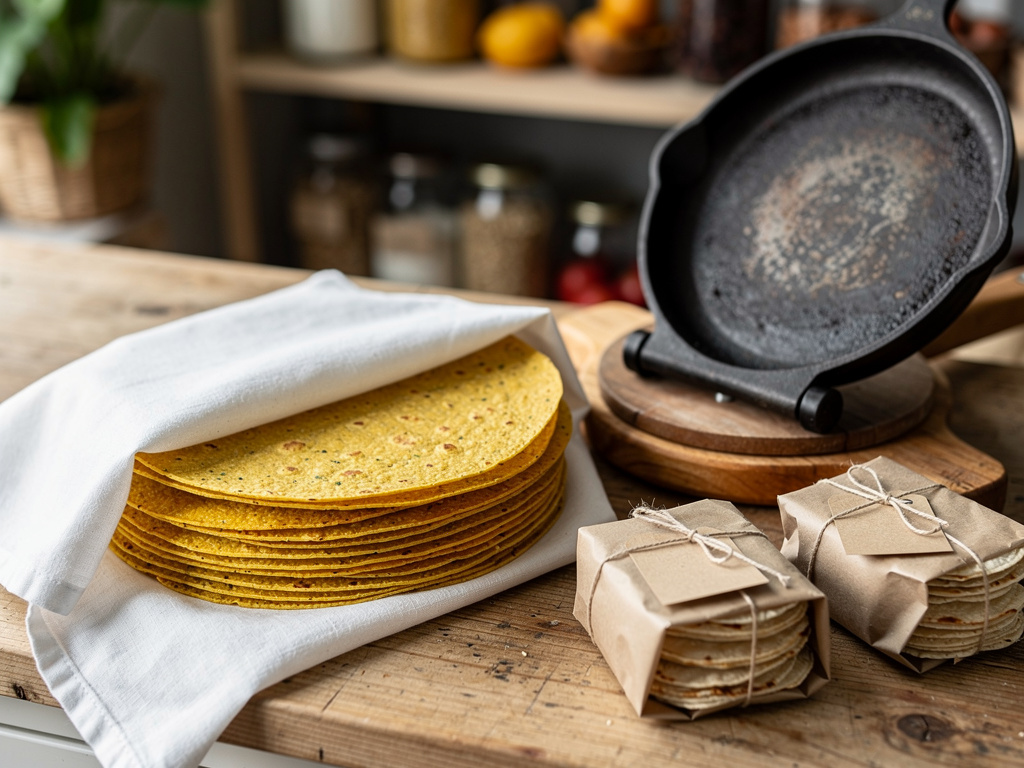


The short version: Yes, in the 9 states we checked, plain homemade tortillas fit the home-kitchen food rules as long as they are shelf-stable, sold straight to your customers and have no meat or cheese inside. California, Colorado and Washington name tortillas on their official food lists, Texas and Arizona allow them under rules that cover almost every food, and Georgia, Florida, New Mexico and North Carolina cover shelf-stable baked foods without naming tortillas, so ask those four in writing. Getting legal costs nothing at the state level in 7 of the 9, $355 for Washington's two-year permit plus a $50 state business license fee, and a county-set fee in California, while yearly sales caps run from $10,000 in net revenue per product in Colorado to $250,000 in Florida, with no cap at all in Georgia. Fresh masa, fillings, shipping and selling to restaurants are where the states split, so check those four against your own state before your first sale.
Checked October 8, 2026: every state rule here on that state's own health or agriculture department website, plus NC State Extension's summary of North Carolina's program for its inspection fee, processing time and store sales, the Colorado and Texas legislature sites for House Bill 26-1033 and Health and Safety Code 437.0194, Washington's Department of Revenue for its business license fee, the nine major allergens on fda.gov, and platform and card processing fees on findhomegrown.com/signup, hotplate.com/pricing and squareup.com/us/en/pricing, with Etsy's fees from etsy.com. Cottage food rules change every legislative session, so verify your state's current rules with the agency named for your state before you sell. Homegrown customers create an account to place a first order, and Homegrown is built for pickup and local delivery, not shipping.
Your tortillas are the thing people ask about. A coworker wants a dozen every Friday, your cousin wants three dozen for a party, and someone at church asked if you take orders. The question underneath all of it is simple: is it legal to sell them from your kitchen?
For a plain tortilla, the answer is usually yes. The details are what trip people up, because a tortilla sits right next to foods the law treats very differently. Raw masa, a bean and cheese burrito and a box shipped across the state can each push you out of the home-kitchen rules. This guide walks through what 9 states actually say, in their own words, loaded from each agency's website on October 8, 2026.
Plain homemade tortillas are clearly allowed in 5 of the 9 states we checked, and they fit the shelf-stable baked food rules in the other 4, where you should confirm in writing. A cottage food law is a state law that lets you make certain lower-risk foods in your home kitchen and sell them, usually straight to the person who will eat them, without renting a commercial kitchen.
How sure you can be depends on how your state writes its rules. Three kinds of states showed up in our check:
If you already know you can sell and want to set a price, our guide to how much to sell tortillas for works through ingredient costs and what small tortilla shops charge per dozen. This page stays on the rules.
Tortillas qualify because a cooked plain tortilla is a baked or griddled bread that does not need a refrigerator to stay safe. That is the dividing line in 7 of the 9 states in our table. Texas and Arizona also allow some foods that need refrigeration, under extra rules. Food safety agencies call foods that need cold or hot holding "time and temperature control for safety" foods, or TCS foods for short. Cottage food laws are built around foods that are not TCS.
Here is how 4 of the 9 states we checked describe the line:
If a state is unsure whether your recipe is shelf-stable, it can ask for a lab test. North Carolina's inspection form says inspectors "may require that your product be tested for pH and/or water activity" before they visit, and New Mexico's FAQ points home cooks to an outside food safety expert called a process authority, such as the NMSU Food Safety Laboratory, for the same question.
That means the cooking method does not matter much. A comal, a cast iron pan and an electric tortilla press all produce a cooked flatbread. What matters is what is in the tortilla and whether it is safe at room temperature once it is packed.
Some customers keep tortillas in the fridge to make them last, and that is fine. KairosGO, one of the 2 tortilla listings on Homegrown, tells buyers its 6-count packs keep "in the fridge for up to a week." Storing them cold for freshness is a quality choice, not proof they are a TCS food.
California, Colorado and Washington name tortillas on their official lists, and Texas and Arizona cover them under rules that allow nearly every food. The table below shows what each of the 9 states says, what it costs, how much you can sell and whether you can ship.
Scroll sideways to see every column.
| State | What the state's own page says about tortillas | Permit and state fee | Yearly sales cap | Online orders and shipping | Stores and restaurants |
|---|---|---|---|---|---|
| California | Named: "Tortillas" in category 1, baked goods without cream, custard or meat fillings | Register (Class A) or get a permit (Class B) from your county; fee set by the county; training within 3 months | $88,878 Class A, $177,756 Class B (2026) | Orders by phone or internet; filled in person, by mail or by third-party delivery | Class B only |
| Texas | Allowed: "any foods, except" meat, poultry, seafood, ice products, low-acid canned foods, CBD or THC products and raw milk | No permit, no fee; food handler training | $150,000 | Online sales if you, an employee or a household member deliver in person | Only through a registered cottage food vendor |
| Colorado | Named: "tortillas and other similar products that do not require refrigeration" | No state permit; food safety training required. From January 1, 2027, a yearly registration with the state health department | $10,000 in net revenue per type of product through 2026; $150,000 gross per product from January 1, 2027 | Internet sales allowed, Colorado only | No |
| Washington | Named: "Donuts, tortillas, pizelles, krumkake, kale chips and similar products" | $355 permit for two years, kitchen inspection first; food worker card and Master Business License ($50 to open); $105 ($30 + $75) per amendment to add products between renewals, nothing extra at renewal | $35,000 | Take orders online; no shipping; payment and delivery person to person | No |
| Arizona | Not named, but "Most foods are allowed!" and burritos, tacos and tortilla chips are listed | Register with the state health department; no fee; food handler card | None listed on the program's pages | Arizona only; online listings must show the label information | Yes for shelf-stable foods, inside Arizona; not for meat or TCS foods |
| New Mexico | Not named; examples of allowed foods include "yeast breads" | No permit since July 1, 2021, outside Bernalillo County and Albuquerque, which run their own food safety programs; food handler card | None listed in the state FAQ | Internet, delivery and mail delivery inside New Mexico | No |
| North Carolina | Not named; shelf-stable foods only, after a home kitchen inspection | No permit and no charge for the inspection; the state form says 6 to 8 weeks to process, NC State Extension says 8 to 12 | None listed | The inspection form expects a full label on anything shipped by mail | Yes, after inspection |
| Georgia | Not named; list includes "Loaf Breads, Rolls, and Biscuits" | No state license since July 1, 2025; food safety training | No limit | Online sales to customers in Georgia | Yes, under the 2025 law, but not to distributors; the state FAQ still says restaurants cannot use home food, so confirm first |
| Florida | Not named; list includes "Loaf breads, rolls, biscuits" | No state food permit | $250,000 | Website and mail order allowed | No wholesale |
We checked every row on October 8, 2026, on the California Department of Public Health, Texas Department of State Health Services, Colorado Department of Public Health and Environment, Washington State Department of Agriculture, Arizona Department of Health Services, New Mexico Environment Department, North Carolina Department of Agriculture and Consumer Services, Georgia Department of Agriculture and Florida Department of Agriculture and Consumer Services websites, plus NC State Extension at NC State University for North Carolina's inspection fee, processing time and store sales, and the Colorado and Texas legislature sites for House Bill 26-1033 and Texas Health and Safety Code 437.0194. City and county rules, zoning and sales tax sit on top of these.
If your state is not in the table, our cottage food labeling requirements guide and your state's own agency page are the next stop. Search the approved list for the word tortilla first, then for "flatbread" and "baked goods."
Corn and flour tortillas are treated the same way in the 3 states that name tortillas, because none of their lists splits them apart. California, Colorado and Washington just say "tortillas." The difference that does matter is the ingredient list, because it changes your label.
One more corn detail matters. Masa harina is a dry flour you buy in a bag. Fresh masa is wet dough made from cooked corn. A tortilla made from either one ends up as the same shelf-stable flatbread, but the dough itself is a separate question, covered next.
None of the 9 state pages we read names fresh masa or raw tortilla dough as an allowed cottage food, so outside Texas and Arizona, treat it as a no until your state says yes in writing. Fresh masa is dough made from corn that has been cooked in limewater and ground. Cooked, moist plant foods are exactly what states worry about.
Georgia's cottage food FAQ, for example, lists "Cooked, plant-based foods (e.g., cooked rice, beans, or vegetables)" among its potentially hazardous foods, which are the ones a home kitchen cannot sell. Fresh masa is cooked corn with plenty of water in it. That puts it on the wrong side of the line in most readings, even though the finished tortilla is fine.
Texas and Arizona read differently, because their rules allow nearly every food. Texas allows "any foods, except" a short list that does not include masa. Fresh masa is perishable and is usually kept refrigerated, so in Texas it would likely fall under the rules for TCS foods: register with DSHS, put the date it was made on the label, and add the safe handling statement on the label or the receipt. Arizona's approved food list includes tamales such as green corn and cheese and jalapeño, which are made from masa dough, and its FAQ says TCS foods must be sold directly to the final customer. Masa by the pound is not on Arizona's list, so ask the program before you sell it. California's approved list also names tamales in category 1, the same baked goods category as tortillas, but only fruit tamales, and masa dough on its own is not on that list.
Flour tortilla dough has a different problem. Raw dough is not a finished product, and most cottage food lists are written around finished, ready-to-eat foods. A customer who buys dough balls to cook at home is buying something the lists do not describe.
Masa sold by the pound and raw dough balls are the two tortilla products most likely to fall outside cottage food law. We checked 9 state agency pages on October 8, 2026, and none of them listed either one by name. Texas and Arizona allow nearly every food, so ask DSHS or the Arizona program how masa fits there. In the other 7, plan on a no, though Colorado's Tamale Act may open a path from January 1, 2027, for packaged foods that need time and temperature control, such as fresh masa, so ask the state health department there. If you want to sell masa, email your state's cottage food program a description of the product and keep the reply.
If masa is the product your customers want most, a licensed commercial kitchen is usually the path. North Carolina, for one, inspects shared-use and community kitchens for "Low & high risk foods, including refrigerated, frozen and shelf-stable products," which a home kitchen cannot make there, according to NC State Extension at NC State University.
In 8 of the 9 states we checked, a tortilla with meat inside is no longer cottage food, so a carne asada burrito or a chicken taco needs a licensed kitchen or a different permit. The tortilla is fine. The filling is the problem.
California's category says baked goods without "Meat Fillings." Texas excludes "meat, meat products, poultry, or poultry products." Colorado says meat is "prohibited from being used as ingredients or toppings." Cheese and cooked beans need a refrigerator once they sit inside a tortilla, which makes a bean and cheese burrito a TCS food. Texas lets a home kitchen sell TCS foods without meat, but only after registering with DSHS, putting the date it was made on the label, and adding the safe handling statement on the label or the receipt.
Arizona is the exception in our table. The Arizona Department of Health Services Cottage Food Program lists burritos, tacos and taco kits as approved under rules that took effect February 4, 2025, with beef and pork bought from a USDA-inspected source and meat products sold only directly to the customer, never through a third party.
Some states have a separate permit for home kitchens that sell full meals, run by the county or city rather than the cottage food program. In California, the Department of Public Health's microenterprise home kitchen page says that permit lets a person "operate a restaurant in their private residence," but only in a city or county that has chosen to allow it. Colorado is changing its cottage food law itself. House Bill 26-1033, which the state health department calls the Tamale Act, takes effect January 1, 2027, and lets a home kitchen "produce and sell packaged foods that require time and temperature control for safety, including tamales, burritos, and tortas." A Colorado producer can sell one type of that food in up to five variations, any meat must be federally inspected or legally exempt, and the producer must take a food safety course that covers time and temperature control. Until then, Colorado's current ban on meat fillings applies. Our guide to selling Mexican home cooking legally walks through those lanes for tamales and salsas.
The yearly sales caps in our table run from $10,000 in net revenue per product in Colorado to $250,000 in Florida, and Georgia has no cap at all. A cap is the most you can gross in a year and still stay under the home-kitchen rules. Colorado is the exception, because its $10,000 limit is net revenue for each type of product, not gross sales. That limit runs through December 31, 2026. On January 1, 2027, House Bill 26-1033 raises it to $150,000 in gross revenue per food product each year, adjusted for inflation, and requires every producer to register with the state health department each year before selling. At $10 a dozen, Washington's $35,000 cap is 3,500 dozen tortillas a year, about 67 dozen a week.
Yearly cottage food sales caps, checked October 8, 2026
Source: each state agency's cottage food page, and California's 2026 Adjusted Gross Annual Sales Limit PDF, loaded October 8, 2026. Georgia has no cap. The Arizona, New Mexico and North Carolina pages we read list none.
Three details are easy to miss:
Most part-time vendors never get close. Our cottage food revenue cap guide covers what happens if you do.
In 7 of our 9 states the state charges nothing to sell cottage food tortillas, Washington charges $355 for a two-year permit plus $50 for the state business license, and California's fee depends on your county. The Washington State Department of Agriculture's cottage food page also requires a Master Business License through the state Department of Revenue, and the Department of Revenue's fee page puts the processing fee to open a new business at $50. Adding products between renewals costs $105 per amendment, a $30 processing fee plus a $75 public health review, and a $125 inspection may be added. Adding them at renewal costs nothing beyond the regular renewal fee. The real costs are the small ones around it: a food handler course, labels, packaging and sometimes a city business license.
Swipe sideways to read the training and inspection columns.
| State | State fee to start | Training required | Kitchen inspection before you sell |
|---|---|---|---|
| Texas | $0; local health departments may not charge one | Food handler training | No |
| Arizona | $0 registration | Accredited food handler course | No |
| New Mexico | $0, no permit | Food handler card | No |
| North Carolina | $0, inspection is not charged | None listed | Yes |
| Georgia | $0, no state license since July 1, 2025 | ANSI-accredited food safety training | No |
| Florida | $0, no state food permit | None listed | No |
| Colorado | $0 state permit | One of three listed food safety courses | No |
| Washington | $355 for two years, plus $50 to open a Master Business License; $125 more if you fail the first inspection; $105 ($30 + $75) per amendment to add products between renewals, plus a possible $125 inspection, or nothing extra at renewal | Washington State Food Worker Card from your county health department | Yes |
| California | Set by your county environmental health department | Cottage Food Operator training within 3 months | Class A: no, you file a self-certification checklist instead; Class B: yes, an initial county inspection before the permit, then no more than one a year, except after a consumer complaint, under Health and Safety Code 114365 and CDPH's AB 1144 fact sheet |
State fees and training rules checked on each agency's site on October 8, 2026. "None listed" means the pages we read did not name a training requirement. California counties publish their own fee schedules.
A food handler course is usually a short online class. Budget for a box of labels, a kitchen scale for net weights and food-safe bags. If you sell at a farmers market, the market sets its own booth fee and sometimes asks for proof of your registration.
Most of the states we checked want your business name, your address or state ID number, the product name, the allergens and your state's exact home-kitchen statement on a cottage food tortilla label. Some also want the ingredients and net weight, and North Carolina's list asks for a physical address, the net weight and the ingredients with no home-kitchen statement. The statement is the part people get wrong, because each state writes its own wording and expects it word for word.
Texas requires:
Colorado asks for a placard at the point of sale that reads: "This product was produced in a home kitchen that is not subject to state licensure or inspection. This product is not intended for resale." Colorado also wants every package labeled with its exact disclaimer, so the placard does not replace the label. North Carolina's Application for Home Processor Inspection asks for a net quantity in ounces or pounds plus the gram equivalent, and a full ingredient list in order of weight.
Weigh one finished pack and print the number. Honey Buns Bakehouse lists its sourdough tortillas as 6 per pack at about 6 to 8 inches each for $14.00. A count and a size tell the customer what they get, and in North Carolina, where Honey Buns sells, the label also needs the weight in ounces and grams.
Our guide to the big 9 allergens on a cottage food label shows how to word the allergen line so it reads cleanly on a small label.
Every state page we read that addresses online orders lets you take them, but only California, New Mexico and Florida say in writing that you can mail tortillas, North Carolina's inspection form plans for products shipped by mail, and Texas and Washington rule out shipping. Texas Health and Safety Code section 437.0194 allows Internet sales "in this state" only with personal delivery, and Colorado, Washington, Arizona, New Mexico and Georgia also say in writing that sales stay inside the state, and North Carolina's pages do not address online orders.
Here is what each state's page says about online orders:
Washington's cottage food page says you can "take orders over the Internet," but also that product delivery and payment must happen "in a person to person transaction." The same page says "Internet, mail, consignment, wholesale, & retail sales outside the state are prohibited." We read both on October 8, 2026. If you sell in Washington, ask the state agriculture department whether card payment through an online ordering page counts before you take prepaid orders.
Our guide to shipping cottage food covers the states that allow mail orders in more detail. For most tortilla vendors, pickup and local delivery are simpler anyway, since tortillas are best within a few days.
Only 4 of our 9 states let a home kitchen sell tortillas to a restaurant or store: Georgia under its 2025 law, North Carolina after a home inspection, California with a Class B permit, and Arizona for shelf-stable foods sold through an Arizona store. Texas allows it only through a registered middleman. Colorado, Washington, New Mexico and Florida say no.
The details by state:
A restaurant account sounds like a big win, but price it carefully. A taqueria that buys 20 dozen a week will want a much lower price per dozen than your retail customers pay, and it will count on you showing up every single week.
In Texas, Colorado, New Mexico, Georgia and Florida there is no state permit to wait for, while Washington, North Carolina and California's Class B inspect your kitchen first, and Arizona says its registration can take up to 4 to 6 weeks to process. North Carolina's application form says to allow 6 to 8 weeks for processing, and NC State Extension puts it at 8 to 12. Work through these steps in order:
The full order of operations for any home food business is in our guide to how to start a cottage food business. The steps above are the tortilla-specific version.
Once your tortillas are legal, the hard part is the weekly order count, and Homegrown handles that for $10 a month billed annually ($12.50 month to month) with no percentage fees beyond standard payment processing. Customers pick corn or flour, choose a pack size and a pickup day, and pay ahead, so you know how many dozen to press before you heat the comal.
The tools most tortilla vendors try first each have a catch for this use:
Swipe the table sideways to compare all three platforms.
| Platform | Monthly plan | Trial | Platform fee | Card processing | Customer pays on a $20 order | You pay on a $20 order | You pay in a month of 50 orders at $20 |
|---|---|---|---|---|---|---|---|
| Homegrown | $10 billed annually ($12.50 billed monthly) | 7 days, no charge until day 8 | $0, 0% commission | 2.9% + $0.30, paid by you | $20.00 | $0.88 plus the plan | $54.00 |
| Hotplate, default | $0 | No plan to try | 5% + $0.55, paid by the customer | 2.9% + $0.30, paid by you | $21.55 | $0.88 | $44.00 |
| Hotplate, you cover the fee | $0 | No plan to try | 5% + $0.55, paid by you | 2.9% + $0.30, paid by you | $20.00 | $2.43 | $121.50 |
| Square Online, Free plan | $0 | No plan to try | $0 | 3.3% + 30¢ online, paid by you | $20.00 | $0.96 | $48.00 |
Checked October 8, 2026, on findhomegrown.com/signup, hotplate.com/pricing (Hotplate's own post "What Hotplate does" says 80% of its chefs keep the customer-pays default) and squareup.com/us/en/pricing. Etsy's fees are from etsy.com/legal/fees and its Etsy Payments policy. Card processing is figured on the $20 price. Homegrown's month of 50 orders is $44.00 in processing plus the $10 plan, or $56.50 on monthly billing.
What Homegrown gives a tortilla business:
Homegrown has limits worth knowing. It does not register you with your state, check your label or ship orders. Customers create a Homegrown account to place a first order. There is no drops or countdown release feature. Card processing of 2.9% + $0.30 comes out of your side with no way to add it to the customer's total. Your storefront appears on the Homegrown marketplace, but plan on most orders coming from people you send to your own link. If the weekly tortilla count is the part you dread, set up a Homegrown storefront and send your regulars the link before Friday.
Two vendors in the Homegrown catalog sold tortillas on their own on October 8, 2026, one at $3.29 for 6 and one at $14.00 for 6. Both make sourdough tortillas, and both price by a fixed pack size rather than by the dozen.
In a pull of the Homegrown catalog on October 8, 2026, 2 of the 2,907 products listed by 310 vendors were tortillas sold on their own. We searched every category for "tortilla," "masa" and "nixtamal" in the product name or description, then read each hit and each vendor's other listings. KairosGO in St. Peters, Missouri, sells 6-count sourdough corn or flour tortillas for $3.29 inside a listing that also offers naan, and Honey Buns Bakehouse in Mocksville, North Carolina, sells 6-packs of hand-rolled sourdough tortillas for $14.00. We left out a $37.00 slow cooker fajita kit that includes tortillas and three "dessert tacos" built on waffles, not tortillas.
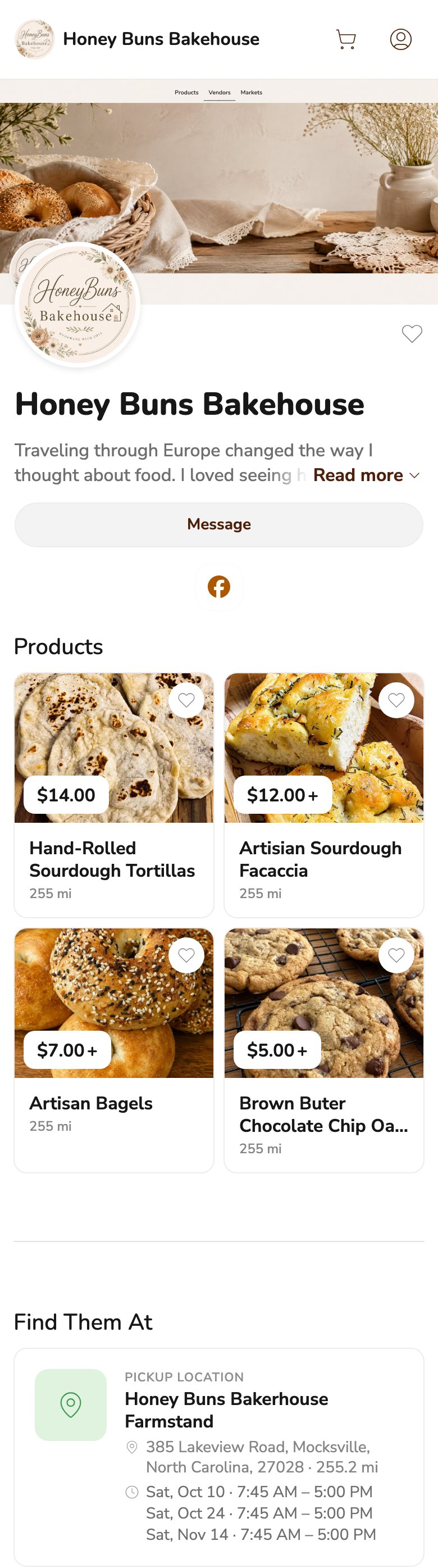
The two price points show how wide the range is. KairosGO's $3.29 pack is about 55¢ a tortilla, sold next to dozens of everyday groceries for weekly delivery. Honey Buns' $14.00 pack is about $2.33 a tortilla, hand-rolled and sold at a farmstand on set Saturdays. Both sell fixed-count packs from a Homegrown storefront. The rules decide whether you can sell, and your customers decide which price works.
The 6 mistakes below come straight from where the state rules split, and each one can turn a legal tortilla business into an unlicensed food business. None of them is about the tortilla itself.
The fix for almost all of these is the same: read your state's page once, write down the exact wording, and keep any email answers from the agency in a folder. Once the rules check out, the rest is production: a dozen 8-inch flour tortillas takes about 450 grams of flour and 12 minutes of griddle time, and how to sell tortillas from home plans the whole week from the order cutoff to the cooled, labeled bag.
Yes, in the 9 states we checked, plain homemade tortillas made in your home kitchen fit the rules as long as they are shelf-stable and sold directly to customers, though four of them (Florida, Georgia, New Mexico and North Carolina) do not name tortillas, so confirm with those in writing. California, Colorado and Washington name tortillas on their approved lists, and Texas and Arizona allow nearly every food. Washington requires a $355 two-year permit, a $50 fee to open a state business license and a kitchen inspection, and North Carolina requires an inspection with no charge.
No permit or fee is required to sell homemade tortillas in Texas under the cottage food law, and local health departments may not require one. You do need food handler training and a label with your name, your address or DSHS ID number, the product name, allergens and the required home-kitchen statement. Yearly gross sales must stay at or under $150,000.
Corn tortillas are allowed in the states that name tortillas, since California, Colorado and Washington do not separate corn from flour. Corn tortillas made from masa harina, water and salt contain none of the nine major allergens. Fresh masa sold as dough is a separate product that none of the 9 state pages we checked lists as allowed.
Yes, farmers markets are a normal place to sell cottage food in the states we checked. Bring your registration or permit if your state issues one, label every pack, and post any required placard, such as Colorado's home-kitchen sign. The market itself may charge a booth fee and ask for proof that you are registered.
You can advertise homemade tortillas on Facebook or Instagram and take orders there in the states we checked that address online sales, but the delivery rules still apply. Texas expects you or a household member to deliver in person, and Arizona wants your label information shown in the listing. Washington says payment and delivery must be person to person.
Your state's cap sets the ceiling: $35,000 a year in Washington, $88,878 for California's Class A in 2026, $150,000 in Texas and $250,000 in Florida, with no cap in Georgia. What you actually make depends on your price and volume. Our pricing guide covers ingredient cost per dozen and what small tortilla shops charge.
These 5 guides pick up where the tortilla rules leave off: what to charge per dozen, how to handle filled foods like tamales, and which states let a home kitchen mail its orders. Each one is written for a part-time vendor selling from a home kitchen.
Your tortillas are already the thing people ask for. Check your state's page, print the label, and when you are ready to take the weekly orders in one place, start your Homegrown storefront.



