

The short version: You usually cannot sell smoked meat made in your home kitchen under cottage food law, because every home food law we read (Texas, Colorado's current law, Utah and Illinois) leaves meat out, apart from some poultry and rabbit exemptions in Utah. The legal routes are a home meal permit where one exists (California counties that opted in, and Utah), a licensed or rented commercial kitchen, a caterer or food truck license, or a temporary permit for a single event. California's home meal permit requires food to be cooked and served the same day, which does not fit an overnight brisket as written, while Utah's allows up to 72 hours from prep if you keep time and temperature logs. Whatever route you pick, start with meat from an inspected source, take orders before you light the smoker, and ask your local health department in writing before your first sale.
Checked on October 10, 2026: the federal rule (9 CFR 303.1 on eCFR), the FDA Food Code 2026, California's MEHKO law, Utah's home kitchen law, and the Texas, Colorado, Utah and Illinois home food pages. Rules vary by state and county, so verify your state's current rules. Fees come from Homegrown's signup page, Hotplate's pricing page and Square's pricing page, loaded the same day. Homegrown customers create an account to place their first order, and Homegrown has no drops feature.
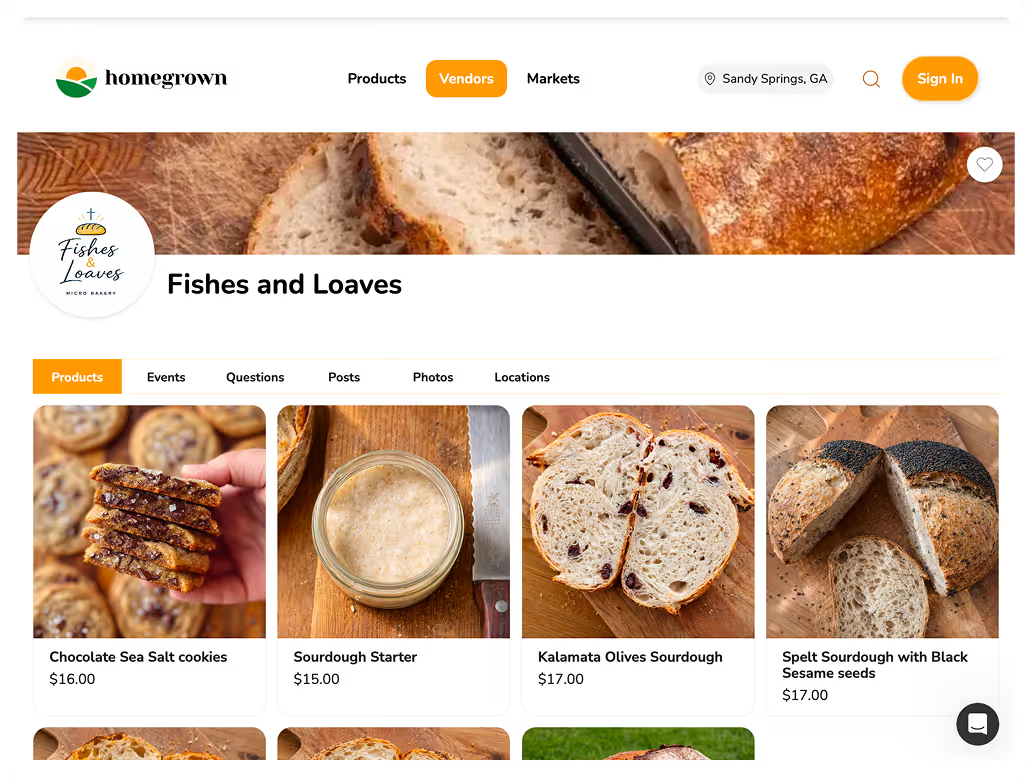
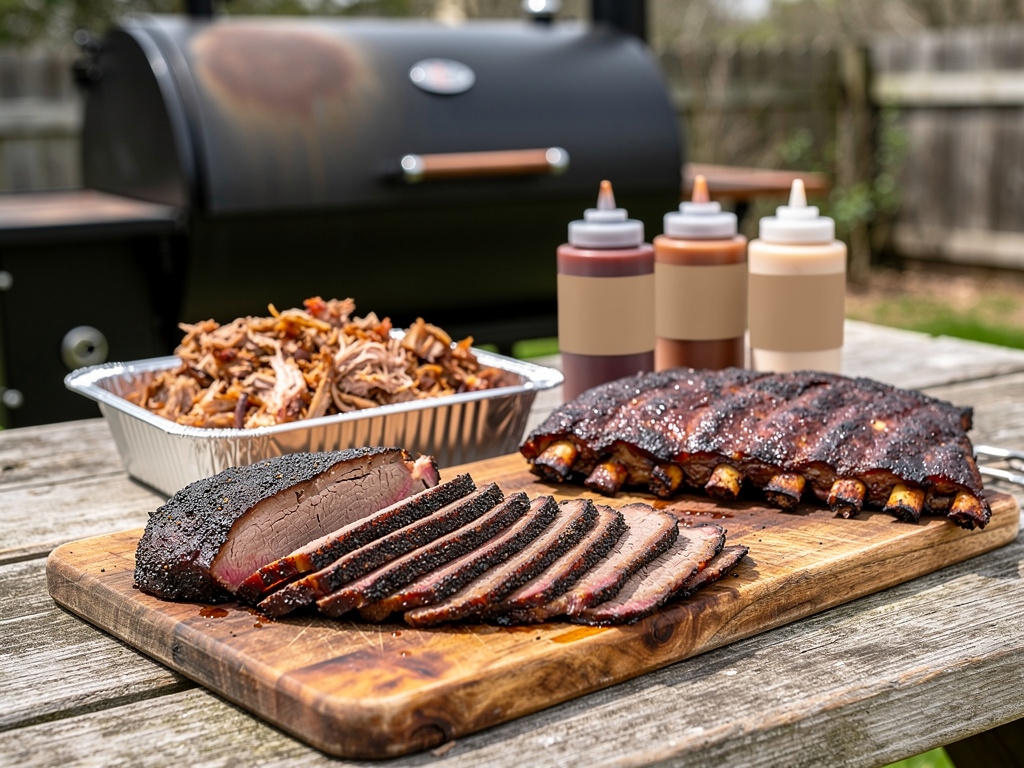
Smoked brisket, ribs and pulled pork are some of the hardest foods to sell legally from home. Smoky Butts BBQ lists an 8-pound pan of pulled pork for $60 on Homegrown. But meat sits outside the home food laws that let bakers sell cookies from their kitchens. This guide walks you through every legal route we could find, what each one costs you in time and paperwork, and how to take orders so you only smoke what is already paid for.
Not under a cottage food license in any of the 4 states we checked, but yes through a home meal permit in a few places or through a licensed kitchen your county approves. Cottage food laws (the state rules that let you sell certain foods made in your home kitchen) cover foods like bread, jam and cookies. Texas and Illinois now also allow some foods that need refrigeration, and every law we read still names meat as off limits.
All 4 state home food laws we read leave meat out, though Utah's page notes a few exemptions for poultry and rabbit meat. That leaves four kinds of permission, which split into the five routes in the table further down:
If you already know your route and want the numbers, our BBQ plate pricing guide works through meat yield, plate size and what a 25-plate sale earns. This guide covers the step before that: how to get to a legal first sale.
Because the laws name meat itself as off limits, even in Texas and Illinois, which now let home cooks sell some foods that need refrigeration. Even states with very wide home food laws carve meat out by name.
Scroll sideways to see every column.
| State | Home food law | What it says about meat | Source, checked October 10, 2026 |
|---|---|---|---|
| Texas | Cottage food, $150,000 yearly sales limit | Allows "any foods, except" a list that starts with "meat, meat products, poultry, or poultry products" | Texas DSHS cottage food page |
| Colorado | Cottage Foods Act (current law) | Ineligible: "Any meat product such as bacon, jerky, chicharron, poultry" | CDPHE cottage foods page |
| Utah | Home Consumption and Homemade Food Act | Not allowed: meat and food products containing meat, with some exemptions for poultry and rabbit | Utah Department of Agriculture and Food |
| Illinois | Cottage food law | Prohibited: "Meat, poultry, fish, seafood, or shellfish" | 2026 Cottage Food Guide from IDPH and University of Illinois Extension |
We read four state home food laws for this guide, and all four leave meat out, though Utah's page says some exemptions exist for poultry and rabbit meat. That is a sample, not all 50 states. We checked each page on October 10, 2026.
Texas is the clearest example. The Texas Department of State Health Services cottage food page says that under SB 541, which took effect September 1, 2025, home cooks can sell "any foods, except for the following," and meat and poultry are first on that list. So even in the state with one of the widest cottage food laws, a brisket from your backyard smoker is not a cottage food.
The four states do not all give the same reason. Colorado's current law leaves out foods that need refrigeration or a specialized process for safety, and names any meat product on that list. Texas says that apart from its excluded list, which starts with meat, "a cottage food production operation may sell time and temperature control for safety food (TCS)" once it registers with the state. The 2026 Illinois Cottage Food Guide also allows foods that need refrigeration, with extra rules such as keeping them at 41°F or below, and still prohibits meat. Utah's list of foods not allowed is short: meat, food products containing meat, and raw (unpasteurized) dairy. Smoked meat is what food safety rules call a TCS food, short for time and temperature control for safety. It has to stay at 135°F or above, or 41°F or below (some roasts may be held at 130°F), and that is hard to prove in a home kitchen. Our guide to TCS foods and cottage food law explains how states draw that line.
Licensed retail stores, restaurants and caterers can cure, cook and smoke meat for their own customers without a USDA inspector on site, under the retail exemption in 9 CFR 303.1(d). Outside its exemptions, federal meat law requires meat sold to the public to be prepared under USDA or state inspection. This exemption is the reason your local BBQ restaurant can smoke brisket out back.
The retail exemption in 9 CFR 303.1 lists "Curing, cooking, smoking" among the jobs a retail store may do. It comes with conditions:
The exemption does not make your home kitchen legal. It covers what a licensed retail food business does. Your state or county health department is the one that licenses that business, so the federal rule and the local permit work as a pair.
Buy your brisket and pork butts from a grocery store or butcher and keep the receipts. Colorado's health department notes that grocery stores and butchers carry USDA-inspected meat, which bears the mark of inspection, and that is the "inspected product" the retail exemption asks for. A receipt for 4 briskets next to a log of 4 briskets smoked answers the inspector's source question on the spot.
There are five common routes, and they differ most in where you cook, how many meals you can sell and who you can sell to.
Swipe the table left to see the last columns.
| Route | Where you cook | Who you can sell to | Main limit | Who issues it |
|---|---|---|---|---|
| Home meal permit (California MEHKO, Utah microenterprise home kitchen) | Your home kitchen and smoker, after an inspection | Consumers directly, no stores or wholesalers | California: same-day cooking, 30 meals a day and 90 a week. Utah: same day, or up to 72 hours with temperature logs | County or local health department, only where it has opted in (California) |
| Commissary or rented commercial kitchen | The licensed kitchen, with an approved smoker | Consumers, through your retail or catering permit | Rent and scheduling; home-cooked food cannot be brought in | Local or state health department |
| Caterer license | A licensed kitchen | Individual consumers in meals or entrees | Meals for events and orders, not wholesale | County or state health department |
| Food truck or trailer with a smoker | The mobile unit plus its commissary | Walk-up and pre-order customers | Upfront cost of the unit; route and parking rules | Local or state health department |
| Temporary event permit | At the event, under that permit's rules | Event guests | One event lasting up to 14 days, under the Food Code model | Local or state health department |
Built from 9 CFR 303.1, the FDA Food Code 2026, California Health and Safety Code 113825 and Utah Code 26B-7-416, all loaded October 10, 2026. Your county may add its own conditions.
For a part-time cook, the first two are the usual starting points. A home meal permit in California tops out at 90 meals a week, while a rented kitchen is limited mostly by the hours you can book. A home meal permit fits small weekly cooks if your county offers one. A rented kitchen fits bigger cooks and is open to you wherever your county licenses commissary kitchens.
Yes in California counties that opted in and in Utah, though California's permit requires food to be cooked and served on the same day and Utah's allows up to 72 hours only if you keep temperature logs. Of the laws we read, these permits are the closest thing to selling smoked meat "from home."
California. California's MEHKO program lets a resident run what the state health department calls a restaurant in their private home. Each city or county decides whether to allow it, and until yours does, no permit can be issued. The law itself, Health and Safety Code section 113825, sets these limits:
Utah. Utah Code 26B-7-416 lets your local health department issue a microenterprise home kitchen permit. Food that needs temperature control must be prepared, cooked and served on the same day, or served within 72 hours of when it was prepared if you keep the logs in subsection (8)(a): a time and temperature log for each food, updated at least every two hours while you operate, refrigerator and freezer temperature logs, all kept for 90 days, and a date mark on the food showing when it must be sold or thrown out. Customers cannot eat on site, and the same no-HACCP rule applies. You also file written procedures that cover every food you will make and how you will keep it hot or cold. Davis County lists its annual permit fee at $300, which we checked on October 10, 2026.
A packer brisket often goes on the smoker the night before. California's law says food must be prepared, cooked and served on the same day, so an overnight cook that starts the day before your pickup does not fit that wording. Utah's law also lets you serve food within 72 hours of when it was prepared if you keep the time and temperature logs it requires, so an overnight brisket can fit there. Ask your county how it reads the rule for a long smoke before you plan a brisket menu. In California, ribs, chicken and pork butts that start at dawn and finish by afternoon fit the wording more easily. We checked both laws on October 10, 2026.
Our MEHKO guide covers the application, the inspection and county permit fees in more detail.
You do all of the cooking, holding and packing in the licensed kitchen, because food cooked at home cannot be brought in. The FDA Food Code 2026, the model that state and local health codes are built from, says "FOOD prepared in a private home may not be used or offered for human consumption in a FOOD ESTABLISHMENT." That means you cannot smoke a brisket in your backyard and then slice it in a rented kitchen.
What that looks like in practice:
Rent varies by city. Our comparison of commissary kitchens and home kitchens lays out typical hourly and monthly rates. A rented kitchen pays off on bigger cooks: a 40-pan cook spreads one day's rent much thinner than a 6-pan cook does.
Yes, with a permit for that event or a licensed setup that covers it. Under the Food Code model, a temporary food establishment is one that "operates for a period of no more than 14 consecutive days in conjunction with a single event or celebration." Your local or state health department issues those permits for single events of 14 days or less, and many markets ask to see one before you set up.
A few things trip up first-time BBQ vendors at events:
"Donation only" plates do not get around the rules. The Food Code counts an operation as a food establishment "regardless of whether there is a charge for the FOOD." Rules for nonprofit fundraisers vary by state, so if you cook for a church or school, ask your county what the group needs. Our guide on selling food at school fundraisers and church events covers how those events are usually permitted.
Colorado's new cottage food rules, starting January 1, 2027, open the door to some meat products, but smoked meat would have to stay refrigerated. Under current Colorado law, meat is ineligible.
The Colorado Department of Public Health and Environment's page on the 2027 law (the Tamale Act, HB26-1033) lists entrees and beef, turkey and pork jerky as eligible, and says meat must come from an "approved source": USDA-inspected meat, or meat covered by an exemption from inspection, such as a federal or state exemption for a poultry producer. On smoking, it says: "Smoking for flavor is allowed, but food must be refrigerated. Smoking as a method of preservation is not allowed." It also says a producer who sells TCS foods (the ones that need refrigeration or hot holding) "must sell only one type of product and up to five variations of such product at a given time," and that food in reduced oxygen packaging, such as vacuum packaged beef jerky, "is not allowed under the act." The page says the law "does not go into effect until January 1, 2027" and calls its own content "for information purposes only." We read it on October 10, 2026.
Colorado is the only state in our sample of four with an announced change for meat. So a Colorado vendor in 2027 may be able to sell a chilled, smoked pulled pork entree from home, but probably not hot plates held for pickup, and only one type of product, in up to five variations, at a time. Email the program at cdphe_cf@state.co.us, the address on that page, before you build a menu around it.
Keep the smoker between 225°F and 300°F, cook to the safe internal temperature for each meat, hold finished meat at 135°F or above, and cool leftovers fast. These are the numbers to build your process around, and they come from two federal sources.
The USDA Food Safety and Inspection Service's guide to smoking meat and poultry says to use two thermometers, one for the smoker and one for the meat, and to keep the smoker "between 225 and 300 °F throughout the cooking process." It says a smoke can take "anywhere from 4 to 8 hours." Its minimum internal temperatures:
The FDA Food Code adds the rules for holding and cooling once you are licensed. It is a model code, so your state's adopted version is the one your inspector enforces, and its numbers can differ:
Pick your route, get the permit, test your process, then sell one small pre-order cook before you grow. Here is an order that works:
Expect the waiting to fall on steps 1, 2 and 6. A permit with a kitchen inspection has more steps than a cottage food registration, so start the paperwork before you start the marketing.
A smoker you can hold steady at 225°F to 300°F, two kinds of thermometers, a way to hold meat at 135°F, and the permits your route requires. You do not need a commercial offset smoker on day one, but you do need gear you can prove works.
Equipment to plan for:
Paperwork to have on file:
The smoked meat listings on Homegrown run from a $12 pulled pork sandwich to a $275 brisket, and Smoky Butts BBQ asks for 1 to 3 days of notice on its wings, pork pans and brisket.
In a pull of the Homegrown catalog on October 10, 2026, 8 of the 2,826 products listed by 310 vendors were ready-to-eat products whose name or description says they are smoked. They come from 3 vendors. Roy's Ribs & Chicken lists a slow-smoked Pulled Pork Sandwich for $12, a Pulled Chicken Sandwich for $12, a Chicken Platter with 2 sides for $20 and a Slab of Ribs (10 to 12 bones) for $35, with two afternoon pickup windows. Smoky Butts BBQ lists smoked Party Wings from $35 for 25 pieces to $90 for 100, an 8-pound pan of smoked Pulled Pork for $60 with 2 days' notice, and a Low and Slow Smoked Brisket for $275 with 3 days' notice. Produce with Purpose Marketplace lists a Smoked Whole Chicken for $22 (4 to 5 pounds before smoking). Our rule: the ready-to-eat category, plus "smoked" in the name or description, then we read every listing from each of those vendors. We did not count two pulled pork and pulled chicken listings that do not say how they are cooked.
Two quick per-pound comparisons from those listings:
Those are prices, not proof of what a pound costs you to make. Smoked meat loses weight on the smoker (fat renders and water cooks off), so a raw brisket price is not your cooked cost. Our BBQ plate pricing guide works through yield, plate size and cost per plate step by step.
Sell every pan before you buy the meat, with a deadline and a set pickup window. Smoked meat is expensive, slow and hard to sell the next day at full price, so guessing costs you real money. A brisket you smoke without an order is a brisket you might eat yourself.
Homegrown gives a smoked meat vendor an ordering page for $10 per month billed annually ($12.50 billed monthly), with no percentage fees beyond standard payment processing of 2.9% + $0.30 per order. For a pitmaster, what matters is the lead time setting (so nobody orders a brisket for tomorrow when you need 3 days), pickup windows by location, one-time events for a festival or fundraiser cook, quantity limits so you never sell 12 pans from a smoker that holds 8, and variants so a half pan and a full pan sit under one listing with their own prices. Compare that to Instagram DMs and Venmo, where you track 20 conversations and chase payments, or Hotplate, which centers on drops (preorder windows with a set start and end time) and adds a 5% + $0.55 service fee to your customer's total by default. Square's Free plan costs $0 a month but charges 3.3% + 30¢ on online card payments.
Homegrown has limits for this use. It does not have a drops or countdown feature. Pricing by the pound is on its roadmap and not live yet, so you list fixed sizes like 1 pound, half pan and full pan. Customers create a Homegrown account to place their first order. Your storefront is listed on the Homegrown marketplace, but plan on most orders coming from people you send to your own link. And Homegrown does not get you a health permit; you need that before you list.
Slide this fee table sideways for all eight columns.
| Platform | Monthly plan | Trial | Service or platform fee | Card processing | Customer pays on a $60 pan | Vendor pays on a $60 pan | Vendor pays in a month of 50 pans |
|---|---|---|---|---|---|---|---|
| Homegrown | $10 billed annually ($12.50 monthly) | 7 days, no charge until day 8 | None, 0% commission | 2.9% + $0.30, paid by the vendor | $60.00 | $2.04 plus the plan | $112.00 |
| Hotplate, default | $0 | None listed | 5% + $0.55, paid by the customer | 2.9% + $0.30, paid by the vendor | $63.55 | $2.04 | $102.00 |
| Hotplate, vendor covers the fee | $0 | None listed | 5% + $0.55, paid by the vendor | 2.9% + $0.30, also on the vendor | $60.00 | $5.59 | $279.50 |
| Square, Free plan | $0 | None listed | None | 3.3% + 30¢ online, paid by the vendor | $60.00 | $2.28 | $114.00 |
We checked these fees on Homegrown's signup page, Hotplate's pricing page and Square's pricing page on October 10, 2026. Hotplate's own post "What Hotplate does" says "we charge a fee to your customer" by default; its pricing page says you can pay it yourself instead. Card processing is figured on the $60 price. Hotplate's post says chefs pay processing on "2.9% of the transaction + 30 cents," and on its default plan the customer's transaction includes Hotplate's fee, so the real cost can run higher, about $2.14 a pan and $107 for 50 pans if it is charged on the full $63.55. The 50-pan column for Homegrown uses the $10 annual plan.
Vendor cost for 50 pans at $60, one month
Source: the fee table above, from pricing pages loaded October 10, 2026. Hotplate's default looks cheapest for the vendor because the customer pays $3.55 more per pan. The $280 bar is $279.50 rounded.
If your permit is in hand and your regulars keep asking when the next cook is, set up your Homegrown storefront with a lead time that matches your smoker, list your pans and plates, and send the link out before you buy a single brisket.
Not smoked meat made under the retail or restaurant exemption, and not anything from a home meal permit. Selling to a store, cafe or restaurant is wholesale, and smoked meat sold wholesale has to come from a USDA-inspected or state-inspected plant.
Here is how the rules line up:
Online ordering for local pickup or your own delivery is a different thing from shipping. Taking a prepaid order online and handing the customer a hot pan is still a direct sale to a consumer. Shipping smoked meat to customers in other states is not something a home meal permit or a catering license covers, so ask your health department before you mail anything.
If shelf-stable smoked products are your goal, look at the jerky path instead. Our guide on whether you can sell homemade beef jerky covers inspected plants, co-packers and what changes in Colorado.
Most trouble comes from selling before the permit, cooking in the wrong kitchen, or holding meat at the wrong temperature. These are the mistakes the rules in this guide point to:
Copy what Smoky Butts BBQ does on Homegrown: it asks for 2 days' notice on an 8-pound pork pan and 3 days on a brisket. A lead time that long lets you smoke only pans that are already sold, and you buy meat for orders instead of guesses.
Price from your real cooked cost, sell to people who already know your food, and keep the first menu to two products. A tight first menu keeps your smoker full and your cook on time.
Ways to set up a first cook so it sells out:
If catering grows out of your plate sales, our guide to starting a catering business covers the license, the kitchen and event pricing.
Not in any of the 4 states we checked. Meat is left out of each of their home food laws, apart from some poultry and rabbit exemptions in Utah, and we found no license-free way to sell smoked brisket, ribs or pork from home. The closest options are a home meal permit in California counties that opted in or in Utah, or a catering or retail permit tied to a licensed kitchen.
Not in Texas, Colorado (under current law), Utah or Illinois, the four states we checked. Texas, for example, allows almost any food except meat and poultry. Colorado's 2027 law allows some meat products from an approved source (USDA-inspected meat or meat covered by an exemption from inspection), but smoked meat would have to stay refrigerated.
Check whether your city or county has opted into the MEHKO program, then apply to your local environmental health agency. You can make up to 30 meals daily and 90 weekly, must cook and serve the food the same day, and can only sell directly to consumers. Ask how your county treats a long overnight smoke before you plan a brisket menu.
Yes, with a permit that covers the market, usually a temporary event permit or a mobile or catering permit tied to a licensed kitchen. Plan on hot holding at 135°F or higher from setup to close. Check the market's own rules on hot food vendors too.
Not smoked meat made under a home meal permit or the retail exemption. Wholesale smoked meat has to come from a USDA-inspected or state-inspected plant. Under the retail exemption, sales to restaurants are limited to cutting, grinding and rewrapping inspected meat.
The FDA Food Code sets hot holding at 135°F or above, with some roasts allowed at 130°F. Cooling leftovers must go from 135°F to 70°F within 2 hours and to 41°F within 6 hours total. Your state's code may differ slightly, so check it when you apply.
These 6 guides cover the next questions most pitmasters ask once the permit question is settled, from what to charge per plate to when a rented kitchen beats your own:
Smoked meat takes more setup than cookies, and 8 smoked listings from 3 vendors were on Homegrown on October 10, 2026. Pick your route, get the answer in writing, and when your permit is in hand, start your Homegrown storefront so your regulars can order their pans before the smoker is lit.