

The short version: Farms average about $10 to $12 a pound for sausage, and the USDA's national pasture-raised pork report for July to September 2026 averaged $10.22 a pound for bulk breakfast sausage and $11.90 for links and patties. If you raise your own hogs, start bulk sausage at $12 a pound and links at $13 to $14, because the same pork sold by the half averaged $8.41 a pound and a USDA processor charges $1.50 to $3.05 more per pound to season or link it. Grocery sausage like Neese's costs about half as much ($5.29 a pound at Food Lion), so sell the farm, the flavor and the freshness instead of trying to match it. Under federal and state meat rules, sausage you sell has to come from a USDA or state-inspected plant, or be made and sold at a licensed meat shop, and in most states never from a home kitchen.
Checked October 12, 2026: USDA AMS pasture-raised pork reports (national, September 25, 2026, and North Carolina, September 18, 2026), Cornell's May 2026 New York farmers market report, Virginia's farmers market meat averages, Sunnyside Meats' 2026 price sheet, Food Lion's online listing for Neese's, a live pull of Homegrown's catalog, 9 CFR 303.1, and the pricing pages of Homegrown, Hotplate, Square and Local Line. Limits: the half-hog comparison uses national averages rather than your local price, Homegrown cannot price by the pound yet (you list fixed packs), customers create a Homegrown account to place a first order, and meat rules differ by state, so verify your state's current rules before your first sale.
You picked up 60 pounds of sausage from the processor, and the market opens Saturday. The chest freezer is full. Now you need a number for the chalkboard, and the grocery store down the road sells a pound of Neese's for $5.29.
Most pricing advice says "double your costs." That rule skips the question that matters most with sausage: what would that same pork have earned if you had sold it as a half hog instead? This guide answers it with prices checked on October 12, 2026, from USDA market reports, real processor fee sheets and real Homegrown listings.
Sell 1-pound packs of bulk sausage for $12 and links or patties for $13 to $14 if you raise your own hogs. Those prices sit just above the national farm averages ($10.22 for bulk and $11.90 for links and patties) and clear the price the same pork earns as a half hog once you add the processor's sausage fee. In a high-priced market like the New York City suburbs, you can go higher. In a low-priced rural market, $10 to $11 may be the ceiling.
Scroll sideways to see every column.
| What you sell | Pack size | Suggested price | National farm average | Why this price |
|---|---|---|---|---|
| Bulk breakfast sausage | 1 lb | $12 | $10.22 | Clears $9.91, the half-hog price plus the seasoning fee |
| Breakfast links or patties | 1 lb | $13 to $14 | $11.90 | Linking costs $2.50 to $3.05 a pound and patties $1.70 to $3.05 at the two processors below, against $0.60 to $1.50 to season bulk |
| Bratwurst | 1 lb | $13 to $14 | $11.80 | Linking costs the same as breakfast links or up to $1 a pound more, plus the cheese or beer in specialty flavors |
| Italian sausage | 1 lb | $12 to $14 | $11.55 | Bulk at the low end, links at the high end |
| Chorizo | 1 lb | $12 to $14 | $11.62 | Price like links if it is cased |
| Ground pork, unseasoned | 1 lb | $10 to $11 | $9.76 | Your price floor, since it skips the sausage fee |
The national averages are third-quarter 2026 figures from USDA Market News, loaded on October 12, 2026. The suggested prices are our recommendation, built in the half-hog and worked-example sections below.
Three numbers back the $12 bulk pack:
If you sell other farm products too, the bigger guide to pricing food for a farmers market covers markup and booth math across everything on your table.
In most states, no: sausage you grind and stuff in your own home kitchen cannot be sold, because cottage food laws leave meat out and meat sold to the public normally comes from an inspected plant or a licensed shop. Cottage food laws, the state laws that let you sell low-risk food made at home, leave out meat. Texas is a clear example: its health department says allowable foods "include any foods, except for the following: meat, meat products, poultry, or poultry products" on its Texas cottage food production page (loaded October 12, 2026). The full list of what you can sell under cottage food laws shows the same pattern across states.
Arizona is the exception we found. Its health department's cottage food presentation says "Meat and meat by-products are allowed but must be offered directly from the registrant to the consumer even if it's shelf-stable." Federal meat rules still sit on top of state law, so if you are in Arizona, get the Arizona Department of Health Services' answer in writing before you sell homemade sausage.
Here are the routes that do work, and what each one lets you charge for:
Swipe left to see where each route lets you sell.
| Route | Can you sell the sausage? | Where you can sell it | Source |
|---|---|---|---|
| Ground and stuffed in your home kitchen | No in most states | Arizona's cottage food program allows meat foods sold in person; ask the state first | State cottage food laws, such as Texas and Arizona |
| Your hog, processed at a custom plant | No, it is stamped "Not for Sale" | Your own household only | 9 CFR 303.1(a)(2) |
| Your hog, processed at a USDA-inspected plant | Yes | Any state, including shipping across state lines | FSIS |
| Your hog, processed at a state-inspected plant | Yes | Usually inside that state only. A plant in USDA's Cooperative Interstate Shipment program can ship across state lines, so ask your plant | FSIS, 30 states run programs; FSIS Cooperative Interstate Shipment page |
| A licensed retail meat shop that makes its own sausage | Yes, to consumers, mostly households | At that shop, under state or local rules | 9 CFR 303.1(d) |
| A restaurant or caterer (a food truck usually counts too; check your state) | Yes, cooked and served as a meal | At the business or event | 9 CFR 303.1(d)(2)(iv) |
We read the federal exemptions in 9 CFR 303.1 on eCFR on October 12, 2026. The USDA Food Safety and Inspection Service lists 30 states that run their own meat inspection and says "All plants under Federal inspection are eligible to sell in interstate commerce."
The custom plant trap catches first-time hog farmers every season. A custom processor cuts and wraps meat "exclusively for use, in the household of such owner," and every package is "plainly marked 'Not for Sale'" under the federal rule. That meat is cheaper to process (Sunnyside Meats in Colorado charges $1.55 a pound for Not for Sale cut and wrap against $1.80 for USDA), but you cannot put a price on it at all.
If you want to sell cooked sausage, like brats on a bun at a fair, you are running a food business, not a farm meat sale. That needs a licensed kitchen or food truck and a health permit. The guide to selling smoked meats from home walks through those routes, including California's and Utah's home kitchen permits.
Farms selling pasture-raised pork straight to customers charged an average of $10.22 to $11.90 a pound for sausage from July to September 2026. That comes from the USDA's quarterly national report, which pulled prices from 74 farms across the country plus the North Carolina and South Carolina state reports. It is the only national farm sausage price report we found, and it moves every quarter.
Swipe across for the full price range.
| Product | Lowest price seen | Highest price seen | Average per pound |
|---|---|---|---|
| Breakfast sausage, links or patties | $7.00 | $20.85 | $11.90 |
| Dinner sausage or bratwurst | $6.99 | $20.85 | $11.80 |
| Chorizo | $6.50 | $20.85 | $11.62 |
| Italian sausage | $6.50 | $20.85 | $11.55 |
| Breakfast sausage, bulk | $6.29 | $17.55 | $10.22 |
| Ground pork | $4.50 | $17.00 | $9.76 |
Source: the USDA AMS National Pasture Raised Pork Report, quarter 3 of 2026, released September 25, 2026 and loaded October 12, 2026.
Average farm price per pound, July to September 2026
Source: USDA Market News, pasture-raised pork sold direct to customers, quarter 3 of 2026, loaded October 12, 2026.
Three things stand out in that report:
Where you sell sets the price more than what you sell, and the same pound of breakfast sausage ranged from $9.12 to $17.56 across the regional reports below. In New York in May 2026, farms in the southeast of the state (the Hudson Valley, New York City and Long Island counties) averaged $17.56 a pound for breakfast sausage, while farms upstate averaged $11.39. That is a $6.17 gap for the same product in the same state and the same month.
Swipe left to compare all five places.
| Where | When | Breakfast sausage | Italian sausage | Who reported it |
|---|---|---|---|---|
| Southeast New York | May 2026 | $17.56 | $17.06 | 6 farms at 10 markets |
| New York, statewide | May 2026 | $13.64 | $14.38 | 21 farms at 31 markets |
| Upstate New York | May 2026 | $11.39 | $10.22 | 15 farms at 18 markets |
| Virginia farmers markets | 2025 average | $10.95 (pork sausage) | Not reported | Virginia Market News Service |
| North Carolina | September 2026 | $9.12 (country) | $10.85 bulk, $8.71 links | USDA and NCDA&CS Market News |
New York figures are weighted averages from Cornell's Farmers Market Prices for May 2026 report. Virginia's comes from the state's farmers market meat price sheet, and North Carolina's from the monthly North Carolina Pasture Raised Pork Report of September 18, 2026. All loaded October 12, 2026.
Virginia's numbers show how prices drift up over time. Pork sausage at Virginia farmers markets averaged $8.82 a pound in 2021 and $10.95 in 2025, a rise of $2.13 in four years. If your price has not moved since 2021, it is behind.
To find your own local number, walk your market and the two nearest ones before you print a price list. Write down every sausage price you see, the pack size and whether it is bulk or links. Your price belongs inside that range, near the top if your hogs are heritage breed or pasture-raised and you can say so honestly.
Grocery sausage costs about half of what farm sausage does, at $5.29 a pound for Neese's against roughly $10 to $12 at farms. Food Lion's online store listed Neese's Country Sausage, a 16-ounce roll, at $5.29 on October 12, 2026. The national farm average for bulk breakfast sausage is $10.22, or 1.93 times that price, and links at $11.90 are 2.25 times it.
You will not win a price fight with a grocery roll. You win by selling what the grocery roll cannot:
When a shopper says "the store has it for five bucks," agree with them. Then tell them what makes yours different in one sentence. Customers who want the cheapest pound of sausage were never going to be your customers anyway.
Farms selling sausage on Homegrown charged $7 to $9 for a 1-pound pack and $6.99 to $8.79 for a 4-link pack on October 12, 2026, below the national averages. Three vendors had packaged sausage listed that day, and their prices show how local markets and farm costs pull a number away from the USDA average.
In a pull of the Homegrown catalog on October 12, 2026, 4 of the 117 meat and poultry listings (from 17 vendors) were packaged sausage, from 3 vendors with 8 priced options. Mor-Lyn-Del Farm listed Pork Sausage Hot or Mild at $9.00 for 1 pound. Five Delta Farms listed Italian sausage at $7.00, "Average size 1lb." KairosGO listed 4 Italian links for $8.19, 4 Polish links for $8.79, 4 brats for $6.99 and jalapeño cheese or mushroom Swiss brats for $7.99, with no pack weight stated. Rule: meat and poultry category, with sausage, brat, kielbasa, chorizo or link in the name or description, then every listing from each of those vendors read. Prepared foods with sausage inside, like sausage rolls, were not counted. Hog shares that list sausage among their cuts, like E3 Farms' quarter hog, were not counted either.
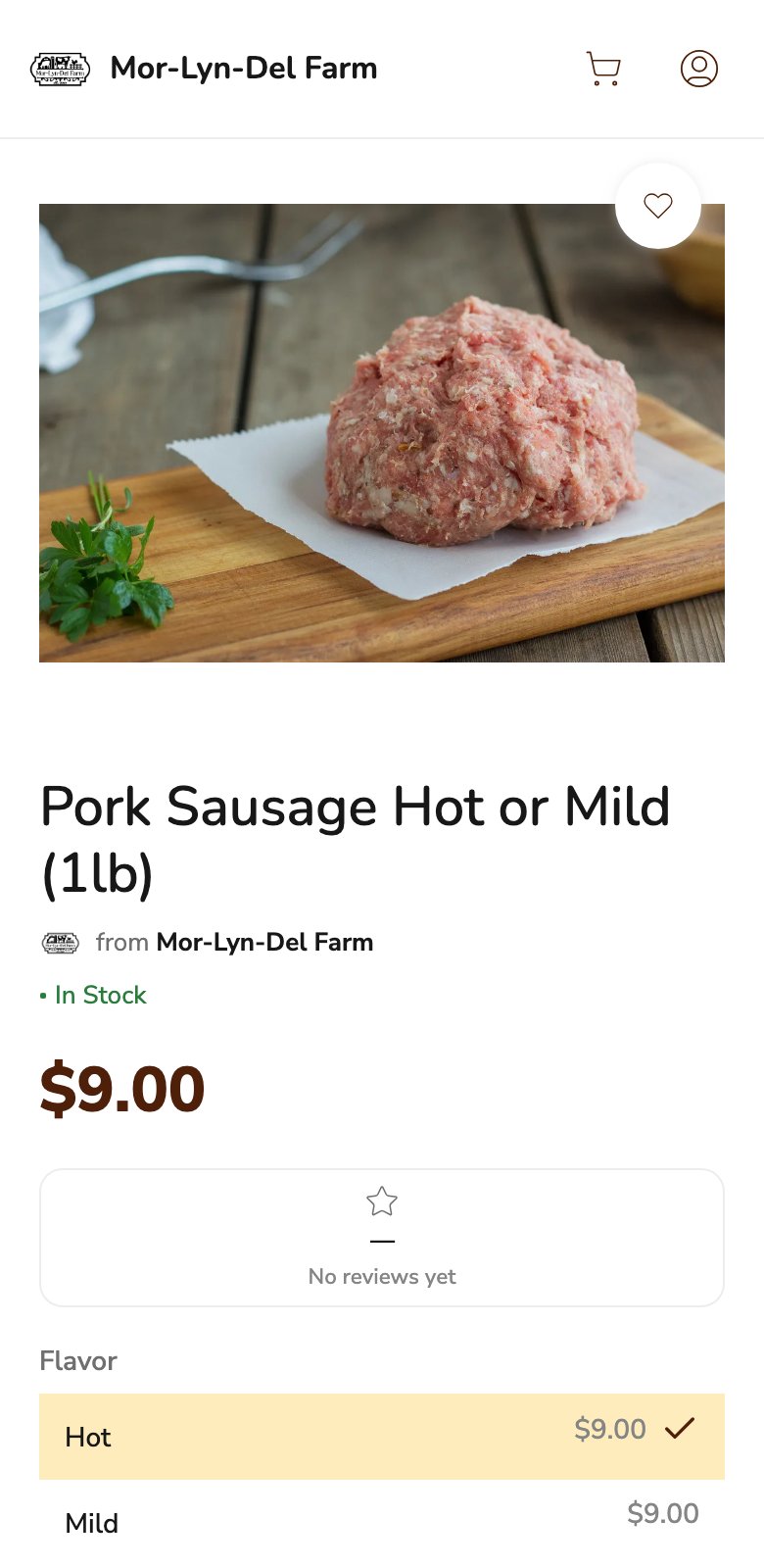
Two things are worth copying from these listings:
And one thing to think twice about. KairosGO's packs say "4 links" but not the weight. A customer comparing $8.19 for 4 Italian links against $9.00 a pound cannot tell which is the better deal. If your processor packs links by count, print the average weight on the listing.
Two 2026 processor price sheets charge $0.60 to $1.50 a pound to season bulk sausage and $2.50 to $3.05 a pound to link breakfast sausage, on top of slaughter and cut-and-wrap fees. Sunnyside Meats, a USDA and custom processor in southwest Colorado, posts its 2026 prices publicly, which makes it a useful real example.
Scroll right for how each fee is charged.
| Fee | Sunnyside Meats (Colorado), 2026 | Clay Center Locker (Kansas), 2026 | How it is charged |
|---|---|---|---|
| Slaughter, one hog | $110 (USDA) | $35 dressing fee plus $20 disposal | Per animal |
| Cut and wrap | $1.80 a pound (USDA) | $1.20 a pound | Per pound of carcass weight |
| Bulk sausage seasoning | $75 for up to 50 pounds | $0.60 a pound (breakfast) | Per batch or per pound of meat |
| Links or patties | $3.05 a pound, 100 pound minimum | $2.50 a pound (breakfast links) | Per pound of meat |
| Bratwurst | Not listed separately | $2.50 a pound | Per pound of meat |
| Smoked or Polish sausage | $2.85 a pound for curing and smoking (any cut) | $3.50 a pound | Per pound of meat |
We loaded both 2026 price sheets on October 12, 2026. Sunnyside's sheet lists separate USDA and Not for Sale prices. Clay Center's sheet does not say which inspection it runs, so ask any processor whether your packages will carry an inspection mark before you book. The USDA national report puts average processing at $1.10 a pound of hanging weight and the average slaughter fee at $90.
Linking minimums can change your whole plan. Sunnyside's $3.05 linking price needs 100 pounds, and the bulk seasoning fee is $75 whether you season 50 pounds or 10. At 10 pounds, that seasoning works out to $7.50 a pound, not $1.50. Price sheets change every year, so call your processor before you set a price.
Ask your processor these questions before you set a single price:
Make sausage only if you can sell it for more than $9.91 a pound in bulk or $11.46 a pound as links. Those are the break-even points against selling the same pork as a half hog, which averaged $8.41 per pound of packaged meat (processing included) in the USDA's national report. Add the processor's sausage fee and you get the floor.
Here is how each floor is built:
This is the comparison most sausage price lists miss. The national averages, $10.22 for bulk and $11.90 for links, sit only 31 to 44 cents a pound above those floors before card fees. In other words, a farm charging the average turns pork into sausage for almost nothing extra. Your local half-hog price may be lower than $8.41, which lowers your floor too, so plug in your own number. Keep in mind what this floor is: a comparison with your other way to sell the same pork, not a full profit calculation. Your feed, your hours, freezer space, market fees and any packs that do not sell all still have to fit inside the price.
The trade is not only about price. Sausage moves the trim and the shoulder that half-hog buyers might not want, and it brings in customers who will never buy 100 pounds of pork at once. If those customers come back every week, a thin margin per pound can still beat waiting for a half-hog buyer.
At $12 a pound for bulk sausage, you earn about $1.59 a pound more than the half-hog route, or $79.60 a month at 50 pounds. At $9 a pound you lose $1.32 a pound against that route. The table uses the floors above, assumes 2-pound orders and includes card fees of 2.9% plus $0.30 per order.
Swipe across to see 20, 50 and 100 pounds.
| Price per pound | Extra per pound vs. half hog | 20 lb a month | 50 lb a month | 100 lb a month |
|---|---|---|---|---|
| Bulk at $9 | minus $1.32 | minus $26.42 | minus $66.05 | minus $132.10 |
| Bulk at $10.50 | $0.14 | $2.71 | $6.77 | $13.55 |
| Bulk at $12 | $1.59 | $31.84 | $79.60 | $159.20 |
| Bulk at $13 | $2.56 | $51.26 | $128.15 | $256.30 |
| Links at $12 | $0.04 | $0.84 | $2.10 | $4.20 |
| Links at $14 | $1.98 | $39.68 | $99.20 | $198.40 |
Our worked example, using the USDA national half-hog average of $8.41 per pound of packaged pork, Sunnyside Meats' 2026 seasoning ($1.50 a pound at 50 pounds) and linking ($3.05 a pound) fees, and a 2.9% plus $0.30 card fee on each 2-pound order. The per-pound fees assume a full 50-pound seasoning batch and a 100-pound linking batch, held frozen and sold over the months shown. Platform plan fees are not included. Figures checked October 12, 2026.
The jump from $10.50 to $12 is the whole story. A $1.50 price change turns 50 pounds a month from $6.77 into $79.60. In our view, a customer who already chose farm sausage over a $5.29 grocery roll is unlikely to walk away over $1.50.
Price links and patties $1 to $2 a pound above bulk, and specialty flavors $1 to $2 above plain. The national gap between bulk breakfast sausage ($10.22) and links or patties ($11.90) is $1.68. Processors charge more for cheese, jalapeño and smoked versions too, so your price should follow.
A simple ladder for a 1-pound pack:
KairosGO on Homegrown charges $1 more for its jalapeño cheese and mushroom Swiss brats than for its plain ones ($7.99 against $6.99 for 4 brats). That $1 premium on a specialty flavor follows the same pattern as processor sheets, where Kempf's charges 75 cents a pound more for jalapeño and cheese brats than for plain ones.
The two listings we checked give about 7 to 9 pounds of sausage from a quarter hog and about 10 pounds from a half hog, when the rest goes to chops, roasts, ham and bacon. Your cut sheet decides the number. E3 Farms on Homegrown lists 7 to 9 pounds of sausage per quarter hog. Wisconsin River Meats, a USDA-inspected processor, lists about 10 pounds of pork sausage from a half hog with a 100-pound carcass.
That is a small number, and it matters for pricing. If a half hog only gives you 10 pounds of sausage, you cannot run a weekly sausage line on one hog. Farms that sell sausage every week send more of the hog to the grinder: the shoulder, the trim and sometimes the ham.
Ask your processor to grind the whole shoulder if sausage sells better than roasts at your market, and read the cut sheet's sausage rules first. Kempf's Meats in Sedalia, Missouri, which offers state inspection, lets a half-hog order pick only one sausage or brat option, with a 10-pound minimum per flavor, on its 2026 cut sheet. Plan your flavors around your processor's minimums, not the other way around.
Whatever the split, count it before you price. Divide what you expect to earn from the whole hog by the pounds you will actually sell, so the chops are not carrying the sausage or the other way around.
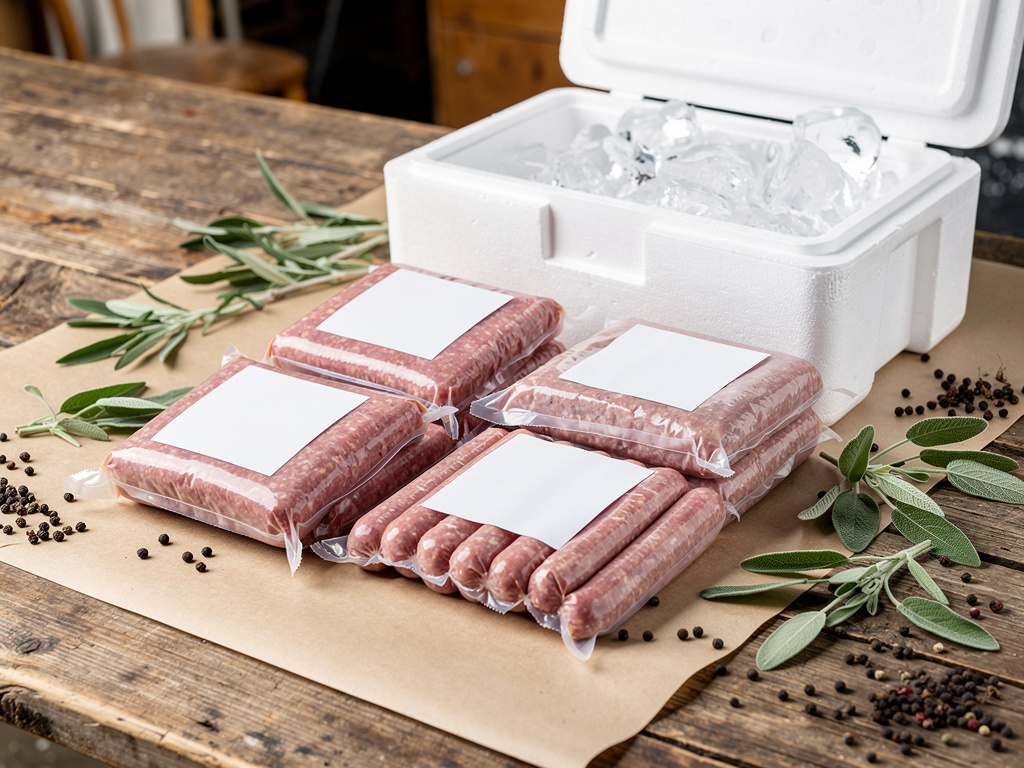
Put your sausage on an online storefront that customers order and pay from before market day, so you bring the right flavors and sell out of the cooler instead of guessing. Sausage comes back from the processor in one batch, and on a half hog that can mean just 10 pounds of a single flavor. Pre-orders tell you which flavors to bring, and they let regulars claim the hot sausage before it is gone.
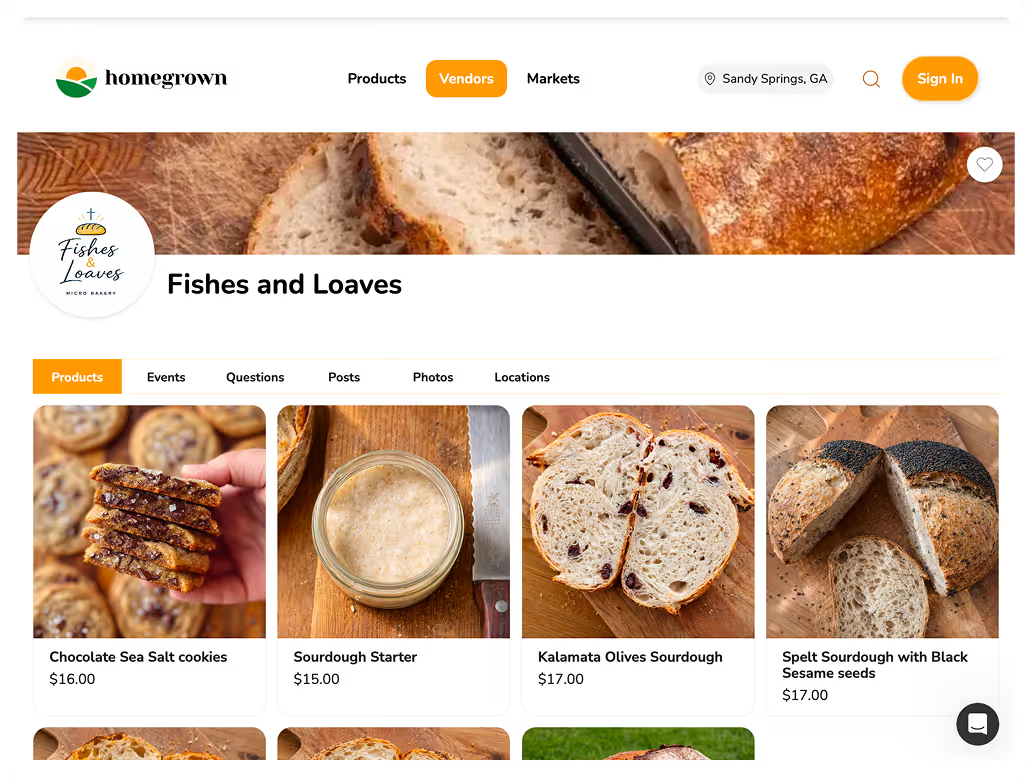
Homegrown is $10 a month billed annually ($12.50 billed monthly) with no percentage fees beyond standard payment processing of 2.9% plus $0.30 per order, which the vendor pays. For a sausage table, the useful parts are these:
Here is how that compares with other ways farms take meat orders, on a $36 order (three 1-pound bulk packs at the $12 this guide recommends) and 40 orders a month:
Scroll sideways for the full fee stack on every platform.
| Platform | Monthly plan | Trial | Platform or service fee | Card processing | Customer pays on a $36 order | Farm pays on a $36 order | Farm pays for 40 orders a month |
|---|---|---|---|---|---|---|---|
| Homegrown | $10 billed annually ($12.50 monthly) | 7 days, no charge until day 8 | None, 0% commission | 2.9% + $0.30, paid by the farm | $36.00 | $1.34 plus the plan | $63.60 ($66.10 on the monthly plan) |
| Hotplate, default | $0 | No plan to try | 5% + $0.55, paid by the customer | 2.9% + $0.30, paid by the farm | $38.35 | $1.34 | $53.60 |
| Hotplate, farm covers the fee | $0 | No plan to try | 5% + $0.55, paid by the farm | 2.9% + $0.30, paid by the farm | $36.00 | $3.69 | $147.60 |
| Square Online, Free plan | $0 | No plan to try | None | 3.3% + 30¢ online | $36.00 | $1.49 | $59.60 |
| Local Line, Core | $87 billed annually ($109 monthly) | 7 days | None, no commissions | 2.9% + $0.30 | $36.00 | $1.34 plus the plan | $140.60 ($162.60 on the monthly plan) |
We checked every price on each company's own pricing page on October 12, 2026: findhomegrown.com/signup, hotplate.com/pricing (plus Hotplate's own post saying it charges the fee to the customer by default), squareup.com/us/en/pricing and localline.co/pricing. Card processing here is figured on the $36 subtotal. The annual columns compare annual plans and the monthly figures in brackets compare monthly plans.
Each of the others fits a different farm. Hotplate costs the farm the least per month, but a $36 sausage order shows the customer $38.35 at checkout, and Hotplate says it was built first for pop-ups and home food businesses. Square's Free plan costs $0 a month and charges a slightly higher online card rate. Local Line is built for farms and wholesale, with more tools than a part-time sausage table needs, at $87 a month billed annually ($109 billed monthly). If you want a deeper side-by-side of plans, fees and features for farms, read Homegrown compared with Local Line.
Be clear on what Homegrown does not do. It cannot price by the pound yet; selling by weight is on its roadmap. So list fixed packs, like "1 lb bulk" or "4 links, about 1 lb," each with its own price. It has no countdown drops feature. It does not check your labels or your inspection status; that is between you, your processor and your state. Customers create a Homegrown account to place their first order. Your storefront is listed in Homegrown's marketplace, but plan on most orders coming from people you send to your own link.
If your sausage sells out at the market most weeks, pre-orders are how you stop disappointing the people who come at 11. You can set up your Homegrown storefront with your flavors, pack sizes and pickup days in an evening, and send the link to your regulars before the next market.
A licensed retail meat shop can make and sell its own sausage without USDA inspection. Wholesale 72% lean pork trim traded at about $1.17 a pound on October 12, 2026, though a small shop pays its distributor more, and the shop's sausage price also has to cover rent, labor and a licensed facility. The federal rule lists "Grinding and freezing products made from meat" and "Curing, cooking, smoking" among the jobs a retail store may do, as long as it sells to consumers, mostly households (at least 75% of sales by dollar value), and uses only "federally or State inspected and passed product." No sale can go past a normal retail quantity, which the rule sets at half a carcass in total per customer, or 100 pounds for pork.
For a shop, the numbers look different from a farm's:
Caterers are named in the restaurant part of the same rule, and a food truck that serves cooked meals usually falls under it too, so check with your state. You can cook sausage and serve it "in meals or as entrees directly to individual consumers," like a brat on a bun at a festival. You price that as a meal, not by the pound. The guide to pricing BBQ plates shows how to build a plate price from meat, sides and your time.
Sell only packages that carry an inspection mark, keep them frozen or cold the whole time, and check what your state requires of meat vendors before your first market (in North Carolina, a $0 registration). The USDA's Food Safety and Inspection Service says a sausage label must carry "the inspection legend and USDA establishment number," and raw sausage needs safe handling instructions. Ask your processor whether it prints that label for you, and read one before you price.
North Carolina is a useful example of the state layer. Its agriculture department says a farm that takes animals to an inspected processor and sells the meat at a farmers market needs a meat handler's registration, and "There is no cost for this registration," according to the NCDA&CS meat and poultry inspection FAQ (loaded October 12, 2026). Other states handle it differently. The North Carolina farmers market vendor permit guide covers the rest of that state's market rules.
The NCDA&CS meat and poultry FAQ says state-inspected meats "can only be sold within the state. This means that you may not cross state lines, sell these meats online, mail or in any other way ship them out of state." Sausage with the round USDA mark does not have that limit. If yours carries the state mark, call the state's meat inspection office at the number below and ask whether online pre-orders for pickup in North Carolina are allowed before you list it. On frozen meat, the clearest guidance we found is older: a 2006 guide by Susan Jelinek Mellage for Heifer International, the Carolina Farm Stewardship Association and NC Choices, which NCDA&CS hosts on its website, says meat you receive frozen from the plant "must remain frozen through the sale to the customer" and that meat that has been frozen "may not be thawed and then sold." The state's current meat handler notice (MPID Notice 7-18) does not repeat that line, so confirm it with the Meat and Poultry Inspection Division at (919) 707-3180 before market day. We read all three on October 12, 2026.
Before your first sausage market, work through these steps:
The most expensive mistake is pricing sausage below the half-hog floor, which for the national averages sits at about $9.91 a pound for bulk and $11.46 for links. At $9 a pound for bulk, every 50 pounds you sell earns $66.05 less than selling the same pork by the half. These are the mistakes that cost sausage vendors the most:
If you sell other cured or dried meats, the beef jerky pricing guide covers jerky, which runs into the same USDA or state meat inspection rules as sausage.
Most farms should sell sausage for $12 a pound in bulk and $13 to $14 a pound as links or patties. Nationally, farms averaged $10.22 for bulk breakfast sausage and $11.90 for links and patties over the third quarter of 2026, per USDA Market News. Those averages sit only 31 to 44 cents above what the same pork earns sold as a half hog plus the sausage fee, so pricing a little above them is how sausage pays you more than selling by the half.
In most states you cannot sell sausage you grind and stuff in your home kitchen, because cottage food laws leave out meat. Texas, for example, excludes "meat, meat products, poultry, or poultry products" from cottage food. To sell sausage at a farmers market, it has to come from a USDA or state-inspected processor, with the inspection mark on the package. A licensed retail meat shop can make and sell its own sausage at the shop, under state or local rules. Arizona's cottage food program is the exception we found, allowing meat foods sold in person, so Arizona vendors should ask the state health department first.
Food Lion's online store listed Neese's Country Sausage, a 16-ounce roll, at $5.29 on October 12, 2026, or about 33 cents an ounce. Store prices vary by location and week. Farm sausage sells for about twice that, with national farm averages of $10.22 to $11.90 a pound in July to September 2026.
At Sunnyside Meats, a USDA processor in Colorado, 2026 prices were $110 to slaughter a hog, $1.80 a pound of carcass weight to cut and wrap, $75 to season up to 50 pounds of bulk sausage and $3.05 a pound to link it, with a 100-pound minimum for links. Clay Center Locker in Kansas listed $0.60 a pound to season breakfast sausage and $2.50 a pound to link it. Call your processor for current prices before you price your sausage.
When most of the hog goes to chops, roasts, ham and bacon, the two listings we checked give about 7 to 9 pounds of sausage from a quarter hog and about 10 pounds from a half hog. E3 Farms on Homegrown lists 7 to 9 pounds of sausage per quarter hog, and Wisconsin River Meats lists 10 pounds of pork sausage from a half hog with a 100-pound carcass. You can get far more sausage if you have the processor grind the shoulder and trim.
Frozen is the easier way to sell sausage at a market, because it keeps longer and holds up in a chest cooler or freezer for a whole market day. In North Carolina, a 2006 farm meat guide hosted on the state agriculture department's website says meat that leaves the processor frozen must stay frozen until the customer buys it, and that frozen meat may not be thawed and sold. The state's current meat handler notice does not repeat that line, so confirm it with the Meat and Poultry Inspection Division. The same guide notes that some markets only allow frozen meat, so ask your market manager before you pick.
These 5 guides answer the questions sausage vendors usually ask after they set their first price list, from legal routes to platform costs:
If you are ready to take sausage orders before market day, start your Homegrown storefront and list your flavors and pack sizes.