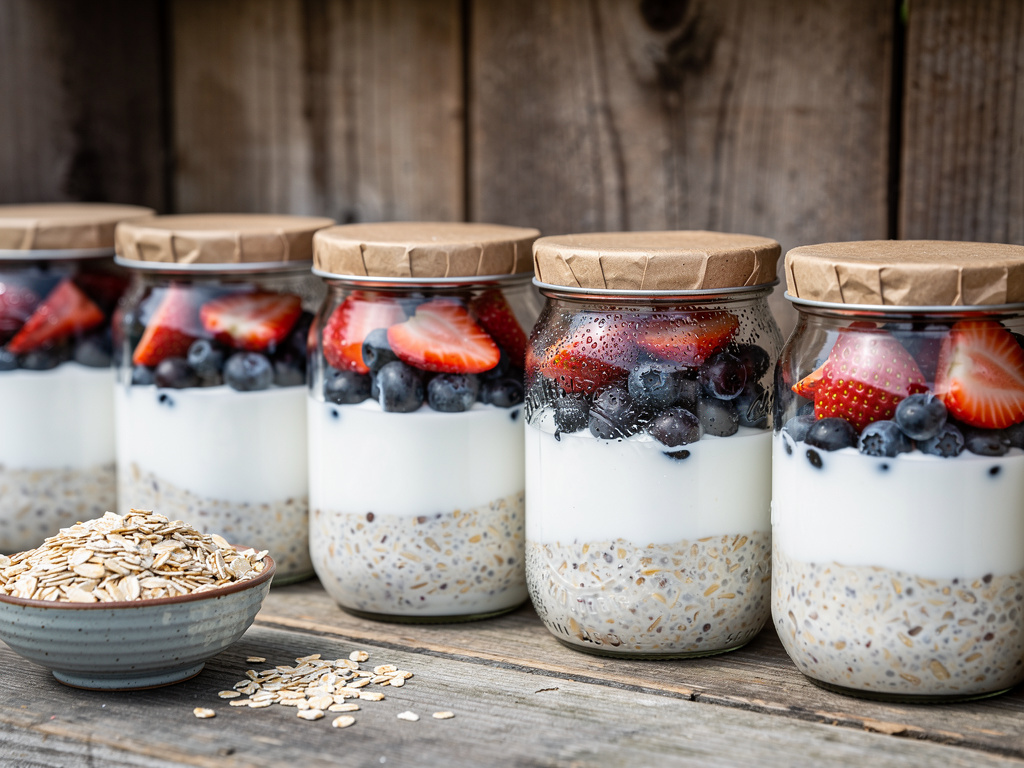


The short version: Sell a ready-to-eat jar of overnight oats for $4 to $5 in an 8-ounce size and $6 to $8 in a 16-ounce size, and sell a dry mix jar that the customer soaks at home for $9 to $12 for three servings. A 16-ounce jar of oats, milk, Greek yogurt, chia, maple syrup and blueberries costs about $1.51 to make in a plastic deli cup, and the oats are only 13 cents of that. Small vendors we checked charge $4 to $9 a container on their own websites, Frugally Bougie lists its overnight oats at $6.50 on Homegrown, and a 5.5-ounce MUSH cup costs $2.49 at Target. Oats soaked in milk or yogurt have to stay cold, so check your state before you sell them: Texas lets registered home cooks sell refrigerated foods, while California and Florida cottage food rules only cover foods that do not need temperature control.
Checked on October 6, 2026: vendor prices on each vendor's own page (OMG Overnight Oats from the Internet Archive's September 2025 snapshot, because its website was down), grocery prices on Target.com and Kroger.com, ingredient prices on Kroger.com and the Bureau of Labor Statistics milk average, packaging prices on WebstaurantStore, Home Depot and Amazon, and Homegrown's pricing on its signup page, plus Venmo's fee page and two vendors' order minimums on October 8, 2026. State rules can change, so verify your state's current rules before your first sale. Homegrown customers create an account to place their first order, and Homegrown has no drops feature.
Overnight oats look like the easiest thing you could ever sell. Oats, milk, a spoonful of yogurt, some fruit, a night in the fridge. Because a bag of oats is cheap, it is tempting to price a jar like a bowl of oatmeal, and then a sold-out week leaves you with very little.
The real costs sit on top of the oats. Berries, maple syrup and Greek yogurt cost more than the grain, a glass jar costs more than everything inside it, and the whole product has to stay cold from your kitchen to your customer's fridge. That last part also decides whether you can legally make it at home at all.
Every number below was loaded on October 6, 2026, except the Venmo fee and two vendors' order minimums, which we checked on October 8. One vendor's price comes from a September 2025 archived copy of its website, because the site was down that day. The guide lists what small overnight oats vendors charge right now, runs a standard 16-ounce recipe through live grocery prices, compares a ready-to-eat jar with a dry mix jar, and shows what a week of orders actually leaves you after fees. It also covers the rules in three states, because a jar made with milk is a different product in the eyes of the law than a jar of dry oats.
A ready-to-eat overnight oats jar should sell for $4 to $5 in an 8-ounce size and $6 to $8 in a 16-ounce size, with $2 more for added protein powder. A dry mix jar with three servings, where the customer adds their own milk, should sell for $9 to $12. Those ranges come from what four small vendors charged on their own sites on October 6, 2026, one more vendor's price read off an Internet Archive snapshot of its website from September 2025, because the site was down on October 6, and the $6.50 jar on Homegrown, set against what each format costs you to make. The dry mix range has no direct comparable. It is set from the jar's $2.58 cost and the gift buyers it sells to, since Beyond Oats' dry pouch on Homegrown works out to about $7.48 for three servings.
If you already sell other grab-and-go food, our guide to pricing meal prep covers the full menu around a breakfast jar, including soups, bowls and family trays. This page is only about the number on the oats.
Scroll sideways to see every format and price.
| Format | Your cost to make | Suggested price | What small vendors charged |
|---|---|---|---|
| 8 oz fruit-topped (half the 16 oz recipe) | About $0.85 | $4 to $5 | Planned Eats $4 classic, $5 blueberry (blueberry sold 2 or more at a time) |
| 16 oz fruit-topped, plastic cup | $1.51 | $6 to $8 | Planned Eats $6 to $8 for 16 oz; jars of unstated size, priced each: Frugally Bougie $6.50, OMG $7.99 (September 2025 copy, 4-serving minimum), StaverY $8, Juices by Trisha $8 |
| 16 oz with protein powder | $1.51 plus the powder | Add $2 | Planned Eats adds $2 (8 oz $6, 16 oz $8) |
| 16 oz fruit-topped, glass pint jar | $2.75 | $8 to $9 | Food Made Fresh $9 for a 16 oz container of 2 servings (container type not stated) |
| Workweek box of five 16 oz cups | $7.55 | $30 to $35 | StaverY (jar size not stated) 6 jars for $42 ($7.00 each) plus $5.99 delivery, 12 for $78 ($6.50 each) plus $3.99 delivery |
| Dry mix pint jar, 3 servings | $2.58 | $9 to $12 | Beyond Oats on Homegrown, $19.95 for an 8-serving pouch ($2.49 a serving) |
Vendor prices were loaded from each vendor's own page or Homegrown listing on October 6, 2026, except OMG Overnight Oats, whose site was down, so we used its menu as the Internet Archive saved it in September 2025. Your costs come from the recipe and packaging table further down. The 8-ounce cost is half the fruit-topped ingredients, blueberries and chia included, in the same cup and label, so a plain 8-ounce jar of oats, milk, yogurt and maple costs less, about 61 cents.
The gap between $4 and $8 is mostly size, toppings and protein, not the oats. A plain 8-ounce jar and a 16-ounce jar with lemon and blueberries use the same base. Price each step up so the customer can see what they are paying for.
Small overnight oats vendors charge $4 to $9 per container. Planned Eats' 16-ounce jars run $6 to $8, and jars of unstated size from four other vendors run $6.50 to $8 each. We loaded each vendor's own page on October 6, 2026, and wrote down only prices printed on the page. One site, OMG Overnight Oats, did not load that day, so its price comes from the newest archived copy of its page, from September 2025. Three more vendors we found are left out: one showed no price, one sold pouches in a format its page did not make clear, and one priced in Canadian dollars.
Swipe sideways to see every vendor's price.
| Vendor | Where they sell | Size and format | Price |
|---|---|---|---|
| Planned Eats | Pickup in Shorewood, WI | 8 oz or 16 oz, oats with Greek yogurt and honey; fruit and dessert flavors sold in sets of 2 or more | $4 (8 oz) and $6 (16 oz) classic; $5 and $7 blueberry; $6 and $8 lemon-blueberry; protein adds $2 |
| StaverY | Delivery in Miami-Dade, FL | Single cold jar | $8 a jar plus $5.99 delivery; 3-jar kit $22, free delivery; weekly 6 for $42 plus $5.99 delivery, 12 for $78 plus $3.99 delivery, 18 for $108 with free delivery |
| OMG Overnight Oats | Home delivery or local pickup, city not stated; $25 minimum | Jar with protein added, 4-serving minimum order | $7.99 for each of nine flavors (menu as of September 2025, see note) |
| Juices by Trisha | Pickup in Brownsville, TX | Matcha overnight oats | $8.00 |
| Food Made Fresh | Monday delivery, $40 minimum order | 16 oz container, 2 servings | $9.00 ($4.50 a serving) |
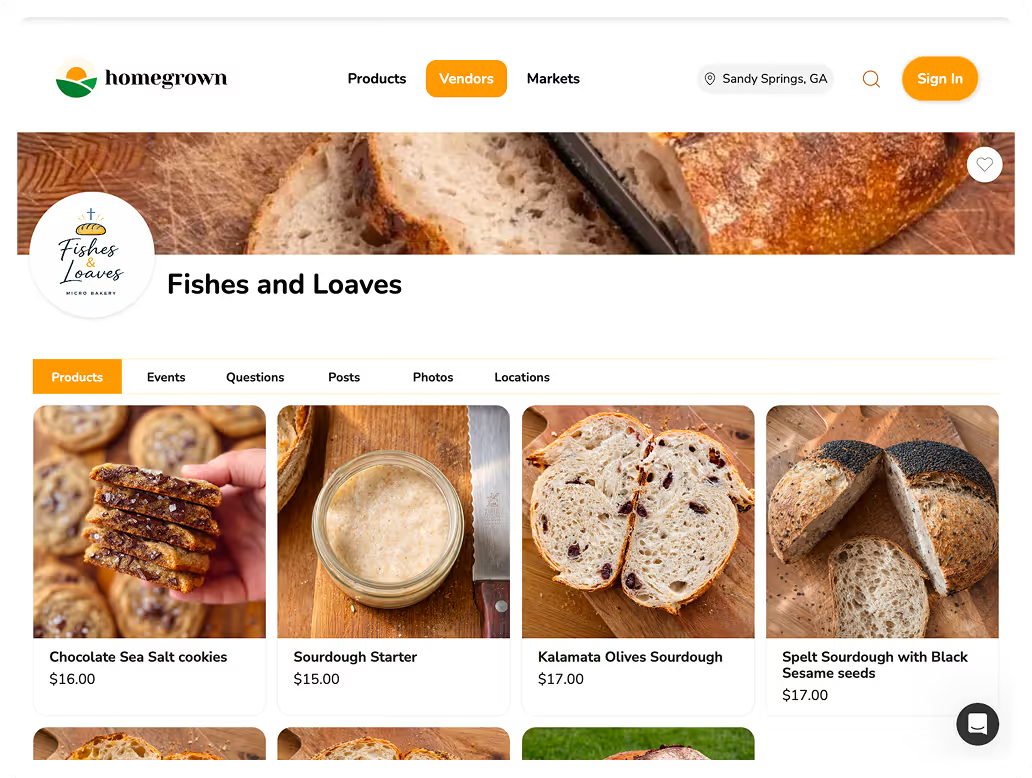
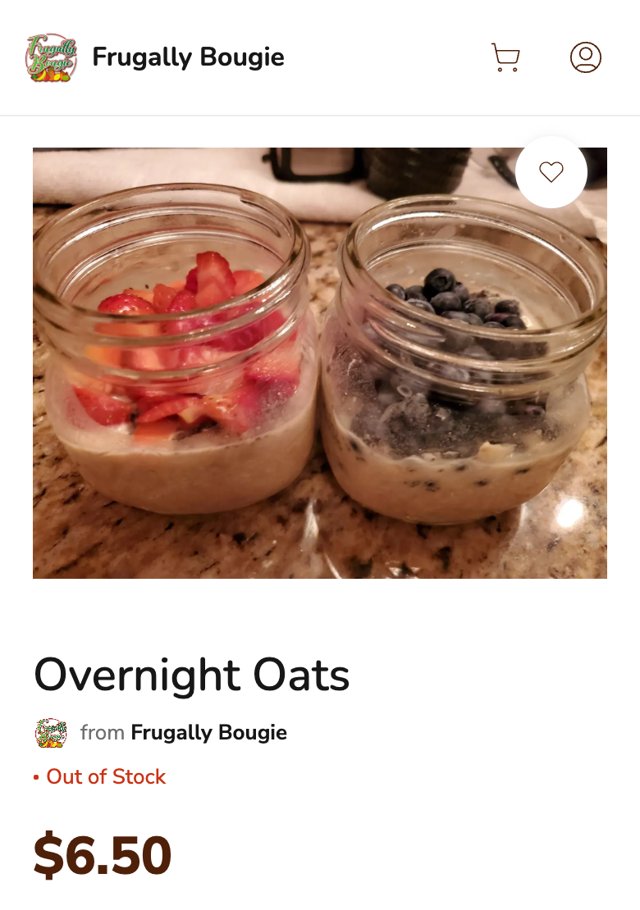
| Frugally Bougie (Homegrown) | Weekend markets | Jar, three flavors | $6.50 |
Prices from each vendor's own website or Homegrown listing, loaded October 6, 2026. OMG Overnight Oats is the exception: its website would not open that day, and its price is from the newest archived copy, captured September 26, 2025. Locations are what each page said. Frugally Bougie's flavors and the Juices by Trisha matcha jar were marked out of stock that day.
The most useful page in that set is the Planned Eats overnight oats menu, because it prices every step separately. A classic 8-ounce jar is $4. Add blueberries and it is $5. Add lemon and blueberry and it is $6. Go to 16 ounces and each one moves up $2. That ladder is a good model for a part-time vendor, because it charges more for the blueberry, lemon and protein add-ons that cost more.
The two grocery cups we checked, MUSH at Target and brekki at Kroger, cost $2.49 and $2.99 for about 5 ounces, so your jar has to be bigger, fresher or more filling to earn $6. On October 6, 2026, Target listed a 5.5-ounce MUSH French Vanilla protein cup at $2.49, about 45 cents an ounce. Kroger listed a 5.3-ounce brekki Original cup at $2.99, about 56 cents an ounce.
Now compare that to a home vendor. Planned Eats charges $6 for a 16-ounce container, which works out to about 38 cents per ounce of container size. Its 8-ounce jar at $4 is 50 cents an ounce. Planned Eats lists container size, not the weight of the food inside, so this is a rough comparison against the grocery cups' net weight. Even so, a small vendor's big jar can cost the customer about the same per ounce as a grocery cup, or less, at more than twice the sticker price.
That is the pitch to put on your listing:
Do not try to beat the grocery cup on price. At $2.49 you would be below the $2.89 it takes to cover a 16-ounce jar's $1.51 in materials, your time and the card fee, before any profit.
One 16-ounce jar of fruit-topped overnight oats costs about $1.51 to make, counting $1.32 in ingredients, an 18-cent plastic cup with a lid and a 1-cent label. We priced a common recipe (half a cup of oats, half a cup of milk, a quarter cup of Greek yogurt, a tablespoon each of chia seeds and maple syrup, and a third of a cup of blueberries) using Kroger.com prices and the national milk average on October 6, 2026.
Slide the table sideways to see what each ingredient costs.
| Item | Amount per jar | What you pay for the package | Cost per jar |
|---|---|---|---|
| Old fashioned oats (Kroger) | 1/2 cup (40 g) | $3.99 for 42 oz, about 30 servings | $0.13 |
| Whole milk | 1/2 cup (4 fl oz) | $4.23 a gallon, U.S. average for August 2026 | $0.13 |
| Plain nonfat Greek yogurt (Kroger) | 1/4 cup (about 64 g) | $3.99 for 32 oz | $0.28 |
| Chia seeds (Simple Truth Organic) | 1 tablespoon (about 12 g) | $4.29 for 12 oz | $0.15 |
| Pure maple syrup (Private Selection) | 1 tablespoon | $17.99 for 32 fl oz | $0.28 |
| Frozen blueberries (Private Selection) | 1/3 cup (about 50 g) | $8.99 for 48 oz | $0.33 |
| Salt and cinnamon | A pinch each | Our estimate | $0.02 |
| Ingredients | $1.32 | ||
| 16 oz clear plastic cup with lid | 1 | $43.99 for 250 at WebstaurantStore | $0.18 |
| 2-inch round label | 1 | $27.76 for 2,000 | $0.01 |
| Total per jar | $1.51 |
Grocery prices from Kroger.com product pages and the Bureau of Labor Statistics average price for whole milk (August 2026), all loaded October 6, 2026. Kroger prices vary by store. The oats and the Greek yogurt were both on sale that day at $3.99, down from $4.29; at the $4.29 regular prices the oats are 14 cents and the yogurt 30 cents, which puts this jar at about $1.54 and the dry mix jar below at about $2.61. Each row is rounded to the cent, and the totals are the sum of the rows.
Your number will move with your recipe. Swap maple syrup for honey, use oat milk, or buy fruit in season and the total shifts by a few cents either way. The point is to write your own recipe into a table like this one before you set a price, not after.
The toppings and the yogurt cost more than the oats because oats are one of the cheapest foods in the store, at about 13 cents a serving. In our recipe, blueberries ($0.33), maple syrup ($0.28) and Greek yogurt ($0.28) add up to 89 cents, which is 67% of the $1.32 in ingredients. The oats are 10%.
That has four practical results for your pricing:
When you build a new flavor, cost the topping first. A peanut butter cup flavor with a spoonful of peanut butter and chocolate chips can easily cost more than a blueberry jar, and it should be priced like it.
Use plastic cups for regular sales and save glass jars for higher-priced orders, because a glass pint jar costs more than the food you put in it. A 12-pack of Ball 16-ounce pint jars was $16.98 at Home Depot on October 6, 2026, which is $1.42 a jar. A 16-ounce clear plastic cup with a lid is 18 cents. In glass, our $1.51 jar becomes a $2.75 jar.
Glass does look better in a photo and keeps a cleaner seal. But if you sell 40 jars a week in glass and only half come back, you are buying 20 new jars a week, about $28 in glass you never planned for.
If you want to sell in glass, charge a jar deposit and list it as its own line. At $1.50 a jar, refunded when the clean jar comes back at pickup, the deposit covers the $1.42 jar if it never returns. A deposit gives regulars a reason to bring the jar back, and the jar becomes a reason to see you again next week.
Whatever you choose, pick a container that holds the recipe with room to stir. Our recipe fills most of a 16-ounce cup or jar, with a little headspace left to stir. An 8-ounce jar only fits half a recipe.
You can charge about $2 more for protein powder and about $2 more to move from an 8-ounce to a 16-ounce jar, based on the prices small vendors posted on October 6, 2026. Some dessert flavors carry another $1 to $2. Planned Eats charges that for banana bread and apple pie, but prices its peanut butter flavors the same as a classic jar.
Here is what the vendors' own menus show:
The protein upcharge is worth checking against your own powder. Price it by the scoop, not the tub: at $1.13 a scoop, the Target price for up&up whey, a $2 upcharge leaves about 81 cents for your trouble after the 2.9% card fee on the extra $2. At $1.55, the Optimum Nutrition price, it leaves about 39 cents, which barely covers it.
You can sell overnight oats made with milk or yogurt from a home kitchen in some states, but many states' cottage food rules leave it out, because the jar has to stay cold to stay safe. Cottage food laws were written for shelf-stable foods like bread, cookies and jam. A moist jar of oats, milk and yogurt is the opposite of that, and Texas law lists "pasteurized and unpasteurized milk and dairy products" as examples of foods that need time and temperature control. Our guide to which states allow refrigerated cottage foods goes state by state.
Here is how three states handle it, checked on October 6, 2026, using the Texas Department of State Health Services cottage food page, California's Approved Cottage Foods List and the 2026 Florida Statutes:
Since September 1, 2025, a Texas cottage food operation may sell foods that need refrigeration, with a short list of exceptions such as meat, seafood and raw milk products. The Texas Department of State Health Services says you must register with the department, complete an accredited food handler course, keep cold foods at 41°F or below while you store and deliver them, put the date made on the label, and include a safe handling statement telling the customer to keep the food refrigerated. If you sell online, the same page says you, an employee or a household member must personally deliver the food to the customer, and your website has to show all the label information before you accept payment. The page does not say whether customer pickup counts as delivery, so ask DSHS before you set up a pickup spot.
California cottage food operations may only make foods that are not potentially hazardous, meaning foods that stay safe outside temperature control. The state's Approved Cottage Foods List (last reviewed April 2026) includes cereals, grain mixes and granola, which is where a dry oat mix would most likely fit; confirm with your county. A wet jar made with milk is not on it.
The 2026 Florida Statutes define a cottage food product as food that is not time or temperature controlled for safety, in section 500.03. So a refrigerated jar of overnight oats falls outside Florida's cottage food exemption, while a dry mix can fit inside it, up to $250,000 a year in cottage food sales under section 500.80.
If your state does not allow it from home, the usual route is a licensed kitchen. Our breakdown of renting a commercial kitchen covers what that costs, and the rent goes straight into your price per jar.
Cottage food rules change often, and in some states your county may add its own steps (Texas bars cities and counties from requiring a permit or fee). Texas rewrote its law in 2025. Before you sell a single jar, verify your state's current rules with your state health or agriculture department, and ask specifically about foods made with milk or yogurt.
When you call or email your state or county office, ask these four questions in plain words:
Write down who you spoke to and the date. If the answer is no for the wet jar, the dry mix in the next section may still be open to you.
A dry overnight oats mix in a pint jar, enough for three servings, should sell for $9 to $12, against a cost of about $2.58 to make. The customer pours in their own milk or yogurt at home, so there is nothing perishable in your kitchen and nothing to keep cold on the way to pickup. That is also why a dry mix lines up with California's cereal and grain mix category, where a wet jar does not.
Drag the table sideways for the full dry mix cost.
| Item | Amount per jar (3 servings) | What you pay for the package | Cost per jar |
|---|---|---|---|
| Old fashioned oats (Kroger) | 1 1/2 cups (120 g) | $3.99 for 42 oz | $0.40 |
| Chia seeds (Simple Truth Organic) | 2 tablespoons (about 24 g) | $4.29 for 12 oz | $0.30 |
| Light brown sugar (Kroger) | 2 tablespoons | $2.59 for 2 lb | $0.08 |
| Sweetened dried cranberries (Kroger) | 3 tablespoons (about 30 g) | $3.99 for 12 oz | $0.35 |
| Cinnamon and salt | A pinch each | Our estimate | $0.02 |
| Ball 16 oz pint jar with lid | 1 | $16.98 for 12 at Home Depot | $1.42 |
| 2-inch round label | 1 | $27.76 for 2,000 | $0.01 |
| Total per jar | $2.58 |
Prices loaded October 6, 2026. The dry ingredients fill about 1.9 cups of the 2-cup pint. Rows are rounded to the cent and the total is their sum.
At $10, that jar leaves you $6.83 after the jar, the ingredients and a card fee of 59 cents, before your time. The customer pays about $3.33 a serving, which is more than the $2.49 a serving Beyond Oats charges for its 8-serving pouch on Homegrown, so the jar and the presentation are what you are selling. Dry mixes behave a lot like a baking mix in a jar, and the buyers are similar:
Print the soaking directions on the label: how much milk to add and how long to leave it in the fridge. Add the full ingredient list too, with any major allergen in the mix, such as tree nuts, called out plainly. Our guide to cottage food labels lists what else a label needs.
The lowest price that still pays you for a 16-ounce jar is about $2.89, and that leaves no profit at all, so treat it as a floor and price well above it. That figure adds $1.51 in materials, $1.00 of labor and 38 cents in card fees, which is what 2.9% plus 30 cents comes to on a $2.89 sale. It leaves out ice packs, spoilage and any platform plan, so your real floor is higher. Labor assumes you assemble 20 jars an hour and pay yourself $20 an hour, which is our assumption, not a measured number. Swap in your own.
Work out your own floor in five steps:
At $6.50, our jar leaves $3.50 after materials, labor and card fees. At $5, the same jar leaves about $2.04. At $4 for a full 16-ounce jar, you are down to about $1.07, before ice packs and before a single jar spoils.
On Homegrown, overnight oats are a rare listing: one ready-to-eat overnight oats product, priced at $6.50, among 2,895 products in a catalog pull on October 6, 2026. That means few jars to compare yours against on Homegrown. Plan on your first orders coming from your own regulars.
In a pull of the Homegrown catalog on October 6, 2026, 9 of the 2,895 products from 311 vendors used the word "overnight" anywhere in the name, description or flavor options, and only one of those was overnight oats: Frugally Bougie's jar at $6.50, in Strawberry Cheesecake, Maple and Brown Sugar with Peaches, and Blueberry Lemon. The other eight were empanadillas and a cultured butter. One more vendor, Beyond Oats, lists six dry oat, chia and flax mixes, four of them with 20 grams of plant protein a serving, at $19.95 for an 8-serving pouch, which the customer softens with their own liquid. The Ready to Eat Food category held 177 listings from 20 vendors.
Frugally Bougie is mostly a fresh juice vendor that sells at weekend markets, and its oats sit next to $6 yogurt parfaits on the same storefront. That pairing is worth copying. A juice or coffee customer is already buying breakfast, and a jar of oats is an easy add to the same order.
Here is how that $6.50 jar sits against the other prices we found the same day:
Price of one overnight oats container, October 6, 2026
Source: each vendor's own page, Target.com, Kroger.com and the Homegrown catalog, loaded October 6, 2026; OMG Overnight Oats from its newest archived page, September 26, 2025, because its site was down. 9 containers. Bar widths are the price divided by $9.00.
Twenty 16-ounce jars a week at $6.50 bring in $130 and leave about $90 after materials and card fees, before you pay yourself for the hour it takes to make them. Doubling to 40 jars leaves about $180, and 80 jars leaves about $360. Those figures treat each jar as its own sale, which overstates fees a little, because a customer who buys four jars pays the 30-cent part of the card fee once.
Move the table left to see sales, costs and hours.
| Jars a week at $6.50 | Sales | Materials at $1.51 | Card fees at $0.49 | Left before your time | Hours at 20 jars an hour |
|---|---|---|---|---|---|
| 20 | $130.00 | $30.20 | $9.80 | $90.00 | 1 |
| 40 | $260.00 | $60.40 | $19.60 | $180.00 | 2 |
| 80 | $520.00 | $120.80 | $39.20 | $360.00 | 4 |
Materials from the cost table above; card fees at 2.9% plus 30 cents on a $6.50 sale. Ice packs, a cooler, a platform plan and any kitchen rent are not included, so subtract yours.
The hours column only counts filling jars. It leaves out:
Those can easily double the time. Even so, a breakfast jar is one of the faster foods to make in volume, because there is no cooking and every jar uses the same base.
What limits you is fridge space. Eighty 16-ounce cups take up several fridge shelves overnight, and they all have to be cold at pickup. Plan your batch size around your fridge, not around your best-case week.
Sell single jars to get people to try you, and sell a workweek box of five to the people who come back, because a box locks in a week of orders before you shop. StaverY prices this way: $8 for one jar plus $5.99 delivery (or a 3-jar kit for $22 with free delivery), then $7.00 a jar for 6 a week plus $5.99 delivery, $6.50 for 12 plus $3.99 delivery, and $6.00 for 18 with free delivery. Planned Eats takes a different route: no bundle discount, but its fruit and dessert flavors must be ordered two or more at a time.
Here is a simple setup that works for a part-time vendor:
The box matters because overnight oats do not keep forever. For a home kitchen, plan on four to five days in the fridge, which is what the two recipe writers we checked give homemade overnight oats (Cookie and Kate says five days, Meal Prep Bix four). StaverY, a licensed producer with a Florida agriculture department permit, markets its jars as made Saturday, fresh through Saturday, but that is its own claim for its own process, not a home-kitchen rule. A box of five picked up on Sunday or Monday covers the week, and you know exactly how many jars to make.
The hardest part of selling overnight oats is guessing how many to make, because a jar that does not sell this week cannot be sold next week. Taking orders before your prep day fixes that. Homegrown is $10 per month billed annually ($12.50 billed monthly) with no percentage fees beyond standard payment processing, and it gives you a storefront where customers pick a flavor and size, pay ahead, and choose your pickup day. You buy yogurt and berries for the jars that are already paid for.
Each flavor or size can be its own option with its own price, the way Frugally Bougie lists three flavors on one jar. You can add more than one pickup spot, such as your porch and your Saturday market booth, or offer delivery. There is no commission on your sales, and card processing of 2.9% plus 30 cents comes out of your side, so a $26 order of four jars costs the customer $26.00 plus any sales tax, with no added platform fee.
Compare that with the tools most breakfast vendors try first:
Homegrown does not keep your oats cold, register you with your health department, or write your label. Customers create a Homegrown account to place their first order. Your storefront is listed on the Homegrown marketplace, but plan on most orders coming from people you send to your own link, like your regulars at the market.
If you are ready to take next week's overnight oats orders before you shop, you can set up your Homegrown storefront with a 7-day trial and no charge until day 8.
Selling fees take about $1.05 from a $26 order of four overnight oats jars on Homegrown (plus the $10 monthly plan) or on Hotplate's default setting (card processing of 2.9% + $0.30 on both, with Hotplate's 5% + $0.55 fee paid by the customer), $1.16 on Square Online's no-cost plan (3.3% + 30¢ online), and $2.90 if you choose to cover Hotplate's fee yourself on top of its 2.9% + $0.30 processing. The bigger difference shows up over a month and in what the customer sees at checkout.
Swipe left for every fee on every platform.
| Platform | Monthly plan | Trial | Platform fee | Card processing | Customer pays on a $26 order | You pay on a $26 order | You pay in a month of 50 orders at $26 |
|---|---|---|---|---|---|---|---|
| Homegrown | $10 billed annually ($12.50 billed monthly) | 7 days, no charge until day 8 | None, 0% commission | 2.9% + $0.30, paid by you | $26.00 | $1.05 plus the plan | $62.70 ($65.20 on monthly billing) |
| Hotplate, default | $0 | None (no plan to try) | 5% + $0.55, paid by the customer | 2.9% + $0.30, paid by you | $27.85 | $1.05 | $52.70 |
| Hotplate, you cover the fee | $0 | None (no plan to try) | 5% + $0.55, paid by you | 2.9% + $0.30, paid by you | $26.00 | $2.90 | $145.20 |
| Square Online, Free plan | $0 | None (no plan to try) | None | 3.3% + 30¢ online, paid by you | $26.00 | $1.16 | $57.90 |
| Square Online, Plus plan | $49 per location | 30 days, free | None | 2.9% + 30¢ online, paid by you | $26.00 | $1.05 plus the plan | $101.70 |
We checked Homegrown's signup page, Hotplate's pricing page and Square's online store plans page on October 6, 2026. Customer totals are before sales tax. Card processing is figured on the $26 price; a platform that charges it on a total with tips or tax runs a few cents higher. Hotplate's own post "What Hotplate does" says it charges the fee to your customer by default and that 80% of its chefs keep that default.
For a vendor doing 50 orders a month, Hotplate's default is the cheapest line for you, because your customers pay its $1.85 fee on every order while you pay the same 2.9% + $0.30 processing you would pay on Homegrown. Homegrown costs you $10 more per month than that on annual billing ($12.50 more on monthly billing) and keeps the checkout at the price on your label plus any sales tax, with no added fee. Which matters more depends on whether your regulars mind seeing a fee added to a $26 breakfast order.
The biggest mistake is pricing overnight oats off the cost of the oats, which are 13 cents of a $1.51 jar. Here are the others:
Every one of these is easy to fix before your first sale and hard to fix after customers get used to a price.
Charge $4 to $5 for an 8-ounce jar and $6 to $8 for a 16-ounce jar of overnight oats, and add about $2 for protein powder. Those ranges are built from what four small vendors posted on their own sites on October 6, 2026 (one charges $9 for 16 ounces), a fifth vendor's last public price, from September 2025, and the $6.50 jar listed on Homegrown the same day. A dry mix jar with three servings should sell for $9 to $12, our suggestion based on its $2.58 cost.
Overnight oats can be profitable because the ingredients are cheap: a 16-ounce jar in a plastic cup with a lid costs about $1.51. At $6.50, that leaves about $3.50 a jar after materials, card fees and $1.00 of labor. The profit shrinks fast if you sell below $5, use glass jars without a deposit, or throw out unsold jars.
It depends on your state and on whether your jar contains milk or yogurt. Texas lets registered cottage food operations sell refrigerated foods if the operator completes an accredited food handler course, keeps them at 41°F or below, and puts the date made on the label and gives a keep-refrigerated safe handling statement on the label or receipt. If you take orders online, Texas says you, an employee or someone in your household must deliver the food to the customer, and your website must show the label information before you take payment. Ask DSHS whether customer pickup counts. California and Florida cottage food rules cover only foods that do not need temperature control, which leaves out a wet jar but can include a dry oat mix. Check your state's current rules before you sell.
For a home kitchen, plan on four to five days in the fridge, which is what the two recipe writers we checked give homemade overnight oats (Cookie and Kate says five days, Meal Prep Bix four). One licensed Miami producer markets its jars as made Saturday, fresh through Saturday, but that is its own claim, not a home-kitchen rule. Put the date you made the jar on the label so the customer knows. In Texas, a refrigerated cottage food must carry the date made and a safe handling statement.
A 16-ounce jar of overnight oats with milk, Greek yogurt, chia, maple syrup and blueberries costs about $1.32 in ingredients at Kroger prices on October 6, 2026, or $1.51 with a plastic cup and label. The oats are only 13 cents of that. Toppings, sweetener and yogurt are where the money goes.
Sell a 16-ounce jar as your main size and an 8-ounce jar as a cheaper option, since that is the split Planned Eats uses, the one vendor we checked that sells both sizes. A standard recipe of half a cup of oats and half a cup of milk, plus yogurt and fruit, fills most of a 16-ounce cup. A 16-ounce plastic cup with a lid costs 18 cents, while a glass pint jar costs $1.42.
More on pricing and selling breakfast and grab-and-go food:
A jar of overnight oats is a small sale that turns into a weekly habit for the right customer. Price it for the toppings, the container and the cold, take orders before you make it, and you will know your profit before the first jar leaves the fridge. When you are ready, start your Homegrown storefront and list your first flavors.