

The short version: Yes, you can legally sell eggs from your own backyard chickens in every one of the seven states reviewed here. Two federal rules written for big egg farms, FDA's egg safety rule and USDA's handler registration, start at about 3,000 laying hens, FDA's at 3,000 and USDA's just above it, so a backyard flock sits under both. Selling at your own farm gate is the easy part: Texas, Washington and Colorado ask a small flock for no state egg license there, though the Texas guidance the state agriculture department links to says a state or local health department permit still applies. The farmers market is where the paperwork shows up, with a $30 egg dealer license plus a state business license application fee in Washington, a transient retail license in Wisconsin, a $103 retail food license in Pennsylvania and a health department permit in Texas, while California has no exemption at all and registers every vendor for $75. Wherever you sell, plan on a cooler at 45°F or colder and a carton that carries your name, address, a date and the federal safe handling statement.
Checked September 23, 2026: the rules here come from the egg pages of the agriculture departments of California, Colorado, Texas, Washington and Wisconsin, Pennsylvania's farm stand and farmers market guidelines revised February 2026, Florida Administrative Code rules 5K-4.033 and 5K-4.020 (the Florida agriculture department's egg page did not render, so the rule text was used), the Washington Department of Revenue's business license fee page, the Texas health department's farmers market clarification, and the federal rules at 21 CFR 101.17, 115.50 and 118.1 and 7 CFR 57, all loaded that day. This guide covers seven states, not fifty, and egg rules change by legislature and by rule, so verify your own state's current rules with your state department of agriculture before your first sale.
Twelve hens, a fridge stacked with cartons, and a neighbor who keeps asking if you have any extra. Somewhere around the third dozen you give away, the question changes from "want some eggs?" to "is it legal to sell eggs?"
It is. Every state page loaded for this guide lets a backyard flock owner sell eggs from their own hens to the people who will eat them. Eggs are not a baked good, so the rules for them come from a different place. In the states checked here, the egg rules start at the agriculture department, with their own rules about temperature, cartons and labels, rather than at the cottage food rules that cover cookies and jam. In Texas the health department adds a permit at the market, and Pennsylvania's market license comes from its retail food rules. Colorado is the one that also names eggs in its cottage foods act, at up to 250 dozen a month.
This guide covers what the federal rules say, what seven states actually require, where the line sits between selling at your farm and selling at a market, and what has to be on the carton. If you already know you are allowed and want to know what to charge and where to find buyers, our guide to how to sell eggs from home is the companion piece to this one.
Yes, in each of the seven states covered here, as long as the eggs come from your own flock and you sell them straight to the person who will eat them. What changes from state to state is the paperwork. Texas asks for no Texas Department of Agriculture (TDA) egg license at the farm gate, though the Texas A&M AgriLife guide that TDA's egg page links to says a vendor selling eggs from their own flock to the end customer must get a permit from DSHS, the state health department, or from the local health department, so check with yours. Wisconsin lists a free registration for "egg producers who collect, package, and store nest-run eggs," meaning eggs that are not washed, graded or candled, and California asks every vendor, however small, to register and pay $75.
Here is what selling your own eggs usually does require:
Here is what it usually does not require for a backyard flock:
Federal egg law is written for big farms, and almost all of it switches on at about 3,000 laying hens. Under that number, you are outside the heaviest federal rules. One federal rule does not care how many hens you have, and that is the label.
The federal pieces, in plain terms:
That fourth point is easy to miss, and it covers a carton sold 5 minutes from your house as much as one shipped across the country. Colorado's egg page repeats it for small flocks, and Pennsylvania's farmers market guidelines list it on the carton. Wisconsin says a flock owner selling directly to household consumers on the farm is exempt from the state's grading and labeling rules, so the state rules do not all line up with the federal text. The same Wisconsin page still lists a labeled carton, with your name and address, the pack date, a sell-by date and "ungraded and uninspected," among the conditions a small flock owner meets to skip the food processing plant license, so print that label anyway. The statement costs nothing to print, so the simple move is to put it on every carton.
Seven states, seven different answers, and the table below is the fastest way to see the pattern. Most of them draw a line at your farm gate and a second line at the farmers market, and a few draw a third line at flock size or weekly volume. California is the outlier: it has no small-flock exemption from its registration at all.
Scroll sideways to see every column.
| State | Selling at your farm | Selling at a farmers market | Size line | Carton rules worth knowing |
|---|---|---|---|---|
| California | Register with CDFA as an egg handler: $75 new, $50 a year to renew. "There are no exemptions" | Same registration; CDFA points Certified Farmers Market vendors to its Direct Marketing Program and the county agricultural commissioner | None. A small flock and a child selling as a hobby both register | Name, address, zip, quantity, "keep refrigerated", sell-by date, size, grade and more. Eggs graded and sized. 45°F |
| Colorado | No CDA license under 250 dozen a month of your own flock's eggs | Same exemption at a farmers market or through a CSA | 250 dozen a month. Also named in the cottage foods act | Address the eggs came from, pack date, grade (AA, A or B), size, safe handling statement, and "These eggs do not come from a government-approved source." Washed. 33°F to 41°F |
| Florida | Limited Egg Farm Operation food permit, $100, with an initial inspection and proof of an approved water supply and sewage disposal | Rule does not name venues. The permit covers a farm-based operation | 3,000 hens or fewer and under 30 dozen a week. 30 dozen or more makes you a dealer | Clean, unused cartons with the farm's name and address. No further processing |
| Pennsylvania | Under 3,000 hens: sell within 5 days of lay, within 100 miles, 45°F within 24 hours of lay | Retail Food License for the stand: $103 new, $82 renewal, $14 temporary | Over 3,000 hens: register with PDA and be inspected | Name and address, date of lay, "eggs", net contents, "Keep Refrigerated", safe handling, and "Unclassified" if not weighed |
| Texas | No TDA egg license for ungraded eggs from your own flock sold to the end user, though the AgriLife guide TDA links says a DSHS or local health department permit is needed | A permit from the state health department or the local food authority | Sell graded eggs and you need a TDA license | "Ungraded" plus your name and address. 45°F. New cartons only: DSHS bans reuse at markets, and the AgriLife guide TDA links says always use new cartons |
| Washington | No license and no egg seals for your own flock's eggs sold at the place of production | Egg Handler/Dealer license through the Department of Revenue: $30 first location, $15 each added one, plus the business license application fee | Guidance written for flocks of 3,000 or fewer hens | WSDA's off-farm guidelines, linked from its egg page: "Eggs", the number of eggs, name and address, "Keep Refrigerated", the safe handling statement and a pull date; no grade or size on ungraded, unweighed eggs. New cartons. The farmers market rule covers eggs from any species of fowl |
| Wisconsin | No food processing plant license at 150 birds or fewer; free nest-run egg producer registration | Transient retail food establishment license still required | Over 150 birds: food processing plant license | Name and address, pack date, sell-by within 30 days, "ungraded and uninspected". 41°F |
Every row was read on September 23, 2026, on the state's own pages and one guide a state links: the CDFA Egg Safety and Quality Management page and its egg handler renewal form, the Colorado Department of Agriculture egg producers page and the CDPHE cottage foods page, Florida Administrative Code rules 5K-4.033 and 5K-4.020 (the FDACS web page did not render, so the rule text itself was used), the Pennsylvania Department of Agriculture's Farmers Market and Farm Stand Guidelines, revised February 2026, the Texas Department of Agriculture Egg Quality Program page and the Texas DSHS regulatory clarification on selling yard eggs at a farmers market, revised May 19, 2017, the Texas A&M AgriLife guide on selling yard eggs that TDA links from its egg page, the Washington State Department of Agriculture eggs page and the Washington Department of Revenue business license fee page, and the Wisconsin DATCP Egg Sales and Licensing page. "Rule does not name venues" means the page did not say, not that no rule exists. These seven are examples. Check what your own state requires right now before you sell.
If your state is not in that table, start with its department of agriculture and search for the word "eggs" rather than "cottage food." Our guide to cottage food laws by state is useful for everything else you might sell next to the eggs, but the egg rule almost always lives with the agriculture department.
Usually not at your own farm, and often yes at a farmers market. Texas says outright that individuals "who sell un-graded eggs from a personal flock to the end user" do not need its egg license. Washington says producers selling "from their own flocks at the place of production, directly to consumers for their own personal use, are not required to be licensed or buy egg seals." California is the one state here that answers yes for everyone.
Finding your own state's answer comes down to one page and one phone call:
There is no small-flock exemption. California's egg program page, loaded September 23, 2026, says anyone selling or marketing eggs must register as an egg handler and that "There are no exemptions to the registration requirement." It answers the backyard question directly: a small flock on your property must register, and so must a child raising chickens and selling eggs as a hobby. CDFA's renewal form puts a new registration at $75 and a renewal at $50. Registered handlers also pay an assessment on the eggs they sell, which the page puts at 13 cents per 30-dozen case from July 1, 2026, up from 10 cents. The same page says selling as an unregistered egg handler can bring fines of up to $1,000 for the first offense.
Yes, but the farmers market is where four of the seven states add paperwork, from $40 to $80 in Washington, where the $30 dealer license comes on top of a $50 or $10 processing fee, to Pennsylvania's $103 license for a market stand. The logic is simple once you see it: at your own farm you are a farmer selling a farm product, and at a market table you are running a small retail food stand. All four say so in writing.
What the four states ask for at the market:
Colorado is the opposite case. Its agriculture department exempts a small flock selling under 250 dozen a month on the farm, at a farmers market or through a community supported agriculture group, known as a CSA. The same page adds that Colorado's retail food rules may also require egg sellers to hold a retail food establishment license, and it sends you to the state health department's Retail Food Program, CDPHE, to find out, so call them before your first market. The market itself can still set its own vendor rules on top of the state's.
Pennsylvania has a clock on your eggs. The department's farmers market guidelines, revised February 2026 and loaded September 23, 2026, say a farm with fewer than 3,000 laying hens must sell eggs "within five (5) days from the date of the lay," sell them from the farm or within a 100-mile radius, and keep them at 45°F or less within 24 hours of lay until the time of sale, including while they sit at the market. The carton carries the date of lay, not only a pack date.
Usually not without a license, even with a flock of 20 hens, because every state small-flock exemption in this guide that names a buyer covers sales to the person who eats the eggs. Selling to a business that resells or cooks your eggs moves you out of that direct-to-consumer lane. In Colorado, Washington, Wisconsin and Texas, that sale, or selling graded eggs, is what moves a backyard flock into a licensed lane.
How the states handle it:
Colorado's inspection is lighter than people expect. The page says a commercial kitchen is not required and that inspectors "will not inspect the housing of the hens or ask about your feeding or gathering practices." They check the washing, the candling, the cooler and the carton.
Your name and address, a date, and the federal safe handling statement are the three pieces that show up almost everywhere. After that, each state adds its own words, and those words are the part people get wrong, because they are specific. Wisconsin wants "ungraded and uninspected." Pennsylvania wants "Unclassified" if you did not weigh the eggs. Texas wants "ungraded." Colorado wants a whole sentence.
The pieces to print, in the order most states list them:
The safe handling statement is 23 words long, and you do not have to cram it onto the front of the carton. 21 CFR 101.17(h)(2) lets it go on the principal display panel, the information panel, or the inside of the lid, with the words "SAFE HANDLING INSTRUCTIONS" in bold. If you put it inside the lid, the words "Keep Refrigerated" have to appear on the outside. 21 CFR 101.17(h)(3) also says the statement has to be set off in a box drawn with thin lines. So a rubber stamp with your farm name and address on the lid, a small printed sticker inside it with the statement in a thin-line box and SAFE HANDLING INSTRUCTIONS in bold, and a date written by hand covers the federal piece for a few cents a carton.
Our guide to cottage food labeling requirements covers the full label list if you sell baked goods or jam at the same table, because those labels follow a different set of rules than the eggs do.
Often no, and it is an easy rule to break without knowing it. 3 of the 7 states in this guide ban reuse in writing, and Colorado bars another farm's name on the cartons its licensed producers use. In Texas the stated reason is not the old brand name on the lid. It is that a paper carton cannot be cleaned, so it cannot be trusted a second time.
What the pages say:
Carton reuse is an easy rule to miss, because a carton that looks clean can still break it. The Texas rule above is written for farmers market sales, the Florida rule for every carton a permitted egg farm sells, and the Colorado rule for licensed producers, so read your own state's page for your own situation. In Texas, the Texas A&M yard egg guide posted on TDA's site also tells every seller to "always use new cartons for storing and selling eggs," at home as well as at the market. A case of new cartons is a small cost next to a market inspector pulling your eggs off the table. Rules on cartons, like the rest of this guide, were read on September 23, 2026 and can change, so check your state's page again before the season starts.
45°F or colder in most of the states checked here, and colder than that in two of them. The federal ceiling for eggs held at a retail spot is 45°F, and Wisconsin and Colorado set theirs lower. A cooler with ice packs at a market can drift past that on a warm Saturday, so a thermometer in the cooler is worth more than any sign you put on the table.
Swipe the table to read all three columns.
| Rule | Temperature | When it applies |
|---|---|---|
| Federal, 21 CFR 115.50 | 45°F or below, ambient | Eggs stored and displayed at a retail establishment |
| California | 45°F or less | Shell eggs, per CDFA's egg handler requirements |
| Texas | 45°F or less | All eggs stored for sale, per TDA's Egg Law as quoted in the DSHS clarification and the AgriLife guide TDA links; DSHS repeats it for farmers markets |
| Pennsylvania | 45°F or less | Within 24 hours of lay until the time of sale, including at the market |
| Washington | 45°F or less | Eggs sold off the farm, from cleaning through storage and the cooler ride to market, per WSDA's off-farm guidelines |
| Wisconsin | 41°F or lower | Packaged eggs for retail sale, at all times |
| Colorado | 33°F to 41°F | All eggs offered for sale, including in transport to a market |
Read September 23, 2026, on each source's own page: the eCFR text of 21 CFR 115.50, CDFA's egg program page, the Texas DSHS regulatory clarification No. 9, the Pennsylvania Farmers Market and Farm Stand Guidelines revised February 2026, WSDA's Shell Egg Producer Guidelines for Off-Farm Sales linked from its egg page, the Wisconsin DATCP egg page, and the Colorado Department of Agriculture egg producers page. Verify your state's current rules before you set up a cooler plan.
A setup that meets every number in that table is a fridge at home set to the colder number, a hard cooler with frozen ice packs for the trip, and a cheap probe thermometer that you actually look at. Washington's page calls shell eggs "a perishable food" that "must be handled properly with care under cold and sanitary conditions," and that is the whole idea in one line.
In Colorado you must, in water between 110°F and 120°F, and the page tells you exactly how. In the other states here, the rule is about clean eggs rather than a washing method: Pennsylvania says "dirty, leaking or cracked eggs must be removed prior to sale," and California says "dirty eggs cannot be sold to consumers." Either way, a dirty egg does not go in the carton, and 2 of the 7 states say so in writing.
Colorado's method, from its Department of Agriculture egg page:
Plenty of small vendors do sell unwashed eggs, and some of them say so on the listing. Before you do, find your state's answer to two questions: is washing required, and does an unwashed egg still have to be kept cold? Colorado answers the first one yes, and every state in the temperature table above answers the second one for eggs offered for sale.
Grading is required in California, and Colorado's page says that before being sold in Colorado, "all eggs shall be graded" into the state's consumer grades and weight classes. It is optional for a small flock in Texas, Pennsylvania and Wisconsin, where a word like "Ungraded" or "Unclassified" still goes on the carton, and the Washington and Florida sources used here do not address it. Candling, which means shining a light through the shell to spot cracks and blood spots, is a different question: Wisconsin expects it even on eggs labeled Ungraded, and Colorado requires it on every egg sold off the farm. Selling graded eggs is also how you trigger a license in Texas.
Grading can mean real money in Texas: the step from ungraded to graded is the step from no TDA license to a licensed egg dealer. How grading plays out in 5 states:
A homemade candler is allowed. Colorado's page says "a homemade candler may also be used" for eggs sold off the farm, and a bright flashlight pressed against a hole in a piece of cardboard, in a dark room, is a simple version to build.
More than a backyard flock will ever lay in most of these states. The lines that matter are Wisconsin's 150 birds, Colorado's 250 dozen a month, Florida's 30 dozen a week, and the federal 3,000 hens. Everything above those numbers is a licensed egg business.
What those numbers mean in eggs:
The line a small vendor actually crosses is not a number. It is the moment a coffee shop asks for ten dozen a week to cook with, or a friend offers to sell your eggs at her store. Those are the sales that move you from direct-to-consumer into the licensed lane in most of these states, well before any flock-size line.
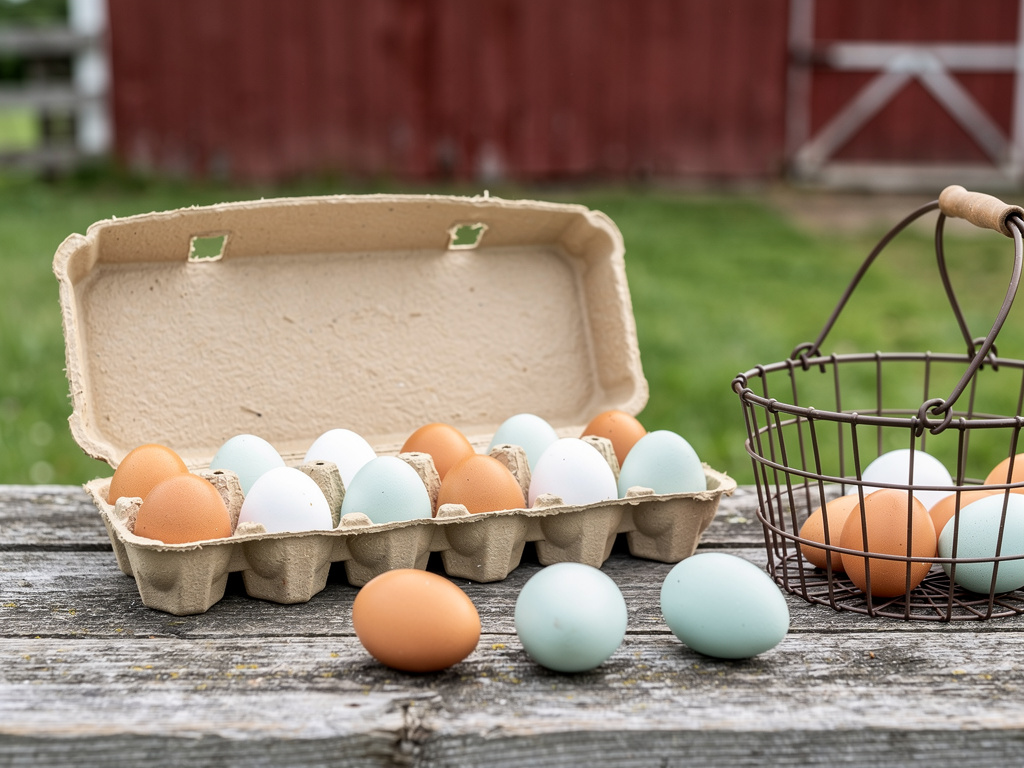
Yes, and in the states that address it, the same rules follow the eggs whatever bird laid them. Washington's farmers market rule covers eggs "from a chicken, goose, turkey, duck, guinea, or any species of fowl." California requires registration from anyone handling eggs of "all species of fowl," and it answers the duck and quail question directly.
What changes for eggs that are not from chickens:
In a pull of the Homegrown catalog on August 14, 2026, 19 of the 1,804 products listed were cartons of shell eggs, from 15 of the 219 vendors. Two were duck eggs and two were quail eggs, and two more said "unwashed" right in the product name. The whole eggs and dairy category held 30 products. These are product listings, not sales figures, and the count leaves out a jar of pickled quail eggs, which is a canned food with its own rules.
Shell egg listings on Homegrown by bird
Source: Homegrown catalog pull, August 14, 2026, 19 shell egg listings from 15 vendors out of 1,804 products.
If you pickle any of those eggs, you are in a different category entirely. Our guide on selling pickled eggs under cottage food law explains why a jar of pickled eggs is a botulism question rather than an egg law question.
Once the paperwork is sorted, the hard part of selling eggs is not the law. It is the Tuesday text thread: who wants a dozen this week, who wants two, who already paid, and who is picking up at the porch cooler on Saturday. An order page fixes that.
Homegrown is $10 per month billed annually, or $12.50 billed monthly, with no percentage fees beyond standard payment processing, and it gives your regulars one link where they order, pay and pick a pickup time. When the hens slow down in winter, you set a smaller quantity for the week, and the count updates as each order comes in, so you can see what is left without scrolling back through texts. Local Line is built for farms and starts at $109 a month on its Core plan billed monthly, against Homegrown's $12.50, or $87 a month billed annually, against Homegrown's $10. At monthly billing, Local Line takes the sales from about 18 dozen eggs at $6 each month just to pay for the subscription. Venmo moves money for a small fee but keeps no order list, and Square Online's Free plan charges more per online card payment. Homegrown does not register you with your state, print your carton labels or keep your cooler cold. It handles the ordering and the payment, and your customers create a Homegrown account the first time they order.
Scroll right for the full fee stack on each row.
| Platform | Subscription | Trial | Platform fee | Card processing | Customer pays on a $6 dozen | Vendor pays on one $6 order | Vendor pays on 50 orders ($300) |
|---|---|---|---|---|---|---|---|
| Homegrown | $10/mo billed annually, or $12.50/mo billed monthly | 7 days, no charge until day 8 | $0, 0% commission | 2.9% + $0.30 | $6.00 | $0.47 | $33.70 billed annually ($36.20 billed monthly) |
| Local Line (Core) | $109/mo billed monthly, or $1,044/yr billed annually | 7 days, no card needed | $0, no commissions | 2.9% + $0.30 (ACH 1.0%) | $6.00 | $0.47 | $132.70 billed monthly ($110.70 on the annual plan) |
| Square Online (Free plan) | $0/mo | None on the Free plan | $0 | 3.3% + $0.30 online | $6.00 | $0.50 | $24.90 |
| Venmo (business profile) | $0/mo | None | $0 | 1.9% + $0.10 per payment received | $6.00 | $0.21 | $10.70, with no order page or order list |
We checked these on each company's pricing page on September 23, 2026: findhomegrown.com/signup, Local Line's supplier pricing page, Square's pricing page, and Venmo's fees page. The $6 dozen is an example price, not a published one. Vendor cost per order is the card processing on $6, and the 50-order column adds one month of subscription where there is one: $10 or $12.50 for Homegrown, $109 or $87 a month on the annual plan for Local Line. Venmo charges 2.99% instead when a goods and services payment goes to a personal account.
A group text works fine for three neighbors. Past ten regulars, the time goes into keeping track rather than keeping hens. If your egg list has outgrown your messages, you can set up an order page for your eggs on Homegrown and send one link instead of twenty replies.
Almost never the flock size, since the federal lines start at 3,000 hens and the lowest state line in this guide, Florida's 30 dozen a week, takes more than 50 hens laying every day. Most of what follows costs little to fix: new cartons, a thermometer, one line on a label, or in Washington a $30 dealer license on top of the business license fee. The problems come from the small things that feel harmless: a used carton, a warm cooler, a missing word on a label. None of them are hard to fix once you know they are there.
The mistakes that show up again and again in the rules above:
Write the date of lay or the pack date on the carton the moment you fill it, not when you sell it. Pennsylvania's five-day clock and Wisconsin's 30-day sell-by both run from the date the eggs went in, and a carton without a date is a carton you cannot prove is fresh. A wax pencil and a fridge shelf sorted oldest to newest does the whole job.
Six steps, most of them free, and all of them doable in a weekend. Do them in this order and you will know exactly which paperwork your state wants before a single dozen changes hands.
Before you file anything, verify your state's current rules with the agriculture department. Egg rules change with new laws and new fee schedules, and the version you read today is the one to follow.
Yes, in all seven states checked for this guide, if the eggs come from your own flock and you sell them to the person who will eat them. What varies is the paperwork: no state egg license at the farm in Texas or Washington, though Texas guidance also says farm-gate vendors need a health department permit, state or local, a free registration in Wisconsin if your eggs are nest-run, $75 in California and a $100 permit in Florida. Check your own state's agriculture department page before your first sale, because the rules change.
In four of the seven states here, yes. Washington requires a $30 Egg Handler/Dealer license plus the business license application fee, Wisconsin a transient retail food establishment license, Pennsylvania a $103 Retail Food License for the stand, and Texas a permit from the health department or local food authority. Colorado's agriculture department exempts a small flock selling under 250 dozen a month at a farmers market, though the same page says the state's retail food rules may also require a retail food establishment license from CDPHE.
The federal rule at 21 CFR 101.17(h) says the label of all shell eggs, whether or not they cross state lines, carries it, and the only written exemption is for eggs treated to destroy Salmonella. Colorado and Pennsylvania both list it for small flocks. It is 23 words and can go inside the carton lid if "Keep Refrigerated" is printed on the outside.
Usually only with a license. Colorado requires a Class I Egg Producer license and an inspection for sales to a grocery store or restaurant, Washington requires its dealer license plus egg seals, and Wisconsin requires a food processing license for retail or wholesale sales. Selling to the person who eats the eggs is the sale every state small-flock exemption in this guide that names a buyer is written for.
Not in every state. Texas prohibits reusing egg cartons for eggs sold at a farmers market, and Texas A&M's yard egg guide tells every Texas seller to always use new cartons. Florida requires clean, unused cartons from a permitted egg farm, and Colorado's licensed egg farms cannot use cartons with another farm's name on them. New cartons are cheap enough that most small vendors switch once they start selling at a market.
In the six states here that publish a number, yes. Federal rules hold eggs at a retail establishment at 45°F or below, Texas, Pennsylvania, California and Washington name 45°F, Wisconsin 41°F, and Colorado keeps eggs between 33°F and 41°F, including on the drive to the market. Washington's egg page says eggs must be handled "under cold and sanitary conditions," and the off-farm guidelines it links set the number at 45°F or less, in storage and in the cooler on the way to the market. This guide found no Florida temperature figure. A cooler with ice packs and a thermometer is the standard setup for a market table.
More on selling eggs, once you know you are allowed to:
The legal side of selling eggs comes down to a handful of things you can finish in a weekend: find your state's egg page, file what it asks for, buy new cartons, print the label and keep the eggs cold. In the seven states in this guide, that paperwork runs from no egg license at all at a Washington farm gate to $103 for a Pennsylvania market stand, which is about 17 dozen eggs at $6.
After that, the work is the weekly back and forth over who wants how many dozen. Spring is when most flocks lay the most, and it is also when a text thread gets out of hand, because everyone who asked in February wants their dozen at once. A single order list, with a pickup day and a count of what is left, keeps you from promising eggs your hens have not laid yet.
If you want one link your regulars can order and pay through, start your Homegrown storefront and have it ready before the spring laying season picks up.