
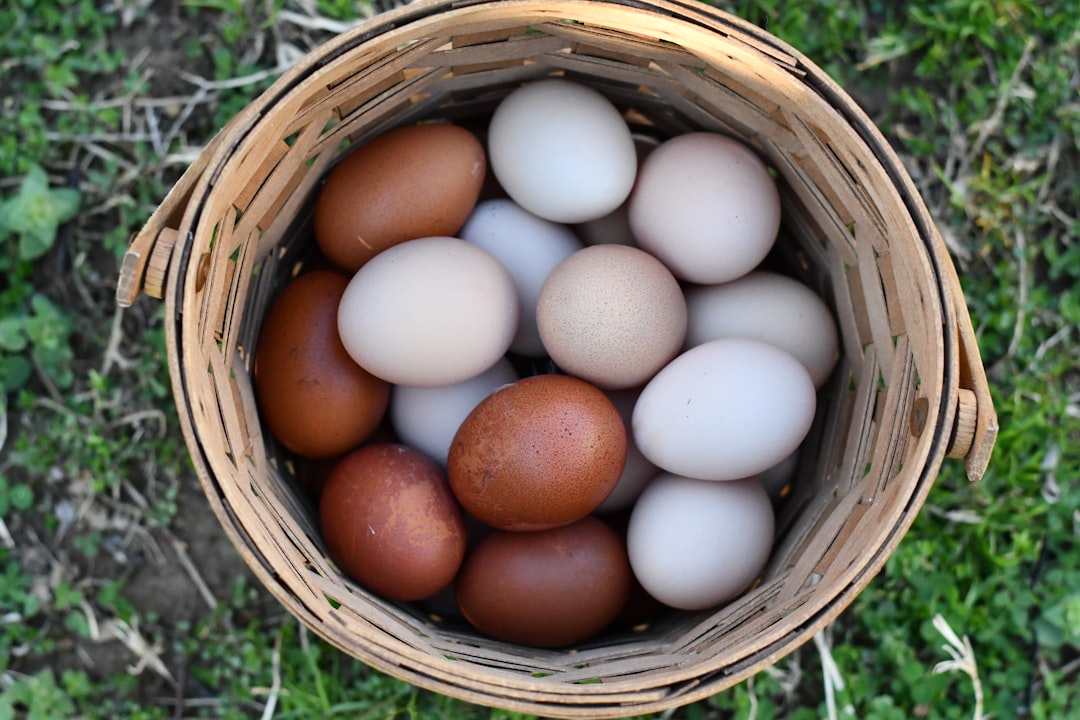


The best platform to sell eggs online for most backyard and small-flock egg producers is Homegrown, which gives you a flat-rate storefront where customers order, pay, and pick up locally through one shareable link. Eggs are fragile, perishable, and heavy for their value — shipping a dozen farm-fresh eggs is impractical for nearly every small producer. The platform you choose should be built around local pickup and pre-orders, not around packing eggs into insulated boxes for transit.
The short version: Homegrown costs $10 per month (annual) or $12.50 per month (monthly) with no platform commission and no checkout surcharge. Customers see your available eggs, order, pay the listed price, and choose pickup or local delivery. Other options include Facebook Marketplace (free but disorganized — no payment processing, no scheduling), Shopify ($39 per month and up — far more platform than egg sellers need), and Square Online (free plan if you already use Square). For a backyard flock owner or small farm selling eggs through porch pickup, farm stand, or farmers market, Homegrown is the simplest choice.
Backyard and small-flock egg production creates a distribution problem that online ordering solves cleanly. Your hens lay on their own schedule. Some weeks you have a surplus of 10 to 15 dozen. Other weeks, production dips and you can barely fill your regulars. Without a platform, managing egg customers means juggling text threads, keeping mental lists of who wants how many dozen, and hoping people show up when they say they will.
Here is what most egg producers deal with:
An online ordering platform turns your weekly egg supply into a simple menu. Customers see how many dozen are available this week, order what they want, pay upfront, and pick up at a time you set. You stop chasing people for payment and start getting paid before eggs leave your hands.
The tipping point is usually the text message burden. Once you are managing more than 8 to 10 regular egg customers through individual texts, a platform saves you an hour or more per week of coordination and eliminates the "I forgot to pay you" problem entirely.
Four options serve egg producers, each matching a different situation.
Homegrown is an online storefront built for local food vendors who sell through pickup or local delivery. You list your egg products — chicken eggs by the dozen, duck eggs, quail eggs, half-dozen options — with prices and descriptions. You set pickup locations and time windows. Customers browse, order, pay, and choose when to pick up.
Here is what Homegrown includes for egg producers:
The pricing advantage for egg producers matters because egg margins are thin. A dozen pasture-raised eggs that sells for $5 to $8 costs $2 to $4 in feed alone, plus bedding, coop maintenance, and carton costs. On Homegrown, your $6 dozen reads as $6 at checkout. No commission taken, only card processing of 2.9% + $0.30 per order. Every dollar of platform commission on a $6 item directly erodes already-tight margins.
Pros:
Cons:
Best for: Backyard flock owners, small farms, and homesteaders selling eggs through porch pickup, farm gate, or farmers markets. If you are managing egg customers through text messages and want a cleaner system, Homegrown handles that.
Start your free 7-day trial with Homegrown.
Facebook Marketplace is where many egg producers start because it is free and reaches local buyers quickly. You post your eggs, interested people message you, and you coordinate pickup. There is no payment processing, no inventory tracking, and no scheduling — everything happens through Messenger conversations.
Facebook Marketplace works as a discovery channel for finding new customers but fails as an ongoing ordering system. Once you have 10 or more regular customers, managing individual Messenger threads for weekly orders becomes the exact problem a platform solves.
Pros:
Cons:
Best for: Egg producers just starting out who want to find their first customers before committing to a platform.
Shopify is designed for e-commerce businesses with shipping operations, product catalogs, and marketing funnels. For a backyard flock selling 10 to 30 dozen eggs per week locally, Shopify at $39 per month is dramatically more platform than needed. The setup time alone (4 to 8 hours to configure properly) is not justified by the simplicity of selling eggs.
Best for: Large egg operations with multiple distribution channels and online shipping (not typical for backyard or small-flock producers).
Square Online connects your online ordering to your Square POS. The free plan includes basic online ordering with Square branding. Useful if you already accept cards at your market booth or farm stand with a Square reader.
Best for: Egg producers who already use Square at markets or their farm stand.
| Feature | Homegrown | Facebook Marketplace | Shopify | Square Online (Free) |
|---|---|---|---|---|
| Monthly cost | $10 (annual) or $12.50 | $0 | $39+ | $0 |
| Platform commission | 0% | N/A | 0% (Shopify Payments) | 0% |
| Card processing | 2.9% + $0.30 | None (cash/Venmo) | 2.9% + $0.30 | 3.3% + $0.30 |
| Total fees on $6 dozen | ~$0.47 processing | $0 | ~$0.47 processing | ~$0.50 processing |
| Monthly cost at 20 doz ($120/wk, $480/mo, 80 one-dozen orders) | $10 + ~$38 = ~$48 | $0 | $39 + ~$38 = ~$77 | ~$40 processing |
| Local pickup | Yes (built-in) | Manual coordination | Workaround | Basic |
| Local delivery | Yes (built-in) | Manual | With apps | Basic |
| Payment processing | Yes | No | Yes | Yes |
| Inventory management | Yes | No | Yes | Limited |
| Multiple pickup locations | Yes | No | With apps | Limited |
| Setup time | ~15 min | 5 min per listing | 4-8 hours | 30-60 min |
At 20 dozen per week ($480 per month, 80 one-dozen orders), Homegrown costs roughly $48 while Shopify costs roughly $77, card processing included. Facebook Marketplace is free but lacks payment processing, inventory tracking, and any ordering structure.
If your egg customers are texting you every week to ask if you have eggs available, the issue is not demand — it is access. They want your eggs but are stuck waiting for you to text them back. A Homegrown storefront gives them a link where they can see how many dozen are available this week, order, pay upfront, and pick up at a time you set. Your weekly text thread coordination disappears.
Start your free 7-day trial with Homegrown.
In most states, selling eggs directly to consumers from your own flock is legal with minimal regulation. Many states exempt small-flock egg sales from licensing if you sell directly to end consumers (not to stores or restaurants) and stay under a flock size threshold (often 150 to 3,000 hens depending on the state). Some states require eggs to be clean and refrigerated but do not require grading or USDA inspection for direct sales. A few states require candling or labeling with your farm name and address. Check your state's specific egg sale laws — regulations vary significantly, but backyard-to-consumer sales are permitted in nearly every state. Resources on local food production regulations and direct-to-consumer sales channels are available from Escoffier's analysis of local food production.
Most backyard and small-flock producers charge $4 to $8 per dozen for chicken eggs, depending on your area and how the eggs are raised. Pasture-raised eggs from heritage breeds command the higher end ($6 to $8). Duck eggs sell for $6 to $10 per dozen. Quail eggs sell for $5 to $8 per dozen (which is typically 12 to 18 small eggs). Price to cover feed costs ($2 to $4 per dozen in feed depending on supplemental foraging), carton costs ($0.30 to $0.60 per dozen), and your time. Check what other local egg producers charge in your area — pricing varies significantly by region.
A flock of 6 hens produces roughly 4 to 5 dozen eggs per week during peak laying season (spring through early fall). Production drops 30% to 50% in winter and during molt. A flock of 12 hens produces 8 to 10 dozen per week at peak — enough to supply 10 to 15 regular customers. Most backyard egg producers sell 5 to 20 dozen per week. Production planning matters: if you have 15 regular customers in summer and production drops to 6 dozen in January, you need a way to limit orders — a platform with inventory tracking handles this automatically.
Update your available inventory weekly based on actual production. List only the dozens you have on hand or can confidently collect before pickup day. During high-production weeks, increase your listed quantity to move surplus quickly. During low-production weeks, reduce quantities so your storefront shows sold out once claimed. Your regular customers will learn that eggs sell out fast and order early in the week. A platform with inventory management prevents overselling — you never promise eggs you do not have.
Pickup is simpler, more profitable, and easier to scale. Porch pickup requires zero coordination beyond setting a cooler on your porch at the scheduled time. Delivery sounds like good customer service, but it adds 15 to 30 minutes per stop in driving time, fuel costs, and the risk of broken eggs in transit. Most successful egg producers use porch pickup or farm gate pickup and reserve delivery for high-value orders only (4+ dozen). If customers want your eggs badly enough to order online and pay upfront, they will drive to your porch. General food safety and nutrition information relevant to egg handling is available from Colorado State University Extension.
Standard 12-count molded pulp cartons are the industry standard for farm eggs. New cartons cost $0.30 to $0.60 each, or you can ask customers to return cartons for reuse (many egg customers are happy to). Some producers use clear plastic cartons to showcase colorful eggs from mixed flocks — these cost $0.40 to $0.70 each. Always label cartons with your farm name, the date collected or packed, and any required disclaimers per your state's labeling rules. Refrigerate eggs if your state requires it (most do for direct sales). A "best by" date of 3 to 5 weeks from collection is standard for refrigerated eggs.
Egg sales from a small flock typically break even on feed costs rather than generating significant profit. A dozen eggs at $6 covers roughly $2 to $4 in feed, $0.30 to $0.60 in carton costs, and leaves $1 to $3 per dozen before your time. At 10 dozen per week, that is $10 to $30 per week in margin — enough to make the flock self-sustaining but not a primary income. Profitability improves with supplemental foraging (reducing feed costs), selling specialty eggs (duck, quail, heritage breeds at premium prices), and selling related products (produce, honey, baked goods) through the same storefront.
Your eggs deserve a storefront where the listed price is what your customer pays — no marketplace fees, no checkout surcharges, no commission taken from any dozen, just card processing of 2.9% + $0.30 per order. Homegrown gives egg producers a shareable ordering link, built-in payments, and local pickup and delivery scheduling for $10 per month flat. Start your free 7-day trial.



