


The short version: Most crafters do not need a special craft license, but you will usually need two ordinary registrations: a state sales tax permit, which California issues at no charge, and a local business license wherever your city or county requires one. A few kinds of crafts add their own rules on top: anything made mainly for children 12 and under falls under federal children's product testing, handmade stuffed toys need a state registration or license in places like Pennsylvania and Massachusetts, and lotion, along with soap sold to moisturize or add fragrance, follows FDA cosmetic rules even though the FDA does not license cosmetics businesses. The IRS wants your craft income reported whether you call it a hobby or a business. Rules change from state to state and city to city, so verify your state's current rules before your first sale.
Checked October 13, 2026, among other sources: the SBA licensing guide, CDTFA and South Carolina and Minnesota revenue pages, Portland and Denver home occupation rules, CPSC children's product and small batch pages, Pennsylvania, Ohio and Massachusetts stuffed toy rules, the FTC textile labeling guide, the FDA homemade cosmetics fact sheet, IRS hobby, self-employment and Form 1099-K pages, the Homegrown, Etsy and Square pricing pages, and a pull of 2,913 Homegrown listings. Homegrown, compared below at $10 a month billed annually ($12.50 month to month), asks customers to create an account to place a first order and has no drops or countdown release feature.
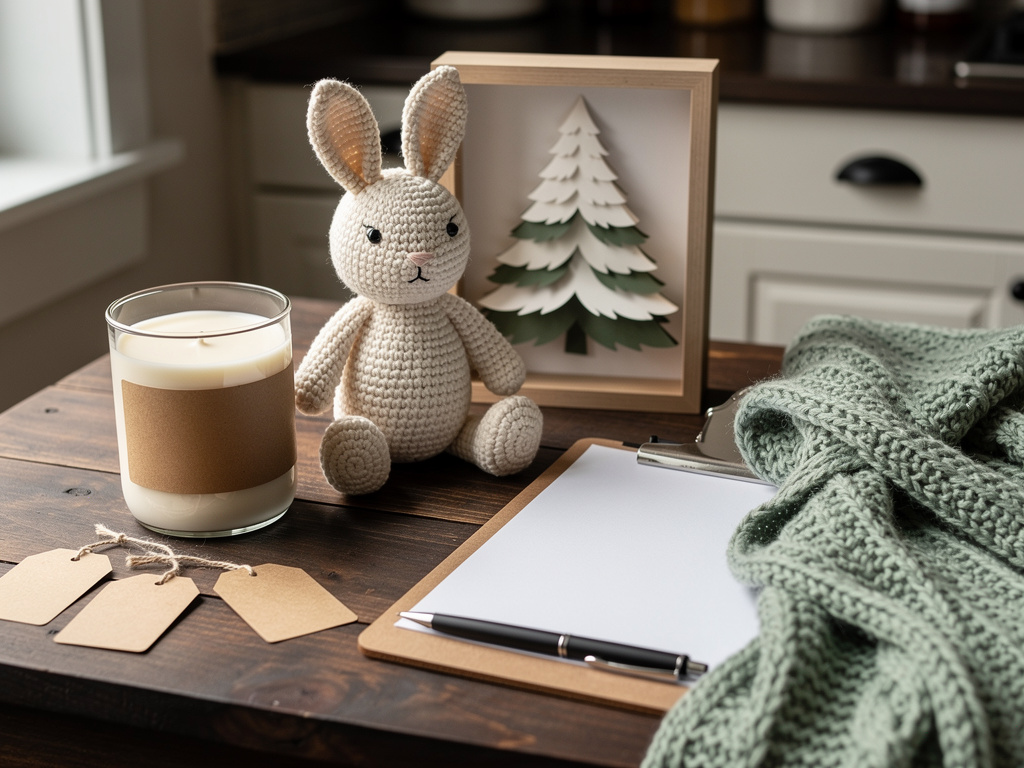
The fall bazaar at your church sounds simple. You have 40 crocheted animals, a box of shadow boxes and a cash box. Then the vendor form arrives, and line 6 asks for your seller's permit number.
That one line is where most crafters first hit the question this guide answers. The good news is that in the states we checked, only South Carolina had a license just for crafts, its craft show license. The rules that do apply come from four places: your state (its tax agency, plus product agencies for a few products like stuffed toys), your city or county, a short list of federal agencies that care about certain products, and the IRS. This guide walks through each one with real numbers from real government pages, then lays out the order to do it in. If your products include anything edible, the guide to whether you need a business license to sell food from home covers the cottage food side.
Usually yes, but not a craft license: most crafters need a sales tax registration with their state and often a business license from their city or county, plus extra steps only for certain products. The U.S. Small Business Administration puts it this way in its guide to applying for licenses and permits: "Most small businesses need a combination of licenses and permits from both federal and state agencies," and "Local governments determine registration, licensing, and permitting requirements." Once you sell regularly, that describes a craft table too.
When people ask whether they need a license to sell crafts, they usually mean one of four things:
Most part-time crafters end up with the first one, sometimes the second, and the third or fourth only if their city or their products call for it. The core permit can cost $0: California charges nothing for a seller's permit, and South Carolina's craft show license is $20.
The table lists 7 kinds of registration a crafter can run into, and the state sales tax permit is the one that applies to most crafters in every state with a sales tax that we checked. The table lines up each one with who issues it and when it applies. Fees are listed only where we loaded the agency page; everywhere else, your agency sets the price.
On a phone, swipe left to see what each registration costs.
| Registration | Who issues it | When a crafter needs it | What it cost where we checked |
|---|---|---|---|
| Sales tax permit (seller's permit) | State tax agency | Before selling taxable products in a state with a sales tax, including at craft fairs | California: no charge, though a security deposit is sometimes required |
| Temporary seller's permit | State tax agency | Selling at one location for a short stretch without a regular permit | California: covers 90 days or less at one location |
| Craft show license | Some state tax agencies | Selling at several craft shows a year | South Carolina: $20 Artist and Craftsman License |
| General business license | City or county | Where your town requires one for every business | Set locally; ask your city clerk |
| Home occupation permit | City zoning office | Where your city regulates businesses run from a house | Portland: no permit for a crafter with no employees or customers at the door |
| Trade name (DBA) | State, county or city | Selling under a shop name instead of your own legal name | Set locally |
| Product registration or testing | CPSC, state agencies | Toys and baby products, stuffed toys in some states | Depends on the product and the lab |
We checked the SBA licensing guide, California's seller's permit and temporary sales pages, South Carolina's arts and crafts page and Portland's home occupation page on October 13, 2026. These are examples, not your state's rules; verify your state's current rules before you sell.
In the states we checked that have a sales tax, usually yes: most handmade crafts are taxable products (Minnesota exempts most clothing), and unless your sales are truly occasional, you register before your first sale even if it is a one-day craft fair (South Carolina's short-show exception, below, is the one exception we found). California spells it out for crafters. Its tax agency's page on temporary sales permits says, under Crafts, "You are required to have a permit if you are selling, even temporarily, new or handcrafted items." The California Tax Service Center adds that "There is no charge for a seller's permit, but security deposits are sometimes required." Not every state has a sales tax: the Oregon Department of Revenue says "Oregon doesn't have a general sales or use/transaction tax," so start with your own state's tax agency.
Minnesota is just as plain. The Minnesota Department of Revenue's arts and crafts guide says "Sales of arts and crafts, except for most clothing, are subject to sales tax," including sales at:
Its list of taxable crafts includes dolls and doll clothing, jewelry, paintings, pottery, purses and wood carvings. Note the exception: most clothing is not taxed in Minnesota, so a hand-knit sweater and a hand-knit doll can land on opposite sides of the line.
The one narrow way out in California is the occasional sale. The state's Publication 107 says you generally do not need a permit if you make no more than two sales in a 12-month period, and its example counts each garage sale as one sale: no permit unless you have more than two garage sales in 12 months. That exception ends the moment your selling looks like a business by its "number, scope, and character." A craft fair table is covered by a separate rule, the crafts rule above, which requires a permit for anyone selling new or handcrafted products "even temporarily."
The permit does not have to be expensive or slow. California's is free, and the Texas Comptroller's permit page tells applicants who sell tangible personal property in Texas to "Allow 2-3 weeks to receive your permit," so apply before you book your first fair. The plain-language guide to sales tax at farmers markets walks through collecting at your table and filing, and the same steps apply at a craft show.
It depends on your city, and two Western cities show how wide the range is: Portland needs no home occupation permit for a crafter with no employees or customers at the door, while Denver bans retail sales from a home craft studio. Call your city clerk or search your city's website for "business license" and "home occupation."
Here is what each city's page said when we read them:
Swipe the table to compare the two cities side by side.
| City | Do you need a home permit? | Can customers pick up at your house? | Source |
|---|---|---|---|
| Portland, Oregon | No, for "Type A" home occupations, where no employees or customers come to the site; the city lists "artists, craftspeople" as examples | Type B allows a maximum of 15 customers per day, with a permit | City of Portland home occupation page |
| Denver, Colorado | Yes: anyone doing business from home and using the home address must get a zoning permit for a home occupation | No for craft work ("retail sales from the home are prohibited"); online sales cannot include handing an order to a buyer at the house | City and County of Denver home business page |
Both pages read October 13, 2026. Your city's rules may sit anywhere between these two.
Portland's home occupation rules say "A permit is not required for Type A home occupations, but Type A home occupations must follow the zoning code rules." Denver's home business page describes craft work as ceramics, needlework, knitting, weaving, leather work, woodwork, metal work or glass work, and says "Mass production or retail sales from the home are prohibited."
Porch pickup is the part of a home craft business most likely to break a zoning rule. Making crafts in your kitchen rarely bothers anyone, but a steady line of buyers at your door can. Denver's home business page, read October 13, 2026, says online sales cannot include handing the order directly to a buyer "at the residential premises." If your city has a rule like that, set your pickup spot at a market, a coffee shop or another public place instead of your porch.
Usually yes, because a craft fair sale is a retail sale, and some states write rules just for crafters who sell at shows. South Carolina is the clearest example, and it also has a narrow exception for crafters at a few short shows a year. Its Department of Revenue's arts and crafts page sets out three paths:
The state's arts and crafts page, read October 13, 2026, says artists, crafters and hobbyists "must charge and collect the 6% statewide Sales & Use Tax and any applicable local taxes." A crafter selling $1,000 of ornaments at a five-show season owes the $20 license plus at least $60 in state tax collected from buyers, before any local tax.
In California, a crafter without a regular permit gets a temporary seller's permit, which covers 90 days or less at one location. California also makes the event organizer collect your details. Publication 111 from the state tax agency says vendors give the operator their business name, mailing address, phone number, driver license or state ID number, a description of what they sell, and their seller's permit number. The same publication says you need a sub-permit for each temporary location "even if you already hold a seller's permit for your permanent place of business."
Keep a single index card in your cash box with the 6 things a California event operator asks for: business name, mailing address, phone, ID number, what you sell, and your seller's permit number. Fill out vendor forms from that card and you will never hold up an application waiting for a number. Crafters in other states can keep the same card; many fair applications ask for some of the same details.
Farmers markets and craft fairs also set their own vendor rules on top of state law, like liability insurance or a juried application. Those are the market's rules, not a government license, but you still need them to get a table. The guide to farmers market vendor insurance covers what markets usually ask for.
Selling online does not need its own license, but it does not remove the state and local ones either, and a marketplace collecting tax for you only covers the sales it handles. Etsy, for example, explains in its help center that under state marketplace laws it "automatically calculates, collects, and remits US sales tax" for its shops on orders shipped to the states it lists.
That covers the Etsy orders only. Whether a crafter who sells only through marketplaces like this needs a permit of their own varies by state, so ask your state tax agency before you assume the marketplace covers everything. Etsy's own handbook for shop owners says that if you have a physical presence in a state where Etsy collects for you, "you may still be required to file a state sales tax return to that state," and many states want you to report Etsy sales alongside the tax you collected on sales you made off Etsy.
Homegrown works the same way for orders placed through your Homegrown storefront. Its signup page, checked October 13, 2026, says sales tax is calculated at checkout and that "Homegrown files and remits on your behalf, all 50 states." Here is how the pieces split for a crafter who sells three ways:
Most crafts need nothing beyond the tax and local registrations, but 6 kinds carry extra federal or state rules: kids' products, stuffed toys and filled bedding like quilts, clothing and textiles, soap and body care, candles, and mugs or bowls meant for food. The table points each one to its rule and to the deeper guide where one exists.
Swipe left to see the agency and the deeper guide for each craft.
| What you make | Extra rule | Agency | Deeper guide |
|---|---|---|---|
| Paintings, prints, shadow boxes, wood signs | None beyond tax and local registrations | State and city | This page |
| Toys, baby items, kids' jewelry (made mainly for 12 and under) | Third-party testing and a Children's Product Certificate; 100 ppm lead limit | CPSC | This page, and the jewelry guide for kids' pieces |
| Stuffed toys, dolls, quilts and filled pillows | State registration and a law label or tag in some states | Pennsylvania (stuffed toys), Ohio, Massachusetts and possibly others; check your state | This page |
| Knitted, sewn or crocheted clothing and household textiles | Fiber content, country of origin and the business's identity on the label | FTC | This page |
| Soap, lotion, lip balm, sugar scrub | Cosmetic labeling and safety rules; no FDA license | FDA (CPSC for true soap) | soap, lip balm |
| Candles and wax melts | No license; metal-core wicks capped at 0.06% lead | CPSC | candles |
| Mugs, bowls and plates | Lead leaching limits for food ware | FDA | pottery |
Agency pages read October 13, 2026.
Jewelry has its own guide too. The homemade jewelry guide covers metals, kids' pieces and the paperwork for a jewelry line.
A craft made mainly for children 12 or younger becomes a "children's product" under federal law, and that brings third-party lab testing, a written certificate and a permanent tracking label, even for a crafter who makes 20 of them. The Consumer Product Safety Commission's children's products page defines a children's product as "a consumer product designed or intended primarily for children 12 years of age or younger," and says these products "are required to undergo third-party testing and to have a written Children's Product Certificate (CPC)."
The CPSC decides what counts using four factors, and a warning label alone does not settle it:
The CPSC's own example is a pen. A plain pen is for everyone, but add childish themes or features with play value and it may become a children's product. The same thinking applies to a crocheted dinosaur listed as "perfect for toddlers."
The rules have teeth. The CPSC's total lead content page says children's products with more than 100 ppm lead in an accessible part are a banned hazardous substance.
There is some relief for very small businesses. The CPSC's small batch manufacturer registry is open to businesses with $1,480,296 or less in gross revenue from all consumer products in the previous calendar year that made no more than 7,500 units of the product. Registered small batch businesses can prove some rules through cheaper methods than a lab, but they must register every year, still issue a certificate, and still use a lab for the short list of rules that always require one, which the CPSC calls Group A.
Small batch status is relief, not an exemption. The CPSC says registered small batch businesses "must still comply with all applicable CPSC product safety requirements" and issue a certificate. If you are about to add a kids' line, get a quote from a CPSC-accepted lab before you buy the yarn, and price the testing into every piece.
In some states, yes: Pennsylvania and Massachusetts require a registration or license before you make or sell stuffed toys there, and Ohio requires one unless you make them as a hobby and sell 100 or fewer a year. These state rules sit on top of the federal children's product rules, and each state's agency decides which filled items it covers.
These are the three states we read today, not a complete list. If you sell plush across state lines, check each state you ship to before you sew the next batch.
Yes, most clothing and household textiles you sell need a label with 3 facts: the fiber content, the country of origin, and who made or sells it, though the guide leaves hats and shoes off its covered list. The Federal Trade Commission's guide, Threading Your Way Through the Labeling Requirements Under the Textile and Wool Acts, says the rules apply if you "manufacture, import, sell, offer to sell, distribute, or advertise" covered products. The same guide says care labels for clothing "are required by another rule enforced by the FTC," so a hand-knit sweater needs care instructions too.
What that means for a crafter:
Wool products fall under the Wool Act, which adds its own wording. A label printer and a roll of sew-in tags are usually all a small knitter needs.
No federal license exists for soap, lotion or candles, but each comes with product rules that the license question tends to hide. The FDA's homemade cosmetics fact sheet says "FDA does not license cosmetics firms," adds that "state or local authorities may require licensing," and notes "It's not against the law to manufacture cosmetics in your home." The same page says a cosmetic label needs a street address unless your business is listed in a current city or telephone directory; a P.O. box is not enough. It also says you "may need to register your facility and list your cosmetics products" with the FDA under the Modernization of Cosmetics Regulation Act of 2022, which exempts certain small businesses from both.
Soap is a special case. The FDA's page Is It a Cosmetic, a Drug, or Both? (Or Is It Soap?) says a product made mainly of "an alkali salt of fatty acids" and sold "solely as soap" is regulated by the CPSC, not the FDA, while a bar sold to moisturize the skin or make the user smell nice is a cosmetic. The full breakdown is in the guide to selling homemade soap.
Candles are not cosmetics and not children's products. The CPSC's children's product page names candles as an example of products that "specifically are not intended for children 12 years of age or younger." The candle rule that does apply is federal: under 16 CFR 1500.17(a)(13), a metal-core wick can hold no more than 0.06% lead by weight of the metal. Labels, scent claims and candle sales tax are in the homemade candle guide.
Usually yes: crafts that copy a cartoon character, a team logo or a brand's artwork generally need the owner's permission, called a license agreement, unless an exception like fair use applies, and this is the one "license" that has nothing to do with the government. The U.S. Copyright Office's overview of copyright says copyright owners hold the exclusive right to reproduce a work, make "derivative works based upon the work," and distribute copies by sale. It names "buying or licensing works" as one way to use work that is not yours, alongside exceptions such as fair use and works in the public domain. Team and brand logos are usually trademarks too, which the USPTO's trademark basics page describes as "any word, phrase, symbol, design, or a combination of these things" that tells shoppers whose products they are.
Three common kinds of crafts raise the question:
Your own shop name works the other way, and basic rights in it cost $0 to get. The U.S. Patent and Trademark Office's trademark basics page says "You become a trademark owner as soon as you start using your trademark," and "You're not required to register your trademark." Its own example is a logo used on handmade jewelry sold at a local farmers market.
The IRS draws the line at intent to make a profit, and either way the income goes on your tax return. Its page on telling a hobby from a business lists factors that include whether you keep "complete and accurate books and records," whether you put in time and effort to make it profitable, and whether you change methods to improve profits. Hobby income goes on Schedule 1 of Form 1040, line 8.
Three numbers matter for a part-time crafter:
A business can deduct costs like yarn, wax and booth fees against its income. A hobby gets nothing back: the IRS tax tip for taxpayers who make money from a hobby, which names pottery and soapmaking among its examples, says hobby expenses "are miscellaneous itemized deductions and can no longer be deducted," while the hobby income still has to be reported. That is the practical reason to keep receipts from your very first craft fair.
None of the three is required to start, but a DBA becomes required in most states the day you sell under a shop name, and an EIN becomes required the day you hire. The SBA says you might need to register a DBA, also called a trade name or fictitious name, and that "most states require you to register your DBA if you use one." Selling as "Maple Hollow Knits" instead of your own legal name is the usual trigger.
For an EIN, the IRS employer identification number page lists three reasons you would need one:
The IRS says "You can get an EIN for free directly from the IRS in minutes," so if your bank or state asks for one, get it. The same page says you also need an EIN to operate an LLC, partnership or corporation, and that you can request one for banking or state tax purposes even if you do not need it. An LLC is a choice about liability, not a license. The guide to whether you need an LLC was written for food vendors, but the cost and protection points are the same for a craft table.
Of the 111 craft listings on Homegrown in October 2026, 54 were wall art, decor, candles or home fragrance, the kinds with the fewest extra rules (candles with metal-core wicks face a federal lead limit, and the outer cartons they ship in must say "Conforms to 16 CFR 1500.17(a)(13)," though the jar itself needs that label only when it is the only packaging the candle ships in). The kinds with extra rules were smaller groups.
In a pull of the Homegrown catalog on October 13, 2026, 2,913 products from 320 vendors were listed. 126 sat in the Arts and Crafts, Home Goods and Apparel categories. We opened every one, set aside 10 food and drink items (honey, a chocolate bar, a juice basket) and 5 services or supplies (a guided art session, murals, furniture painting, collage paper, a beeswax block), and sorted the remaining 111 craft listings from 16 vendors by what they are. Soap and lotion listed in the separate Health and Wellness category (135 listings) are not counted here.
Homegrown craft listings by type
Source: Homegrown catalog pull, October 13, 2026, 111 craft listings from the Arts and Crafts, Home Goods and Apparel categories. "Other" is candle warmer lamps, stickers, keychains, small figures, a light-up toy and one window piece we could not identify.
Here is what that mix means for the rules in this guide:
Once your permit is in hand, the next headache is tracking tax on every order, and Homegrown calculates and remits sales tax on your online orders for $10 a month billed annually ($12.50 month to month) with no percentage fees beyond standard payment processing. Its signup page, checked October 13, 2026, says "Homegrown files and remits on your behalf, all 50 states" and lists "Sales tax handled for your online orders" for soap, candle and craft makers. You still report your own cash sales at the craft fair, but the storefront orders are off your plate.
Here is what a $25 order costs on three common options:
Scroll sideways to see every fee column.
| Platform | Subscription | Trial | Platform fee | Card processing | Customer pays on a $25 order | Vendor pays on a $25 order | Vendor pays in a month of 50 orders at $25 | Sales tax on online orders |
|---|---|---|---|---|---|---|---|---|
| Homegrown | $10/mo billed annually ($12.50 billed monthly) | 7 days, no charge until day 8 | $0, 0% commission | 2.9% + $0.30, paid by the vendor | $25.00 plus any sales tax | $1.03 plus the plan | $61.25 ($63.75 on the monthly plan) | Calculated and remitted for you |
| Etsy | $0, no plan required | None; a one-time set-up fee may apply | $0.20 listing fee plus 6.5% transaction fee | 3% + $0.25 | $25.00 plus any sales tax and shipping | $2.83 | $141.25, plus any set-up fee and Offsite Ads fees | Collected and remitted by Etsy on orders shipped to the states it lists |
| Square Online, Free plan | $0 | None needed | $0 | 3.3% + 30¢ online | $25.00 plus any sales tax | $1.13 | $56.25 | Not mentioned on Square's plans page |
| Square Online, Plus plan | $49/mo | 30 days | $0 | 2.9% + 30¢ online | $25.00 plus any sales tax | $1.03 plus the plan | $100.25 | Not mentioned on Square's plans page |
We checked Homegrown's signup page, Etsy's Fees and Payments Policy and payments page, and Square's online store plans page on October 13, 2026. Card processing is figured on the $25 price before tax; Etsy charges its 6.5% on shipping too and its processing on the full total. Etsy's Offsite Ads fee is 15% on orders that come from its ads for shops under $10,000 a year in sales.
Square's Free plan costs the least over a month of 50 orders in this table, and it is a good fit if you mostly sell in person with a card reader. Etsy reaches shoppers across the country, which suits crafts that ship well. Homegrown fits the crafter whose buyers are local: your regulars order from your storefront link, pick up at your next fair or a set spot, and the tax on those orders is filed for you.
Be clear on what Homegrown does not do. It does not get you a seller's permit or a business license, it does not report your craft fair cash sales, and it does not test kids' products or print fiber labels. Customers create a Homegrown account to place a first order. Homegrown has no drops or countdown release feature. Your storefront is listed on the Homegrown marketplace, but plan on most orders coming from people you send to your own link.
If your permit is filed and you are tired of tracking tax by hand on every order, set up your Homegrown storefront and let the next batch of craft orders come in with the tax already handled.
Plan on a few weeks from start to first sale: in Texas the tax permit takes 2 to 3 weeks to arrive, and a stuffed toy license or lab testing can add more, such as the 6 to 8 weeks Massachusetts asks you to allow. Start with the permit and work through the rest in order:
Most of these steps are forms and phone calls. The permit wait and any lab testing are the slow parts, so plan around those two.
You do not need a special craft license to sell crafts from home, but your city may require a business license or a home occupation permit, and in a state with a sales tax you will usually need to register unless your sales are truly occasional. Portland, Oregon, needs no home permit for a crafter with no employees or customers at the door, while Denver requires a zoning permit if you use your home address for the business and bans retail sales from a home craft studio. Call your city clerk before you open your door to buyers.
In the states we checked that have a sales tax, you need a sales tax permit to sell crafts at a craft fair, because craft fair sales are retail sales. One narrow exception is South Carolina, which may not require a license from a crafter at four or fewer short shows in a fiscal year. California requires a permit even for temporary sales of handcrafted pieces, and South Carolina has a $20 Artist and Craftsman License for crafters at more than four shows per fiscal year. In California, event organizers must collect your permit number, and fairs elsewhere often ask for it on the vendor form.
Calling it a hobby does not by itself remove a sales tax permit requirement, which depends on how often you sell. South Carolina's arts and crafts rules name "artists, crafters, and hobbyists" alike, and California's Publication 107 exempts only occasional sales, meaning no more than two sales in a 12-month period, where the state's example counts each garage sale as one sale. What the hobby label changes is your federal taxes: the IRS treats an activity without a profit motive as a hobby, the income still gets reported on Schedule 1, and hobby costs cannot be deducted the way business costs can.
No national dollar threshold triggers a craft license. Some states set their own lines, such as South Carolina, where a crafter selling at four or fewer short shows in a fiscal year may need no license at all. For federal taxes, net self-employment earnings of $400 or more mean you must file a return, and payment apps send a Form 1099-K once payments pass $20,000 in more than 200 transactions.
Selling on Etsy does not replace your state and city registrations. Etsy collects and remits sales tax on orders shipped to the states it lists, but Etsy's own handbook for shop owners says a crafter with a physical presence in a state may still need to file a state sales tax return there and report sales made off Etsy.
Handmade toys intended mainly for kids age 12 or younger need third-party testing at a CPSC-accepted lab and a Children's Product Certificate. Small businesses with $1,480,296 or less in yearly consumer product revenue and 7,500 or fewer units of the product can register as small batch manufacturers for relief on some tests, but some rules always require a lab. Some states also require stuffed toy registration, like Pennsylvania, and Ohio unless you make them as a hobby and sell 100 or fewer a year.
These five guides go deeper on the product rules and selling questions above. Each covers a question this page only touches, from wick lead limits to the soap definition to collecting tax at a market table.
If your paperwork is done and you want local buyers to order your crafts ahead of the next fair, start your Homegrown storefront for $10 a month billed annually ($12.50 month to month), with a 7-day trial and no charge until day 8.



