
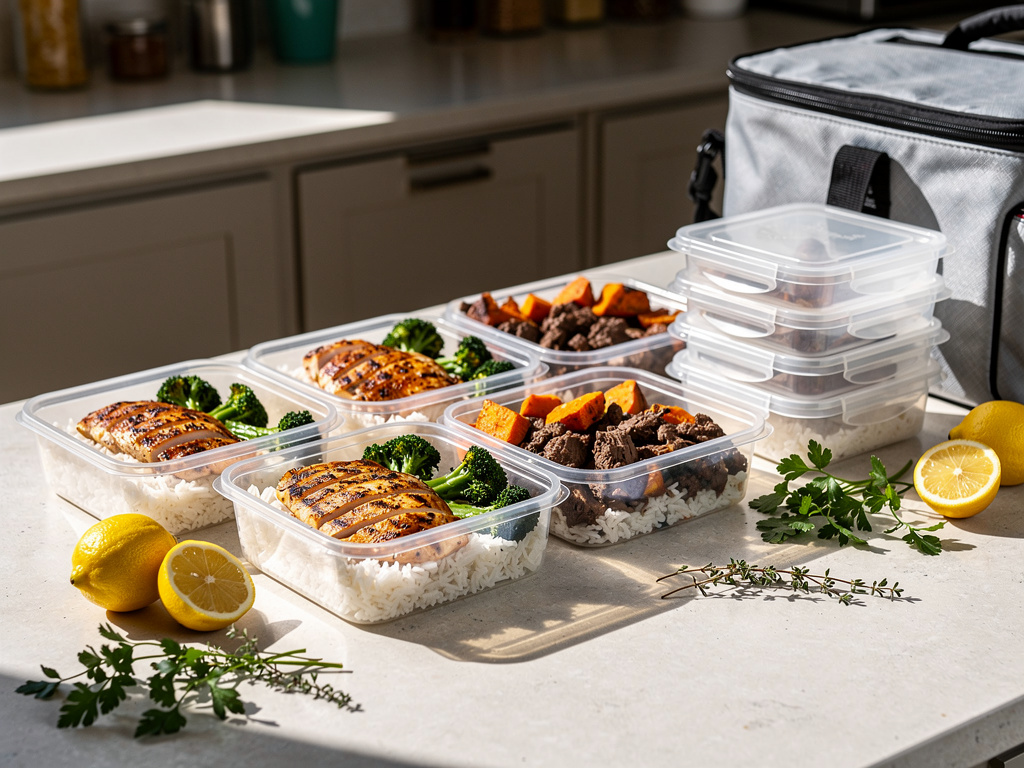


The short version: Meal prep sells in seven places: your own weekly pre-order link with pickup or delivery, gyms and fitness studios, offices, farmers markets, delivery apps and home chef marketplaces like DoorDash, Uber Eats and Shef, cafes and corner stores with a grab-and-go fridge, and standing weekly customers such as busy families and new parents. Your kitchen permit decides which of those doors are open, because cooked meals that need a refrigerator are not cottage food in most states; California's home kitchen permit, for example, allows sales straight to the eater and through apps but never to a store. The middle price of the 48 meals and main dishes in Homegrown's ready-to-eat category on September 25, 2026 was $12.00, and on a $60 five-meal order that reaches you as $57.96 through a Homegrown storefront before its $10 monthly plan, $51.00 on DoorDash's Basic delivery plan and $42.00 on Shef's marketplace. Start with your own link and one nearby place where your customers already spend their week, then add one place at a time.
Checked September 25, 2026: Homegrown is $10 a month billed annually or $12.50 billed monthly, with 0% commission and card processing of 2.9% + $0.30 paid by the vendor (findhomegrown.com/signup). The Hotplate, DoorDash, Uber Eats, Shef and Square fees come from their own pages, the permit limits from California Health and Safety Code 113825, and the prices from a live pull of the Homegrown catalog, all loaded that day. Verify your state's current rules before you sell. The limits: your customer creates a Homegrown account to place a first order, Homegrown is built for pickup and local delivery rather than shipping, it has no timed release feature, and most orders will come from people you send to your own link.
You cook on Sunday, the containers are stacked in the fridge by dinnertime, and the question is where they go on Monday. A coworker already buys five a week. The gym down the street keeps asking if you could leave some at the front desk. Somebody in the neighborhood group wants to know if you are on DoorDash.
Every one of those is a real place to sell meal prep, and each one pays you a different amount per meal and asks for a different permit. If you have not set up the business yet, start with our guide to how to sell meal prep from home, which covers menus, packaging, labels and food safety. This guide is only about where: seven places meal prep vendors actually sell, what a real $12 meal pays you in each one, and which kitchen setup each place requires.
You can sell meal prep in seven places, and many part-time meal prep vendors run two or three of them at once: their own pre-order link for regulars, one place where customers gather, and sometimes one app for reach. Five of the seven run through your own link or cash, where close to the full $12 of each meal reaches you; the apps (number 5) and the cafes and corner stores (number 6) are the two that keep a bigger share.
Two ideas are left off on purpose. Grocery store shelves need a manufacturing setup, a steady case count and wholesale pricing that a one-person kitchen rarely wants on day one. And a restaurant of your own is a different business, not a place to sell.
People already buy meal prep in five places: the prepared food case at the grocery store, national delivery services that ship chef-made meals, home chef marketplaces, grab-and-go fridges at gyms and cafes, and small local meal prep kitchens that post a weekly menu. If you searched "where do they sell meal preps" as a shopper, those are your options. If you are a vendor, that list is your competition, and it shows you where customers are already looking.
A few of those names are worth knowing because your customers compare you to them:
What the big services cannot do is live on your street. A national box ships from a regional kitchen, while a local cook's $12 container was made a few miles away that morning or the day before. Your edge is the local one: food cooked a few miles away, a person who answers the message, and a pickup window that fits your customer's commute. Every place below uses that edge in a different way.
Pick the place that matches your kitchen permit, your cook day and the number of meals you can make, then add one place at a time. A cook with a home kitchen permit and 30 meals a week starts somewhere different from a cook renting a commissary kitchen with room for 150. The table below is the short way to choose.
Scroll sideways to see every column.
| Your situation | Start here | Add next | Why |
|---|---|---|---|
| Home kitchen permit, 20 to 60 meals a week | Your own pre-order link with pickup | Delivery to a few nearby streets | Your permit covers direct sales, and a pickup window on each cook day hands the meals off fresh; in California that means up to 30 meals a day, cooked and picked up the same day, so plan two or three cook-and-pickup days |
| Rented commissary kitchen, one cook day a week | Your own link plus one office drop | A gym pickup shelf | A licensed kitchen, under the permit your county issues you, opens most doors, so you pick places that fill a single cook day; ask whether store sales need a separate license |
| You work weekdays and cook Sundays | Standing weekly customers | A farmers market cold case in season | Regulars who order every week let you shop once and cook once |
| You want reach before you have regulars | DoorDash pickup or Shef | Your own link for repeat buyers | Apps bring strangers, and repeat buyers cost less to serve on your own link |
| You make 100+ meals a week in a licensed kitchen | A cafe or corner store fridge | A second store in the next town | A store pays you once and sells for you, which suits high volume |
These rows are planning guides built from the fee pages, the California permit statute and the catalog data in this article, all checked September 25, 2026. Your state's rules and your own costs decide the final mix.
You may never need the last two rows. A pre-order link plus one office or gym keeps a Sunday cook busy all year, and every meal stays close to its full $12 price.
Your kitchen permit decides where you can sell meal prep because cooked meals that need a refrigerator are not cottage food in most states, so the permit you hold, not the place you like, sets the list. Cottage food laws cover shelf-stable foods like bread, cookies and jam. A container of chicken and rice is a perishable prepared food, and in most states it has to come from a kitchen the health department has inspected.
That leaves three common setups, and each one opens different doors:
California's rules show how tightly a home permit shapes the list. California Health and Safety Code section 113825, read September 25, 2026, limits a MEHKO to 30 individual meals per day and 90 per week, a cap your county can lower but never raise, and to $100,000 in verifiable gross annual sales, adjusted each year for inflation. It says the operation "only sells food directly to consumers and not to any wholesaler or retailer," and it counts sales through a delivery app's website or app as direct sales. Food is eaten at the home, picked up or delivered, and it must be prepared, cooked and served on the same day.
The same-day rule changes how a California home kitchen can run meal prep. The statute, read September 25, 2026, says food must be prepared, cooked and served on the same day, so a Sunday batch handed out on Wednesday does not fit a MEHKO. A cafe fridge is closed to you too, because the permit allows no sales to a wholesaler or retailer. Your county, or your city if it runs its own health department, must opt in before anyone can get the permit, so read our guide to MEHKO laws and call your county health department before you plan around it.
Outside California, ask your county health department one question: "Which permit covers cooked, refrigerated meals sold to the public, and does it allow sales to a store?" The answer tells you which of the seven places below are open to you.
You sell meal prep from your own link by posting a weekly menu, closing orders a day or two before your cook day, and handing the meals over in one or two pickup windows or on a short delivery route. Every order is paid before you shop, so you buy groceries for exactly the meals you sold and nothing sits in the fridge unsold.
A weekly link works best with a simple rhythm your customers can memorize:
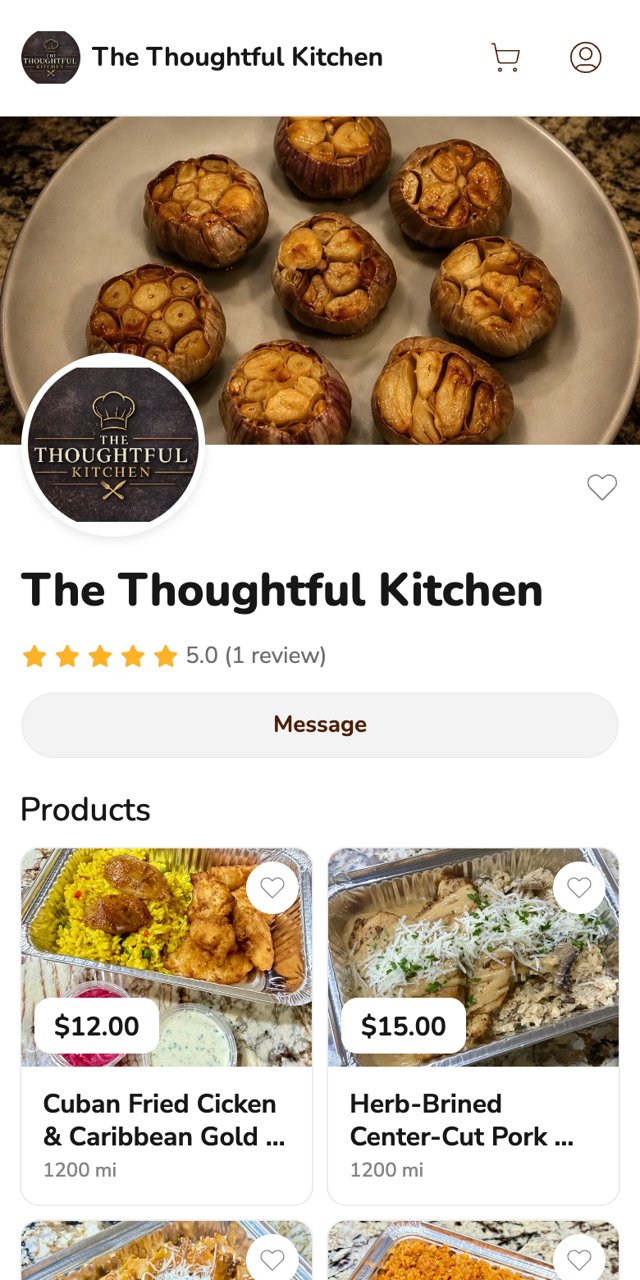
The Thoughtful Kitchen in Commerce City, Colorado, shows the model on a real storefront. On September 25, 2026 it listed 11 dinners at $10 to $15 plus a $6 two-pound rice side, with four dinners tagged by the weekday they are available, Monday through Thursday. Its storefront listed pickup at the kitchen in set windows, such as 9 AM to 3 PM on Saturday, September 26 and 7 AM to 7 PM on Sunday, September 27. Its one review so far, from a customer named Beto A., calls the meals "ready for the oven" and "healthy homemade from scratch options for busy parents."
If your regulars keep asking what is on the menu next week, set up a Homegrown storefront for your weekly meal prep menu and post this week's meals with a pickup window. Every meal is paid for before your shopping trip, and you cook the exact count on the list.
A $10 storefront gives your weekly meal prep menu one link where customers order and pay before your cook day, with no commission on each meal. Meal prep lives or dies on knowing the count before you shop, and that is the problem a pre-order page solves. Homegrown is $10 per month billed annually, or $12.50 billed monthly, with no percentage fees beyond standard payment processing of 2.9% + $0.30, which the vendor pays. On a $60 five-meal order that is $2.04 in processing, so $57.96 reaches you. Payouts go to your bank by next-day ACH, and an order placed on a Saturday reaches your bank Tuesday morning. Homegrown also holds 20% of each order for 30 days before releasing it, so plan your own grocery money for your first few weeks.
Compare the other ways meal prep vendors take orders:
What helps meal prep in particular:
What it does not do: Homegrown is built for pickup and local delivery, not shipping meals across the country. Customers create a Homegrown account to place their first order. There is no automatic weekly repeat order, so regulars place each week's order themselves. There is no timed release or countdown feature. Your storefront is listed on the Homegrown marketplace, but plan on most orders coming from people you send to your own link.
You can sell meal prep at gyms and fitness studios, usually by leaving pre-ordered meals on a pickup shelf or in the gym's fridge on set days, and it is one of the best fits for high-protein meals. Members already think in grams of protein, often come in several times a week, and already trust the trainer who recommends you.
There are three common setups, from lightest to heaviest:
Put the numbers members care about on the menu: calories, protein, carbs and fat per container. A five-meal "training week" box at $60 is an easy yes for someone who was going to spend Sunday cooking chicken anyway. Our guide to selling food at yoga studios, gyms and wellness events covers how to pitch a gym owner and what to offer in return.
Ask the gym owner two things before your first drop: where the meals will sit and how cold that spot is. A bag on a front desk for six hours is a food safety problem, and a shared fridge needs a shelf with your name on it.
You sell meal prep to offices by setting one weekly drop time, taking every coworker's order on the same link, and bringing all the meals at once, usually just before lunch. One stop with 10 or 15 meals is a far better morning than 10 or 15 porch deliveries across town, and coworkers who see each other's lunches order more the next week.
The simplest way in is through someone who already buys from you:
Set a minimum for every office drop. At $12 a meal, a 10-meal minimum makes one stop worth $120 before you pull out of the driveway, the same as ten separate deliveries without the ten separate drives. If an office misses the minimum one week, roll those orders into your regular pickup window instead of making the trip.
Coworking spaces, clinics, school staff rooms and fire stations work the same way. Our guide to selling food at work and taking workplace orders covers how to get your employer's OK and set up workplace pre-orders.
A farmers market is a good place to find new meal prep customers, but a weaker place to sell your whole week, because a single cold meal at a booth is an impulse buy and the rules for cooked food at a market are stricter than for bread. The real value of a market table is the card you hand to everyone who tries a $12 bowl and comes back asking what else you make.
Before you apply, call the market manager and ask:
California's MEHKO permit covers meals eaten at the home, picked up or delivered, so a market booth is a separate question for your county. Ask whether your county wants a temporary food permit for the booth and proof of the kitchen where the meals were made.
Take cards at the table. At Square's in-person rate of 2.6% + 15 cents, checked September 25, 2026, a $12 meal costs 46 cents in card processing, so $11.54 reaches you. Then put your pre-order link on every receipt and every bag, and tell each buyer when next week's menu goes up.
You should sell meal prep on DoorDash, Uber Eats or Shef only if you need strangers to find you and your delivery price can carry a 15% to 30% commission, because on every plan the app keeps a large share of each delivery order. The apps are good at finding customers who have never heard of you. They are expensive for serving customers who already love your food.
Here is what each one charges, from their own pages on September 25, 2026:
Two things to know before you sign up. Your kitchen still needs the permit your county requires for prepared meals, because the app does not replace it, and California's statute counts app sales as direct sales, so the law lets a MEHKO sell through them; confirm the app will list a home kitchen in your county. And each app sets its own delivery and service fees for your customer, on top of your menu price.
App commissions and intro rates change, and the 0% intro period ends after 7 or 30 days on DoorDash's plans. We checked DoorDash's and Uber Eats' merchant pricing pages and Shef's payout page on September 25, 2026. Run your own numbers on a real week of orders before you raise prices for the app or move regulars onto it.
A common pattern is to use the app for reach and your own link for regulars. Our comparison of in-house delivery and third-party apps walks through when each one pays.
You can sell meal prep through cafes, coffee shops and corner stores if your meals come from a licensed kitchen that allows sales to a retailer, and the store has a grab-and-go fridge. The store pays you for the meals, puts them in its case, and sells them at its own price. You get one invoice instead of 30 customers.
This place has the most rules attached:
Start with one store and a small order, such as 12 meals twice a week, and watch what sells before you add flavors. A cafe near offices often sells lunch bowls by 1 PM and nothing after, which tells you to drop earlier and bring fewer on Fridays.
You find standing weekly customers by offering the same box on the same day every week to people whose week has no room for cooking: busy families, new parents, older neighbors, athletes and anyone recovering from surgery. A customer who orders five meals at $12 every week is worth $60 a week, or about $3,120 over a year, and costs you almost nothing to keep.
Places to meet them:
Standing customers are also where your price holds best. They are not comparing you to an app at checkout. They are comparing you to cooking on Sunday night, and your $12 meal wins that comparison every week.
A $60 order of five $12 meals costs you $2.04 in card processing through a Homegrown storefront plus the $10 monthly plan, $9.00 in DoorDash's 15% Basic commission and $18.00 on Shef's marketplace. The table shows the full fee stack for each option, so you can compare them on the same order.
Scroll sideways for all eight columns of the fee stack.
| Platform | Monthly plan | Trial or intro period | Platform fee or commission | Card processing | Customer pays on a $60 order | Vendor keeps on a $60 order | Vendor pays in a month of 20 orders |
|---|---|---|---|---|---|---|---|
| Homegrown | $10 billed annually ($12.50 monthly) | 7 days, no charge until day 8 | None (0%) | 2.9% + $0.30, paid by the vendor | $60.00 | $57.96, before the plan | $50.80 ($40.80 processing plus $10) |
| Hotplate, default | $0 | None needed, no subscription | 5% + $0.55, paid by the customer | 2.9% + $0.30, vendor pays | $63.55 | $57.96 | $40.80 |
| Hotplate, vendor covers the fee | $0 | None needed, no subscription | 5% + $0.55, vendor pays | 2.9% + $0.30, also vendor-paid | $60.00 | $54.41 | $111.80 |
| Square Online, Free plan | $0 | None needed, $0 plan | None | 3.3% + 30 cents online | $60.00 | $57.72 | $45.60 |
| DoorDash Basic, delivery | $0, no subscription fee | 0% commission for 7 days | 15% of the food subtotal | Covered by the commission | $60.00 plus DoorDash's own delivery and service fees | $51.00 | $180.00 |
| DoorDash Plus, delivery | $0, no subscription fee | 0% commission for 30 days | 25% of subtotal | Inside the 25% | $60.00 plus DoorDash customer fees | $45.00 | $300.00 |
| DoorDash, pickup (any plan) | $0, no subscription fee | Same as the plan | 6% on pickup orders | Inside the 6% | $60.00 plus any DoorDash service fee | $56.40 | $72.00 |
| Uber Eats Lite, delivery | None listed | None listed | 20% marketplace fee | Included, listed in every plan | $60.00 plus Uber Eats' own fees | $48.00 | $240.00 |
| Shef marketplace | None listed | None listed | Payout is 70% of your price (30% kept) | Not listed separately | $60.00 plus any Shef fees | $42.00 | $360.00 |
We checked every fee on each company's own page on September 25, 2026: findhomegrown.com/signup, hotplate.com/pricing, squareup.com/us/en/pricing, merchants.doordash.com/en-us/pricing, merchants.ubereats.com/us/en/pricing and Shef's help center payout page. Card processing here is figured on the $60 subtotal; a platform that charges it on the total with fees, tips and tax runs a few cents higher. Tips, taxes and delivery costs are left out. Homegrown's month uses annual billing; on monthly billing it is $53.30. In some cities, including Los Angeles, San Francisco, Seattle and New York, Uber Eats' Lite plan starts at 15% on delivery, and in New York and Portland card processing is charged separately, so check the rate for your city. The table uses a $60 order and a month of 20 orders, rather than the $20 order and 50-order month in our other fee tables, because this guide prices a week of meals, five $12 meals, as one order.
The gap grows with volume. At 20 orders a month, keeping $57.96 per order on Homegrown instead of $45.00 on DoorDash Plus leaves you $249.20 ahead even after Homegrown's $10 plan, which is the grocery bill for a good share of those meals.
A $12 meal reaches you as the full $12.00 in cash at a market, about $11.59 through your own Homegrown link before the $10 monthly plan, $10.20 on DoorDash Basic for delivery and $8.40 on Shef's marketplace. The per-meal view makes the choice plain, because meal prep margins are thin once groceries, containers and kitchen rent come out.
Scroll sideways for the kitchen each place needs.
| Place | How the customer pays | What reaches you from a $12 meal | Kitchen setup it needs |
|---|---|---|---|
| Farmers market, cash | Cash at the booth | $12.00 | A permit your county accepts for a market booth |
| Farmers market, card | Square in person, 2.6% + 15 cents on a $60 order | $11.66 | Same as above |
| Your own Homegrown link | Card, 2.9% + $0.30 on a $60 order | $11.59, before the $10 plan | Any permit that covers direct sales |
| Hotplate, default | Card, customer pays the service fee | $11.59 | Any permit that covers direct sales |
| DoorDash pickup | In the app, 6% | $11.28 | A kitchen DoorDash can list |
| DoorDash Basic delivery | In the app, 15% | $10.20 | A kitchen DoorDash can list |
| Uber Eats Lite delivery | In the app, 20% | $9.60 | A kitchen Uber Eats can list |
| DoorDash Plus delivery | In the app, 25% | $9.00 | A kitchen DoorDash can list |
| Shef marketplace | In the app, 70% payout | $8.40 | A kitchen Shef approves |
Per-meal figures divide the $60 five-meal order by five, using the fee table's rates checked September 25, 2026. The farmers market card row instead applies Square's in-person card rate, which the fee table does not list, to a $60 order; a single $12 meal swiped at a booth keeps $11.54, as the market section shows. A cafe or corner store is left out because the price per meal is whatever you and the store agree.
None of this makes the apps wrong. A stranger whose first $60 order on DoorDash Basic cost you $9.00, and who then joins your weekly list, is worth it. The mistake is serving your regulars there forever.
Meals on Homegrown sold for a middle price of $12.00 on September 25, 2026, across 48 meal and main dish listings from 9 vendors, with 36 of the 48 priced under $15. That is the same range the containers in your fridge probably land in, and it is why this guide uses a $12 meal and a $60 five-meal order.
In a pull of the Homegrown catalog on September 25, 2026, 183 of the 2,699 products listed by 304 vendors were in the ready-to-eat category, from 20 vendors, and 64 of those 183 were freeze-dried candy from a single vendor. Sorting the rest by name, 48 listings were a meal or a main dish (bowls, dinners, plates, sandwiches, empanadillas and party pans) from 9 vendors. Their middle price was $12.00, and they ranged from a $3.00 lentil stew to a $275.00 smoked brisket for a party.
Meals and main dishes on Homegrown, by listed price
Source: public Homegrown catalog pull, September 25, 2026, 48 meal and main dish listings from 9 vendors.
The listings fall into a few clear styles:
For a deeper look at the number on your label, our meal prep pricing guide builds a container cost from store prices and shows what 20, 50 and 100 meals a week pay you.
You add a new place to sell meal prep by checking your permit first, then picking one place, testing it for four weeks with a small count, and keeping it only if it fills your cook day at a price you like. Adding three places at once is how a Sunday cook day turns into a Sunday, Monday and Wednesday.
Four weeks is long enough to see a pattern and short enough to walk away without losing much. Most places reveal themselves by week three.
Meal prep vendors who sell out every week keep the menu short, close orders at the same hour every week, and move every customer onto one pre-order list, whatever place they first met. Selling out is not about more places. It is about each place feeding the same cook day.
What they do:
The pattern is simple: one cook day, one list, and a few places that all point back to your own link.
You can sell meal prep from home through your own pre-order link with pickup or local delivery, to gyms and offices, at farmers markets, on delivery apps, and to standing weekly customers, as long as your kitchen has the permit your county requires. In most states, cooked meals that need refrigeration are not cottage food. California's home kitchen permit allows direct sales and app sales but no sales to stores. Verify your state's current rules with your county health department.
Yes, as long as your kitchen holds a county permit for selling prepared meals. DoorDash's merchant pricing page, checked September 25, 2026, lists 15%, 25% or 30% on delivery orders depending on the plan, 6% on pickup orders if your app prices match your own, and no separate card processing fee. On a $12 meal, the Basic plan leaves you $10.20. California law counts app sales from a home kitchen permit as direct sales, so the law lets a MEHKO sell through an app; confirm DoorDash will list a home kitchen in your county.
Shef's help center payout page, last updated February 10, 2026 and checked September 25, 2026, says cooks whose dishes sit only on its marketplace are paid 70% of their set price, so Shef keeps 30%. For its Weekly Shef Service, a weekly meal plan Shef sells to its subscribers, it pays a fixed $10, $13 or $15 per main. You bring packaged orders to a Shef drop-off point, and its sign-up page features cooks in New York, Austin and the Bay Area.
You can sell meal prep to a coffee shop or gym that resells it only if your kitchen permit allows sales to a retailer, which usually means a commissary or commercial kitchen. California's home kitchen permit bars sales to any wholesaler or retailer. A gym that is only a pickup point for meals your customers already bought on your link is a different setup and avoids the resale question.
People buy meal prep at grocery store prepared food cases, from national delivery services like CookUnity, on home chef marketplaces like Shef, from grab-and-go fridges at gyms and cafes, and from local meal prep kitchens that post a weekly menu. Local kitchens compete on freshness, a nearby pickup window and a person who answers messages. On Homegrown, meals and main dishes in the ready-to-eat category had a middle price of $12.00 on September 25, 2026.
Under California's microenterprise home kitchen operation permit, you can make no more than 30 individual meals per day and 90 per week, or fewer if your county sets a lower cap, with no more than $100,000 in verifiable gross annual sales, adjusted for inflation. That comes from California Health and Safety Code section 113825, read September 25, 2026. Other states set their own limits or have no home kitchen permit for meals at all, so check with your county health department.
These 5 guides answer the next questions meal prep vendors ask once they know where they want to sell, from the price on each $12 container to whether a frozen line or a cook-at-home kit fits better:
If you only read one, make it the pricing guide. The places in this article decide how much of each meal reaches you, and the pricing guide decides how much each meal costs you to make, so the two together tell you whether a place is worth your cook day.
The places in this guide all lead back to one habit: every order is paid before your shopping trip, so you cook the exact count and keep most of each $12 meal. Gyms, offices, markets and apps find the customers, and your own link keeps them. A market buyer who takes your card, a coworker who joins the office drop and a stranger who found you on DoorDash all end up on the same weekly menu, with one cutoff and one cook day.
That is the difference between a side business that eats your whole weekend and one that fits inside a Sunday. Start with the place closest to people who already eat your food, and let each new place feed the same list.
When you are ready to take next week's orders in one place, start your Homegrown storefront and post your weekly meal prep menu with a pickup window. It is $10 a month billed annually with no commission, and every order lands on one list for your cook day.



