
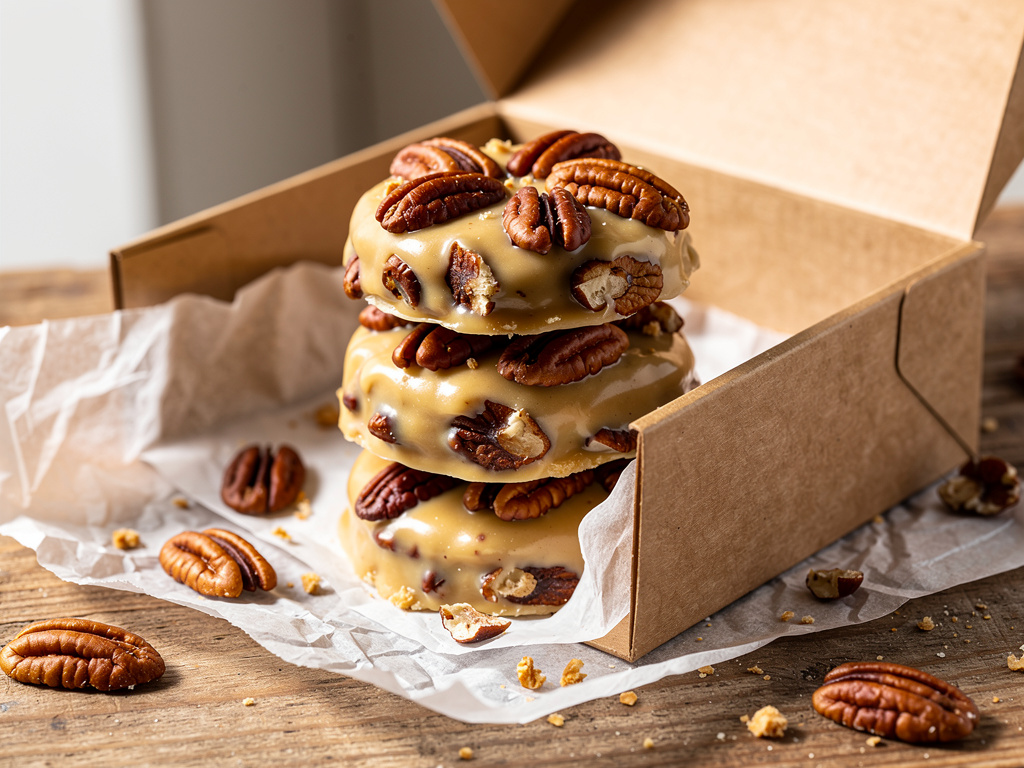


Pralines, the creamy, pecan-studded New Orleans candy, are one of the most story-rich sweets a home confectioner can sell. They carry a deep Southern heritage, they're shelf-stable enough to ship as gifts, and, like most sugar candies, they demand a dry day and real skill to make well. If you can cook a proper praline and tell its story, you have a product that stands out from anything on a grocery shelf. This guide walks through selling pralines from home, from the heritage to the humidity to how to price a candy built on expensive pecans.
The short version: Pralines are a Southern candy of sugar, cream or butter, and pecans, cooked to the soft-ball stage and dropped to set. As shelf-stable candies, they're generally cottage-food eligible in most states, though shipping and out-of-state sales vary by state, so confirm yours. Sugar is hygroscopic, so pralines can stay soft and sticky on humid days, make them on dry days. Pecans are expensive and the candy is labor-intensive, so price for it: established New Orleans shops sell pralines around $2.50 to $3 a piece. Lean into the rich New Orleans heritage as your marketing, package them as gift boxes, and, where your state allows, ship them. Homegrown gives you the storefront to sell and, where permitted, ship them, but you make the candy.
This guide covers what pralines are, cottage food and shipping, making them, pricing, the heritage story, selling, and mistakes. This is general information, not legal advice.
Pralines are a soft, creamy candy made from sugar, cream or butter, and pecans, cooked to the soft-ball stage and spooned onto a surface to set, with deep roots in New Orleans. Knowing both the candy and its history is central to selling it well, because the story is a big part of the product.
The essentials of pralines and their origin:
The takeaway: a praline is both a specific candy and a piece of New Orleans heritage, and both matter to selling it. The rule is to know your product and its story, since the tradition behind pralines is one of your strongest selling points, part of a genuine heritage brand.
Pralines are generally cottage-food eligible as shelf-stable candies in most states, but whether you can ship them or sell them out of state varies significantly, so you have to confirm both for your state. Making them is broadly allowed; shipping is a separate question.
What the rules look like:
The takeaway: pralines are broadly sellable as a shelf-stable candy, but shipping is a separate, state-specific permission you must verify. The rule is to confirm both eligibility and shipping rules before you sell, the same first step as any cottage food business.
You make good pralines by cooking the sugar and dairy to the soft-ball stage and dropping them to set, and you beat the humidity by making them on dry days, because sugar readily absorbs moisture from humid air and stays soft. Both the cooking precision and the weather awareness matter.
The keys to making pralines:
The takeaway: precise cooking and dry-day timing are what separate firm, creamy pralines from a sticky failure, though once set they hold up beautifully. The rule is to cook to temperature on a dry day, since humidity is the enemy of the making but not of the finished candy, the same discipline as making divinity.
You price pralines on your real cost of pecans, sugar, dairy, packaging, and labor plus a margin, anchored to what established praline shops charge, and you never underprice a candy built on expensive pecans. Pecans and hand-work make pralines costly to produce, and the market supports real prices.
Here's a market-anchored picture, drawn from established New Orleans praline makers:
| Format | Typical retail range | Notes |
|---|---|---|
| Per piece | ~$2.50 to $3 | At established New Orleans shops |
| Box of 6 | ~$16 to $18 | Common gift format |
| Box of 12 | ~$30 to $36 | The larger gift box |
How to build your price:
The takeaway: pralines cost real money to make, between pricey pecans and hand labor, so price them to the established market, not to grocery candy. The rule is to charge for the pecans and the craft, using praline shops as your comparison, much like pricing handmade chocolate truffles.
The New Orleans heritage of pralines is your best marketing because it gives an otherwise-simple candy a rich, authentic story that differentiates it from anything mass-produced. That tradition is a genuine, documented asset, not manufactured hype, and it's what makes customers choose your pralines.
Why the story sells:
Tell the heritage honestly and respectfully, honoring the tradition and the people behind it rather than leaning on caricature. The takeaway: the story is what elevates a praline from a sugar candy to a heritage gift, so make it central to your marketing. The rule is to sell the tradition authentically alongside the candy, because the heritage is exactly what a mass producer can't copy.
You sell pralines by packaging them as heritage gifts in boxes and tins, leaning on the New Orleans story, and, because they're shelf-stable, shipping them where your state allows alongside local and holiday sales. Their giftability and shelf stability point toward a gift-focused, holiday-heavy, and potentially mail-order approach.
The selling approach that fits:
The takeaway: pralines sell as a shelf-stable, giftable heritage candy, so package them for the holidays and expand your reach by shipping where you can. The rule is to sell the tradition in gift form and use shelf stability to reach further, listing everything on a proper online storefront.
The mistakes that hurt a praline business are making them on humid days, underpricing a pecan-heavy candy, and failing to lead with the heritage story. Each undercuts your product, your margin, or your marketing.
The mistakes to avoid:
The takeaway: the mistakes come from fighting the weather, undervaluing costly ingredients and labor, and hiding the story, all avoidable with planning and positioning. The rule is to make on dry days, price for the pecans and craft, and sell the heritage.
Pralines are a heritage gift product, and they deserve a storefront that lets you tell their story and sell them, locally and, where allowed, by mail. Homegrown is a $10-per-month online storefront, with no percentage fees beyond standard payment processing, where you can list your pralines and gift boxes, share the New Orleans story, and take orders for pickup or shipping.
You list each praline box and assortment, tell the heritage behind them right on your storefront, and take payment at order time, running holiday pre-orders for your busy gifting season. Because pralines are shelf-stable, you can offer local pickup and, where your state permits shipping cottage foods, mail-order gift boxes that reach customers far beyond your area. A flat monthly price also means a strong holiday season isn't eaten by per-sale percentage fees stacking up on every box, the way they would on a marketplace like Etsy.
To be clear about what Homegrown does not do: it does not make your pralines, control the weather, or make shipping legal in your state. Your craft, your dry-day production, and your state's rules are yours to manage. What Homegrown gives you is the storefront to tell your heritage story, sell your pralines, and take orders for pickup or permitted shipping. If your pralines are ready, set up your Homegrown storefront and sell your candy and its story together.
Generally yes, since pralines are shelf-stable candies, and most states list candies and confections among permitted cottage foods. Even though pralines contain cream or butter, it's cooked into a shelf-stable candy that doesn't require refrigeration, so they qualify as non-hazardous, unlike a fresh-cream product. The separate question is shipping: some states allow you to ship or sell shelf-stable cottage foods out of state, while others restrict sales to in-state or in-person only. Confirm with your state's cottage food agency that candies are eligible and whether you can ship before you sell.
Almost always because of humidity. Sugar is hygroscopic, meaning it pulls moisture from the air, so on humid or rainy days pralines can stay soft, sticky, or grainy instead of setting firm. The most reliable fix is to make pralines on dry days, planning your production around the weather. Getting the cook temperature right matters too, pralines are cooked to the soft-ball stage, roughly the mid-230s Fahrenheit, so under-cooking leaves them too soft. Use a candy thermometer, cook to temperature, and choose a dry day for the best set.
Price on your real cost, pecans, sugar, dairy, packaging, and a real hourly rate for your labor, then anchor to the market. Established New Orleans praline shops sell pralines around $2.50 to $3 per piece, with boxes of six in the high teens and boxes of twelve in the low-to-mid thirties. Pecans are an expensive nut and pralines are hand-cooked and hand-dropped, so pricing near grocery candy won't cover your costs. Charge for the ingredients and the craft, using established praline makers as your comparison rather than underselling the work.
Physically, yes, pralines are shelf-stable and quite heat-resistant once set, which makes them strong mail-order gift candidates. The catch is legal: whether you can ship cottage foods depends on your state, and some states restrict cottage food sales to within the state or to in-person venues only. So confirm your state's rules before offering shipping. Where it's allowed, the shelf stability and durability of pralines let you reach customers far beyond your local area with gift boxes and tins, which is a real advantage over perishable products.
Their heritage. Pralines carry a deep, documented New Orleans tradition, adapted from a French confection by local cooks using pecans and cream, and long sold by the pralinières, the women vendors of the French Quarter. That authentic story differentiates pralines from anonymous mass-produced sweets and supports premium pricing, since customers are buying a taste of a place and a tradition, not just sugar and pecans. Telling that heritage honestly and respectfully, alongside your own connection to it, is the single strongest marketing angle you have for this candy.
The holidays are the peak season, since pralines make excellent shelf-stable gifts and gift boxes, and Christmas gifting drives strong demand. They also sell well year-round through farmers markets, local pickup, and, where permitted, shipping, and they carry a natural tie to Southern and New Orleans regional identity and tourism. Plan attractive gift assortments and, if your state allows shipping, offer mail-order gift boxes for the holidays. Taking pre-orders ahead of the season lets you plan production, buy your pecans, and schedule your candy-making for dry days during the busy gifting stretch.
Pralines are a rare candy that combines real craft, expensive ingredients, and an authentic heritage story, which is exactly why they can command real prices and stand out. Make them on dry days, price for the pecans and the work, and sell the New Orleans tradition. Start your Homegrown storefront and sell your pralines and their story to customers who'll treasure both.



