
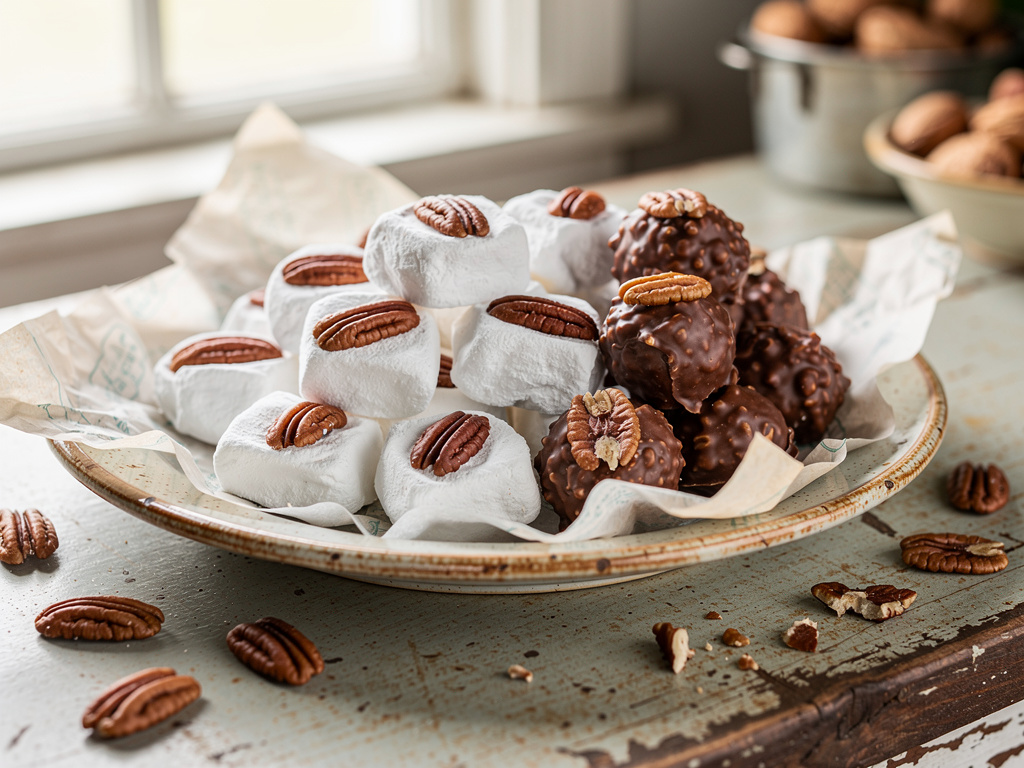


Divinity, that cloud-soft, pecan-studded white candy, is exactly the kind of nostalgic, heritage sweet a home confectioner can build a real business around. It's a Southern holiday tradition, it's shelf-stable enough to ship, and almost nobody makes it anymore, which is its own kind of advantage. But divinity is also famously temperamental: it flat-out won't set on a humid day, and the vendors who succeed with it plan around that. This guide walks through selling divinity and old-fashioned Southern candy from home, from the heritage story to the humidity problem to how to price it.
The short version: Divinity is a whipped candy of egg white, sugar syrup, and corn syrup, usually with pecans, and it anchors a family of old-fashioned Southern sweets alongside pralines, fudge, and pecan brittle. As shelf-stable candies, these are generally cottage-food eligible in most states, though whether you can ship or sell online varies by state, so confirm yours. The famous catch is humidity: divinity absorbs moisture and won't set on humid or rainy days, so plan production around dry weather. Lean hard into the heritage and nostalgia story, price for the labor-intensive craft it is, and, because it keeps, sell it by gift box and tin, and ship it where your state allows. Homegrown gives you the storefront to sell and, where permitted, ship it, but you make the candy.
This guide covers what divinity is, the heritage story, cottage food and shipping, the humidity problem, safety, pricing, selling, and mistakes. This is general information, not legal advice.
Divinity is a light, nougat-like candy made by whipping egg whites into a hot cooked sugar-and-corn-syrup mixture, usually folded with pecans, and it sits at the center of a family of traditional Southern confections. Understanding the product and its relatives helps you build a full, coherent line.
The divinity and Southern candy family:
Together these form a natural product line built on nostalgia, pecans, and shelf-stable sugar work. The takeaway: divinity anchors a whole family of heritage Southern candies you can sell together, not just a single product. The rule is to think in terms of a candy line, since offering divinity alongside pralines and fudge gives customers a fuller, more giftable range rooted in the same tradition.
The heritage and nostalgia story sells old-fashioned Southern candy because these sweets carry powerful associations, a grandmother's Christmas kitchen, a church social, a family tradition, that generic candy can't touch. That story is your single biggest marketing asset, and it's what differentiates you from a grocery-store shelf.
Why the story is so powerful:
Because of this, your marketing should lead with the tradition, the family recipe, the regional roots, the Christmas-morning memory, not a generic "candy for sale." The takeaway: the heritage story is what makes old-fashioned candy special and premium-worthy, so put it front and center. The rule is to sell the tradition first and the candy second, building a genuine heritage brand around your recipes and roots.
Divinity and traditional sugar candies are generally cottage-food eligible as shelf-stable confections in most states, but whether you can ship them or sell them online varies significantly by state, so you have to confirm both. Eligibility to make them and permission to ship them are two separate questions.
What the rules look like:
The takeaway: making divinity is broadly allowed as a candy, but shipping it is a separate, state-specific permission you must verify. The rule is to confirm both eligibility and shipping rules for your state before you sell, the same first step as any cottage food business.
Divinity won't set on humid or rainy days because it's a sugar candy that readily absorbs moisture from the air, which keeps it sticky and soft instead of firming up. This is the single most famous challenge with divinity, and planning around it is essential to making it reliably.
How to beat the humidity problem:
The takeaway: divinity's set depends on the weather, so treating humidity as a hard production constraint is the difference between firm, beautiful candy and a sticky failure. The rule is to make divinity only on dry days, planning your holiday production around the forecast, because no technique fully beats a humid kitchen.
Divinity is safe when made correctly, because the egg whites are cooked by the hot sugar syrup and the finished candy is shelf-stable and low in moisture. The keys are cooking it fully and storing it airtight, and understanding why it keeps well.
The safety essentials:
The takeaway: divinity made to full temperature and stored airtight is a safe, shelf-stable candy, which is part of what makes it a practical product to sell. The rule is to cook it fully and store it dry, following a tested recipe, so it stays both safe and beautifully set.
You price divinity and old-fashioned candy on your real cost of ingredients and labor plus a margin, anchored to what specialty Southern confectioners charge, and you never underprice a labor-intensive, weather-dependent craft. These candies take real skill and time, and their heritage supports strong pricing.
Here's a market-anchored picture, drawn from established Southern candy makers like River Street Sweets:
| Format | Typical retail range | Notes |
|---|---|---|
| Per piece (praline, divinity) | ~$2 to $4 | At specialty-confectioner retail |
| By the pound | ~$23 to $26 | Boxed or bagged |
| Gift box or tin | Varies, premium | The holiday-gift hero format |
How to build your price:
The takeaway: specialty Southern candy commands real prices, so cost your labor and lean on the heritage to price above commodity sweets. The rule is to price for the craft and the tradition, using established confectioners as your ceiling, and never to undersell labor-intensive candy, the same discipline as pricing chocolate truffles.
You sell old-fashioned candy by leaning on the heritage story, packaging it as holiday gifts in boxes and tins, and, because it's shelf-stable, shipping it where your state allows. The nostalgia, the gifting occasions, and the shippability all point toward a gift-focused, holiday-heavy sales approach.
The selling approach that fits:
The takeaway: old-fashioned candy sells as a nostalgic, giftable, shelf-stable product, so package it for the holidays and reach further by shipping where you can. The rule is to sell the tradition in gift form and use shelf stability to expand your reach, listing it all on a proper online storefront.
The mistakes that hurt an old-fashioned candy business are making divinity on humid days, underpricing labor-intensive candy, and failing to lead with the heritage story. Each undercuts either your product or your marketing.
The mistakes to avoid:
The takeaway: the mistakes come from fighting the weather, undervaluing the craft, and hiding the story, all avoidable with planning and positioning. The rule is to make on dry days, price for the craft, and sell the heritage, so your old-fashioned candy business honors both the tradition and your time.
Old-fashioned candy is a gift product with a story, and it deserves a storefront that lets you tell that story and sell it, locally and, where allowed, by mail. Homegrown is a $10-per-month online storefront, with no percentage fees beyond standard payment processing, where you can list your divinity, pralines, and fudge, share your heritage story, and take orders for pickup or shipping.
You list each candy and gift assortment, tell the tradition behind them right on your storefront, and take payment at order time, running holiday pre-orders for your busy Christmas season. Because divinity and pralines are shelf-stable, you can offer local pickup and, where your state permits shipping cottage foods, mail-order gift tins that reach customers far beyond your area. A flat monthly price also means a strong holiday season isn't eaten by per-sale percentage fees stacking up on every tin, the way they would on a marketplace like Etsy.
To be clear about what Homegrown does not do: it does not make your candy, control the weather, or make shipping legal in your state. Your craft, your dry-day production, and your state's shipping rules are yours to manage. What Homegrown gives you is the storefront to tell your heritage story, sell your candy, and take orders for pickup or permitted shipping. If your old-fashioned candy is ready, set up your Homegrown storefront and sell your tradition to the customers who miss it.
Generally yes, since divinity and traditional sugar candies are shelf-stable confections, and most states list candies and confections among permitted cottage foods. The separate question is shipping: some states allow you to ship or sell shelf-stable cottage foods online, while others limit sales to in-person venues only, even when the candy itself is allowed. So you need to confirm two things with your state's cottage food agency, that candies are eligible, and whether you can ship or sell online. Don't assume shipping is permitted just because making the candy is.
Almost always because of humidity. Divinity is a sugar candy that readily absorbs moisture from the air, so on a humid or rainy day it stays sticky and soft instead of firming up. The most reliable fix is simply not to make divinity on humid or rainy days, planning your production around dry weather instead. On a marginally humid day, cooking the syrup a degree or two higher than the recipe states can help, since humidity raises the chance of sticky candy. But no technique fully overcomes a genuinely humid kitchen, so watch the forecast.
Yes, when made properly. Divinity is made by beating hot cooked sugar syrup into the egg whites, and that hot syrup cooks the egg whites, so correctly made divinity is not a raw-egg product. The key is to cook your sugar syrup to the full temperature the recipe calls for and not shortcut that stage. The finished candy is also shelf-stable and low in moisture, which is why it keeps at room temperature. Store it in airtight containers to keep it firm, since it absorbs moisture from the air just as it does while setting.
Price on your real cost of ingredients and labor plus a margin, anchored to what specialty Southern confectioners charge. Established makers commonly sell pralines and divinity around $2 to $4 per piece and roughly in the low-to-mid $20s per pound, which shows real room above a "homemade discount" price. These candies are skill-intensive and, for divinity, weather-dependent, so charge for the craft and lean on the heritage story to support premium pricing. Cost out your sugar, pecans, eggs, packaging, and a real hourly rate for your time, then price with confidence rather than underselling the work.
Because divinity, pralines, and fudge are shelf-stable, they physically ship well, which makes them strong mail-order gift candidates, especially at the holidays. The catch is legal, not physical: whether you can ship cottage foods depends on your state. Some states permit shipping shelf-stable cottage foods, while others restrict sales to in-person venues only. So confirm your state's rules before offering shipping. Where it's allowed, the shelf stability of these candies lets you reach customers far beyond your local area with gift tins and boxes, a real advantage over perishable products.
Lead with the heritage and nostalgia story, since that's your biggest advantage. Divinity and pralines are tied to holidays, family, and tradition for many customers, and almost nobody makes them anymore, so being one of the few makers is a genuine draw. Market the family recipe, the regional roots, and the Christmas-morning memory rather than generic "candy for sale," and package the candy as holiday gift boxes and tins. The tradition is what differentiates you from grocery-store sweets and justifies premium pricing, so put it front and center in every listing and post.
Divinity and old-fashioned Southern candy are a rare, nostalgic, giftable product that a home confectioner can genuinely own, if you respect the humidity, price for the craft, and sell the heritage. Make it on dry days, package it for the holidays, and reach further by shipping where you can. Start your Homegrown storefront and bring your family's candy tradition to the customers who miss it.



