
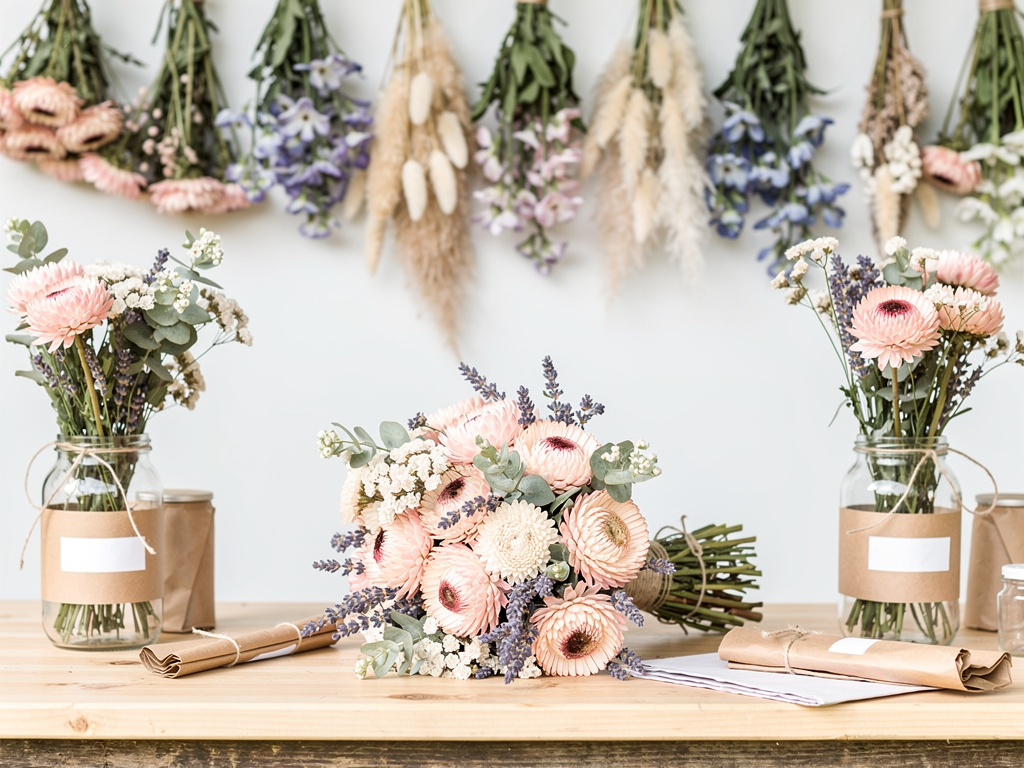


Dried flowers have quietly become one of the smartest products a small flower farmer can sell, especially to weddings. They're everlasting keepsakes, they suit the boho and rustic looks couples love, they don't wilt, they ship, and, crucially, you grow and dry them in season but sell them all year. For a DIY bride planning her own bouquets and decor months ahead, your dried stems and bunches are exactly what she needs. This guide walks through how to sell dried flowers for DIY weddings, from what to grow to how to dry it to how to price the work.
The short version: Dried flowers are a booming wedding product because they're everlasting keepsakes, on-trend, no-wilt, shippable, and perfect for DIY brides planning ahead. Grow flowers that dry well, strawflower, statice, gomphrena, celosia, larkspur, globe amaranth, baby's breath, lavender, and grasses, then air-dry them by hanging upside down in a dark, dry, airy space, harvesting just before full bloom so they don't shatter. Sell bulk stems and bunches, DIY bouquet kits, pre-made bouquets, boutonnieres, and confetti, on pre-order since weddings are planned months out. The huge advantage: you grow and dry in season but sell year-round. Price for the arranging labor, not just the stems. Homegrown gives you the storefront to take wedding pre-orders and sell dried flowers. This is general information.
This guide covers why dried flowers are booming, what to grow, drying, products, pricing, the year-round advantage, selling, and mistakes. This is general information, not agricultural advice.
Dried flowers are booming for weddings because they're everlasting keepsakes that suit today's boho and rustic aesthetics, don't wilt, ship well, and are ideal for DIY brides planning their own decor months in advance. They solve real problems that fresh flowers can't.
Why couples and DIY brides love them:
The takeaway: dried flowers hit a sweet spot for weddings, keepsake, on-trend, no-wilt, and plan-ahead friendly, which is why demand has surged. The rule is to lean into what makes dried flowers special for weddings, the permanence and the freedom from wilting, since that's exactly what DIY brides are looking for, a natural complement to a flower-growing business.
You should grow flowers known to dry well, strawflower, statice, gomphrena, celosia, larkspur, globe amaranth, baby's breath, lavender, and ornamental grasses, since not every flower holds its color and shape when dried. Choosing the right varieties is the foundation of a good dried-flower line.
Here are flowers well-suited to drying:
| Flower | Note |
|---|---|
| Strawflower | Classic, holds color beautifully |
| Statice | Reliable, wide color range |
| Gomphrena (globe amaranth) | Round, colorful, durable |
| Celosia | Bold texture and color |
| Larkspur | Airy, tall, popular |
| Baby's breath | A wedding staple |
| Lavender | Fragrant and beloved |
| Ornamental grasses | Bunny tail, texture and movement |
A few notes on selection:
The takeaway: grow proven dryable flowers, strawflower, statice, gomphrena, and the rest, chosen to give you a full palette of colors and textures. The rule is to plant varieties known to dry well, since a flower that fades or shatters when dried is a wasted crop, no matter how pretty it is fresh.
You dry flowers well by air-drying them, hanging small bunches upside down in a dark, dry, airy space, and by harvesting just before full bloom so they hold their shape. Good drying is what separates keepsake-quality flowers from a faded, shattered mess.
The keys to quality drying:
The takeaway: quality drying comes from harvesting before full bloom and air-drying in a dark, dry, airy space, with silica gel for delicate blooms. The rule is to harvest at the right stage and dry in darkness, since these two steps determine whether your flowers become beautiful keepsakes or a faded, shattering disappointment.
You can sell DIY brides bulk dried stems and bunches, DIY bouquet kits, pre-made bouquets, boutonnieres, cake flowers, confetti, and larger installation pieces, spanning from raw materials to finished arrangements. Between weddings, the same stems become vase pieces, wreaths and crowns, and selling dried flower arrangements from home covers that everyday side, from stem costs to what each way of taking orders keeps from a $20 sale. Offering a range lets brides choose how much they want to do themselves.
Products to offer wedding customers:
The takeaway: a full range from bulk stems to finished bouquets lets you serve every kind of DIY bride, from the fully hands-on to the mostly-done-for-me. The rule is to offer products across that spectrum, since some brides want raw materials and others want it finished, and a full lineup captures both, all sold through a proper flower storefront.
You price dried flowers by the bunch or stem for bulk, and price finished wedding arrangements as premium work that reflects the design labor, not just the materials. Wedding work in particular commands more than raw stems, since it's skilled, deadline-driven arranging.
How to price it:
The takeaway: price bulk stems per unit and price finished wedding work for the design labor and the occasion, well above materials. The rule is to charge for your arranging skill and the wedding stakes, not just the flowers, since the value in a finished bouquet is the design, not the dried stems.
The biggest advantage of dried flowers is that you grow and dry them during your season but sell them all year, which frees you from the wilting clock that limits fresh-flower sales. This changes the whole economics of a flower business.
Why the timing advantage matters:
The takeaway: growing in season and selling year-round removes the perishability constraint that limits fresh flowers, letting you build inventory and sell any time. The rule is to treat your dried stock as year-round inventory, since this timing freedom is dried flowers' single biggest business advantage over fresh.
You sell to brides through pre-orders placed months ahead, custom color palettes, and both local sales and shipping, since weddings are planned far in advance and dried flowers ship beautifully. Meeting brides on their long planning timeline is the key.
How to sell to wedding customers:
The takeaway: sell to brides on their long planning horizon with pre-orders, custom palettes, and shipping, since dried flowers suit the plan-ahead, ship-anywhere nature of DIY weddings. The rule is to take orders early and deliver on a clear timeline, using a pre-order system built for the months-ahead nature of wedding planning.
The mistakes with dried flowers are harvesting too late so blooms shatter, drying poorly so they mold or fade, underpricing wedding work, and not planning inventory against wedding demand. Each undercuts your product or your income.
The mistakes to avoid:
The takeaway: the mistakes come from poor harvest timing, poor drying, underpricing the design work, and weak inventory planning, all avoidable. The rule is to harvest and dry for quality, price wedding work for the labor, and plan your inventory to sell year-round.
Dried-flower wedding sales run on early pre-orders, custom palettes, and shipping, and a simple storefront handles all of it. Homegrown is a $10-per-month online storefront, with no percentage fees beyond standard payment processing, where you can sell dried flowers and take wedding pre-orders and custom orders.
You list your bulk bunches, DIY kits, finished bouquets, and custom options, take pre-orders and payment months ahead of the wedding, and fulfill by pickup, delivery, or shipping, which dried flowers handle beautifully. Because your storefront keeps clean records, you can manage your custom wedding orders and plan your growing and drying against real demand. A flat monthly price means your wedding and bulk sales aren't eroded by per-sale percentage fees stacking up on every order, the way they would on a marketplace like Etsy.
To be clear about what Homegrown does not do: it does not grow your flowers, dry them, or arrange your bouquets. The growing, drying, and design are your craft. What Homegrown gives you is the storefront to sell your dried flowers and take wedding pre-orders and custom orders on the months-ahead timeline brides plan on, so the selling runs smoothly. If your dried flowers are ready, set up your Homegrown storefront and take wedding and bulk orders in one place.
Flowers known to hold their color and shape when dried, including strawflower, statice, gomphrena (globe amaranth), celosia, larkspur, baby's breath, and lavender, all confirmed by university extension sources as suited to drying. Baby's breath and lavender are wedding staples, while strawflower and statice offer wide color ranges that hold beautifully. Ornamental grasses like bunny tail add texture and movement that brides love, though confirm which specific grasses dry well for you. The key is to grow varieties proven to dry well and to plant for a full palette of colors and textures, since a flower that fades or shatters when dried is a wasted crop no matter how lovely it is fresh.
The most common method is air-drying: hang small, loose bunches upside down in a warm, dark, dry, well-ventilated space. The darkness preserves color and good airflow prevents mold. Critically, harvest the flowers just before they're fully open, since flowers cut in full bloom tend to shatter and drop petals as they dry, and cut in the morning after the dew has dried. For dense-petaled flowers like roses that don't air-dry well, silica gel in a sealed container dries them in about a week while holding their shape. Store finished dried flowers out of direct light and humidity so they stay vibrant until you sell them.
Price bulk stems and bunches at a per-unit rate covering your growing, drying, and handling plus a margin, and price finished arrangements, bouquets, boutonnieres, and installations, well above their material cost to reflect your design labor. Wedding work especially commands a premium: it's skilled, high-stakes, and deadline-driven, and brides expect to invest in it, so price custom wedding arrangements as the premium service they are. Dried-flower and wedding-flower prices vary widely, so check comparable makers and treat any figure as a market estimate to confirm locally. Remember the value in a finished bouquet is your design and labor, not just the dried stems it contains.
Yes, and it's their single biggest advantage over fresh flowers. You grow and dry your flowers during your growing season, then sell that stable inventory all year, including the off-season when fresh flowers are scarce and expensive. Because dried flowers keep indefinitely, you're never racing spoilage the way you are with fresh cut flowers, and you can fill orders for weddings in any month, not just when your flowers are blooming. This lets you build inventory, serve any wedding date, and smooth out the feast-or-famine cash flow of a seasonal flower operation. Treat your dried stock as year-round inventory to make the most of it.
Meet them on their long planning timeline. Weddings are booked and planned months, sometimes a year, ahead, so take pre-orders and custom orders well in advance and use the lead time to prepare. Offer custom color palettes from your dried inventory, since brides plan around specific colors, and provide a range of products from bulk stems for hands-on brides to finished bouquets for those who want it done. Because dried flowers ship well, you can serve brides beyond your local area as well as sell at markets and directly. Set clear order deadlines and delivery dates so every bride has her flowers in hand with time to arrange.
Yes, very well, which is a major advantage for wedding sales. Unlike fresh flowers, dried flowers are stable and don't wilt or need water, so they can be packed and shipped without the perishability worries of fresh blooms, arriving ready to use. This lets you serve DIY brides across the country, not just locally, which greatly expands your market. Pack them carefully in protective boxes so the delicate dried stems don't crush or shatter in transit, and factor real shipping costs into your pricing. The shippability of dried flowers, combined with their long shelf life, is exactly what makes them such a strong plan-ahead wedding product.
Dried flowers are a rare farm product that's on-trend, keepsake-worthy, and free from the wilting clock, letting you grow in season and sell weddings all year. Grow the right varieties, dry them well, price your design work, and take orders on the long timeline brides plan on. Start your Homegrown storefront and take dried-flower wedding orders in one place.



