
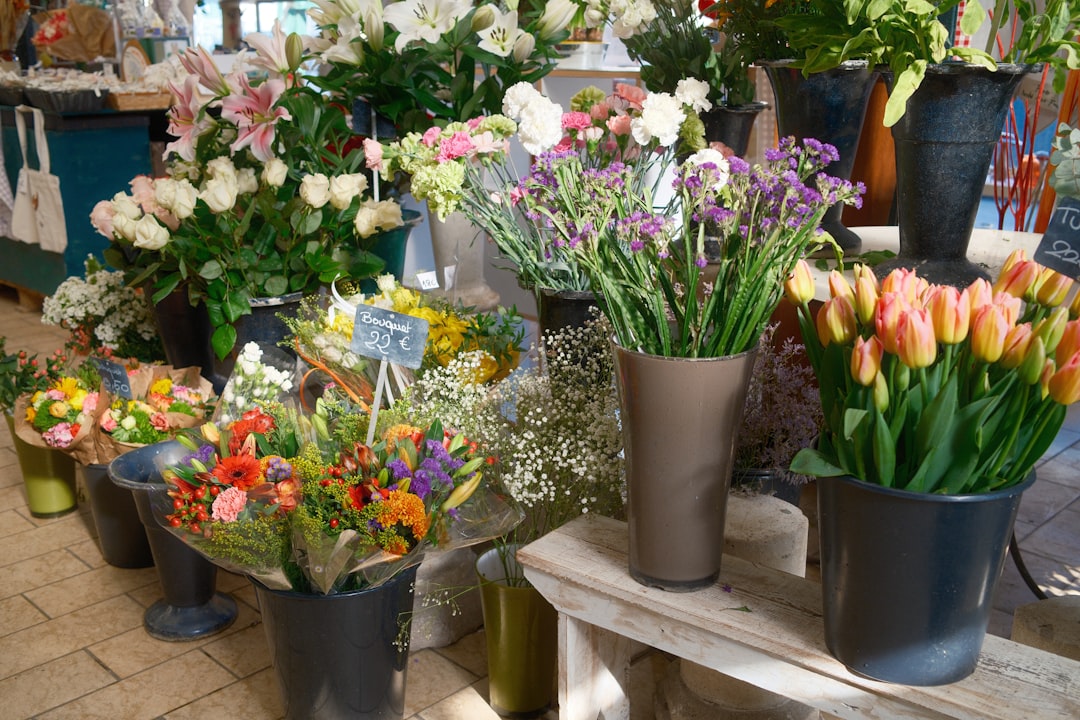


The best platform to sell cut flowers online for most small flower farmers and backyard growers is Homegrown, which gives you a flat-rate storefront where customers order, pay, and pick up locally through one shareable link. Cut flowers are perishable — a bouquet picked Tuesday morning needs to be in a vase by Wednesday. Shipping flowers across the country requires cold chain logistics that small growers cannot afford. The platform you choose should be built around local pre-orders and pickup, not around boxing roses for overnight delivery.
The short version: Homegrown costs $10 per month (annual) or $12.50 per month (monthly) with no platform commission and no checkout surcharge. Customers see your available bouquets and arrangements, order, pay the listed price, and choose pickup or local delivery. Other options include Etsy (viable for dried flowers and preserved arrangements that ship well, but 6.5% plus listing fees reduce margins), Shopify ($39 per month and up — more platform than most flower growers need), and Square Online (free plan if you already use Square at markets). For a small flower farm selling fresh bouquets at farmers markets and through local pickup, Homegrown is the simplest choice.
Cut flower farming produces inventory with a ruthlessly short shelf life. You cut stems in the morning, condition them in water, and they need to reach a customer within 24 to 72 hours. Unlike baked goods or preserved foods, you cannot hold flowers for next week's market. What does not sell Saturday is compost by Monday.
Here is what most small flower growers deal with:
An online ordering platform turns your weekly harvest into a pre-order menu. Customers see what you are cutting this week, order their bouquet, pay upfront, and pick up at the market or a scheduled time. You harvest to order rather than harvesting on hope, which reduces waste and guarantees sales before you cut a single stem.
The tipping point for flower growers is usually waste. If you are composting unsold stems after market day or turning away customers who want flowers for a specific date, a platform pays for itself by capturing those orders before they disappear.
Four platforms serve flower growers, each matching a different selling pattern.
Homegrown is an online storefront built for local food and farm vendors who sell through pickup or local delivery. You list your flower products — mixed bouquets, single-variety bunches, specialty arrangements, subscription options — with prices and descriptions. You set pickup locations and time windows. Customers browse, order, pay, and choose when to pick up.
Here is what Homegrown includes for flower growers:
The pricing advantage for flower growers is important because bouquet margins vary widely. A $15 mixed bouquet might cost $3 to $6 in stems depending on what is in season. That $3 to $6 is about what 12 zinnias bring from a florist at 25 to 50 cents a stem, while the seed, sleeve and flower food cost about 69 cents, and how much to sell cut flowers for works a $15 bouquet out stem by stem. On Homegrown, your $15 bouquet reads as $15 at checkout. No commission taken, only card processing of 2.9% + $0.30 per order. On Etsy, that same bouquet would incur about $1.88 in fees per sale ($0.20 listing, $0.98 transaction and $0.70 processing) — and fresh flowers on Etsy face the additional challenge of shipping logistics that most small growers cannot manage.
Pros:
Cons:
Best for: Small flower farms, backyard growers, and market flower vendors selling fresh bouquets locally. If you are losing stems to waste after market day or turning away date-specific requests, Homegrown captures those sales.
Start your free 7-day trial with Homegrown.
Etsy works for flower vendors who sell dried flowers, preserved arrangements, and flower-based crafts that ship without spoilage risk. Dried bouquets, pressed flower art, wreaths, potpourri, and flower crowns perform on Etsy because they survive transit and appeal to the handmade marketplace audience. Etsy charges a $0.20 listing fee, 6.5% transaction fee, and 3% + $0.25 processing.
Fresh cut flowers are extremely difficult to sell on Etsy because they require overnight shipping with cold packs, and even then, quality on arrival is unpredictable. Dried and preserved flowers eliminate that problem entirely.
Pros:
Cons:
Best for: Flower vendors who sell dried, preserved, or craft-based flower products suitable for shipping.
Shopify makes sense for flower businesses doing $2,000 or more per month with subscription programs, wedding services, and retail partnerships. For a backyard flower grower selling 20 to 40 bouquets per week at the Saturday market, Shopify is more platform than needed.
Best for: Established flower businesses with subscription programs and event services.
Square Online connects your online ordering to your Square POS. The free plan includes basic online ordering with Square branding. Useful if you already accept cards at your market booth with a Square reader.
Best for: Flower growers who already use Square at markets.
| Feature | Homegrown | Etsy | Shopify | Square Online (Free) |
|---|---|---|---|---|
| Monthly cost | $10 (annual) or $12.50 | $0 (per sale) | $39+ | $0 |
| Platform commission | 0% | 6.5% | 0% (Shopify Payments) | 0% |
| Card processing | 2.9% + $0.30 | 3% + $0.25 | 2.9% + $0.30 | 3.3% + $0.30 online |
| Total fees on $15 bouquet | ~$0.74 processing | ~$1.88 | ~$0.74 processing | ~$0.80 processing |
| Monthly cost at 30 bouquets ($450/mo, 30 orders) | $10 + ~$22 = ~$32 | ~$56 in fees | $39 + ~$22 = ~$61 | ~$24 processing |
| Local pickup | Yes (built-in) | Limited | Workaround | Basic |
| Local delivery | Yes (built-in) | No | With apps | Basic |
| Shipping | No | Yes (core) | Yes | Yes |
| Inventory management | Yes | Yes | Yes | Limited |
| Multiple pickup locations | Yes | No | With apps | Limited |
| Setup time | ~15 min | 1-2 hours | 4-8 hours | 30-60 min |
At 30 bouquets per month ($450), Homegrown costs roughly $32 (the $10 plan plus about $22 in card processing) while Etsy costs roughly $56. For flower growers with variable margins, that $24 per month difference matters — especially in slower growing months when bouquet counts drop.
If your best stems are wilting on the conditioning table after Saturday's market, the issue is not demand — it is timing. Your customers want your flowers but can only buy them during the three hours you are at the booth. A Homegrown storefront gives them a link where they can see what you are cutting this week, pre-order their bouquet, pay upfront, and pick up fresh. You harvest to order, and nothing goes to waste.
Start your free 7-day trial with Homegrown.
Ready to start selling locally? The easiest way to take local orders and get paid is an online storefront — see the best platform to sell food from home, or set up a Homegrown storefront in about 15 minutes ($10/mo, 0% commission).
In most states, selling fresh cut flowers does not require a food handling license because flowers are not a food product. However, you may need a general business license or home occupation permit depending on your city or county. Some states require a nursery license if you also sell live plants. If you sell at farmers markets, the market may have its own vendor requirements. Cut flowers are among the least regulated products you can sell from a small farm or backyard garden. Information on getting started with small-scale cut flower production is available from the Association of Specialty Cut Flower Growers.
Most small flower farmers charge $10 to $20 for a standard mixed bouquet, $20 to $35 for premium or large arrangements, and $5 to $10 for single-variety bunches (sunflowers, zinnias, dahlias). Pricing depends on your area, the season, and what stems are included — peonies and dahlias command higher prices than zinnias and cosmos. A common formula is 3x to 4x your stem cost. If a bouquet costs $4 in stems, price it at $12 to $16. Check what other flower vendors charge at your local market and position accordingly.
Sunflowers are the most popular farmers market flower, followed by zinnias, dahlias, peonies (in season), ranunculus, and mixed bouquets. Seasonal availability drives sales — peonies in late spring, sunflowers and zinnias in summer, dahlias in late summer and fall, dried arrangements in winter. The most successful market flower vendors offer a mix of grab-and-go bouquets at $10 to $15 and premium arrangements at $25 to $35 to capture both impulse buyers and planned purchases. Detailed production guides for specialty cut flowers are available from Virginia Tech Extension.
Update your online storefront weekly based on what is actually blooming and ready to cut. Most flower growers update their product list on Tuesday or Wednesday for weekend pickup — you survey the field, note what is ready, and list only those varieties and quantities. If a planned variety is not ready, do not list it. If something unexpected is blooming abundantly, add it. Your regular customers will learn your posting rhythm and check weekly for availability.
In most climates, fresh cut flower season runs from late spring through early fall (roughly May through October). Some growers extend the season with high tunnels or greenhouses. During off-season months, diversify into dried flower arrangements, wreaths, forced bulbs (paperwhites, amaryllis in winter), and potted plants. Many flower farmers find that their off-season dried and preserved products sell well enough to maintain year-round revenue, especially for holiday wreaths and dried bouquet subscriptions.
Small-scale cut flower farming can be highly profitable per square foot. An established flower plot can generate $5 to $10 per square foot per season. A quarter-acre flower farm producing 30 to 50 bouquets per week at $12 to $18 each generates $1,500 to $3,500 per month during growing season. Seed and supply costs are relatively low — $200 to $500 per season for a small operation. The main costs are your time (planting, weeding, harvesting, arranging) and land access. Profitability improves significantly with pre-orders because you waste fewer stems and can harvest to demand rather than speculation.
Flower subscriptions (weekly or biweekly bouquets) are one of the strongest revenue models for small flower farms because they guarantee sales before you harvest. A subscription customer who pays $15 per week for a summer bouquet commits $240 to $300 over a 16 to 20-week season. Even 10 subscription customers provide a reliable base of $150 per week. List subscription options on your storefront alongside single-purchase bouquets — customers who buy weekly anyway often prefer the commitment of a subscription because it guarantees they will not miss out.
Set a clear cancellation policy on your storefront — most flower vendors allow cancellations up to 48 hours before the scheduled pickup but not after, since flowers are harvested to order. State the policy in your product descriptions so customers see it before purchasing. If a customer cancels after harvest, keep the bouquet and sell it at your next market or through a flash sale on social media. Pre-paid orders through a storefront reduce cancellation rates significantly compared to DM-based orders where no money has changed hands.
Your flowers deserve a storefront where the listed price is what your customer pays — no marketplace fees, no checkout surcharges, no commission taken from any bouquet, just card processing of 2.9% + $0.30 per order. Homegrown gives flower growers a shareable ordering link, built-in payments, and local pickup and delivery scheduling for $10 per month flat. Start your free 7-day trial.



