
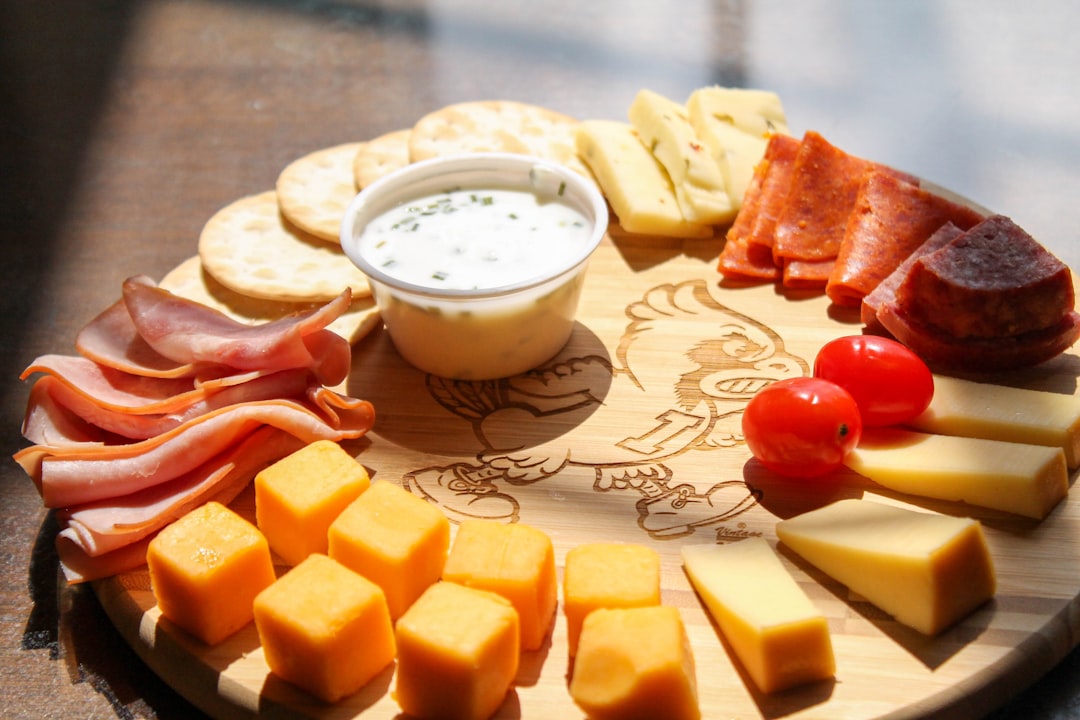


The short version: You can sell charcuterie boards from home, but in all six states we read, a board with meat and cheese did not cleanly fit a cottage food or food freedom law, so plan on a food permit and either a home kitchen your county inspects or a rented commercial kitchen. Of the six states we read on October 8, 2026, Minnesota says a cottage food registration cannot cover charcuterie, the food freedom laws in Wyoming and Tennessee and North Dakota's cottage food law bar or restrict the meat, and California counties that opted in and Utah counties issue home kitchen permits that can cover a full board. A board for six costs about $29.59 to make at Walmart prices, and our pricing guide suggests $75 for it, which pays you about $34 an hour. Take paid pre-orders before you buy the cheese, and keep every board at 41°F or colder until pickup.
Checked October 8, 2026: the Minnesota Department of Agriculture's cottage food guidance, the Wyoming Food Freedom Act, North Dakota Century Code chapter 23-09.5, Tennessee Code 53-1-118, Sonoma County's MEHKO page, Davis County Health Department's home kitchen page and Utah rule R392-106, plus the pricing pages of Homegrown, Squarespace, Square, Venmo, Etsy, FLIP and ServSafe. Rules change and vary by county, so verify your state's current rules before you sell. Homegrown customers create an account to place a first order, and Homegrown has no drops feature.
Charcuterie boards are a made-to-order food business with real margins. A board for six that costs you about $29.59 in food and packaging can sell for $75, and our pricing guide puts bigger party boards at $130 to $240. Birthdays, showers, holiday parties, office lunches and date nights all bring orders, and most of them are ordered ahead.
Plan around this first: in all six states we checked, a board with salami and cheese did not cleanly fit a cottage food or food freedom law. Cottage food laws cover shelf-stable foods like cookies and jam. A charcuterie board holds sliced meat, cheese and cut fruit that need a fridge to stay safe, so it needs a higher level of permit than a bake sale.
That does not mean you cannot sell them. It means the legal path is different from baking cookies. This guide covers how to sell charcuterie boards from home legally, including the permits, the kitchen, equipment, sourcing, pricing, food safety, carts and franchises, and where to find your first customers. When you get to the numbers, our charcuterie board pricing guide shows the full Walmart cost build behind the $29.59 and what each board size pays you per hour.
Ready to start selling? Once your permit is in place, a Homegrown storefront lets customers pick a board size and a pickup date and pay when they order, for $10 a month billed annually and 0% commission, plus 2.9% + $0.30 card processing.
Not in the states we checked, at least not boards with meat and cheese. Of the six states we read on October 8, 2026, five rule out a fresh board with salami from a home kitchen that has no permit, and the sixth, North Dakota, is not a clean fit either.
Cottage food laws are written for foods that stay safe on a shelf with no fridge. Cookies, bread, jam, honey and candy qualify because they are dry or high in sugar and germs grow slowly in them. A charcuterie board is the opposite. It contains:
The University of Nebraska-Lincoln's food safety guide says cut produce and cheeses should be refrigerated until served and not kept at room temperature for more than 2 hours total, or 1 hour if the temperature is above 90°F. That 2-hour limit is serving advice, not a law, but it shows why a charcuterie board falls outside the cottage food laws we read: the food needs time and temperature control, and cottage food laws are built for food that does not.
Minnesota says it plainly. Its agriculture department's cottage food guidance asks "Can I sell charcuterie boards with a cottage food registration?" and answers "No," because meat and cheese are not allowed cottage foods and "a food license is required to make and sell charcuterie boards containing those products." The same page notes a 2025 law change that takes effect August 1, 2027, which adds shipping of cottage foods inside Minnesota. Its charcuterie answer did not change.
Swipe the table left to see every column.
| State | Law or permit we read | A board with salami and cheese from your home kitchen? | What the rule does allow |
|---|---|---|---|
| Minnesota | Cottage food registration, MDA guidance | No. A food license is required for boards that contain meat or cheese | Shelf-stable cottage foods. Shipping inside Minnesota starts August 1, 2027 |
| Wyoming | Food Freedom Act, W.S. 11-49-101 to 104 | No. Sales may not involve meat products, outside a short list (your own poultry, rabbit, farm-raised fish, animal shares) | Dairy and foods that need refrigeration, sold by you or your named agent to an informed customer, inside Wyoming only |
| North Dakota | Cottage food law, N.D.C.C. 23-09.5 | Not a clean fit. The law bars uninspected products made from meat, and any product needing refrigeration must be labeled as transported and kept frozen | Direct sales to an informed customer for home consumption, with a home-kitchen notice |
| Tennessee | Food Freedom Act, T.C.A. 53-1-118 | No. Homemade foods that need refrigeration may not contain meat or meat food products | Refrigerated foods like a cheese, fruit and cracker board, sold face to face, with the label the law requires |
| California | Microenterprise home kitchen operation (MEHKO), county opt-in | Possible with a county permit and inspection, in counties that opted in, such as Sonoma | Food made and sold the same day, up to 30 meals a day or 90 a week and $100,000 in gross sales a year. Catering is not allowed |
| Utah | Microenterprise home kitchen permit, Utah rule R392-106 | Possible with a county permit, an approved plan and an inspection | $300 a year in Davis County. Food made and sold the same day, held at 41°F or colder, sold straight to the customer |
We read each state's law or agency page on October 8, 2026: the Minnesota Department of Agriculture's Cottage Food Law Guidance, Wyoming Statutes title 11 chapter 49, North Dakota Century Code chapter 23-09.5, the Tennessee Code text published by the University of Tennessee's food science department, Sonoma County's MEHKO page, and Davis County Health Department's page with Utah rule R392-106. Your county may add its own rules.
Exceptions and workarounds:
Bottom line: Check your state's Department of Agriculture or Health Department website, and call your county health department about a retail food or home kitchen permit. You likely need a food business license, not just a cottage food registration. This is a higher bar, but it is achievable, and our guide on selling TCS foods under cottage food laws explains the "time and temperature control" label that puts cheese and meat outside the cottage food rules.
"Food freedom" does not mean "anything goes." Wyoming's act says sales may "not involve the sale of meat products," and Tennessee Code 53-1-118, the Food Freedom Act described on Tennessee's agriculture department page, says refrigerated homemade foods may not contain "meat, meat byproducts, or meat food products." Salami and prosciutto are meat food products even when you bought them already cured. We read both laws on October 8, 2026.
Most charcuterie businesses end up with four things, which cost about $614 in year one at the Davis County, Utah prices below, before a manager certificate and a city license: a food handler card or food safety certificate, a permitted kitchen (an inspected home kitchen or a rented commercial one), a business license, and liability insurance. The exact mix depends on your state and county, so your county health department is the first call.
A food handler card is a short online food safety course and test. ServSafe's Food Handler online course and assessment costs $15, includes three tries at the test, and the certificate is valid for three years (checked on servsafe.com on October 8, 2026). ServSafe says each section takes about 10 minutes.
Some permits ask for more. Utah's home kitchen rule (R392-106, linked from Davis County's home kitchen permit page) says anyone who handles the food must meet the state's food handler rule, and at least one person must hold a food safety management certificate, which is a separate, longer certification than the $15 card. Our guide on how to get a food handler's permit walks through which card your state accepts.
Some states and counties allow a home kitchen permit for food that goes beyond cottage food. In Davis County, Utah, you submit a written plan for the foods you will make, how you will clean, and how you will keep cold foods cold, then the county inspects within a week before you open. The permit costs $300 a year, plus $100 if an inspection finds your kitchen produced adulterated food or caused a foodborne illness outbreak. California's MEHKO program also runs through a county permit, in the counties that offer it.
Where no home permit exists, you make the boards in a licensed commercial kitchen.
Commercial kitchen rental options:
A charcuterie board is assembled, not cooked, so prep-only space is usually enough. Four hours a week at $25 is $400 a month, on top of that kitchen's $100 fee and $1,000 deposit, so batch every order into one or two kitchen sessions a week. Our guide to what a commissary kitchen is and whether you need one covers how to find one near you.
Your city or county may also require a general business license, on top of the food permit. The fee and the office vary by city, so call your city or county clerk, and ask whether your street's zoning allows a home business. Our guide on whether you need a business license to sell food from home explains how the two licenses differ.
None of the permit pages in this guide required liability insurance, but it matters more for perishable food than for cookies, and venues and wedding planners can ask for proof of it before you set up. FLIP, a food vendor insurance program, listed its FLIP Pro policy for food vendors and caterers at $25.92 a month, or from $299 a year, on October 8, 2026.
Swipe left for the cost and timing columns.
| Requirement | Example cost we checked | Time to get |
|---|---|---|
| Food handler card | $15 for ServSafe's online course and test, valid 3 years | Online, in sections of about 10 minutes |
| Food safety manager certificate (if your permit requires one, like Utah's) | Varies by provider; a longer course than the $15 card | Ask your health department which exams it accepts |
| Home kitchen permit (where offered) | $300 a year in Davis County, Utah | Plan review, then an inspection within a week of opening |
| Commercial kitchen rental (where no home permit exists) | $25 an hour for prep-only use, plus a $100 fee and a $1,000 deposit, at one kitchen in Leander, Texas | As soon as the kitchen approves you |
| Business license | Set by your city or county | Ask your city or county clerk |
| Liability insurance | From $299 a year, or $25.92 a month, with FLIP | Same day online |
Prices checked October 8, 2026 on servsafe.com, daviscountyutah.gov, fliprogram.com and The Kitchen Door's listing for the Cedar Park Commissary in Leander, Texas. Your county and city set their own fees.
Example first-year cost: In Davis County, Utah, the home kitchen permit ($300), FLIP insurance paid yearly ($299) and a ServSafe food handler card ($15) come to $614, before the manager certificate and your city's business license.
By our estimate, you can go from idea to first paid order in about a month if your county offers a home kitchen permit. A shared kitchen does not skip that wait, because you still need the health department's permit for the boards you make there, so that call comes first either way. Most of that month is waiting on the permit, not building boards. Here is the order that wastes the least money:
Write your lead time into the menu from day one. A board needs fresh fruit bought close to pickup, so a 48-hour order cutoff gives you one shopping trip for every board due that day.
Yes, a charcuterie business can be profitable, because our pricing guide's suggested price for a board is about 2.5 times what it costs you to make. A board for six costs about $29.59 in food, a box and gloves at Walmart.com prices from September 23, 2026, and sells for $75 at the price our pricing guide suggests. After 2.9% + $0.30 in card fees ($2.48), you keep about $42.93 for roughly 75 minutes of work, or about $34 an hour.
If you are wondering how anyone makes money when "salami, cheese and all the things are pretty pricey," the answer is that you do not buy whole packages for each board. The $29.59 is the share of each package one board uses. Buy every package for a single board and the grocery run is about $80, which is why profit comes from making several boards from one shopping trip.
What a month looks like at 5 boards for six a week (20 boards):
Profit falls fast when boards go unsold. Cheese, fruit and sliced meat bought for a board that is never picked up is money gone. That is why charging when the order is placed matters more in this business than in a cookie business.
Time one board for six with a phone timer, from walking into the store to drying the last knife. Our pricing guide estimates 75 minutes, which makes $75 worth about $34 an hour. If yours takes 2 hours, that same board pays you about $21 an hour, and the fix is batching, not working faster.
Charcuterie boards need very little special equipment, and most of what you need is already in your kitchen. By our estimates below, knives, containers, gloves and a cooler bag come to about $64 to $109 before your first box of ingredients.
Ingredients are your biggest cost, and meat is the biggest part of it. Here is what one board for six costs, grouped from our pricing guide's Walmart.com build of September 23, 2026:
Swipe left for the per-board cost of each part.
| Component | What was in the build | Cost per board for six |
|---|---|---|
| Cured meats (3 types) | Hard salami, Genoa salami, prosciutto, 4 oz each | $9.33 |
| Cheeses (3 types) | Brie, sharp cheddar, gouda, 4 oz each | $5.32 |
| Crackers | Assorted crackers, 5 oz | $1.54 |
| Fresh fruit | Red grapes, blackberries | $4.02 |
| Nuts and dried fruit | Almonds, dried apricots | $2.66 |
| Olives and pickles | Stuffed olives, cornichons | $1.69 |
| Dips and spreads | Fig preserves, honey | $1.28 |
| Food total | About 61 oz of food | $25.84 |
| Box and gloves | One kraft box, four gloves | $3.75 |
| Board total | $29.59 |
Grouped from the Walmart.com cost build in our charcuterie board pricing guide, prices loaded September 23, 2026. Portions are estimates, and grocery prices move weekly, so price your own list the same way.
Where to save:
Price charcuterie boards at about $12 to $15 per guest at the largest guest count each size serves, which works out to about 2.5 times what a board costs you to make. Charcuterie is a premium product, and pricing it like a grocery tray leaves little for your time once shopping and cleanup are counted.
These are the prices our charcuterie board pricing guide suggests, with the supply cost of each size from its Walmart.com build of September 23, 2026:
Swipe left to see the price and margin for each size.
| Size | Serves | Supplies | Suggested price | Share of the price left after supplies |
|---|---|---|---|---|
| Grazing box | 1 | $6.14 | $14 | 56% |
| Petite board | 2 to 3 | $13.92 | $40 | 65% |
| Medium board | 4 to 6 | $29.59 | $75 | 61% |
| Large board | 8 to 10 | $50.38 | $130 | 61% |
| Party board | 15 to 20 | $100.39 | $240 | 58% |
Supplies include food, a box and gloves, from the pricing guide's Walmart.com build loaded September 23, 2026. The last column is (price minus supplies) divided by price, before card fees, your time and any permit or insurance costs.
Your time is an ingredient. A board for six takes about 75 minutes counting your share of the grocery run, prep, building, boxing and cleanup, by our pricing guide's estimate. At $75, that board leaves about $42.93 after supplies and card fees, or about $34 an hour. Cut the price to $50 and the same board pays about $15 an hour.
A grazing table built on the customer's own table for 25 or more guests is priced per guest, at about $12 to $15 a head, plus a setup fee for your hours at the venue. Take a deposit when the date is booked, since you buy $4 to $5 of food per guest before anyone eats. Our guide to deposits and partial payments on custom food orders shows how to set that up.
These are add-ons we suggest pricing separately, so the base board stays simple:
Keep every board at 41°F or colder until the customer picks it up, and tell the customer it should not sit out more than 2 hours. Those two numbers are the core of board food safety, because a board is ready-to-eat food that nobody cooks before eating.
The Mississippi State University Extension notes that crackers, dried fruits, breads, nuts, shelf-stable cured meats and hard or semi-hard cheeses are safe at room temperature, while perishable foods should be tossed after two hours. It suggests setting out refrigerated meats and soft cheeses in small amounts and replacing them often, and putting dips in small bowls that get replaced and washed. That is advice for serving a board, not a permit rule: a dry salami that can sit out at a party is still a meat product under the laws in the table above, and Nebraska Extension still says to keep cut cheese refrigerated until it is served.
Start with online pre-orders from people who already know you, then add events, because pre-orders let you buy food only for boards that are paid for. Charcuterie is made to order, and that shapes every channel below.
Online pre-orders are the best place to start because charcuterie is made to order, and you do not build 15 boards and hope they sell. You buy the prosciutto, brie and figs after you know what is ordered, which means your ordering system is not a side detail. It is the business. And a common place to start is Instagram DMs.
The problem is that DMs were designed for conversations, not orders. A customer messages "I want a medium board for Saturday" and you reply with your options and sizes. She asks if you can swap the brie for gouda. You send your Venmo. She says she will pay tomorrow. Meanwhile three more DMs come in, and you are tracking pickup times, swaps and payments across four threads in an app with no order list and no payment record.
A website builder like Squarespace gives you a professional-looking page, but its Basic and Core plans cost $19 and $29 a month billed annually ($25 and $39 billed monthly), with bigger plans up to $99 ($139 monthly), and the $19 Basic plan adds a 2% transaction fee on online sales (checked on Squarespace's pricing page on October 8, 2026). Squarespace does offer local pickup at checkout, but its help center says customers can't schedule a pickup time (checked October 8, 2026), so plan how you would set pickup days before you pay for a plan, or you may end up sorting pickup times in DMs.
Homegrown is $10 a month billed annually. You list your board sizes with photos, descriptions and prices. Customers pick a size and a pickup date and pay when they order, before you buy a single ingredient. You see every order in one place with its pickup date, not scattered across DM threads, and our guide on adding online ordering to your existing business walks through setting it up step by step.
Weddings, showers, office lunches and holiday parties are where the biggest single orders come from. A party board at our suggested $240 is worth about three $75 medium boards, and a grazing table for 50 at $13 a guest ($650 before setup) is worth more than eight. Build a photo portfolio on Instagram and send it to wedding planners and venue coordinators.
Check what your permit covers before you book a venue. Sonoma County's MEHKO rules say catering is prohibited under that home kitchen permit, so an on-site grazing table there needs a different permit. Ask your health department what an event setup needs where you live. The catering guide on how to start a catering business covers that permit side.
Some vendors sell individually portioned grazing boxes at farmers markets: sealed boxes for one, kept on ice. This works only when you can hold the boxes cold all day and your market and health department allow perishable food at your booth. Ask the market manager and your health department, before you apply, whether a booth selling meat and cheese needs a temporary food permit or proof of a licensed kitchen.
A local business partnership puts your boards in front of another shop's customers, through coffee shops, wine bars and boutiques that want charcuterie for events but have no kitchen to make it. Partner with a local wine shop on a "wine and cheese board" bundle where the customer orders the board from you and the wine from them, and pitch offices and co-working spaces on lunch orders. Selling boards through another business's counter is a different matter: Utah's home kitchen rule, R392-106, bars selling to any wholesaler or retailer, Wyoming's Food Freedom Act bars uninspected homemade food from being sold or used in a commercial food establishment, and North Dakota's cottage food law says cottage food may not be sold or used in any food establishment, food processing plant or food store. Our guide on where to sell charcuterie boards ranks seven places, from brewery pop-ups and wedding planners to realtor closing gifts, and shows what each one costs you on a $75 board, and our guide on how to sell food without a farmers market walks through five channels that skip the market booth, from community food drops to pop-up events.
A board business lives or dies on knowing the exact order count before the grocery run, so the best ordering setup is one where the customer picks a size and a pickup date and pays at the same moment. Here is what each common setup costs you on a $75 board for six.
Swipe left to see all eight columns.
| How you take the order | Monthly plan | Trial | Platform or transaction fee | Card processing | Customer pays on a $75 board | You pay on a $75 board | You pay on 20 boards in a month |
|---|---|---|---|---|---|---|---|
| Homegrown storefront | $10 billed annually, or $12.50 billed monthly | 7 days, no charge until day 8 | $0 (0% commission) | 2.9% + $0.30, paid by you | $75.00 | $2.48 | $49.50 + $10 plan = $59.50 ($62.00 on monthly billing) |
| Squarespace Basic | $19 billed annually, or $25 billed monthly | 14 days | 2% online store transaction fee ($1.50) | From 2.9% + $0.30 with Squarespace Payments | $75.00 | $3.98 | $79.50 + $19 plan = $98.50 ($104.50 on monthly billing) |
| Squarespace Core | $29 billed annually, or $39 billed monthly | 14 days | $0 | From 2.9% + $0.30 with Squarespace Payments | $75.00 | $2.48 | $49.50 + $29 plan = $78.50 ($88.50 on monthly billing) |
| Square Free plan, online order | $0 | None needed, free plan | $0 | 3.3% + 30¢ | $75.00 | $2.78 | $55.50 |
| Instagram DMs, paid on a Venmo business profile | $0 | None needed | $0 | 1.9% + $0.10 | $75.00 | $1.53 | $30.50, with no order list or pickup schedule |
| Etsy | $0 (a one-time shop setup fee may apply) | None | $0.20 listing + 6.5% transaction fee ($4.88) | 3% + $0.25 | $75.00 plus any shipping you charge | $7.58 | $151.50, before shipping a perishable board |
We checked these on each company's pricing page on October 8, 2026: findhomegrown.com/signup, squarespace.com/pricing, squareup.com/us/en/pricing, venmo.com/resources/our-fees and etsy.com/sell. One board per order. Monthly totals use the unrounded per-order fee (20 × $2.475 = $49.50), and leave out fees on tips, tax and delivery.
What you pay on 20 boards at $75 in a month
Source: our arithmetic from each pricing page, checked October 8, 2026. Plans billed annually; 20 orders of one $75 board.
Venmo in your DMs is the cheapest line on paper, but it is the one where you track every size, swap, pickup time and payment by hand. One no-show on a $75 board can cost about as much as the $29 a month between Venmo and a Homegrown storefront.
That is the gap Homegrown fills for a charcuterie business. It is $10 per month billed annually with no percentage fees beyond standard payment processing, and you get an ordering page built around how boards actually sell:
Compared with Etsy, where the $0.20 listing fee, 6.5% transaction fee and 3% + $0.25 processing take $7.58 of a $75 board and you would still have to ship a perishable box, or Squarespace Basic at $19 a month plus a 2% fee and card processing, Homegrown is built for local pickup at $10 a month billed annually plus 2.9% + $0.30 card processing, with no platform fee.
Here is what Homegrown does not do. Customers create a Homegrown account to place their first order. There is no drops or countdown-release feature. Card processing of 2.9% + $0.30 is paid by you, with no option to pass it to your customer. Your storefront is listed on the Homegrown marketplace, but plan on most orders coming from people you send to your own link. And it is built around listed sizes at set prices, so a custom 200-guest wedding grazing table still gets quoted and booked directly with the planner.
In a pull of the Homegrown catalog on October 8, 2026 (2,907 products from 310 vendors), one vendor sold charcuterie boards: From Scratch, with 4 board listings. Its main listing runs from a $10 single grazing box to a board for 14 to 18 that rings up at $200, and it also sells a roast beef board from $135, a vegetable board from $50 and a fruit board from $50. Another 21 listings from 8 vendors describe themselves as something to put on a charcuterie or cheese board: 10 jams, jellies and fruit butters, 6 pickles, relishes and pickled foods, 4 breads and crackers, and 1 candied pepper product. We counted product names and descriptions that use the words charcuterie, grazing, graze, cheese board, salami or prosciutto, then read every listing of each vendor we counted; a pastured-chicken farm whose description said "grazing" about its birds was left out.
If you have a permit and a few photos, you can open your charcuterie board storefront tonight and send the link to your first ten customers.
Yes, a charcuterie cart or mobile charcuterie bar is a real business model, but it is a mobile food service, so ask your health department which event or mobile food permit it needs on top of the kitchen where you prep. A cart brings the boards to the party: you build small boards or cups to order in front of guests at weddings, breweries and private events, and Nebraska Extension's 2-hour guideline for food at room temperature still applies to every one of them.
The Board Babes in Roseville, California is one example, described in a January 27, 2026 success story from California's Office of the Small Business Advocate. Two siblings who both work full-time in the medical field run "a mobile charcuterie bar serving delicious, fully customizable personal-sized charcuterie spreads at events and parties" across three counties. With help from their local Small Business Development Center (SBDC), they got seller's permits and food handler permits, formed an LLC and wrote a business plan before their first summer of events.
What a cart business needs that a pickup business does not:
If you are shopping for a charcuterie cart for sale, buy the cart after your health department approves the setup, not before, since the permit decides what the cart needs.
Start from home if you want to test demand cheaply; look at a franchise only if you want a storefront and already have the capital. A home business at the Davis County, Utah numbers costs about $614 in permit, insurance and training in year one before your city license and manager certificate, plus groceries you buy only after orders are paid.
A charcuterie franchise sells you a brand, a menu and a storefront playbook, and you pay for it with a franchise fee, ongoing royalties and a lease. Ask any franchise for its franchise disclosure document and read the fee pages before you talk numbers. The FTC's guide to buying a franchise says an initial franchise fee typically runs from tens of thousands of dollars to several hundred thousand dollars, and royalties can be a percentage of your weekly or monthly gross income, owed even when you are losing money.
Questions that decide it:
A charcuterie business plan answers six questions on one or two pages: which permit you have, where you make the boards, what you sell at what price, what each board costs, how you take orders, and how many boards a week you need to hit your income goal. You do not need a 30-page document to start, and our guide on writing a simple business plan for a food side business has a one-page template.
Put these numbers in it:
The Board Babes wrote theirs with an SBDC advisor. Your state's SBDC network offers business advising, and it is a good place to get the plan read by someone who reviews business plans for a living.
Start your first 20 orders with people who already know you, like friends, family and coworkers, then let photos do the selling. Here is the order to work through:
Ready to turn your charcuterie boards into a business? Your first customers need one link where they can see your sizes, pick a pickup day and pay before you shop. See the best platform to sell food from home, or set up a Homegrown storefront in about 15 minutes ($10/mo billed annually, 0% commission, plus 2.9% + $0.30 card processing).
The charcuterie products that sell best for a home vendor are the ones a customer can order for a reason: a box for one, a date-night board, a holiday board and an office box. Each one fits a different buyer, so three or four of them give every kind of customer a reason to order.
Ideas to build your menu from:
Yes, but you usually need more than a cottage food registration, because a charcuterie board with meat and cheese needs refrigeration. Plan on a food handler card, a business license, and either a home kitchen permit with an inspection, where your county offers one (as some California counties and Utah do), or a licensed commercial kitchen. Minnesota's Department of Agriculture says a cottage food registration cannot cover a charcuterie board made with meat and cheese. Check with your state and county health department before you sell charcuterie boards from home.
A home charcuterie vendor making 5 boards for six a week at $75 brings in $1,500 a month. After about $591.80 in food and packaging and $49.50 in card fees, about $858.70 is left before the ordering plan, permit, insurance, mileage and taxes. Each board at that price pays about $34 an hour for roughly 75 minutes of work, by our pricing guide's estimate, and bigger boards pay a little more per hour.
Charge about $12 to $15 per guest at the largest guest count each size serves: around $14 for a single grazing box, $40 for a board for 2 to 3, $75 for 4 to 6, $130 for 8 to 10 and $240 for 15 to 20. Those prices run about 2.3 to 2.9 times the supply cost of each board at September 2026 Walmart prices. Add separate charges for delivery, wooden boards you want back, and special diets that change your shopping list.
A prepared charcuterie board should not sit at room temperature for more than 2 hours total, or 1 hour above 90°F, per Nebraska Extension. Keep it refrigerated at 41°F or below until serving time. Home kitchen permits like Utah's require food that needs temperature control to be made and served the same day, so assemble boards the morning of pickup rather than the night before, and print the date on the label.
No state or county permit page we checked required liability insurance, but it is strongly recommended because a charcuterie board is perishable food served ready to eat, and venues and planners can ask for proof of it. FLIP listed its food vendor policy at $25.92 a month, or from $299 a year, on October 8, 2026. A policy protects you if a customer says they got sick from your product.
A grazing box is a single-serving version of a charcuterie board, packed in a box with a lid. Grazing boxes are easier to sell through online pre-orders and at farmers markets because they are sealed, portioned and easier to keep cold. Boards are better for events and parties where you deliver close to serving time. Both need the same permit when they contain meat and cheese.
Not safely if the board has meat on it. Meta's commerce policies, which apply to Facebook Marketplace and Shops on Facebook and Instagram, prohibit "some products from animals intended for consumption, such as raw fish, meat, or eggs" (checked October 8, 2026), so a Marketplace listing for a board with salami can be removed. A fruit or vegetable board is not an animal product, so that rule does not cover it. You can still post photos of your boards in local Facebook groups with a link to your own ordering page, where customers pick a size, a pickup day and pay.
These guides pick up where this one stops, from the price of each board to the permit and kitchen behind it:
Selling charcuterie boards takes more paperwork than baking cookies, but a single board earns far more per order. A $75 board for six leaves about $42.93 after supplies and card fees. A $130 board for ten leaves about $75.55, by our pricing guide's numbers.
Here is the order to do it in:
Get your permit in order, build a portfolio of beautiful boards, and start taking pre-orders. Set up your Homegrown ordering page in about 15 minutes and start accepting paid charcuterie board pre-orders before you buy a single ingredient.



