
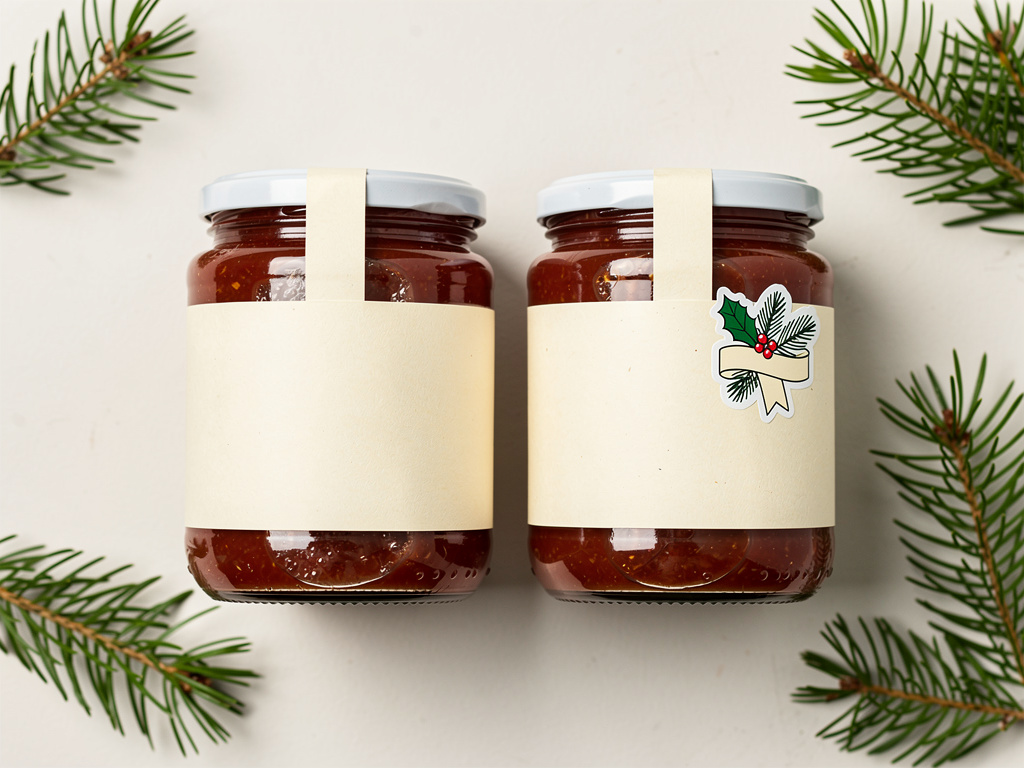


A seasonal or limited-edition label is one of the easiest ways to make a product feel special and timely, a pumpkin-spice fall run, a holiday gift edition, a summer-berry batch. The mistake most small vendors make is redesigning the whole thing from scratch every season, which is expensive, slow, and quietly erases the brand recognition they've built. The better move is to keep your brand's core fixed and change only a small, controlled seasonal layer. This guide walks through designing a seasonal limited-edition label that feels fresh without redoing your whole brand.
The short version: Lock down your brand's fixed parts, your logo, primary font, layout, product name treatment, dominant color, and all required legal label text, and vary only a small seasonal layer: one accent color, one motif or illustration, a "limited edition" callout, or an add-on sticker or band. That keeps the product instantly recognizable as yours while still feeling special. The cheapest approaches don't reprint your packaging at all, a seasonal sticker or stamp on your standard label, or a swappable accent in a reusable template. Never let a seasonal graphic crowd out or shrink your required label information below a legible size. Homegrown lets you list a limited-edition product as its own storefront listing you open for a season, though the design is yours to make.
This guide covers why seasonal labels work, what to keep versus change, cheap tactics, staying recognizable, protecting legibility, building a template, and mistakes. This is general information, not legal advice.
A seasonal or limited-edition label works because it adds novelty, urgency, and gift-timing to a product customers already like, giving them a fresh reason to buy now. It's a low-cost way to create an event around your product without changing what's inside.
Why it drives sales:
These are accepted marketing dynamics, scarcity, novelty, and timing, not a guarantee of a specific sales bump, so treat a seasonal run as a smart lever, not a magic one. The takeaway: a seasonal label turns your existing product into a timely event with built-in reasons to buy now. The rule is to use seasonality to create urgency and freshness, which pairs well with marketing seasonal products before they arrive.
The key to a seasonal label is a clean divide: keep your brand's core identifiers fixed and change only a small, controlled set of seasonal elements. This is the single decision that separates a recognizable seasonal edition from an accidental rebrand.
Here's the divide:
| Keep fixed (your brand) | Change seasonally (the layer) |
|---|---|
| Logo and wordmark | One accent color |
| Primary brand font | A seasonal motif or illustration |
| Label layout and grid | A "limited edition" or flavor callout |
| Product name treatment | An add-on sticker, stamp, or band |
| Dominant brand color | A short seasonal tagline |
| All required legal label text | (never changes) |
Why this split works:
The takeaway: keep the identity fixed, change only a thin seasonal layer, and the edition feels both fresh and unmistakably yours. The rule is to treat your brand as the constant and the season as a small overlay, never the other way around.
You add a seasonal look cheaply by not reprinting your packaging at all where you can avoid it, using add-on stickers, stamps, or bands on your standard label, or a single swapped element in a reusable template. Seasonal editions should cost you a little, not a full packaging redo.
The cheapest tactics, in order:
The takeaway: the most cost-effective seasonal labels add a cheap layer to what you already have rather than reprinting everything. The rule is to reach for stickers, stamps, and bands first, and reprint a full label run only when the volume truly justifies it, which keeps a seasonal push viable at small scale.
You keep a seasonal edition recognizably yours by anchoring it on your unchanging brand elements, your logo, font, layout, and dominant color, so the seasonal touches read as a variation on your brand, not a departure from it. Recognition is the whole point of a brand, and a seasonal run should reinforce it, not risk it.
How to protect recognition:
Consistency across your regular and seasonal products is exactly what makes a small brand look established, the same discipline behind your core color palette and brand fonts. The takeaway: a seasonal edition should look like your brand wearing a seasonal outfit, not a stranger. The rule is to anchor every seasonal design on your fixed identity so customers always know it's you.
You protect legibility by never letting a seasonal motif or color crowd out, shrink, or obscure the required information on your label, which stays exactly as clear as on your standard product. A seasonal look is never a reason to compromise the legal, functional part of a label.
What to protect no matter the season:
The takeaway: the seasonal layer is decorative and lives around the required information, never on top of it. The rule is that legibility and legal compliance are fixed constraints every season, and the details are in the guide on cottage food labeling requirements.
You build a reusable seasonal template by creating one master label file where your fixed brand elements are locked and only a defined seasonal zone is editable, so each new season is a quick swap rather than a fresh design. This turns seasonal labels from a recurring project into a five-minute update.
How to set it up:
The takeaway: a master template with a single editable seasonal zone makes each new edition fast, consistent, and cheap. The rule is to design the system once so every future season is an edit, not a rebuild, which is how a one-person brand keeps up without a design team.
The seasonal-label mistakes that hurt a brand are redesigning everything each season, letting the seasonal look bury your required information, and over-cluttering with too many festive elements at once. Avoiding this short list keeps a seasonal run an asset instead of a liability.
The mistakes to avoid:
The takeaway: the errors all come from doing too much, too expensively, or at the expense of legibility, and all are avoidable. The rule is to change little, protect the required information, and keep the seasonal push cheap and on time.
A seasonal edition works best when customers can actually find and buy it during its short window, which means giving it a clear home online for the season. Homegrown is a $10-per-month online storefront, with no percentage fees beyond standard payment processing, where you can list a limited-edition product as its own listing and open it for exactly the season you want.
You add your seasonal edition as a distinct product, with its own name, photo, and description, and feature it while it's available, then retire the listing when the season ends. That makes the limited run feel like a real event: here now, gone later. Because your storefront keeps clean records, you can also see how your fall or holiday edition sold, which tells you what to bring back next year. A flat monthly price means a strong seasonal push isn't eroded by per-sale percentage fees stacking up on every order, the way they would on a marketplace like Etsy.
To be clear about what Homegrown does not do: it is not a design tool, and it will not design your seasonal label, create your motif, or lay out your artwork. Those creative decisions are yours, using the process and free tools here. What Homegrown gives you is the storefront to list and sell your limited edition as a proper seasonal drop, open and close it on your schedule, and learn from how it did. Once your seasonal label is ready, set up your Homegrown storefront and launch your limited edition.
Keep your brand's fixed identifiers, your logo, primary font, label layout, product name treatment, dominant color, and all required legal text, exactly the same, and change only a small seasonal layer: one accent color, one motif or illustration, a "limited edition" callout, or an add-on sticker or band. That controlled change keeps the product instantly recognizable as yours while still feeling fresh and timely. The goal is a seasonal variation on your brand, not a new look each season, so vary one or two elements, never everything.
Don't reprint your packaging where you can avoid it. The cheapest approach is a seasonal sticker or wax stamp added to your standard label, so you only buy stickers for the seasonal batch. A paper belly-band wrapped around your regular container adds a big seasonal look for very little. If you do reprint, change just one accent color in a reusable template and print only the small seasonal run. Reserve a full label reprint for when your seasonal volume genuinely justifies the cost.
Anchor it on your unchanging elements. Never move your logo or change your font, keep the same label layout so customers' eyes find your name and product where they expect, and let your dominant brand color still lead, with the seasonal color as an accent rather than a replacement. Change only one or two things, like a single accent and one motif. When your fixed identity stays constant and only a thin seasonal layer changes, the edition reads as your brand in a seasonal outfit, not as a different company's product.
No. Your required information, ingredients, allergens, net weight, business details, and cottage food disclosure, must stay exactly as complete and legible on a seasonal label as on your standard one. Many state cottage food programs set a minimum type size, often around a 10-point floor, so a seasonal graphic can't shrink or crowd out that text, and a seasonal sticker or band must never cover it. Keep required text high-contrast and full-size, and confirm your seasonal version still meets your state's specific label rules before printing.
Create one master label file with your fixed brand elements, logo, font, layout, dominant color, and required text, all locked in place, then designate a single editable seasonal zone: the accent color, a motif slot, and a callout. Free browser-based tools like Figma support reusable components that let you change only that seasonal layer while everything else stays fixed, and free editors like GIMP work on no budget. Save each season's version so next year you can refresh last year's design instead of starting from scratch.
Limited-edition and seasonal products tap into well-established buying dynamics, scarcity that creates urgency, novelty that re-engages regulars, and timing that aligns with gift-buying, which give customers a reason to buy now rather than someday. That said, they're a lever, not a guarantee of a specific sales increase, so treat a seasonal run as a smart way to create an event around your product rather than a promise of a set boost. Plan and launch it ahead of the season's peak so it lands while the demand is there.
A seasonal label is a chance to make your product feel special without spending on a rebrand or losing the recognition you've built. Keep your brand fixed, change a thin seasonal layer, protect your required information, and keep it cheap with stickers and templates. Start your Homegrown storefront and give your next limited edition a place to shine.



