
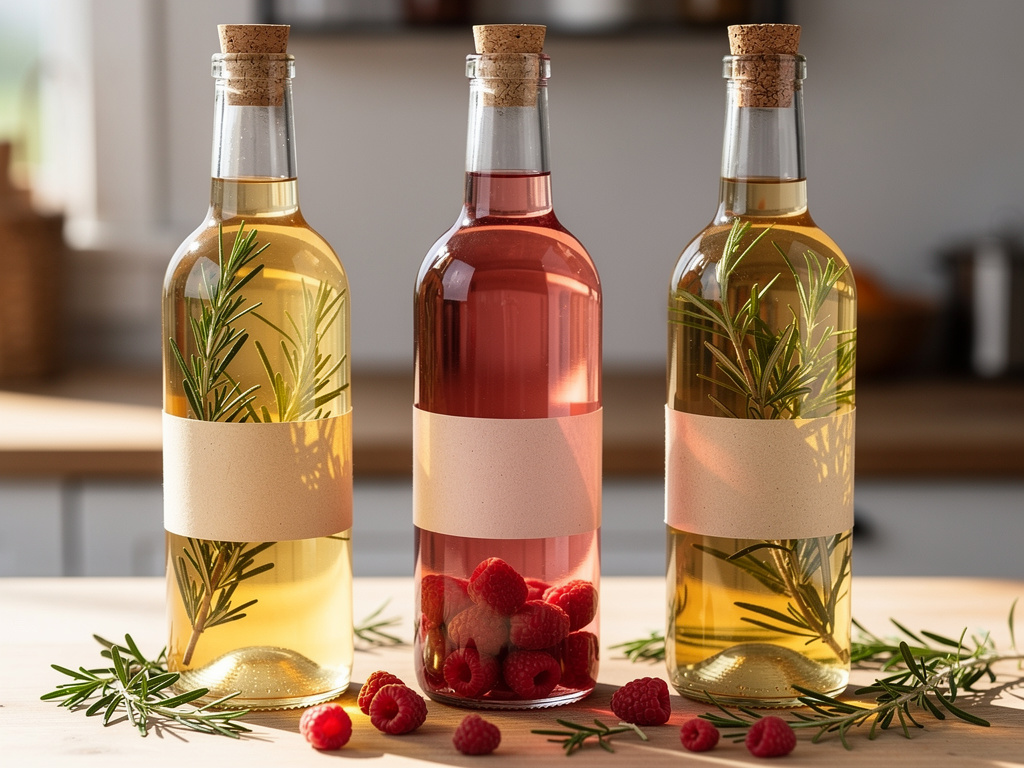


The short version: You can sell homemade vinegar from your own kitchen in 6 of the 7 states we checked, but each state draws the line in a different place. Florida, Michigan, Texas and Virginia allow vinegar and flavored vinegar, California allows plain vinegar and infusions made only with high-acid fruits, Washington allows only vinegar you bought from an approved source and rebottled, plain or with fruit or herbs added, and Ohio leaves vinegar off its list. The easiest product is a flavored vinegar made from store-bought vinegar, because TTB, the federal alcohol tax agency, says anyone making vinegar commercially from fresh fruit or juice must qualify as a bonded wine cellar. FDA expects any vinegar to carry at least 4 grams of acetic acid per 100 mL, which is 4% acidity.
Checked on the state agency pages, TTB's alcohol FAQ and FDA's vinegar policy guide, October 1, 2026: rules change between legislative sessions, so verify your state's current rules with its agency before you sell a bottle. If you take orders on Homegrown, your customers create a Homegrown account to place their first order.
You have a gallon jar of apple scraps turning sour on the counter, or a shelf of raspberry vinegar that friends keep asking to buy. Before you put a price sticker on a bottle, it helps to know that vinegar sits in an odd legal spot. It keeps safely on a shelf, so the home-kitchen lists we checked treat it as a low-risk food. But the way you make it can pull in a federal alcohol agency, and two of the states we checked allow only a narrow version of it.
This guide walks through the rules in plain terms: which kind of vinegar you are making, what 7 states said when we loaded their pages on October 1, 2026, the federal acid and alcohol rules, what goes on the label, and how to take orders once you are allowed to sell.
Yes, in 6 of the 7 states whose agency pages we loaded on October 1, 2026, a home kitchen can sell at least one kind of vinegar. Florida and Michigan name "vinegar and flavored vinegars" on their lists, and Virginia names "vinegars and flavored vinegars." Texas no longer keeps a list at all: since September 1, 2025 it allows any food except six named categories, and vinegar is not one of them. California lists plain vinegars and fruit-infused vinegars made with high-acid fruits. Washington allows vinegar only if you buy it finished and rebottle it, plain or with fruit or herbs added. Ohio's list of 20 cottage foods does not include vinegar at all.
So the honest answer is "probably, but read the fine print for your kind of vinegar." The fine print matters more for vinegar than for cookies, because "homemade vinegar" covers three very different products:
If you already know you want to ferment apple cider vinegar from scratch, our guide on how to make and sell apple cider vinegar from home covers the fermenting, the equipment and the pricing. This page sticks to whether you are allowed to sell it and what the rules ask of you.
The kind of vinegar you make decides which rules apply, and the four common types below land in four different places. A flavored vinegar made from a bottle you bought is the simplest case, allowed in some form in 6 states on our list. A vinegar you ferment from fresh fruit is the hardest, because federal alcohol rules apply before any state rule does.
Slide the table sideways to compare the four kinds of vinegar.
| Type of vinegar | How it is made | Example | Home-kitchen status (FL, TX, CA, MI, WA, VA, OH) | Federal alcohol rules (TTB) |
|---|---|---|---|---|
| Flavored or infused vinegar from store-bought vinegar | Fruit, herbs or spices steeped in a finished commercial vinegar | Raspberry white wine vinegar, tarragon vinegar | Allowed in FL, MI, TX, VA and WA; California approves only high-acid fruit infusions; not on Ohio's list | No alcohol stage happens in your kitchen, so TTB's vinegar rules do not come up |
| Vinegar fermented from fresh fruit or juice | Juice ferments to alcohol, then bacteria turn the alcohol into acetic acid | Apple cider vinegar from your own apples | Listed as "vinegar" in FL, MI, VA and CA, and not excluded in TX; not allowed under Washington's permit, which covers only rebottled vinegar | TTB calls it nonbeverage wine: bonded wine cellar, approved formula, records |
| Vinegar made from wine or beer you bought | A vinegar culture added to bottled wine or beer on which tax was paid | Red wine vinegar from a case of table wine | Same as plain vinegar in FL, MI, TX, VA and CA; not covered by Washington's rebottle-only rule; not on Ohio's list | Not regulated by TTB when the excise tax on the wine or beer was paid |
| Shrubs and drinking vinegars | Fruit and sugar mixed with vinegar into a syrup | Strawberry shrub | Unclear on most lists; Washington allows no beverages and Michigan bars simple syrups | Depends on how the vinegar inside was made |
State status from the Florida, Texas, California, Michigan, Washington, Virginia and Ohio agency pages; TTB status from TTB's alcohol FAQ, question G7. All loaded October 1, 2026.
The top row is the easiest place to start. You skip the months of fermenting, you know the starting acid strength from the bottle you bought, though fruit adds water, so measure again after infusing, and you stay clear of the federal alcohol question entirely.
States treat vinegar as low risk because it keeps safely on a shelf. Washington's agriculture department lists "vinegars" among its "non-potentially hazardous products," and Michigan's FAQ lists vinegars among foods that "can be safely kept at room temperature and do not require refrigeration." Neither page names acidity as the reason, but the federal definitions show where vinegar sits. FDA's acidified foods rule, 21 CFR 114.3, puts the line between acid and low-acid foods at a pH of 4.6 and defines acid foods as "foods that have a natural pH of 4.6 or below." Store vinegar at 5% acidity starts out far below that line, so it does not need the tested recipes, pH logs and process reviews that pickles do.
The split shows up in Washington, which turns pickles away but lists rebottled vinegar. In our guide to selling homemade pickles, Washington and Ohio both said no to pickled vegetables. Washington still allows rebottled vinegar with fruit or herbs added, while Ohio leaves vinegar off its list as well. Under the federal definitions, a pickle is a low-acid vegetable that has to be made acidic, while vinegar is acidic on its own.
The same federal rule also explains why a few herbs in a bottle do not change the answer. Section 114.3 excludes "acid foods ... that contain small amounts of low-acid food(s)" when the finished pH "does not significantly differ" from the acid food it started as. Three points follow from that wording:
If your recipe adds more low-acid produce than a sprig or a handful, treat it like a pickle and check your state's acidified food rules, not its vinegar line.
Six of the 7 states we checked allow some form of homemade vinegar, and the five that set a yearly cap run from $35,000 in Washington to $250,000 in Florida. The table below puts each state's answer, permit, cap and online rule side by side. Every row comes from the state's own agency page or rule, loaded on October 1, 2026.
Drag the state table sideways for each permit, cap and online rule.
| State | Plain vinegar | Flavored or infused | Permit or registration | Yearly sales cap | Online orders and shipping |
|---|---|---|---|---|---|
| Florida | Yes, "vinegar and flavored vinegars" | Yes | No food permit from the state agriculture department | $250,000 | Website, mail order and in person; no wholesale |
| Texas | Yes, not among the six excluded categories | Yes, not excluded | No permit or fee for direct sales; food handler training required; registration optional | $150,000 | Online orders only when you, an employee or someone in your household delivers in person; label details posted on your site before you take payment |
| California | Yes, "vinegars" | Only high-acid fruit infusions | Class A registration or Class B permit from your county environmental health office; training within 3 months | $88,878 (Class A) or $177,756 (Class B) in 2026 | Class A sells direct by phone or internet, delivered in person or by mail |
| Michigan | Yes, "vinegar and flavored vinegars" | Yes | No license or inspection | $50,000, or $75,000 if your products sell for $250 or more each | Internet or mail orders if the customer can reach you before the sale; sales and delivery within Michigan only |
| Washington | Only rebottled vinegar that came from an approved source | Yes, with fruit or herbs added | $355 permit for two years, plus a home kitchen inspection | $35,000 | Orders can be taken online, but delivery and payment must be person to person; no shipping, no wholesale. The same agriculture department page also lists Internet sales and sales outside Washington as prohibited, so get its answer in writing first |
| Virginia | Yes, "vinegars and flavored vinegars" | Yes | No state inspection and no $40 annual fee | None stated for this low-risk category | No online sales, no shipping, no sales across state lines; sell only from your home, at farmers markets or at events that run 14 days or fewer, and never to stores or restaurants |
| Ohio | No, not on the 20-food list | No | Not available under the home-kitchen rule | Not applicable | Not applicable |
Sources, all loaded October 1, 2026: Florida Department of Agriculture and Consumer Services cottage foods page; Texas Department of State Health Services cottage food page and Senate Bill 541; California Department of Public Health approved list (last reviewed April 2026) and its 2026 adjusted sales limit sheet; Michigan Department of Agriculture and Rural Development cottage food pages; Washington rule WAC 16-149-120 and the state agriculture department's cottage food page; the Virginia agriculture department's home kitchen fact sheet (revised July 2024); Ohio Administrative Code 901:3-20-04.
Yearly home-kitchen sales caps, 2026
Source: the state agency pages in the table above, loaded October 1, 2026. California's caps are the 2026 inflation-adjusted figures ($88,878 and $177,756). Virginia's fact sheet states no cap for vinegar, and Ohio does not allow it.
A cap is the most you can sell in a year and still count as a home kitchen. For a part-time vendor these are far off: at $12 a bottle, Washington's $35,000 cap is about 2,900 bottles a year. If you live in Ohio, the home-kitchen route is closed for vinegar, so the question to ask the Ohio Department of Agriculture's food safety division is what license a commercial kitchen would need.
California's own cottage food web page still said "$75,000" and "$150,000" when we loaded it on October 1, 2026. The state's 2026 adjusted sales limit sheet, linked from that same page, sets the caps at $88,878 and $177,756. The sheet is the one that adjusts for inflation each January.
California allows plain vinegars and vinegars infused with high-acid fruits, and its list names nothing else in the vinegar family. The state health department's Approved Cottage Foods list, last reviewed in April 2026, has a category called "Vinegars and Mustards." It names vinegars, plain mustards made without eggs, and "fruit-infused vinegars (only high-acid fruits such as" apple, blackberry, cherry, lemon, peach, raspberry, strawberry and 18 more.
The Approved Cottage Foods list allows "fruit-infused vinegars (only high-acid fruits)" and gives 25 example fruits. It does not name herb, garlic, pepper or spice infusions, and a 2022 University of California fact sheet on vinegar listed flavored vinegars with herbs or spices as not allowed. That sheet said the same about fruit, which the current list now allows, so treat it as a sign of caution rather than the rule. Ask your county environmental health office before you sell a rosemary or garlic vinegar.
Here is what that means for a California vendor in practice:
California runs two classes. Class A sells straight to the customer, including by phone and internet. Class B can also sell through restaurants and stores. The 2026 caps are $88,878 for Class A and $177,756 for Class B.
Washington's cottage food rule allows vinegar only when you buy it finished from an approved source and rebottle it at home. The rule, Washington Administrative Code 16-149-120, lists "vinegars that are obtained from approved sources and are rebottled in the cottage food operation" and adds that "flavors such as fruits and herbs may be added." It does not list vinegar fermented from scratch in your kitchen.
The state agriculture department charges $355 for a two-year cottage food permit and inspects your kitchen before it is issued. A failed inspection costs $125 to repeat, and adding a product later costs a $30 processing fee plus a $75 review fee. Sales are capped at $35,000 a year. We loaded both pages on October 1, 2026.
Washington's rule lists only rebottled vinegar, so a vinegar you ferment from your own pressed apples is not on it. Ask the department before you apply. For any product the cottage rule does not allow, including vinegar you ferment yourself, the department points vendors to its food processor license instead.
What a Washington vinegar vendor needs before the first sale:
Florida and California allow online orders with mail delivery, Texas and Michigan allow online orders with limits, Washington's agriculture department gives two different answers on its own page, and Virginia does not allow online sales of home-kitchen vinegar at all. This is where the 7 states split hardest, and it decides whether an online storefront helps you or not.
Shipping glass is its own problem even where it is legal, because every bottle needs padding and a box that survives a drop. Pickup at a market, a farm stand or your porch avoids that cost entirely.
Yes, if you sell vinegar you fermented from fresh fruit or juice. TTB requires anyone who makes that vinegar commercially to set up a bonded wine cellar first. TTB, the Alcohol and Tobacco Tax and Trade Bureau, collects the federal tax on wine, beer and spirits. Vinegar from fruit passes through an alcohol stage on its way to being vinegar, and TTB treats that stage as wine.
TTB's alcohol FAQ, question G7, says it plainly: "If you make vinegar from fresh fruit or juice, (this type of vinegar is classified as nonbeverage wine) you must" set up a bonded wine cellar with TTB, get approval for your formula, and keep records and file reports. In plain terms, a bonded wine cellar is the same federal status a winery holds: you file an application and a bond with TTB, and your production site is registered with the agency. The excise tax is $0 if you make only finished vinegar under the approved formula. You also do not need the separate wine permit that beverage wineries hold.
TTB's FAQ G7, loaded October 1, 2026, does not list a size exemption for small vinegar batches. The federal home winemaking allowance does not help either: 27 CFR 24.75 lets an adult make wine "for personal or family use and not for sale," and says it "may not under any circumstances be sold or offered for sale." None of the 7 state agency pages we loaded mention TTB, so a state yes does not settle the federal question.
There are two clean ways around it, and both come straight from the same FAQ:
Planning to sell vinegar fermented from your own orchard's apples? Call TTB before you sell a bottle. The bonded wine cellar application goes through TTB's Permits Online system.
FDA expects anything sold as vinegar to reach at least 4% acidity, which the agency writes as 4 g of acid in every 100 mL. There is no formal federal standard of identity for vinegar, so this comes from FDA's compliance policy guide on vinegar, CPG Sec. 525.825, which the agency still treats as current policy for labels. It says each listed kind of vinegar "should contain 4 grams of acetic acid per 100 mL," and that a vinegar cut with water must say "diluted with water to ___ percent acid strength," never below 4%.
Most white and cider vinegars on store shelves are 5% acidity, though not all, according to Penn State Extension, and some labels call that 50 grain. The federal wine rules define grain strength as 10 times the acid content in grams per 100 mL, so 4% is 40 grain and 5% is 50 grain.
Home-fermented vinegar is where this gets hard. Penn State Extension tells home canners, "Do not use homemade vinegar when pickling. The acidity of homemade vinegar is not consistent." Three habits keep you on the right side of the 4% line:
FDA's guide also calls vinegar eels, tiny worms that can live in raw vinegar, a reason to treat finished bottles as adulterated. Filter or strain every batch before it goes into a bottle you sell.
Every state we checked that allows vinegar requires a label, and the lists overlap: who made it, where, what it is, what is in it, plus a home-kitchen statement. The exact statement changes by state, so copy it word for word from your own state's page. Here is what the Texas health department's cottage food page lists:
Virginia's fact sheet asks for your name, physical address and phone number, the date the product was processed, and a statement that begins "NOT FOR RESALE" and ends "PROCESSED AND PREPARED WITHOUT STATE INSPECTION." It also expects the standard parts of any food label, like the net weight and the ingredient list.
FDA's vinegar guide adds two naming rules that matter for home vendors. "Cider vinegar" means vinegar made from the juice of apples. Vinegar made from apple cores or peels should be labeled "vinegar made from apple peels" or "vinegar made from apple cores," not "apple cider vinegar." If you dilute a vinegar with water, the label has to state the acid percent, and it can never read below 4%. Our cottage food labeling requirements guide walks through ingredient order, net quantity and allergen wording in more detail.
No. Sweet drinking vinegars are harder to get approved from a home kitchen than plain or flavored vinegar. A shrub is fruit, sugar and vinegar made into a syrup you mix into drinks. Some home-kitchen lists treat drinks and syrups as their own categories, separate from vinegar, and keep them off the list.
Washington and Michigan, 2 states on our list, spell it out:
If you want to sell shrubs anyway, our guide on how to sell shrubs and drinking vinegars covers recipes, costs and pricing. Get your state's answer in writing first, because a "vinegar" approval does not automatically cover a sweet fruit syrup.
In 4 of the 6 states that allow homemade vinegar, the state charges nothing to start: Florida, Texas, Michigan and Virginia. Washington charges $355 for a two-year permit, and California leaves the fee to each county's environmental health office.
Swipe left to see what each state charges.
| State | State fee to start | Other costs named on the state's page |
|---|---|---|
| Florida | $0, no food permit | Labels and packaging; all state and federal tax rules still apply |
| Texas | $0; local health departments may not charge a fee for direct sales | An accredited food handler course; optional registration to use an ID number on your label |
| Michigan | $0, no license | Keep sales records to show an inspector on request |
| Virginia | $0, and no $40 annual inspection fee | None named; each label carries the date the vinegar was processed |
| Washington | $355 for two years | Food Worker Card, Master Business License, $125 for a repeat inspection, $30 plus $75 to add a product |
| California | Set by your county | Cottage food operator training within 3 months |
Fees from each state's agency page, loaded October 1, 2026. We did not price the training courses or county fees, which vary.
The bigger cost is the federal one if you ferment from fresh fruit. A bonded wine cellar means a TTB application, a bond and ongoing reports. That paperwork is a good reason to flavor finished vinegar instead.
Once your state says yes, the work shifts to taking orders in a way your state's delivery rule allows. Vinegar suits pre-orders: a regular reserves a bottle for Saturday pickup, and you bottle only what is spoken for.
Homegrown costs $10 a month billed annually ($12.50 billed monthly) with no percentage fees beyond standard payment processing. Customers order and pay ahead, then pick up at your farmers market, farm stand or porch where your state allows those spots, or you deliver within a zone you set from 1 to 25 miles. That local delivery fits Texas, where online orders must be delivered in person. Each listing has a place for ingredients and allergens. In Texas that field alone does not cover the rule, which asks for all the label information before you take payment, so paste your full label text, including your business name and the private-residence statement, into the listing description. Size options like an 8-ounce and a 16-ounce bottle can each carry their own price under one listing, and your home address stays hidden until after purchase.
Here is how the fees compare with two places vinegar vendors often consider:
Move the fee table sideways to see every platform's full cost.
| Platform | Monthly plan | Trial | Platform fee | Card processing | Customer pays on a $20 order | Vendor pays on a $20 order | Vendor pays in a month of 50 orders at $20 |
|---|---|---|---|---|---|---|---|
| Homegrown | $10 billed annually ($12.50 billed monthly) | 7 days, no charge until day 8 | None, 0% commission | 2.9% + $0.30, paid by the vendor | $20.00 | $0.88 plus the plan | $54.00 billed annually ($56.50 billed monthly) |
| Etsy | None; a one-time shop set-up fee may apply | None (pay per listing) | $0.20 listing fee plus 6.5% transaction fee; 15% Offsite Ads fee on sales from those ads | 3% + $0.25 (US), paid by the vendor | $20.00 plus shipping | $2.35 | $117.50 |
| Square Online, Free plan | $0 | None (plan is $0) | None | 3.3% + $0.30 online, paid by the vendor | $20.00 | $0.96 | $48.00 |
We checked these on Homegrown's signup page, Etsy's seller page and Square's pricing page on October 1, 2026. Processing is figured on the $20 price only. Etsy's 6.5% transaction fee also applies to the shipping price you set, so $8 of shipping adds $0.52 to each order, or $26 across 50 orders, before any processing charged on that shipping. Etsy's $2.35 is $1.30 transaction fee, $0.85 processing and a $0.20 listing fee for the item sold.
Square's free plan costs a vendor a little less than Homegrown at 50 orders a month, and Etsy costs more than twice as much. If you list on Etsy, check that you can deliver the way your state requires: Washington and Virginia bar shipping home-kitchen vinegar, Michigan keeps sales inside the state, and Texas wants online orders delivered in person. Square's free plan is a general checkout for any kind of business. Homegrown is built around local pickup, with pickup days and time windows you set for each market or spot, and it calculates and files sales tax for you.
What Homegrown does not do matters just as much:
If your state allows online orders with local pickup, set up a Homegrown storefront and list your first vinegar with the label details right on the page.
The five habits below follow straight from the state rules and the federal guide above: keep the product simple, the records tight and the claims modest.
Plan bottles from the gallon you buy. One gallon is 128 fluid ounces, so it fills 16 eight-ounce bottles or 8 sixteen-ounce bottles, minus whatever the fruit or herbs soak up. Buy two gallons for your first market and you have about 32 small bottles to sell or sample.
In a pull of the Homegrown catalog on October 1, 2026, 2 of the 2,753 products from 309 vendors were vinegar sold as vinegar: KairosGO's 32-ounce Apple Cider Vinegar at $7.99, made from the farm's own apples, and Heavenly Fresh Fruits' Brunos Red Wine Vinegar at $12.50. We searched every product name and description for vinegar, shrub, oxymel, fire cider, switchel and balsamic, then read all 25 matches. The other 23 use vinegar as an ingredient (hot sauces, pickled garlic, jams, bread) or mention it in a serving tip. No vendor listed a shrub or a flavored vinegar, so the shelf is close to empty.
You can get a reliable answer in one afternoon if you go straight to your state's own pages instead of a blog summary, and 6 steps cover it. Our state-by-state cottage food laws guide points to each state's agency, and these six steps take it from there:
When the answer is yes and your state allows online orders with local pickup, the last step is giving regulars a way to reserve a bottle. A Homegrown storefront for your vinegar takes about 15 minutes to set up and costs $10 a month, with your pickup days and the ingredient details from your label on every listing.
Yes in six of the seven states on our list, as long as your kind of vinegar fits your state's rules. Florida, Virginia, Michigan and Texas allow vinegar and flavored vinegar, California allows plain vinegar and high-acid fruit infusions after you register with your county, and Washington requires a $355 permit and allows only rebottled vinegar. Ohio's home-kitchen list leaves vinegar out.
It depends on your state and on how much you add. Michigan, Florida, Virginia and Washington allow flavored vinegars, and Washington lets you add fruit or herbs to rebottled vinegar. California's approved list names only high-acid fruit infusions. A bottle packed with garlic or peppers may count as an acidified food under 21 CFR 114.3, with the pickle rules that come with it, so keep additions small or ask your state.
Only after TTB approval. Florida, Texas, Michigan, Virginia and California allow plain vinegar at the state level, and Washington's rebottle-only rule does not cover it. But TTB treats vinegar fermented from fruit as nonbeverage wine, so TTB requires a bonded wine cellar before you sell homemade vinegar from scraps. FDA's vinegar guide adds a naming rule: vinegar from apple cores or peels should be labeled "vinegar made from apple cores" or "vinegar made from apple peels," not "apple cider vinegar."
Penn State Extension says not to. It tells home canners not to use homemade vinegar for pickling because its acidity is not consistent, and tested canning recipes call for 5% acidity. Leave "pickling vinegar" off your label unless every batch is measured.
Your state's online rules decide it first. Virginia bars online sales of home-kitchen vinegar, Washington bans shipping, Michigan allows sales only within the state, and Texas requires personal delivery for online orders. Etsy charges a $0.20 listing fee, a 6.5% transaction fee and 3% + $0.25 processing on a US sale, checked October 1, 2026.
At the state level, Michigan, Florida, Virginia and Texas need no license for it, California needs a county registration, and Washington's home permit does not cover vinegar you ferment yourself. At the federal level, TTB says a business that ferments vinegar from fruit or juice must register a bonded wine cellar and get a formula approved. Calling it raw or "with the mother" describes the product; keep cure-style health claims off the label.
These 6 guides pick up where the rules leave off, from fermenting your first batch to labeling every bottle. Each one is written for a part-time vendor selling from a home kitchen, a farmers market table or a porch pickup shelf.



