


The short version: Yes, you can sell succulents and cactus you grow at home from leaves, cuttings, pups or seed, but plants answer to your state's department of agriculture, not the health department. In the six states checked for this guide, the plant license fees listed for a small home grower ran from $0 to $330 a year, the top being a Texas vendor at a weekly market who buys extra event permits, and California and Nevada let some growers under $1,000 a year in sales skip the fee. Cactus dug from the wild is a different matter: Arizona and parts of California require permits to remove native cactus, Nevada requires the landowner's written permission plus a permit for commercial harvests, and a saguaro over four feet tall needs an Arizona permit, an $8 tag and a seal to be moved. A saguaro you grew from seed is exempt from that saguaro rule, so the line that matters is grown versus dug.
Checked October 10, 2026: the agriculture department pages and plant laws of Arizona, California, Nevada, New Mexico, Texas and Florida, the federal Endangered Species Act, Lacey Act and plant patent law, USPS Publication 52, a live pull of Homegrown's catalog, and the fee pages of Homegrown, Square and Etsy. Honest bounds: six states are examples, not the whole country, and fees change every year. Homegrown customers create an account to place a first order, Homegrown storefronts are set up for pickup and local delivery rather than shipping, and there is no drop or countdown release feature.
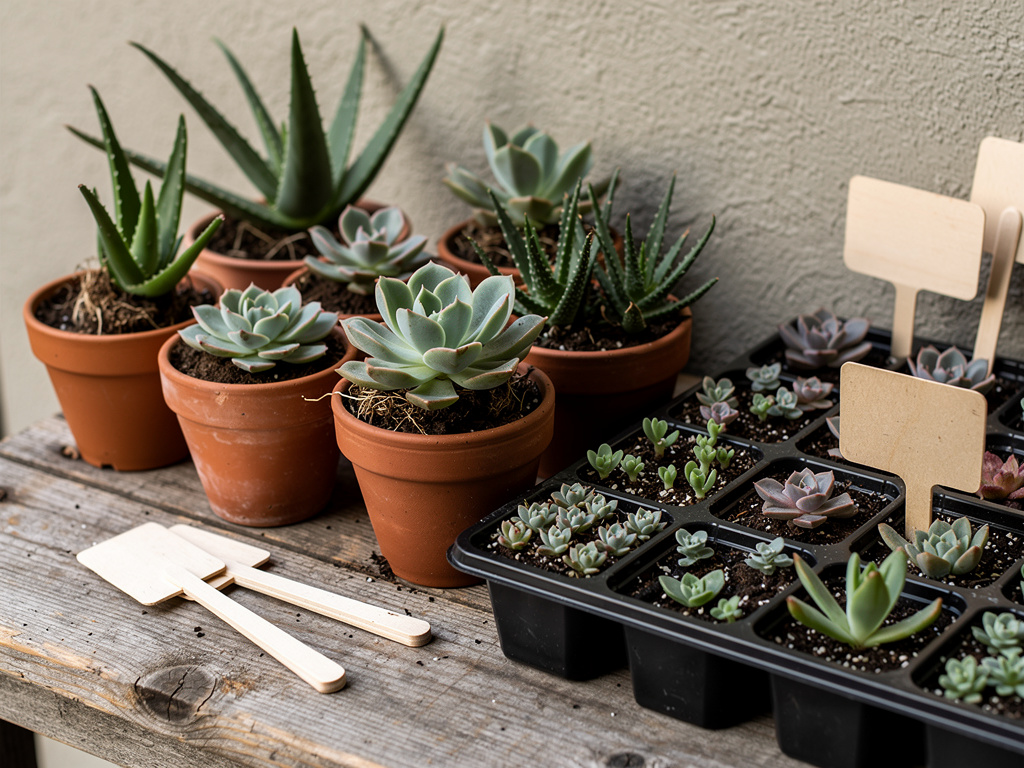
You knocked a few leaves off an echeveria, laid them on a tray, and two months later you have 40 tiny rosettes. Your aloe threw six pups. A neighbor's prickly pear dropped a pad that rooted in your gravel. Now a coworker wants to buy a few, and the Saturday market has an open table. Before you print a price sign, it helps to know which office regulates a 2-inch pot of succulents, and where the law draws a hard line.
This guide covers the rules only: licenses, wild cactus laws, patents, shipping and sales tax, as written on October 10, 2026. For what to charge, our guide on how much to sell succulents for prices them by pot size, from about $5 for a 2-inch pot. For a 10-state look at plant licenses in general, the guide to selling homemade seedlings lists the license rules for Washington, Maine, Georgia and seven more.
Yes: all six states checked for this guide let a home grower sell succulents and cactus they propagated, and four of the six ask for a plant license or registration first, while Nevada asks most vendors for one but exempts occasional hobby sales. A plant license is a yearly registration with the state agriculture department that lets you sell live plants. It usually comes with the right of an inspector to look at your plants for pests. In the 5 states that listed a fee on the pages checked October 10, 2026, the standard fee for a small grower ran from $35 to $300 a year.
The rules that do not apply are worth knowing too. A potted echeveria is a plant, not food, so you will not deal with:
Instead you deal with two kinds of plant rules. The first is the nursery license, which exists to keep insects and plant diseases from riding into a new county on your pots. The second only matters for cactus and a few other desert plants: native plant laws that stop people from digging wild plants and selling them. A cactus you grew from a pup in your own pot and a cactus pulled out of the desert can look identical on a market table, and the law treats them very differently.
The rest of this guide takes those two rules in order, then covers patents, shipping and sales tax.
Your state department of agriculture regulates a potted succulent, because state law counts plants grown for sale as "nursery stock," and that term is broad enough to cover a single 2-inch pot. Many home growers picture a nursery as a farm with greenhouses. The legal definition is about what you sell, not how big you are.
Here is how three states put it, on pages loaded October 10, 2026:
So in all 3 states, a tray of 40 rooted echeveria leaves headed for $5 pots counts. Cuttings count too, since Arizona lists "cuttings" in the same definition. The practical reason is pests: an insect riding on one tray of succulents can end up in every yard those pots go home to. States license plant vendors so they know who is selling and can send an inspector to look before that happens.
In 4 of the 6 states checked, yes: California, New Mexico, Texas and Florida ask a home grower to hold a plant license or registration before selling, with a fee waiver in California for sales under $1,000. Nevada licenses most plant vendors but exempts occasional hobby sales. Arizona's agriculture department describes market sales with records and labels and lists no license for them.
The six states fall into three groups:
If you sell succulents and nothing else, assume you need a license until your state's own page says you do not, and keep a copy of that page or the agency's written answer with your records.
The six states read on October 10, 2026 split from no license named in Arizona to a yearly license or registration in four states, with Nevada in between. The table puts each state's plant license and its wild cactus law side by side, since a succulent vendor in the Southwest deals with both.
Scroll sideways to see every column.
| State | Plant license for a home grower | Small-grower exemption on the state's page | Yearly cost for a small grower | Wild cactus law | Agency |
|---|---|---|---|---|---|
| Arizona | None named for in-state market sales; keep records, label plants, no buyers carrying them out of state | Not needed; grower certification is voluntary | $0 for in-state sales | Yes: every native cactus is protected; permit, tags and seals to remove one | Arizona Department of Agriculture |
| California | License to Sell Nursery Stock | No fee under $1,000 a year if you grew every plant, told the county agricultural commissioner and sell in your own county; plants sold only for indoor decoration are exempt | $300 with one sales location ($150 minimum plus $150 per location), $150 with no sales location (the application has a box for none), or $0 if fee-exempt | Yes, in 8 desert counties: permit from the county to harvest any cactus | California Department of Food and Agriculture |
| Nevada | Nursery stock dealer license for most plant vendors | Hobby growers with occasional sales (under $1,000 a year) and no advertising; indoor decorative plants; a no-fee waiver under $1,000 a year | $0 with the waiver; $75 a location for an occasional-sales vendor (under $1,000 a year) without the waiver; $175 a location above that, plus $25 for each acre after the first, up to $250 more (NAC 555.1098) | Yes: every cactus; written landowner permission to remove any, plus registration, $2 tags and a shipping permit once you remove 6 or more in a day, or fewer each day on 7 or more straight days | Nevada Department of Agriculture; Nevada Division of Forestry for wild cactus |
| New Mexico | Nursery Inspection Certificate for anyone who grows and sells | A Farmers Market Inspection Certificate held by a market or growers cooperative covers its registered vendors, who must grow the plants on land they own or lease and sell them only at that market | $75 plus $2 an acre of growing area to sell outside a registered market; the market certificate's fee is not listed on the page checked | Yes, for cacti on the state endangered plant list | New Mexico Department of Agriculture; State Forestry for endangered plants |
| Texas | Nursery Floral license for every location that grows or sells plants, including online | None on the page checked | $110 for a grower on 10 acres or less (Class 2); $180 for Class M, listed for temporary-market vendors that do not grow | Not covered in this guide | Texas Department of Agriculture |
| Florida | Nursery registration for anyone growing plants for sale | None on the page checked | From $35, based on inventory or acreage | Not covered in this guide | Florida Department of Agriculture and Consumer Services |
We read each state's own pages on October 10, 2026: Arizona's Plants FAQ and native plant page, California's licensing sheet (revised November 18, 2025) and fee-exempt license form (revised September 2024), Nevada Revised Statutes chapters 527 and 555, New Mexico's nursery licensing page and its license form for October 1, 2026 to September 30, 2027, the Texas Nursery/Floral page and FAQ, and Florida's nursery registration page. "Not listed" means the page we loaded gave no fee; call the agency before you assume it is free.
The Texas Department of Agriculture's Nursery/Floral program page lists Class M at $180 a year for vendors at temporary markets such as flea markets and plant shows, with 30 one-day event permits included and more at $50 for each block of 10. Its FAQ also says a license is needed to sell plants on any website. Class 1 to 4 licensees can use event permits only at trade shows, garden shows or other horticultural exhibits, so ask the department which class fits if you grow at home and sell at a weekly market.
In the Southwest a cactus can fall under two sets of rules: the state's nursery rules for any plant you sell, and its native plant law for any plant dug from the wild. The cheapest legal path in the two states with a fee waiver depends on staying small and local: under $1,000 a year and, in California, sold in your own county.
For a small home grower, the plant license fees listed by the six states checked run from $0 to $330 a year, the top being a Texas vendor at a weekly market who buys extra event permits, and the cost per plant drops fast once you sell more than a few hundred pots. The chart shows each state's yearly cost for a grower selling from home or at a market.
Yearly plant license cost for a small succulent grower
Source: each state agriculture department's own pages, checked October 10, 2026. Nevada is $0 with its occasional-sales waiver, $75 for an occasional-sales vendor who skips the waiver, and $175 a location above $1,000 a year, plus $25 for each acre after the first. California is $0 with the fee-exempt license under $1,000 a year, and $150 for a licensee who lists no sales location. Texas Class M is $180, and the department's chart marks it as a class that does not grow. New Mexico's $75 is for a grower selling outside a registered farmers market and adds $2 for each whole acre grown, which is $0 for a backyard under an acre.
Here is what those fees mean at $5 a pot, the starting price for a 2-inch succulent in our pricing guide:
The fee-exempt route in California comes with a catch: the plants must be sold "for planting within the county of production," according to the state's fee-exempt license form. Selling at a market one county over, or mailing pots across the state, takes you out of it.
Sometimes, and it matters, because California and Nevada both exempt plants sold only for indoor decoration from their nursery license rules. California's Food and Agricultural Code section 6743 exempts "any retail florist or other person that sells plants at retail for indoor decorative purposes only." Nevada's statute exempts people "who sell potted, ornamental plants intended for indoor decorative purposes."
The catch is the word "only." Nevada's regulation, NAC 555.1093, reads that phrase to mean "plants that are cultivated exclusively for indoor use." Many succulents are not: aloe, agave and prickly pear are sold for garden beds as well as windowsills, and a vendor selling them for rock gardens and patio pots is selling plants for planting.
A fair way to sort your table:
Of the states checked, California and Nevada write an indoor exemption into the license law. If your whole table is indoor arrangements, ask your state agriculture department whether the exemption covers you, in writing. If you sell even a few garden succulents, plan on the license. In Nevada, the exempt vendor still has to register each year by July 1 with the location, size and type of nursery stock, under NRS 555.236.
It is legal to sell a saguaro you grew from seed, and illegal to sell one taken from Arizona land without a permit, tags and the landowner's consent. Arizona's native plant law protects plants "growing wild on state land or public land or on privately owned land without being propagated or cultivated by human beings," under Arizona Revised Statutes section 3-903. A saguaro raised in a pot is outside that definition.
Arizona's rules list every native cactus as protected. The state's protected plant appendix says that "all other species" in the cactus family, beyond the ones named, are "salvage restricted protected native plants." That covers saguaro, barrel cactus, prickly pear, cholla, hedgehog cactus and the rest when they grow wild.
The core rule is in Arizona Revised Statutes section 3-906: "a person shall not take, transport or possess any protected native plant taken from the original growing site in this state without possessing a valid permit." The same section adds a saguaro rule. Anyone who moves a saguaro more than four feet tall from somewhere other than where it grew must buy a permit, tag and seal, unless there is a record of a previous legal move. Then it says plainly: "Saguaro cacti that are propagated by humans are exempt from the requirements of this subsection."
The Arizona Department of Agriculture's native plant page listed these fees on October 10, 2026: a one-time-use permit $7, a saguaro tag $8, a tag for other protected native plants $6, pincushion, Coryphantha and Mammillaria cactus tags $0.50, and a seal $0.15 per plant. The department also says plants "cannot be removed from any lands without permission of the owner and a permit." Owning the land does not get you out of it: a landowner may sell a plant growing there, but a protected plant still cannot be taken from its growing site without a permit.
Under Arizona Revised Statutes section 3-932, taking protected native plants from private or state land without the landowner's consent is theft. It is a misdemeanor under $500 in value and a felony from $500 up, rising to a class 4 felony at $1,500 or more. Moving protected plants without the required permits, tags or seals is a class 1 misdemeanor, and a second conviction is a class 6 felony.
What this means for a home vendor:
Arizona and California's eight desert counties require permits to take wild cactus, Nevada requires written landowner permission to remove any and a permit and tags for commercial harvests, and New Mexico protects the cacti on its state endangered plant list. The rules differ in what they cover and who issues the paper, so the table puts the four side by side.
Swipe the table left to read all six columns.
| State | Which cactus | What you need to take one | Cost | Propagated plants | Law |
|---|---|---|---|---|---|
| Arizona | Every native cactus growing wild | Landowner permission, a Department of Agriculture permit, a tag and a seal on each plant | $7 permit, $8 saguaro tag, $6 most other tags, $0.15 seal | Not protected; propagated saguaros exempt from the saguaro rule | Arizona Revised Statutes 3-901 to 3-932 |
| Nevada | Every member of the cactus family, plus yucca | Written landowner permission; for 6 or more plants in a day, or fewer each day for 7 days in a row, a registration 10 days ahead, a tag on each plant and a shipping permit | $2 a tag; harvest and shipping permits free | Plants propagated at local nurseries from cuttings or seed do not need tags; keep proof of origin, and ask the Division of Forestry if you grow at home | Nevada Revised Statutes 527.060 to 527.120 |
| California | Every cactus growing in Imperial, Inyo, Kern, Los Angeles, Mono, Riverside, San Bernardino or San Diego County | A harvest permit from the county agricultural commissioner or sheriff; saguaro and one barrel cactus only for science or education | Set by the county | The act covers harvesting native plants, not growing your own | California Desert Native Plants Act, Food and Agricultural Code 80001 and following |
| New Mexico | Cacti on the state endangered plant list, such as Kuenzler's hedgehog cactus and Lee's pincushion cactus | A permit from the state forester, issued for study, propagation or incidental take; selling any plant collected from the wild also takes the agriculture department's Collected Plants Permit | Forester permit fee not listed on the page checked; Collected Plants Permit $75 | The rule covers plants taken from where they naturally grow, not plants you grew | 19.21.2 NMAC |
We read each law on October 10, 2026, on the state legislature or rules site, plus the Arizona Department of Agriculture's native plant page and the Nevada Division of Forestry's permit page. California's act is listed chapter by chapter, with a link to each, on the California Department of Fish and Wildlife's Desert Native Plants Act page. Texas and Florida were not checked for wild cactus rules.
Nevada's rule reaches further than most home vendors expect. The Nevada Division of Forestry's permit page says "all members of the Cactaceae family and Yucca genus, including Joshua trees, are protected species in Nevada." Its endangered species program page adds: "Plants that are propagated at local nurseries from cuttings or seed do not require tags." The division's cactus brochure says native plants "propagated by licensed nurseries" skip the tag "so long as their origin can be clearly traced," so a home grower should keep proof of origin and ask the division before selling native cactus without tags.
California's act also binds the businesses you might sell to. Section 80005 says nurseries "shall not receive any harvested native plants, unless each plant has securely and properly attached thereto a valid native plant tag and seal." A garden center that buys wild-dug cactus from you without tags is breaking the law too.
Two federal laws reach wild cactus: the Endangered Species Act, which covers listed endangered plants taken from federal land, dug anywhere in knowing violation of state law, or sold across state lines, and the Lacey Act, which applies once a plant taken in violation of state law is moved or sold across a state line. Neither one touches a common $5 succulent you grew from a leaf on your patio.
Put together, the Lacey Act turns a state violation into a federal one the moment the plant crosses a state line. A cactus dug without an Arizona permit and shipped to a buyer in Ohio breaks Arizona law and federal law at once. A common cactus you grew from seed in Ohio and shipped to Arizona does not touch the Lacey Act, though Arizona wants a certificate from the origin state with incoming plants, and asks anyone bringing in a species on its protected native plant list for planting to declare it and get a Movement Permit and seals. If you grow a species on the federal endangered list, ask the U.S. Fish and Wildlife Service before you sell it across state lines.
You prove it with a paper trail: receipts for the plants you propagated from, dated photos of your trays and pots, and labels that name each plant. Arizona's agriculture department ties market sales to exactly that, saying you can sell "as long as you have on hand all records of where you purchased the plant material or where it was grown."
A simple records system for a home succulent vendor:
One receipt can cover a whole season. If you bought one $12 echeveria and turned its leaves into 40 pots, that receipt plus two dated photos of the leaf tray shows where the 40 pots came from, which is the kind of record Arizona's agriculture department asks market vendors to keep. Check the mother plant's tag for a patent number too.
Nevada's cactus brochure gives buyers the same advice from the other side: buy from a licensed nursery, get a written bill of sale, and "if they are unwilling to give you one, be suspicious." Hand your customers a receipt and you look like the vendor they were told to trust.
Not without the patent owner's permission, if the variety holds a live US plant patent. Federal law at 35 U.S.C. 163 gives a plant patent owner "the right to exclude others from asexually reproducing the plant, and from using, offering for sale, or selling the plant so reproduced." Rooting a leaf, splitting off a pup and taking a cutting are all asexual reproduction. If you bought one patented echeveria for $12 and rooted 40 of its leaves to sell at $5, all 40 pots are copies the patent owner can stop you from selling.
Some succulents carry live plant patents. One example: US Plant Patent PP34,256 covers an Echeveria named 'AMIECH2009', granted May 17, 2022, according to its Google Patents record checked October 10, 2026. Its leaves would root as easily as any other echeveria's, which is exactly why the patent matters to a vendor.
How to stay on the right side of it:
Patents expire. Google Patents lists the expected expiration of the 'AMIECH2009' patent as September 21, 2041, 20 years after it was filed. The varieties to check are recent named ones, since an older variety's patent may have run out.
You can mail succulents within the US, but the destination state's plant entry rules apply, and some states inspect parcels. USPS Publication 52, section 561, says plants "are mailable within the United States" but "subject to certain prohibitions and restrictions imposed by federal agricultural and conservation statutes."
What three states said about incoming plants on October 10, 2026:
Texas adds a license wrinkle, since its agriculture department requires its plant license for sales through any website. New Mexico counts anyone "selling or taking orders for nursery or floral stock to be shipped directly to the consumer" as an agent who needs a $75 Nursery Dealer license.
For most home vendors, local sales are simpler. A buyer who picks up four pots on Saturday never touches a quarantine rule, a parcel inspection or an out-of-state certificate.
In California, the one state whose plant tax rule we checked, yes, because a potted succulent is not food. California's exemption covers plants whose products are food, or are sold in the buyer's business, so a retail sale to a home gardener is taxable. In the other states, ask your state revenue department how it taxes plants. California's sales tax rule, Regulation 1588, exempts seeds and plants "the products of which ordinarily constitute food for human consumption," such as fruit trees and berry vines. An echeveria grows nothing anyone eats, so it is not on that list.
What that means in practice:
Sales tax rules vary by state and sometimes by city. Our guide to sales tax at farmers markets walks through permits, filing schedules and how to price with tax included, and your state revenue department has the final word.
Once your license and records are in order, the easiest way to sell succulents locally is pre-orders with pickup, so a regular can claim four echeveria before you pot them up and you never mail a cactus across a state line. That is also the setup that keeps you inside the simplest rules in this guide: sold in your county, picked up in person, with a record of every sale.
Homegrown is $10 per month billed annually ($12.50 billed monthly) with no percentage fees beyond standard payment processing of 2.9% + $0.30 per order, which the vendor pays. It gives you one storefront link for your succulents, cactus and arrangements, with pickup days you choose and an order history that doubles as the sales log this guide recommends keeping. Compare that to Etsy, where a $20 set of four pots sold as one listing costs you a $0.20 listing fee, a 6.5% transaction fee and 3% + $0.25 processing, and where those fees also apply to any shipping you charge. Selling through Facebook Marketplace posts or Instagram messages means every order is a separate chat to track and a payment to chase.
Homegrown has honest limits for a plant vendor. Storefronts are set up for pickup and local delivery, so it does not solve mailing succulents to other states. Customers create a Homegrown account to place a first order. There is no drop or countdown release feature, and your storefront is listed on the Homegrown marketplace, but plan on most orders coming from people you send to your own link.
Swipe left for the fee columns.
| Way to get paid | Monthly plan | Trial | Platform fee | Card processing | Customer pays on a $20 order | Vendor pays on a $20 order | Vendor pays in a month of 50 orders at $20 |
|---|---|---|---|---|---|---|---|
| Homegrown | $10 billed annually ($12.50 monthly) | 7 days, no charge until day 8 | None, 0% commission | 2.9% + $0.30, paid by the vendor | $20.00 | $0.88 plus the plan | $54.00 ($56.50 on monthly billing) |
| Etsy | $0 (a one-time set-up fee may apply; Etsy Plus is an optional $10) | None | $0.20 listing fee plus 6.5% transaction fee | 3% + $0.25, paid by the vendor | $20.00 plus shipping | $2.35 before shipping | $117.50 before shipping |
| Square Free, online checkout link | $0 | None | None | 3.3% + 30¢, paid by the vendor | $20.00 | $0.96 | $48.00 |
| Square Free, card reader at a market | $0 | None | None | 2.6% + 15¢, paid by the vendor | $20.00 | $0.67 | $33.50 |
| Cash at pickup | $0 | None | None | None | $20.00 | $0 | $0 |
We checked these on Homegrown's signup page, Square's pricing page and Etsy's fees and payments policies on October 10, 2026. Card processing is figured on the $20 price. Etsy charges its transaction and processing fees on shipping too, and its Offsite Ads fee of 15% applies to orders that come from Etsy's outside ads, so its real cost per order runs higher than the table shows. Sales tax is left out of every row: Etsy and Homegrown collect and remit it for you, and with Square or cash you collect it yourself. Etsy's listing fee renews at $0.20 after each sale from a multi-quantity listing, so the table counts the four pots as one $20 listing.
Homegrown is not the cheapest line in the table. Cash and a card reader cost less per sale. What the $10 buys is the pre-order step: you know which plants are spoken for before market day, and you have a dated record of every sale. If that is the piece you are missing, you can set up a succulent and cactus storefront on Homegrown and share the link with your regulars.
In a pull of the Homegrown catalog on October 10, 2026, 20 of the 2,827 products listed by 310 vendors were potted succulents, and all 20 came from one vendor, Jolene's Backyard Nursery: 13 snake plants from $9.99 to $15.99, 4 desert roses at $20.00, an aloe vera at $8.00, a donkey ear plant at $12.99 and an ox tongue gasteria at $11.99. No vendor listed a cactus plant. We counted by category, name and description, read every listing of all 17 vendors in the plants and flowers category, and left out a red portulaca sold as a bedding plant.
Four habits run straight into the rules in this guide: digging wild plants, propagating patented ones, mailing plants without checking the destination, and skipping a license because a $5-a-pot operation feels too small to count. Each one has a cheap fix once you know the rule.
Six specific mistakes, each tied to a rule above:
Nevada's hobby exemption in NRS 555.236 covers a grower who "does not advertise or solicit for the sale of that nursery stock." A public post listing prices may count as advertising. If you plan to post your succulents online, ask the Nevada Department of Agriculture about its no-fee waiver for occasional sales, meaning less than $1,000 of plants in a year, which takes an application and a notarized affidavit and is renewed every year.
You can check your state's succulent rules in about an afternoon by reading three pages: your agriculture department's nursery license page, your state's native plant or endangered plant rules, and your tax agency's seller's permit page. The steps below are the order that saves the most phone calls.
New Mexico shows why the call matters: its nursery licensing page lists several license types, and the license form says a renewal sent October 1 or later pays a double fee. Rules change every year, so verify your state's current rules before your first sale. Our guide to farmers market vendor permits by state covers the market-side paperwork that sits on top of the plant license.
It depends on your state. Arizona's agriculture department says you can sell nursery stock at a farmers market or swap meet if you keep records of where it came from, label it and do not sell to a buyer taking it out of state. Texas requires a Nursery Floral license to sell at temporary markets, but its $180 Class M is listed for vendors who do not grow, so ask the department which class a home grower at a market needs. California and Florida license or register plant vendors. In New Mexico, a market or growers cooperative that holds a Farmers Market Inspection Certificate covers the registered vendors on its list, for plants they grew and sell at that market. Nevada exempts from its license a hobby grower who sells under $1,000 a year and does not advertise. Check your state's agriculture department before your first market day.
Yes, if the parent cactus was planted or propagated by a person, since Arizona's law protects only plants growing wild "without being propagated or cultivated by human beings." A cactus that grew wild on your land is different: in Arizona it stays protected even on private land, and removing it or its parts needs a permit. Keep a photo or receipt that shows the parent plant was planted.
Yes, without permission and permits in Arizona, Nevada and the eight California desert counties covered by the Desert Native Plants Act. Arizona requires landowner permission plus a state permit, tag and seal, Nevada requires written landowner permission plus $2 tags on each plant once a harvest for sale reaches 6 or more plants in a day or runs 7 days in a row, and harvesting any plant on federal public land needs a permit from the managing agency. Moving an illegally dug cactus across state lines can also break the federal Lacey Act.
Yes in California, New Mexico, Texas and Florida, the four states checked whose pages name no hobby exemption, and Texas and New Mexico name online or shipped orders outright. In Nevada, a public listing may count as the advertising that ends its hobby exemption. The Texas Department of Agriculture says "you need a Nursery Floral license to sell plants using any Internet website," and New Mexico counts anyone taking orders for plants shipped to the customer as an agent who needs a $75 Nursery Dealer license. Arizona names no license for in-state sales and lists cuttings in its definition of nursery stock, so treat unrooted cuttings like any other plant. Its Plants FAQ also tells vendors not to sell to a buyer who plans to carry the plants across state lines, so an Arizona vendor shipping out of state should check the destination state's rules first.
Yes, an aloe vera plant follows the same plant license rules as any other succulent in your state. In the October 10, 2026 Homegrown catalog pull, one vendor listed an aloe vera plant at $8.00. Selling aloe gel or a skin product made from the leaves is a different product with its own rules, so this answer covers live plants only.
No. Cottage food laws cover low-risk foods made in a home kitchen, and a succulent is a plant, so it falls under your state agriculture department's nursery rules instead. That means no kitchen inspection or ingredient label, but it can mean a plant license, as in California, where the license is $0 for a qualifying grower under $1,000 a year and otherwise a $150 minimum fee plus $150 per sales location.
More guides for home plant vendors:
Your leaf trays are already growing. Get the license your state asks for, keep the receipts that prove you grew every pot, and when you are ready, take succulent pre-orders for local pickup on Homegrown.



