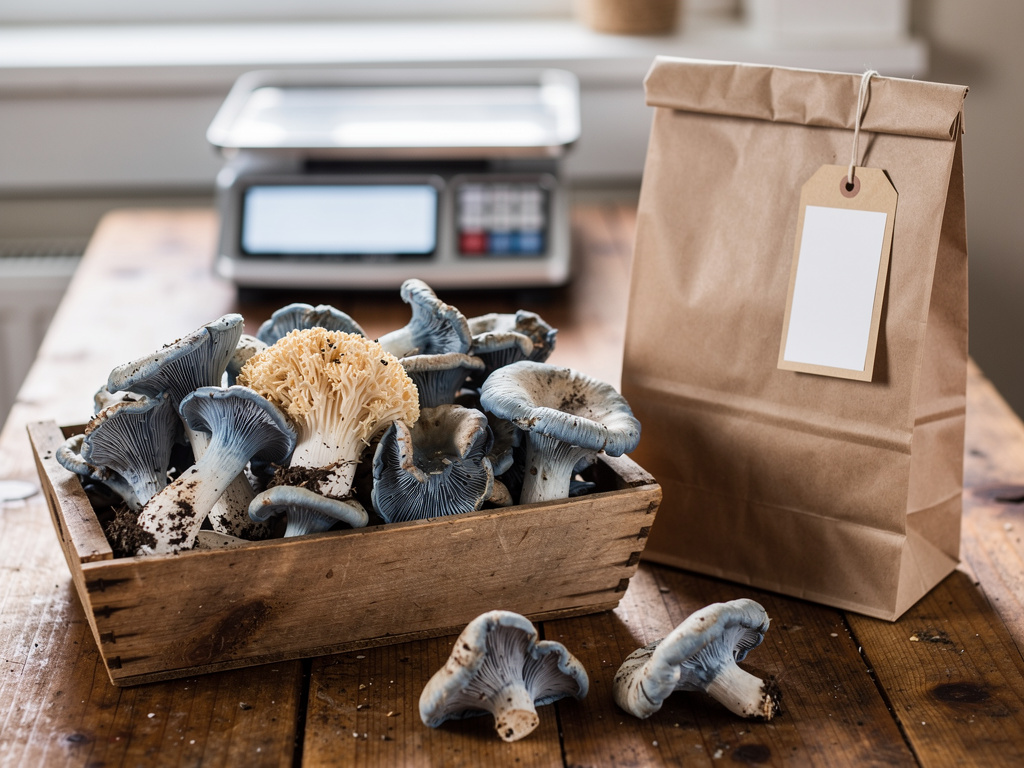


The short version: Yes, in the 4 states whose rules on it we read (Kansas, Illinois, Missouri and Michigan), you can sell mushrooms you grow at home, and fresh whole cultivated mushrooms are one of the easiest foods to sell legally because they count as a raw crop, not a cottage food. The federal produce rule names mushrooms, but it skips any farm whose produce sales average under $34,324 a year. The rules get tighter when you cut, dry or powder the mushrooms, and tighter again for wild mushrooms, which need a trained identifier or state approval in most of the states we read, and which the Illinois Department of Agriculture's farmers market guide says "shall not be offered for sale or distribution." Psilocybin ("magic") mushrooms are a federal Schedule I drug and are not covered here.
Checked on November 28, 2026: FDA's inflation-adjusted cut-offs page, FDA's 2026 Food Code, the federal drug schedule on eCFR, and the state agency pages for the eight states in the table below. Verify your state's current rules with your state agriculture office before your first sale, because a state can treat a cut, dried or wild mushroom very differently from a whole fresh one.
You have a grow tent, a shelf of blue oyster blocks and more mushrooms than your family can eat. A neighbor offers to pay for a pound. Is that legal, and what changes when it becomes a weekly habit?
"Homemade mushrooms" here means mushrooms you grow yourself from bought spawn, plus simple foods you make from them, like dried slices. This page is the rules page: what is allowed, what needs a permit, and what is off limits. Prices, packaging and sales channels are in how to sell mushrooms from home, which is the companion to this guide, and the equipment and yield side is in how to start a mushroom farm.
Yes, in the 4 states we read that address it (Kansas, Illinois, Missouri and Michigan) you can sell fresh, whole mushrooms you grow from bought spawn, because they count as a raw crop and so sit outside the cottage food laws that cover baked goods, jams and other foods made in a home kitchen. A state can still add a business license or a market permit, and FDA's produce rule can reach any farm whose average yearly produce sales are above $34,324, but a basket of oyster mushrooms is not handled like a cake.
Three state sources say it in their own words:
Illinois's 2026 Cottage Food Guide (from University of Illinois Extension) says that for mushrooms a cottage food operation grows, proof may be "receipts from the purchase of spores," so keep the receipt for your spawn or grow blocks, and ask the market or the department what counts for a farmers market sale.
Four sets of rules can apply: FDA's produce rule, FDA's model Food Code, your state, and your city or county. The product you sell decides which ones matter, and a $34,324 sales line decides the first. A whole fresh mushroom touches the fewest, while a dried powder, a wild mushroom or a restaurant sale touches more.
Scroll sideways to see every column.
| What you sell | Who sets the rule | What the sources say |
|---|---|---|
| Fresh whole cultivated mushrooms | FDA produce rule, your state, your city | Mushrooms are named as covered produce, but small farms fall under the sales cut-off. Treated as a raw crop or farm product by Kansas, Illinois, Missouri and Michigan, the four states we read that address it. |
| Cut or washed fresh mushrooms | Your state | Kansas allows washing and cutting without a license for sales straight to shoppers, but cut mushrooms sold wholesale need one. Michigan says cutting, chopping or grinding mushrooms for wholesale takes a license, and cutting them for sale to shoppers also takes one unless the cottage food law's requirements are met. |
| Dried mushrooms | Your state's cottage food list | Allowed under cottage food rules in Illinois, Michigan and South Carolina, and left off New Jersey's list. |
| Wild-foraged mushrooms | FDA's model Food Code, then your state | A trained identifier or state approval in most states we read. Illinois bans them at farmers markets and from its cottage food list. |
| Grow kits, agar, slants and liquid cultures | Your state (Illinois: not regulated as food) | Illinois says unexposed grow kits are not food and not covered by its cottage food law. It does not name spawn plugs, so ask the state about those. |
| Psilocybin mushrooms | Federal drug law | Psilocybin and psilocyn are Schedule I controlled substances. |
We checked these sources on November 28, 2026: FDA's produce rule page and Food Code, the Michigan, Kansas, Illinois, Missouri, South Carolina, New Jersey, Pennsylvania and New Hampshire pages linked in this guide, and the federal drug schedule at eCFR. Your own state can differ.
For most home growers, no, because FDA's produce rule does not cover a farm whose produce sales average under $34,324 a year. The rule lists mushrooms as covered produce, but the cut-off is an average over the previous three years, and $34,324 is the original $25,000 line adjusted for inflation on FDA's cut-offs page for 2023 to 2025.
Here is what that looks like in pounds. At $20 a pound, 15 pounds a week brings in $15,600 a year (15 x $20 x 52 weeks), less than half the line. It takes 34 pounds a week, every week for three years running, to pass it on average (34 x $20 x 52 = $35,360 a year), because 33 pounds a week comes to $34,320, just under it.
A farm over the line can still qualify for a lighter "qualified exemption" if its total food sales average under $686,476 and more of its sales go to consumers, or to restaurants and stores in its state or within 275 miles, than to anyone else. One of its requirements is to show the farm's name and full business address on the label or on a sign where people buy, and the farm must also keep records that show it qualifies.
FDA says it intends to update these cut-offs each April, so the $34,324 figure covers 2023 to 2025 and will change. Check FDA's page before you rely on a number from last season.
Mostly no, because whole fresh mushrooms are handled as a farm product and not as a cottage food, and Michigan is the one state we read that also names them on its cottage food list. A cottage food law covers foods you make in a home kitchen, and it is usually limited to foods that stay safe at room temperature. A fresh mushroom you grew is a crop, not something you made. That is why Missouri says mushrooms "do not fall under" its cottage law and why Illinois calls cultivated mushrooms an agricultural product. Illinois's cottage food law allows all foods except a listed few, and wild-harvested mushrooms are on that banned list.
Cottage food laws matter once you change the mushroom. Dried mushrooms can land on a cottage food list, as they do in Michigan, or be left off it, as they are in New Jersey. A mushroom used as an ingredient is another case: Illinois allows cultivated mushrooms in cottage food products and bars wild ones, and says that a receipt for wild mushrooms bought from a person who foraged them does not make them legal to use (Illinois Cottage Food Guide, 2026).
Cottage food laws also limit where you sell. Michigan's cottage food rules allow sales directly to consumers, so a dried mushroom made under that law cannot go to a restaurant or a shop.
Once you cut, dry or grind a mushroom, several of the states we read stop treating it as a raw crop and treat it as a processed food. That can mean a cottage food permit, a license or a commercial kitchen, and the line moves from state to state. Here is how it reads in the states we checked:
So the same jar of dried lion's mane is a cottage food in Michigan, South Carolina and Illinois (Illinois also allows a commercial kitchen), and not on New Jersey's list. Ask before you buy a dehydrator for sales.
FDA's model Food Code, which states copy for restaurants and stores, says in section 3-201.11 that "food prepared in a private home may not be used or offered for human consumption in a food establishment." A restaurant that buys dried mushrooms you made in your kitchen can run into that line, so a chef's health inspector may say no.
Sometimes, but it is the strictest category, and it is not the same as selling mushrooms you grow. FDA's model Food Code says in section 3-201.16 that mushroom species picked in the wild "shall not be offered for sale or service" by a food establishment unless it has been approved to do so. States turn that sentence into their own programs, and 5 of the 6 states in our table below that speak to wild mushrooms ask for a trained identifier, classes or state approval. The sixth, Illinois, bars wild mushrooms in its farmers market guide and bans them from its cottage food list.
Where you pick matters as much as who identifies the mushroom. Michigan says mushrooms found on public land "are for personal use and cannot be sold," and Pennsylvania says mushrooms for retail sale shall not be harvested from federal, state or local parks and forests, and that taking them from public land is generally prohibited without written permission. Get a landowner's permission in writing before you pick on private land to sell.
These 8 states answer 3 questions: what a grower needs for fresh mushrooms, what happens when they are dried or cut, and what wild mushrooms take. "Not on the page we read" means the agency page we loaded does not say, so ask the agency before you assume either way.
Scroll sideways to see every column.
| State | Fresh cultivated, whole | Dried or cut | Wild-foraged |
|---|---|---|---|
| Kansas | No license for sales to shoppers, or wholesale if only cleaned and not heat-treated | Washing and cutting allowed; heat-treated needs a license | Each mushroom inspected by a state-registered identifier |
| Illinois | A farm product; keep proof of source | Mechanically dried or powdered is a processed food | Banned at farmers markets and from cottage food |
| Missouri | Sold raw and unprocessed with no routine inspection | Not a cottage food (its list is baked goods, jams, jellies and dried herbs) | Classes approved by the Missouri Mycological Society |
| Michigan | No license for whole, uncut, raw mushrooms; a farm inspection only if it meets FDA's criteria | Raw or dried allowed under cottage food, sold to shoppers only | Certified identifier required for any sale |
| Pennsylvania | Not on the page we read | Slicing or drying wild mushrooms means registration and inspection | State approval before harvesting, plus a label |
| New Hampshire | Not on the page we read | Not on the page we read | Health department license after a course |
| New Jersey | Not on the page we read | Dried mushrooms are not on the cottage food permit list | Not on the page we read |
| South Carolina | Not on the page we read | Dried mushrooms allowed if dried in the home kitchen | Not on the page we read |
We read the Kansas (K-State, January 2026, and the Department of Agriculture), Illinois (Department of Agriculture, May 2023, and the 2026 Cottage Food Guide), Missouri (Department of Health and Senior Services, August 2023), Michigan (MDARD, 2024 and 2026), Pennsylvania (PDA, 2018), New Hampshire, New Jersey and South Carolina (July 2025) pages on November 28, 2026. Older documents may have changed.
The state's 2026 Cottage Food Guide says mushrooms are allowed as an ingredient, but "wild foraged mushrooms are prohibited, even when purchased commercially," so a cottage food baker there cannot use a forager's morels in a product.
No. Under federal law it is not legal to sell psilocybin mushrooms, because psilocybin and psilocyn are listed in Schedule I of the federal controlled substances list in 21 CFR 1308.11, which covers any material or preparation that contains any quantity of them. People who search "is it legal to sell mushrooms" sometimes mean these.
This guide only covers mushrooms you cook with, and it does not cover any state program for controlled substances. This is federal drug law, separate from the food rules in the rest of this guide, so a storefront, a market booth, a farm license or a cottage food permit changes none of it, and a product name or a label does not either. If you are unsure whether something you grow or sell falls under the schedule, ask a lawyer or your state's agriculture office before the sale, not after.
If a shopper asks at your booth, the plain answer is that you sell culinary mushrooms: oyster, lion's mane, shiitake and the like, grown for the kitchen.
In Illinois, yes, because a growing kit is something a customer grows from, not a food, and the Illinois Department of Agriculture says so. It calls grow kits (blocks that have not yet been exposed to light, humidity and airflow), agar, slants and liquid cultures "not considered food," and Illinois's cottage food guide (from University of Illinois Extension) says a mushroom kit is "not regulated by the Cottage Food Law." Illinois defines a kit by that unexposed block, so ask your own state about one that has already started to fruit. Illinois does not name spawn plugs for logs, which are the spawn product in Homegrown's catalog below, so ask the state about those. Other states may treat kits differently, so check with your state before you ship.
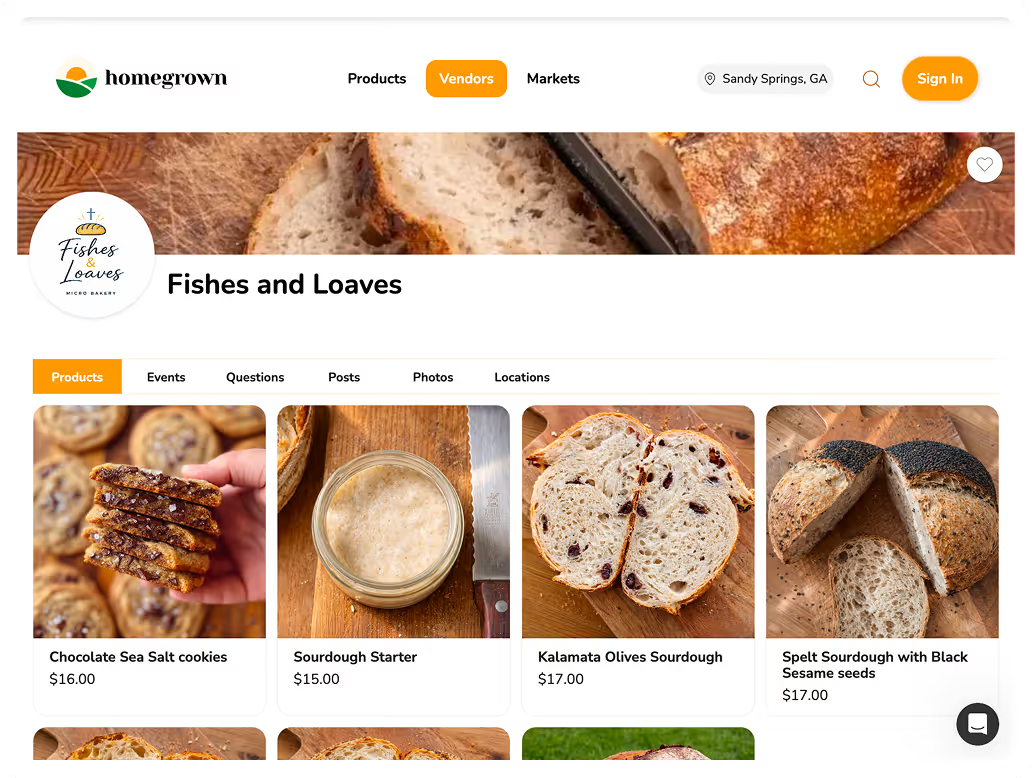
Homegrown's catalog shows this is a real product line. On November 27, 2026, one store listed six kinds of spawn plugs for growing mushrooms on logs, each about 100 plugs for $15. The price, label and sales-channel side of kits is in selling mushroom growing kits from home.
Shoppers are the easiest buyers, and restaurants and stores are possible once you can show where the mushrooms came from. The rules change with the buyer, not just the product, and Kansas and Michigan, the 2 states we read that speak to wholesale of cultivated mushrooms, set different conditions.
A good label has these 4 things. That is a recommendation, not a legal minimum for every bag. FDA's lighter produce-rule exemption asks a qualified-exempt farm for its name and complete address on the label or on a sign where people buy, and Kansas suggests these label items for wild mushrooms (name, weight, storage temperature, a tracking code and seller contact), which work as a model for grown ones too.
Packaging matters too. K-State's guidance says fresh mushrooms should not be sealed in vacuum or heat-shrink packaging, and that plastic film should be visibly perforated, and it notes that two holes about 3 mm (roughly 1/8 inch) wide over the top of a tray, or an equal line of perforations, does the job.
Describe flavor and texture on the bag, such as "meaty, nutty, good seared," and leave health promises off it. For wild mushrooms, Pennsylvania's list (common and scientific name, harvester name and address, county, harvest date, net weight) is a good model for a label even outside Pennsylvania. The weighing and scale rules for selling by the pound are covered in how to sell mushrooms from home.
Start with whole, fresh, cultivated mushrooms and add anything else one step at a time. Six steps cover it, and the first sale can happen within a week of the first email if your state and city answer quickly:
Fresh mushrooms are perishable, so the cleanest way to sell them is to know the order count before you harvest. Homegrown lets customers order and pay from one link, pick a pickup spot or local delivery, and you pick what was ordered. For a mushroom grower, that comes down to four things:
Hotplate is built around drops too. Its pricing page, checked November 28, 2026, shows the chef paying 2.9% + $0.30 for card processing and the customer seeing, by default, a 5% + $0.55 fee on the subtotal (about $1.55 on a $20 order), with no monthly subscription and automatic text alerts. Square's Free plan has no monthly cost and charges 3.3% + 30 cents online and 2.6% + 15 cents in person on Square's pricing page, checked the same day, which makes it one way to take a card at a booth.
What Homegrown does not do: it has no card reader for in-person sales, it does not price by the pound at checkout (a pound is a fixed size), and it does not promise marketplace traffic, so plan on most orders coming from people you send to your own link.
In a pull of the Homegrown catalog on November 27, 2026, 17 listings from 6 stores were fresh whole mushrooms to cook with, counted across every category from stores with an active subscription. Mushroom jerky, powders, tinctures, coffee, spawn plugs and dishes that only use mushrooms as an ingredient were not counted. Of the 17, 14 have a one-pound size priced from $10 to $24, and 2 are priced per ounce, at $1.25 and $1.50.
Lowest one-pound price per store, fresh mushrooms on Homegrown
Source: Homegrown catalog pull of November 27, 2026, 14 one-pound sizes from 4 stores. Widths are each price divided by $22.
Three habits keep a mushroom business out of trouble with the rules above: take orders before you harvest, log every batch, and sell one product at a time.
Price the size, not just the pound. The catalog shows one-pound prices from $10 to $24, and the store at the low end lists six kinds at the same $10.
List a half pound and a pound, and make the pound cheaper per ounce. On Homegrown, Majestic Caps lists lion's mane at $12 for a half pound and $21 for a pound, so the pound costs $3 less than two halves ($24 minus $21). A gap like that gives shoppers a reason to buy the bigger bag.
Send one email to your state department of agriculture's produce safety program rather than guessing from a website. A short written answer is worth more than a phone call, because you can show it to a market manager or a chef later. Ask these six questions:
Keep the reply. It is your proof that you asked, and it tells you which of the rules in this guide your state actually applies.
Usually not a food license for whole fresh cultivated mushrooms, because they are a raw crop. Missouri says unprocessed mushrooms can be sold without routine inspection, and Kansas says cultivated mushrooms can be sold to shoppers without a license. You may still need a local business license, and FDA's produce rule covers farms with produce sales averaging more than $34,324. Verify your state's current rules.
Yes, for whole fresh cultivated mushrooms where a state addresses them (we read Kansas, Illinois, Missouri and Michigan), and the market adds its own vendor rules. Wild mushrooms take more. New Hampshire, for example, requires a state license for wild mushrooms even at a farmers market.
Only with the approval your state requires. Michigan needs a certified identification expert, Pennsylvania needs approval from its Department of Agriculture before you harvest to sell, and Illinois's farmers market guide bars wild mushrooms from sale there. Mushrooms from public land cannot be sold in Michigan.
It depends on the state. Dried cultivated mushrooms fit cottage food rules in Illinois, Michigan and South Carolina, and New Jersey's cottage food permit does not include them. Check your state's list first.
Often yes, for whole fresh cultivated mushrooms. Kansas allows wholesale sales without a license when the mushrooms are only cleaned, and Michigan requires a license if someone other than the grower resells them. Expect the chef to ask for your farm name and an invoice.
No. Psilocybin and psilocyn are Schedule I controlled substances under federal law in 21 CFR 1308.11. This guide covers culinary mushrooms only, and answers the question "is it legal to sell mushrooms" for the ones you cook with.
In Illinois, yes: it says grow kits that have not yet been exposed to fruiting conditions, and cultures, are not considered food and are not regulated by its cottage food law. Ask your state before you ship live cultures.
These guides cover the parts of a mushroom business that sit next to the rules. Each one answers a question this page only touches, so read the one that matches your next step.
When the paperwork is done, start your 7-day trial (no charge until day 8), list two sizes of your first mushroom, 8 ounces and 1 pound, and share one link at your next market.