
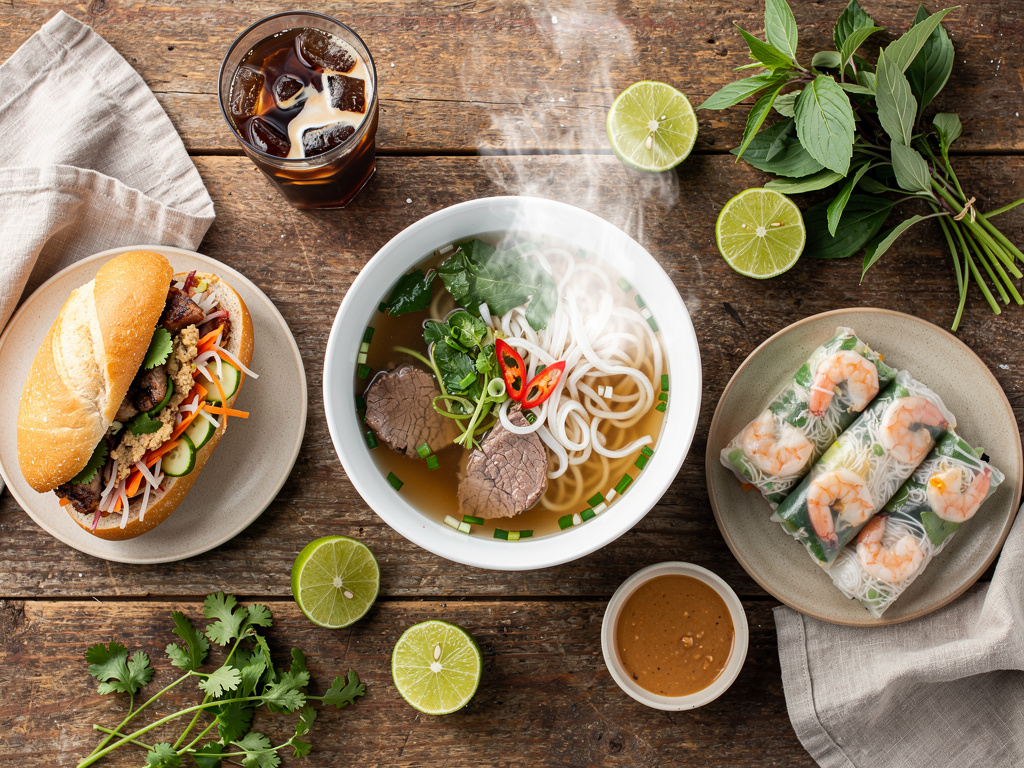


Vietnamese food is having a real moment in the US, phở, bánh mì, fresh spring rolls, and the demand for authentic, home-style versions is strong. If you cook it well, there's a genuine business here. But before you sell your first order, there's a legal reality that catches most home cooks off guard: nearly all of these dishes are perishable, and perishable food usually can't be sold under the simple cottage food laws people point you to. The good news is there's a real, legal path. This guide walks through selling Vietnamese home foods from home, honestly and legally, so you build something sustainable rather than risky.
The short version: Most Vietnamese prepared foods, phở broth with meat, bánh mì, fresh spring rolls, chả, cooked dishes, are perishable, time-and-temperature-controlled foods that standard cottage food laws generally don't allow. The legal paths for perishable home-cooked meals are a MEHKO (Microenterprise Home Kitchen Operation) permit, available in California county by county, or a licensed commissary or commercial kitchen. A shelf-stable subset, whole or ground Vietnamese coffee, dry spice blends, and properly acidified pickles, can go the cottage food route. Rules vary a lot by state, so confirm both your state and, in California, your county. Homegrown gives you the storefront and same-day pickup tools these models need, but you secure the permit or kitchen.
This guide covers what's sellable, the cottage food catch, the MEHKO and commissary paths, pickles, pricing, selling, and mistakes. This is general information, not legal advice.
You can sell Vietnamese home foods, but which ones and how depends entirely on whether each dish is shelf-stable or perishable, because that single distinction sets your legal path. Nearly all the signature dishes are perishable, which is the catch nobody warns new sellers about.
The lay of the land:
None of this means you can't sell your food, it means you need the right legal framework for perishable food, which the rest of this guide lays out. The takeaway: the split between perishable and shelf-stable food is the single most important thing to understand before you sell. The rule is to sort your dishes into perishable and shelf-stable first, since that determines your legal path, exactly the challenge with ethnic heritage foods.
Phở, bánh mì, and most Vietnamese dishes aren't cottage foods because cottage food laws are built for shelf-stable, non-hazardous items, and perishable dishes that need refrigeration or hot-holding fall outside that definition in most states. This is a broad pattern, though the details vary by state.
Why perishable food is excluded:
The takeaway: it's not that Vietnamese food is singled out, it's that perishable food of any cuisine generally doesn't qualify as a simple cottage food. The rule is to recognize that most of your menu needs a permit framework built for perishable food, not the basic cottage food path, the same distinction covered in starting a cottage food business.
The legal path for selling perishable, home-cooked Vietnamese meals is either a MEHKO permit where it's available, or a licensed commissary or commercial kitchen, both built for exactly this kind of food. There's a real, above-board way to do this, and it protects you and your customers.
Here's how the paths compare:
| Path | What it covers | Key limits |
|---|---|---|
| Cottage food | Shelf-stable subset only (coffee, dry blends, some pickles) | No phở, bánh mì, fresh rolls, or cooked dishes |
| MEHKO (where adopted) | Hot, perishable, ready-to-eat meals from home | Meal-per-day and annual-sales caps; same-day, direct-to-consumer; county opt-in |
| Licensed commissary | Perishable food, any state, room to scale | Requires renting a permitted kitchen |
The two main legal routes:
The takeaway: perishable Vietnamese food has a legitimate home for sale, MEHKO where it exists, and a licensed commissary everywhere else. The rule is to match your perishable menu to a permit built for it, weighing the commissary versus home kitchen options for your situation.
Pickled vegetables like đồ chua are a nuanced case: a properly acidified, shelf-stable pickle can fall outside the perishable-food category, but acidity has to be done and verified to spec, so you can't assume a pickle is automatically a cottage food. Acidity is the deciding factor, and it's a safety issue, not just a paperwork one.
What to understand about pickles:
The takeaway: acidity determines whether a pickle is a shelf-stable cottage food or a perishable product, and it must be done correctly, not assumed. The rule is to treat any pickle as perishable unless its acidity is properly achieved and verified, handling it with full food safety care.
Under cottage food law, you can sell the shelf-stable subset of Vietnamese foods, coffee, dry blends, and properly acidified pickles, while the perishable dishes need a permit framework. Knowing which items qualify lets you start legally on the simplest path while you set up for the rest.
What may qualify as cottage food:
The takeaway: a real, if limited, slice of Vietnamese food, coffee, dry blends, and safe pickles, can be sold under cottage food, which is a legitimate way to start. The rule is to launch your shelf-stable products under cottage food and reserve the perishable dishes for the proper framework, confirming each item against your state's list.
You price Vietnamese home food for small-batch, handmade value, and you sell it through same-day pickup and pre-orders that fit both the strong demand and the legal requirements. Your food is made by hand in small batches, and your pricing and model should reflect that.
How to price and sell well:
The takeaway: price for handmade small-batch value and sell through a same-day, direct-to-consumer model that fits the food and the law. The rule is to charge what your handmade food is worth and use pre-orders with same-day pickup, which a proper online storefront makes easy to run.
The mistakes that get Vietnamese home cooks in trouble are assuming perishable dishes are cottage-food legal, not knowing the MEHKO or commissary paths, mishandling fresh-roll and broth food safety, and underpricing. Each is avoidable with the right information.
The mistakes to avoid:
The takeaway: the mistakes come from misunderstanding the perishable-food rules, mishandling safety, and undervaluing the work, all fixable. The rule is to sort by perishability, use the correct permit path, handle perishables safely, and price for your craft.
Once you've secured the right permit or kitchen, the last piece is a clean way to take orders and offer same-day pickup, which is exactly the model perishable Vietnamese food needs. Homegrown is a $10-per-month online storefront, with no percentage fees beyond standard payment processing, built for made-to-order, direct-to-consumer, same-day selling.
You list your phở, bánh mì, spring rolls, coffee, and pickles, open pre-orders, and take payment at order time, then have customers pick up the same day, which fits both the demand for fresh food and the same-day, direct-to-consumer structure frameworks like MEHKO require. Because your storefront keeps clean records, you can track orders against any permit caps and see which dishes sell best. A flat monthly price means a busy weekend of orders isn't eaten by per-sale percentage fees stacking up on every bowl.
To be clear about what Homegrown does not do: it does not provide your permit, your commissary kitchen, or your food-safety compliance. Securing a MEHKO permit where available, or a licensed commissary, and following safe practices are your responsibility. What Homegrown gives you is the storefront and same-day pickup flow that matches how perishable Vietnamese food must be sold, so the selling runs smoothly once your legal path is set. If your permit or kitchen is in place, set up your Homegrown storefront and sell your home cooking the right way.
Yes, but usually not under a basic cottage food registration, because phở broth with meat, bánh mì, and most Vietnamese dishes are perishable and need temperature control, which cottage food laws generally exclude. The legal paths for perishable, home-cooked meals are a MEHKO (Microenterprise Home Kitchen Operation) permit where it's available, currently mainly in California and only in counties that have adopted it, or a licensed commissary or commercial kitchen, which works in any state. You can also sell a shelf-stable subset, like coffee, dry blends, and properly acidified pickles, under cottage food. Sort your dishes by perishability and match each to the right framework.
Because most Vietnamese dishes are perishable, and cottage food laws are built for shelf-stable, non-hazardous items. A meat broth, a filled bánh mì, fresh rice-paper rolls, and cooked meat dishes all need refrigeration or hot-holding to stay safe, which makes them time-and-temperature-controlled foods that most states keep out of cottage food. State treatment varies, some exclude perishable foods entirely, while others register them with strict labeling, so check your own state. The shelf-stable parts of your menu, like coffee and dry spice blends, can go the cottage food route, but the fresh, cooked dishes need a MEHKO permit or a commissary.
A MEHKO, or Microenterprise Home Kitchen Operation, is a California permit that lets home cooks legally sell hot, perishable, ready-to-eat meals, like phở and prepared Vietnamese dishes, from their home kitchen, which cottage food laws don't allow. It comes with limits: caps of 30 meals per day and 90 per week, a gross annual sales limit, and a requirement that food be made and sold directly to consumers, generally the same day. It's adopted county by county, so it's not available everywhere even in California, and equivalent programs are rare elsewhere. If you want to sell perishable Vietnamese dishes from home and your county offers MEHKO, it's the permit to look into; otherwise, a licensed commissary is the route.
It depends on their acidity. A properly acidified, shelf-stable pickle, generally at or below a pH of 4.6, can fall outside the perishable-food category and may qualify as a cottage food, while a fresh, refrigerated đồ chua is a perishable product with a short shelf life. The catch is that the acidity has to be genuinely achieved and, often, verified against a tested recipe, not assumed, since an under-acidified pickle isn't shelf-stable and can be unsafe. Because acidified foods are a controlled category, confirm with your state whether your specific pickle qualifies as a cottage food or needs a tested process.
The shelf-stable, non-perishable subset. That typically includes whole-bean or ground Vietnamese coffee, dry spice and seasoning blends, and properly acidified pickled vegetables whose acidity is achieved and verified to spec, though you should confirm those against your state's rules. What you can't sell under cottage food are the perishable dishes, phở, bánh mì, fresh spring rolls, chả, and cooked meals, which need a MEHKO permit or a licensed commissary. Starting with your coffee, dry blends, and safe pickles under cottage food is a legitimate way to begin while you set up the perishable side of your business.
Price for small-batch, handmade value, not against cheap restaurant comparisons. Dishes like phở and hand-rolled spring rolls are labor-intensive, so total your real ingredient costs, your time, and packaging, then price to reflect the authenticity and freshness customers are seeking. Vietnamese cuisine has surged in US popularity, so there's genuine demand both within the community and from a broader audience for real home cooking, and you don't need to undercut restaurants. Use pre-orders with same-day pickup to manage batches and, where MEHKO applies, meet its same-day requirement, and consider catering larger orders where your permit allows.
Selling Vietnamese home cooking is a real, worthwhile business riding a wave of genuine demand, and the cooks who build something lasting get the legal framework right from the start. Sort your food by perishability, pursue MEHKO or a commissary for the perishable dishes, verify your pickles, and price for your craft. Start your Homegrown storefront and sell your phở, bánh mì, and more the right way, with the same-day pickup model this food needs.



