
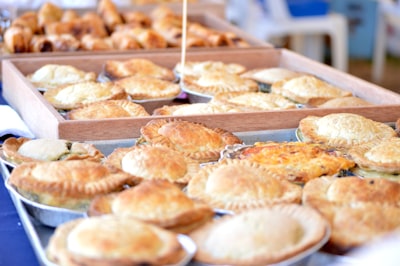


Nigerian meat pies, those golden, flaky hand pies filled with seasoned minced meat, potatoes, and carrots, are a beloved snack and party staple across Nigeria and its diaspora. It's tempting to assume that because a meat pie is baked, it's a cottage-food-legal baked good like any other pastry. But here's the crucial detail: the crust may be a baked good, but the meat filling makes the whole pie a perishable food, which usually puts it outside standard cottage food law. Understanding this distinction, that the filling determines everything, is the key to selling Nigerian meat pies legally, and it points you toward both a licensed path for the classic pie and a possible shelf-stable version you can sell now.
The short version: A Nigerian meat pie's flaky crust is a baked good, but its seasoned meat filling makes the whole pie a perishable food that usually requires a licensed kitchen, not a cottage food permit. Confirm your state's rules. Meat pies shine as a party and event food, sold from a licensed setup. A shelf-stable filling, like certain sweet or fully cooked-down vegetable fillings, might qualify under cottage food law in some states, so that's worth exploring. Focus on a legal production path for the classic meat pie and the event market. Never sell perishable, meat-filled pies from an unlicensed home kitchen.
This guide explains why the filling matters, the legal reality, your options, and how to build a Nigerian meat pie business the right way.
The filling determines whether you can sell meat pies because cottage food law judges a food by its most perishable component, and a seasoned meat filling is a perishable ingredient that requires refrigeration. The flaky crust alone would be a shelf-stable baked good, but once you add meat, the whole pie becomes a perishable, time-and-temperature-control-for-safety (TCS) food.
Here's the principle:
This is exactly why a baked good with a perishable filling is treated differently from a plain baked good. Our overview of how cottage food law treats heritage foods explains the shelf-stable-versus-perishable rule, and the cottage food laws by state directory links to your state's specifics. The FDA's guidance on foodborne illness explains why meat-filled foods carry the strict rules they do, and the National Center for Home Food Preservation is a reliable, university-backed resource on what makes a filling shelf-stable or perishable.
You generally cannot sell classic meat-filled Nigerian meat pies under standard cottage food law, because the meat filling makes them a perishable food that requires a licensed kitchen. This is the honest reality, and it's the same rule that applies to meat empanadas, hand pies, and similar foods from any culture.
Here's what this means:
Because the classic meat pie is perishable, it almost always requires a licensed or commissary kitchen. But the filling distinction opens a door: if you can create a genuinely shelf-stable version, you may be able to sell it under cottage food law. Confirm with your state, since fillings and preparations are judged individually, and don't assume any filled pie qualifies without checking. Starting with a shelf-stable-filled version, where possible, or a licensed path for the classic, is how you sell legally.
Your options for selling classic Nigerian meat pies are a licensed commercial or commissary kitchen, a home-kitchen permit program where your state offers one, or selling at permitted events. Because the meat pie is perishable, selling it legally means a regulated setup, while a shelf-stable-filled version may open a cottage food path.
Your possible paths:
Each licensed path involves more cost and inspection than cottage food, which is the tradeoff for a perishable food. Before investing, talk to your local health department about the requirements for selling meat pies. Many Nigerian food entrepreneurs start by selling meat pies at permitted events or from a commissary kitchen, building a following and income legally, then grow. Exploring a shelf-stable-filled version can also let you start under cottage food law, so consider both paths for your business.
Where you can legally sell them, price Nigerian meat pies by the piece or dozen, typically $2 to $4 per pie or $20 to $40 per dozen depending on size and filling, since they're hand-made and filling. Meat pies are labor-intensive to shape and fill, so price for the real work, and customers happily pay for authentic, fresh pies.
A pricing structure that works:
Party and event orders, ordered by the dozen and up, are where meat pies become lucrative, since they're a celebration favorite. If pricing your work fairly feels uncomfortable, read why charging what you're worth feels wrong, and see how vendors approach pricing baked goods and treats. Meat pies are genuinely labor-intensive to make by hand, so price your pies for that time, especially on large party orders.
You build a meat pie business by securing a legal production path, then reaching the Nigerian community and event hosts who crave authentic pies. Once you're operating legally, meat pies' role as a beloved party and snack food gives you passionate, steady demand.
Ways to build and sell:
Because meat pies are a party favorite ordered in quantity, catering large orders is where the business grows. Managing dozen and party orders through DMs gets messy fast, so a real ordering system helps. Here's how to sell food online as a local vendor so your meat pie orders stay organized as you grow.
Once you're operating legally, a party-favorite food with big dozen orders benefits from an organized system. Homegrown is $10 a month with no percentage fees beyond standard payment processing, and it gives you an order page where customers order meat pies by the dozen or for parties, choose pickup or event dates, and reorder for their next gathering, keeping your orders organized in one place.
How it compares to the alternatives:
What Homegrown does well for a meat pie vendor: order intake for dozens and party quantities, pickup and event scheduling, a customer list for repeat celebrations, and a fifteen-minute setup. What it doesn't do: it won't make you legal to sell perishable meat pies (that's your licensed-kitchen or permit path), bake for you, or handle food-safety compliance. It keeps your orders organized once you're operating legally. When your legal path is set, you can set up your storefront and take meat pie orders.
The most serious mistake is assuming a baked meat pie is cottage-legal because it's baked, when the meat filling makes it perishable. Because the filling determines eligibility, the errors that matter most involve that distinction.
Mistakes to avoid:
Getting these right keeps you legal and safe while building a beloved food into a business.
You generally cannot sell classic meat-filled Nigerian meat pies from an unlicensed home kitchen, because the seasoned meat filling makes the whole pie a perishable food outside cottage food law, even though the crust is a baked good. Selling them legally usually requires a licensed or commissary kitchen, a home-kitchen permit program where your state allows perishable foods, or event permits. Confirm your state's specific rules before selling.
A baked meat pie isn't cottage-legal because cottage food law judges a food by its most perishable component, and the seasoned meat filling is perishable, requiring refrigeration, even though the crust alone would be shelf-stable. The whole pie is treated as a perishable food. This is why a plain baked good qualifies while a baked good with a meat or other perishable filling usually requires a licensed kitchen instead.
Possibly, a pie with a genuinely shelf-stable filling, such as certain sweet fillings or fully cooked-down, low-moisture vegetable fillings, might qualify under cottage food law in some states, since the perishability of the filling is what matters. However, you must confirm this carefully with your state, since fillings are judged individually and moisture and ingredients affect eligibility. Exploring a shelf-stable version could open a cottage food path for you.
You can sell meat pies legally through a licensed commercial or commissary kitchen, a home-kitchen permit program where your state offers one that allows perishable foods, or by selling freshly made pies at permitted events. Each requires more setup and inspection than cottage food, since meat pies are perishable. Talk to your local health department about the requirements for selling meat pies, and consider whether a shelf-stable-filled version could qualify under cottage food law.
Where you can legally sell them, Nigerian meat pies typically sell for $2 to $4 per pie or $20 to $40 per dozen depending on size and filling, with party quantities ordered by the dozen and up. Meat pies are labor-intensive to shape and fill by hand, so price for the real work, especially on large orders. Party and event orders are where meat pies become genuinely lucrative for a vendor.
Meat pies are an excellent party food business because they're a beloved snack and celebration staple across Nigeria and its diaspora, ordered by the dozen for gatherings, parties, and events. The catch is that they're perishable, requiring a legal production path like a commissary kitchen or permits. With passionate community demand and natural large-order sizes, meat pies reward vendors who secure a legal kitchen and focus on the event market.
You can start either way: selling freshly made meat pies at permitted events is a common, accessible legal path for the classic pie, while developing a genuinely shelf-stable-filled version could let you sell under cottage food law from home. Event permits let you reach crowds with hot, fresh pies, while a shelf-stable version offers a home-based path if your state permits it. Choose based on your local rules and how you want to sell.
You can sell freshly made Nigerian meat pies at festivals, cultural events, and community gatherings if you obtain the proper temporary food permits and meet the health department's requirements for preparing and holding the pies safely. Permitted events are one of the most accessible legal ways to start, since hot, flaky meat pies sell fast to crowds who love them. Confirm the specific permit requirements with your local health department and the event organizer before setting up your booth.
Nigerian meat pies are a case where the filling makes the difference: the crust is a baked good, but the meat filling makes the pie perishable and usually requires a licensed kitchen or event permits, while a shelf-stable-filled version might qualify under cottage food law. Secure a legal path, focus on the party and event market, and price for the hand-made work. When your legal path is set, set up a Homegrown storefront and keep your meat pie orders organized.



