
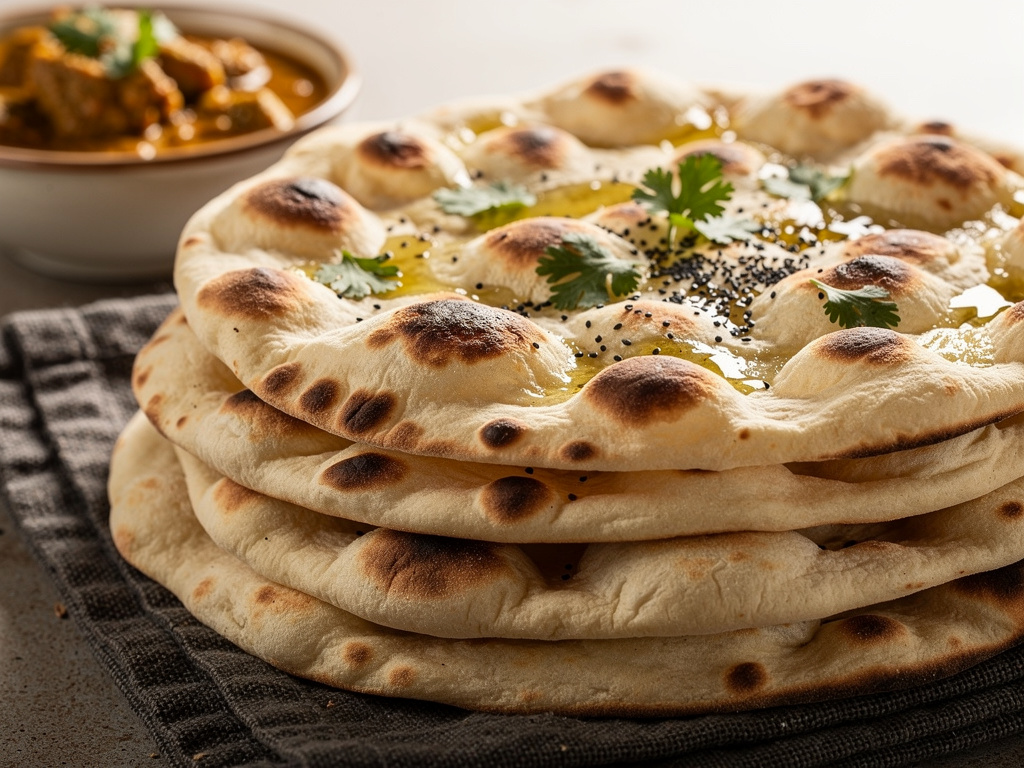


Fresh naan is one of the easiest home food products to fall in love with selling, because bread is about as cottage-food-friendly as it gets. Plain naan, roti, and simple flatbreads are baked breads, and baked breads sit squarely inside what nearly every state allows. The catch is what you put on top or inside. The moment you finish a naan with fresh garlic in butter or stuff it with cheese, you can cross out of the safe zone, and one of those toppings carries a genuine safety risk. This guide walks through how to sell naan from home, which versions stay eligible, and where the line is.
The short version: Plain naan and most flatbreads (roti, plain paratha, dry-spiced naan) are baked breads, and bread is one of the most universally allowed cottage foods, so in nearly every state you can sell plain naan from home under a standard cottage food registration. The line is toppings and fillings: cheese- or paneer-stuffed naan, fresh-butter or ghee spreads, and fresh-garlic-in-oil finishes push into perishable or potentially hazardous territory, and fresh garlic in oil specifically carries a real botulism risk. So sell plain and dry-spiced naan freely, and treat any fresh-dairy or fresh-garlic-oil version as needing extra caution or a licensed path. Homegrown gives you the storefront to sell your naan by the batch, for meal kits, or to local kitchens. This is general information, not legal advice.
This guide covers whether naan is cottage-eligible, the toppings line, the garlic-in-oil safety risk, which versions qualify, making and storing, the market, pricing, and mistakes. This is general information, not legal or food-safety advice.
Yes, in nearly every state you can sell plain naan and most flatbreads as cottage foods, because bread is a baked good and baked goods are the most universally allowed cottage food category. Plain naan is close to the easiest possible cottage food product.
Why plain naan is so clearly eligible:
The takeaway: plain naan and simple flatbreads are baked breads, which makes them cottage-eligible in nearly every state. The rule is to build your naan business on the plain and dry-finished versions first, since they're the cleanest fit, the same footing as any cottage food business.
The line is toppings and fillings: a plain or dry-spiced naan stays eligible, but adding fresh dairy, fresh vegetables, or a fresh-garlic-oil finish pushes it toward perishable and potentially hazardous, which cottage food laws restrict. It's not naan versus not-naan, it's plain versus fresh-topped.
Where naan crosses the line:
The takeaway: the eligibility line runs between plain or dry-finished naan and anything with fresh dairy, produce, or garlic-oil added, with the latter pushed out by both perishability and safety rules. The rule is to keep your cottage-food naan plain or dry-spiced, and treat fresh-topped versions as a separate, licensed conversation, a matter of real food safety.
Fresh garlic stored in oil is a botulism risk because garlic is a low-acid vegetable, oil creates the oxygen-free environment Clostridium botulinum needs, and the combination has caused documented outbreaks. It's the one topping that's dangerous, not just bureaucratically excluded.
Why the garlic-oil combination is hazardous:
The takeaway: fresh garlic in oil is a real botulism hazard, documented in outbreaks and regulated by the FDA, not a paperwork technicality. The rule is to never finish a cottage-food naan with fresh garlic in oil or butter, using dried garlic or a licensed, acidified process instead.
You can sell plain naan, roti, plain paratha, and dry-spiced naan finished with dried garlic, dried herbs, or seeds, all of which stay in the eligible baked-bread category. The safe list is broad as long as you avoid fresh perishable toppings.
Here's how common versions sort out:
| Version | Cottage-eligible? | Why |
|---|---|---|
| Plain naan, roti, plain paratha | Yes | Baked bread, no perishable topping |
| Dry-spiced naan (dried garlic, herbs, seeds) | Yes | Dried, shelf-stable ingredients |
| Fresh garlic-butter naan | No | Fresh garlic-in-oil botulism risk |
| Cheese or paneer-stuffed naan | No | Fresh dairy, potentially hazardous |
| Fresh-vegetable-topped naan | Usually no | Fresh produce, perishable |
What stays on the safe side:
The takeaway: plain and dry-spiced flatbreads are all cottage-eligible, giving you a wide product range without touching fresh toppings. The rule is to flavor with dried and shelf-stable ingredients so your naan stays firmly in the eligible zone, similar to how you'd approach selling dry spice blends.
You make and store naan for selling by baking it well, cooling it fully before packaging, and either selling it fresh within a short window or freezing it, since bread stales fast at room temperature. Naan's short fresh life is the main thing to plan around.
Making and storing well:
The takeaway: naan is a short-shelf-life fresh bread, so cool it fully, sell it fast, and freeze what needs to keep. The rule is to build your ordering around naan's freshness window rather than pretending it's a long-shelf-stable product.
The market for homemade naan spans meal-kit pairings, farmers markets, curry-night regulars, and local demand for authentic fresh flatbread that beats the grocery-store version. Fresh naan has an obvious quality edge that customers notice immediately.
Where naan sells:
The takeaway: naan sells through meal pairings, markets, and repeat local demand, all driven by the quality gap over store-bought. The rule is to build a repeat-order base around naan's freshness advantage, the same local-demand playbook behind selling pakoras and other homemade favorites.
You price naan by the piece or the pack, covering flour and fuel, the real labor of shaping and cooking each bread by hand, packaging, and a margin, then leaning on multi-packs to lift order value. Naan is cheap on ingredients but labor-heavy, so labor drives the price.
Pricing guidance:
The takeaway: price naan for its heavy handwork and quality edge, using multi-packs to lift order value. The rule is to cost your labor and fuel fully, then price the quality difference in, not just the cheap ingredients.
The biggest mistakes selling naan are adding fresh garlic-oil or cheese to a cottage-food product, ignoring naan's short shelf life, and underpricing the handwork. The topping mistakes are the ones with real consequences.
Mistakes to avoid:
The takeaway: the mistakes that matter most are unsafe or restricted toppings, followed by mispricing the labor and ignoring shelf life. The rule is to keep cottage naan plain or dry-spiced, price the handwork, and respect the freshness window, all confirmed against your state and its labeling rules.
Naan is a fresh, made-to-order product with a short window, which means you need a clean way to take batch orders, offer pickup or delivery, and get paid, without losing a cut of every sale. That's what Homegrown is built for.
Homegrown gives you an online storefront to sell your naan and flatbreads by the piece or the pack, take scheduled orders, and collect payment, all for a flat $10 a month with no percentage fees beyond standard payment processing. For a low-margin, labor-heavy product like fresh bread, a per-order commission quietly eats into already-thin returns. A marketplace-style platform takes a percentage of every order, and a generic website builder wasn't made for scheduled food pickups. Homegrown packages the storefront, order scheduling, and payment into one flat rate, so your naan margin stays yours. It isn't for everyone, if you sell a few dozen naan cash-in-hand at a single stall, you may not need a storefront yet, but the moment you're taking naan orders online for pickup or delivery, a flat monthly rate beats surrendering a slice of every sale.
Ready to sell your naan online? Set up your Homegrown storefront and start taking orders.
Yes, in nearly every state. Plain naan is a baked leavened flatbread, and breads are one of the most universally allowed cottage food categories. As long as it has no perishable topping or filling, plain naan is one of the cleanest possible cottage food products. Confirm your state's rules and labeling requirements before you start.
Because a fresh-garlic-in-oil finish is a genuine botulism risk. Garlic is a low-acid vegetable, and stored in oil or butter it creates the oxygen-free, low-acid environment Clostridium botulinum needs, which has caused documented garlic-bread botulism outbreaks. Use dried garlic for a cottage product, or a licensed acidified process for a fresh version.
Generally not as a cottage food. Cheese and paneer are fresh dairy, a classic potentially hazardous ingredient that most states prohibit in cottage foods. Stuffed, dairy-filled naan typically needs a licensed commercial kitchen. Keep your cottage-food naan plain or dry-spiced to stay eligible.
Naan is best within a day or two at room temperature since bread stales quickly, so it suits a made-to-order or scheduled-batch model rather than long storage. Naan also freezes and reheats well, so freezing is the practical way to extend its shelf life and offer customers a stock-up option.
Dry-spiced versions. Naan flavored with dried garlic powder, dried herbs, nigella or sesame seeds, or other shelf-stable dried seasonings stays cottage-eligible because the additions aren't fresh or perishable. The rule is dried and shelf-stable in, fresh dairy and fresh garlic-oil out.
It depends on volume and pricing. Naan has low ingredient cost but heavy handwork, so profitability comes from pricing the labor properly and selling in multi-packs. Repeat curry-night customers, meal-kit pairings, and farmers markets can build a steady order base around naan's quality edge over store-bought.



