
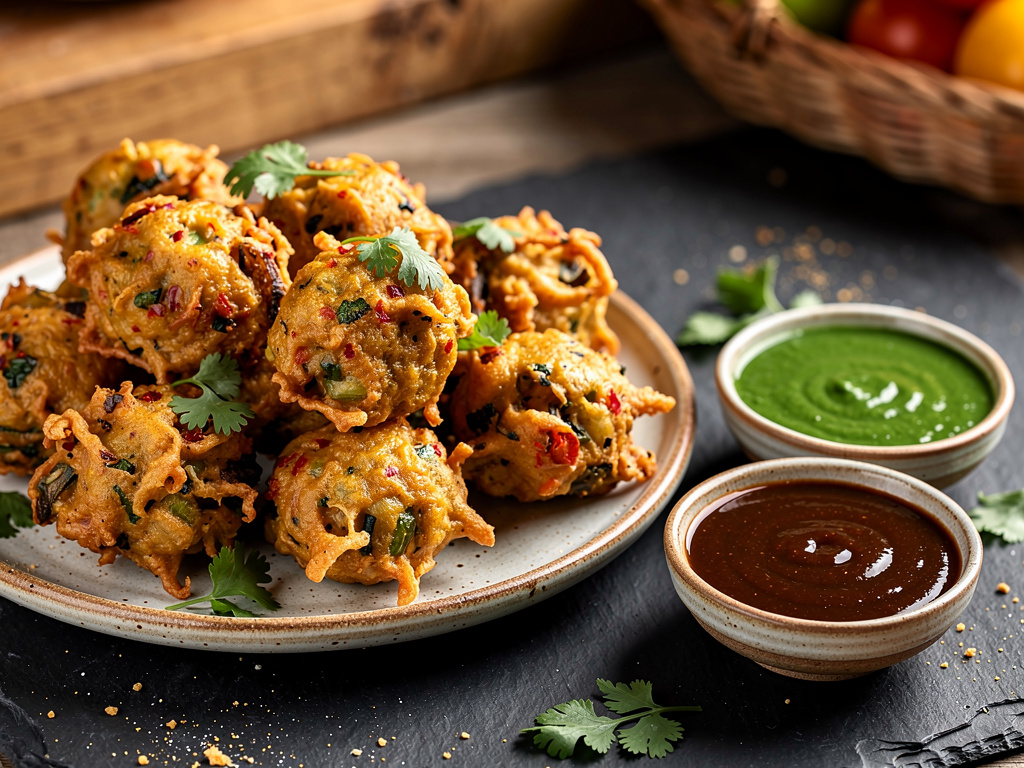


Pakoras are the snack everyone wants the second it rains, and a good batch of hot, crispy bhaji sells itself at any gathering. Turning that into a home business is trickier than it looks, though, because fresh fried pakoras run straight into the one thing cottage food laws are built to keep out: ready-to-eat, perishable food. This guide walks through how to sell pakoras from home, why fresh-fried snacks usually need a licensed path, and the shelf-stable pivot that lets you build a legal home business around the same flavors.
The short version: Fresh, hot-fried pakoras and bhaji are ready-to-eat, perishable prepared foods, and cottage food laws almost never allow them. Cottage food covers shelf-stable, non-hazardous items, baked goods, candies, jams, and dried mixes, not fried food meant to be eaten hot. To sell fresh pakoras you need a licensed commercial or commissary kitchen, or a California MEHKO permit, which is designed for exactly this kind of ready-to-eat home cooking. The workaround that stays inside cottage food: sell a shelf-stable dry pakora mix and your own chaat masala or spice blends, which are packaged, non-perishable products. Homegrown gives you the storefront to sell either path, whether you're taking snack-platter orders from a licensed kitchen or shipping dry mixes. This is general information, not legal advice.
This guide covers why fresh pakoras aren't cottage food, the licensed and MEHKO paths, the shelf-stable dry-mix workaround, safe frying and storage, the snack market, pricing, and mistakes to avoid. This is general information, not legal or food-safety advice.
In almost every state, no, you can't sell fresh-fried pakoras as a cottage food, because they're ready-to-eat, perishable prepared foods and cottage food laws only cover shelf-stable items. This is the hard fact to get straight before you plan anything.
Why fresh pakoras fall outside cottage food:
The takeaway: fresh pakoras are ready-to-eat perishable food, and that puts them outside cottage food eligibility in nearly every state. The rule is to treat fresh-fried snacks as a licensed-kitchen product from the start, not something you can register as a cottage food, which is a different track from the shelf-stable items in starting a cottage food business.
Fried, ready-to-eat foods are treated differently because they're potentially hazardous, they're served hot and eaten immediately, and there's no shelf-stability or packaging step that makes them safe at room temperature. The whole category sits in the higher-risk lane.
What makes fresh pakoras higher-risk:
The takeaway: fried, ready-to-eat food is regulated as higher-risk because there's no step that makes it shelf-safe, so it needs a licensed setting. The rule is to plan for a permitted kitchen if fresh pakoras are your product, treating hot-hold food safety as central, the same discipline covered in food safety rules.
The legal path for selling fresh pakoras is a licensed commercial or commissary kitchen, or a California MEHKO (Microenterprise Home Kitchen Operation) permit where your county allows it, both of which are built for ready-to-eat food. There's a real way to do this, it just isn't cottage food.
Here's how the paths compare:
| Path | What it covers | Note |
|---|---|---|
| Cottage food | Shelf-stable only | Fresh pakoras not eligible |
| Commercial/commissary kitchen | Ready-to-eat food under a facility permit | Reliable in any state |
| California MEHKO | A home restaurant selling ready-to-eat meals | County opt-in only |
The options for fresh pakoras:
The takeaway: fresh pakoras need a licensed commercial kitchen or a county-authorized California MEHKO, because both are designed for ready-to-eat food that cottage food can't cover. The rule is to pick your permitted path based on your state and county before you take a single order, and if you're in California, start by reading up on how MEHKO laws work.
The pakora products you can sell as cottage foods are the shelf-stable ones: a dry pakora or bhaji mix and your own chaat masala or spice blends, all packaged, non-perishable, and cottage-eligible. This is the workaround that lets you sell the flavor without the licensed kitchen.
The shelf-stable products to build around:
The takeaway: you can sell a shelf-stable dry pakora mix and your own spice blends as cottage foods, capturing the flavor and the brand without a licensed kitchen. The rule is to lead your cottage food business with dry mixes and masalas, a close cousin of selling packaged spice blends from home.
You fry and store pakoras safely by frying at the right oil temperature, holding hot food hot and cold food cold, and never letting cooked pakoras sit in the danger zone, all of which are far easier to document in a licensed kitchen. Food safety is the whole reason fresh pakoras need permits.
Safe practices for fresh pakoras:
For a dry mix, safety is simpler but still real:
The takeaway: safe pakora selling means tight temperature control for fresh food and tight moisture control for dry mixes, and the fresh path is far easier to run inside a permitted kitchen. The rule is to build temperature and moisture discipline into your process from day one.
The market for homemade pakoras is strong wherever people gather, snack platters for parties and festivals, chaat catering, weekend orders, and dry mixes for cooks who want the flavor without the work. Demand isn't the problem, the legal path is.
Where pakoras and pakora products sell:
The takeaway: the pakora market spans fresh platters and catering on the licensed side and dry mixes on the cottage-food side, so you can serve demand either way. The rule is to match your product to your legal path, fresh for licensed, mixes for cottage, and sell both through one storefront, the same multi-product approach that works for Indian sweets.
You price fresh pakoras and platters to cover ingredients, oil, your licensed-kitchen costs, and real labor, and you price dry mixes as a packaged retail product with room for margin. Frying is cheap on ingredients but heavy on time, so labor is where pricing usually goes wrong.
Pricing guidance:
The takeaway: price fresh pakoras to cover kitchen costs and heavy labor, and price mixes as retail products with real margin. The rule is to cost every input, including your kitchen and your hours, before you set a number, since a price is only right when it covers all of it.
The biggest mistakes selling pakoras from home are assuming fried food is a cottage food, ignoring the licensed-kitchen requirement, and underpricing labor-heavy platters. Most of these trace back to treating fresh snacks like a shelf product.
Mistakes to steer clear of:
The takeaway: the fatal mistakes are treating fresh pakoras as cottage food and underpricing the labor, both avoidable with the right legal path and honest costing. The rule is to confirm your permitted path and cost your labor before your first order, not after.
Whichever path fits, fresh platters from a licensed kitchen or shelf-stable dry mixes under cottage food, you need a clean way to take orders, and that's where Homegrown comes in. Homegrown gives you an online storefront to sell your pakoras, chaat catering, and dry mixes, take scheduled and party orders, and get paid, all in one place built for small food vendors.
Homegrown is a flat $10 a month with no percentage fees beyond standard payment processing, which matters for a snack business where margins are already tight from oil, kitchen rental, and labor. A platform like Marketplace-style services or a general site builder either takes a cut of every order or leaves you stitching together tools that were never made for food. Homegrown is built for exactly this: order scheduling, a storefront, and payment in one flat-rate package, so a percentage of your festival-season sales doesn't disappear to fees. It isn't a fit for everyone, if you're purely in-person and cash-only at a single stall, you may not need a storefront yet, but the moment you're taking pakora platter or dry-mix orders online, a flat monthly rate beats losing a slice of every sale.
Ready to sell your pakoras and mixes online? Set up your Homegrown storefront and start taking orders.
Almost never. Fresh-fried pakoras are ready-to-eat, perishable prepared food, and cottage food laws cover only shelf-stable items like baked goods, candies, jams, and dry mixes. To sell fresh pakoras you generally need a licensed commercial or commissary kitchen, or a California MEHKO permit where your county allows it.
A MEHKO is a Microenterprise Home Kitchen Operation, a California permit created by Assembly Bill 626 that lets an individual run a small restaurant out of their home and sell ready-to-eat food. It's a good fit for fresh pakoras, but it's authorized county by county, so you have to confirm your local jurisdiction has adopted it before you rely on it.
Yes. A shelf-stable dry pakora or bhaji mix is a packaged, non-perishable product, and dry mixes are a standard cottage food category in most states. It's the cleanest way to sell the flavor of your pakoras without needing a licensed kitchen, since the customer does the frying at home.
In most states, dried seasoning blends are cottage-food eligible, so you can often sell your own chaat masala or spice blends under a cottage food registration without a commercial kitchen. Confirm your state's rules, package and label properly, and use dried, shelf-stable ingredients.
It depends on your path and volume. Fresh platters and catering can command strong prices during festival season, but they carry kitchen-rental and heavy labor costs, so price to cover both. Dry mixes are lower-labor and shippable, giving you a scalable second income stream alongside fresh orders.
Fried, ready-to-eat foods are meant to be eaten right away and have no preservation step, so they sit in the bacterial-growth danger zone as they cool. Baked goods, candies, and jams are shelf-stable through low moisture, high sugar, or acidity, which is why they qualify as cottage foods and fresh fried snacks don't.



