
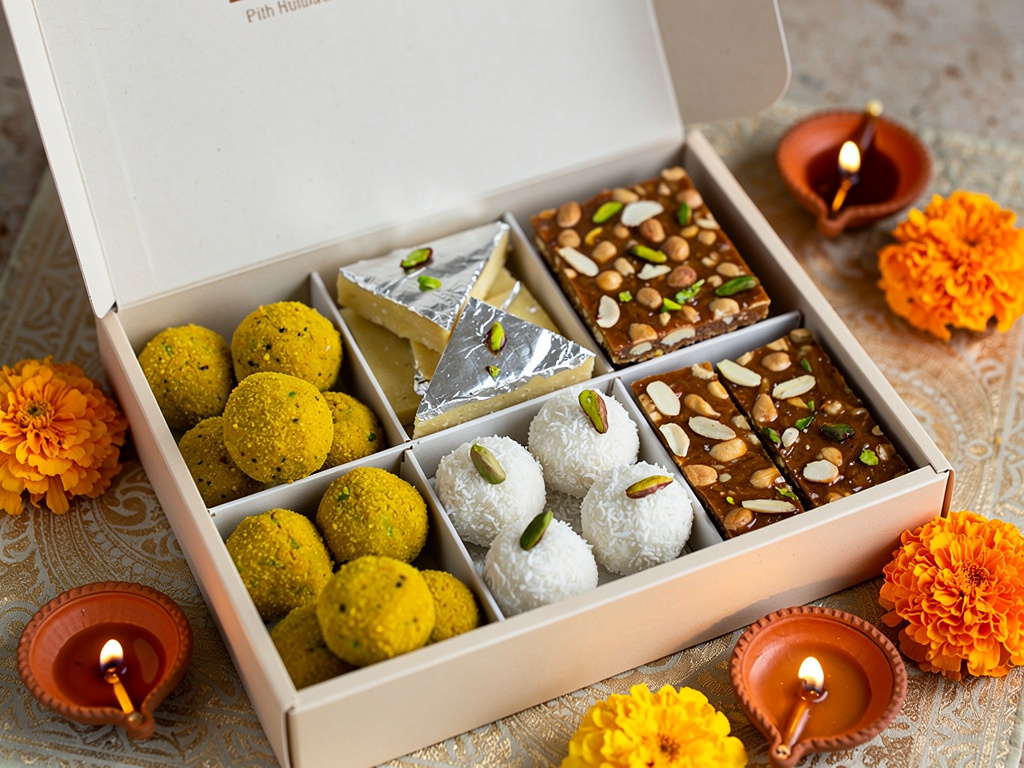


Indian sweets, mithai, are at the heart of every celebration, and the demand around Diwali, weddings, and festivals is enormous. Selling your own ladoo and barfi from home is a genuinely good business, but there's a legal split most cooks don't see coming: some mithai qualifies as a cottage food and some doesn't, and the dividing line is dairy. A sugar-and-nut ladoo is a shelf-stable confection you can often sell freely; a fresh milk barfi is a perishable food that needs a licensed kitchen. This guide walks through how to sell Indian sweets from home, sorting which sweets you can legally sell and how to build on the festival gift market.
The short version: Indian sweets split into two legal categories. Shelf-stable, sugar-ghee-nut-based sweets, most ladoo, dry barfi, chikki, and brittle, are candies and confections that are cottage-food eligible in most states. Milk-based and fresh-dairy sweets, khoya barfi, rasgulla, sandesh, gulab jamun in syrup, and rasmalai, are perishable, refrigeration-dependent foods that are generally excluded from cottage food and need a licensed or commercial kitchen. The rule of thumb: if it needs to live in your fridge, it almost certainly isn't a cottage food. Lean hard into the Diwali and festival gift-box market with your shelf-stable sweets. Homegrown gives you the storefront to sell them and take festival gift orders. This is general information, not legal advice.
This guide covers the key split, which sweets qualify, why milk-based ones don't, the legal path, making and storing safely, the Diwali market, pricing, and mistakes. This is general information, not legal or food-safety advice.
The key split is between shelf-stable, sugar-and-nut-based sweets, which are cottage-food eligible as confections, and milk-based or fresh-dairy sweets, which are perishable and generally not. Understanding this divide is the single most important thing before you sell any mithai.
The two categories:
The takeaway: mithai isn't one legal category, it's two, split by whether the sweet is shelf-stable or milk-based and perishable. The rule of thumb is simple: if the sweet needs to live in your fridge, it almost certainly isn't a cottage food, unlike the shelf-stable items covered in starting a cottage food business.
The Indian sweets you can generally sell as cottage foods are the shelf-stable, sugar-ghee-nut-based ones, most ladoo, dry barfi, chikki, and brittles, which qualify as candies or confections in most states. These are the sweets to build a home business around.
What tends to qualify:
The takeaway: shelf-stable, sugar-and-nut-based mithai, ladoo, dry barfi, chikki, and brittles, are cottage-food eligible as confections in most states. The rule is to build your home sweets business on the shelf-stable subset, confirming your state's candy and confection rules, the same category as heritage sweets like divinity.
Milk-based sweets aren't cottage-food eligible because fresh dairy makes them perishable, high-moisture, potentially-hazardous foods that need refrigeration, and cottage food laws exclude exactly those. The dairy is what disqualifies them.
Why the milk-based sweets fall outside:
The takeaway: milk-based sweets are perishable, refrigeration-dependent foods that cottage food laws exclude, because the fresh dairy makes them potentially hazardous. The rule is to treat any milk-based mithai as a perishable food that needs a licensed path, never selling it at room temperature, a core matter of food safety.
If you want to sell milk-based sweets, the legal path is a licensed commercial or commissary kitchen, or a MEHKO permit where available, not a cottage food registration. There's a legitimate way to sell them, it just requires a licensed setting.
Here's how the paths compare for your sweets:
| Sweet type | Legal path | Note |
|---|---|---|
| Shelf-stable (ladoo, dry barfi, chikki) | Cottage food | Confections eligible in most states |
| Milk-based (milk barfi, rasgulla, gulab jamun) | Commercial/commissary kitchen or MEHKO | Perishable; needs a licensed setting |
The paths for perishable milk sweets:
The takeaway: milk-based sweets need a licensed commercial kitchen or MEHKO, while your shelf-stable sweets can sell under cottage food, so you can run both streams appropriately. The rule is to match each sweet to its legal path, using a licensed kitchen for the perishable ones, the same framework as other perishable heritage foods.
You make and store Indian sweets safely by keeping shelf-stable sweets dry and at room temperature and keeping milk-based sweets refrigerated at all times, since their moisture and dairy content determine their safety. The making and the storage follow the same shelf-stable-versus-perishable divide.
The safety essentials:
The takeaway: shelf-stable sweets keep dry at room temperature while milk-based sweets must stay refrigerated, and knowing which is which is the whole safety picture. The rule is to store each type to its nature, dry for confections, cold for dairy sweets, never treating a perishable milk sweet like a shelf-stable one.
Diwali is the single biggest opportunity in selling Indian sweets, because the festival, along with weddings and other celebrations, drives enormous demand for mithai gift boxes across the South Asian community. Festival gifting is where the volume and the premium live.
Why the festival market matters:
The takeaway: Diwali and other celebrations drive powerful demand for mithai gift boxes, making the festival gift market the biggest opportunity for a home sweets business. The rule is to build your shelf-stable sweets into attractive festival gift boxes and market hard around Diwali, using a gift-box strategy for the seasonal peak.
You price Indian sweets by the piece, by weight, or by the gift box, on your real cost of ingredients and labor plus a margin, with festival gift boxes commanding a premium. Quality ingredients like ghee and nuts, plus real handwork, support strong pricing.
How to approach pricing:
The takeaway: price by piece, weight, or gift box on your real costs plus a margin, with a premium for festival gift boxes. The rule is to price for the quality ingredients and handwork, and to charge festival boxes as the premium gifts they are, much like pricing any handmade confection.
The mistakes with Indian sweets are assuming all mithai is cottage-food eligible, holding milk-based sweets at room temperature, and under-leveraging the Diwali gift market. The first two are legal and safety issues.
The mistakes to avoid:
The takeaway: the mistakes come from misjudging which sweets are legal, mishandling perishable dairy sweets, and missing the festival market, all avoidable. The rule is to sort your sweets by shelf stability, refrigerate the milk-based ones, and lean hard into the Diwali gift market with your eligible sweets.
Once you know which sweets you can sell and you're ready for the festival rush, you need a clean way to sell them and take Diwali gift-box orders, and a simple storefront does exactly that. Homegrown is a $10-per-month online storefront, with no percentage fees beyond standard payment processing, where you can list your sweets and take festival and gift-box orders.
You list your shelf-stable ladoo, barfi, and chikki, and your assorted gift boxes, take pre-orders and payment ahead of Diwali and weddings, and fulfill by pickup, delivery, or, for shelf-stable sweets, shipping where allowed. Because your storefront keeps clean records, you can manage the festival rush and see which sweets and boxes sell best. A flat monthly price means your busy Diwali season isn't eaten by per-sale percentage fees stacking up on every box.
To be clear about what Homegrown does not do: it does not make your sweets, verify which are cottage-food eligible, or make milk-based sweets legal in your state. Your recipes, your sorting of shelf-stable versus perishable, and your state's rules are your responsibility. What Homegrown gives you is the storefront to sell your eligible sweets and take festival gift orders, so the selling runs smoothly. If your sweets are ready for the season, set up your Homegrown storefront and take your Diwali and gift-box orders in one place.
It depends on the sweet. Shelf-stable, sugar-ghee-nut-based sweets, most ladoo, dry barfi, chikki, and brittles, qualify as candies or confections and are cottage-food eligible in most states, so you can generally sell them from home. Milk-based and fresh-dairy sweets, however, like khoya barfi, rasgulla, sandesh, gulab jamun, and rasmalai, are perishable, refrigeration-dependent foods that cottage food laws exclude, so they need a licensed commercial kitchen or, where available, a MEHKO permit. The simple rule of thumb: if the sweet needs to live in your fridge, it almost certainly isn't a cottage food. Confirm your state's specific candy and confection rules before selling.
The shelf-stable, low-moisture ones made from sugar, ghee, flour, and nuts, without fresh dairy. That includes most ladoo (besan, boondi, coconut), dry barfi (besan, coconut, sesame), chikki, and nut or seed brittles. These qualify as candies and confections, a category most state cottage food laws permit, because their low water activity and high sugar make them stable at room temperature. What's not eligible are the milk-based sweets, which are perishable. So build your home sweets business on the shelf-stable subset, and confirm your specific state's candy and confection rules, since state cottage food lists vary in exactly how they phrase eligibility and any sales caps.
Because fresh dairy makes them perishable, potentially-hazardous foods that need refrigeration, and cottage food laws exclude dairy and refrigerated products. Khoya, mawa, chhena, and paneer are fresh dairy that spoils quickly, so milk barfi, rasgulla, sandesh, gulab jamun in syrup, and rasmalai are high-moisture, time-and-temperature-controlled foods that must be kept cold. A milk-based sweet left at room temperature is in the bacterial-growth danger zone, which is exactly why these are regulated as perishable and kept out of cottage food. To sell them legally, you need a licensed commercial or commissary kitchen, or a MEHKO permit where available, not a home-kitchen cottage food registration.
By category. Shelf-stable sweets, ladoo, dry barfi, chikki, keep at room temperature because of their low water activity, so store them dry and airtight to protect them from humidity. Milk-based sweets, khoya barfi, rasgulla, gulab jamun, paneer sweets, must be refrigerated from production through sale and never left at room temperature, since the fresh dairy is perishable. The whole safety framework depends on knowing which category a sweet is in, so never treat a milk barfi like a besan ladoo. Package shelf-stable sweets airtight against moisture, and package milk-based sweets cold with short timelines, keeping the two types clearly separate.
Diwali is the biggest opportunity, so build attractive assorted gift boxes of your shelf-stable sweets and market them hard ahead of the festival. Diwali is one of the most widely celebrated holidays in the South Asian diaspora, marked heavily by exchanging sweets, which creates enormous seasonal demand for mithai gift boxes. Take pre-orders in advance so you can plan production for the rush, offer beautiful assortments at festival-premium pricing, and reach the community where they gather. Weddings and other festivals extend this gift-box demand through the year. Focus your Diwali offering on shelf-stable, cottage-eligible sweets so you can sell freely, and pursue a licensed path separately for any milk-based additions.
Price on your real cost of ingredients and labor plus a margin, selling by the piece, by weight, or as gift boxes, with festival boxes at a premium. Total your ghee, sugar, nuts, and flour, plus packaging and a real hourly rate for the labor-intensive making, then divide per piece or per pound and add a margin. Mithai uses quality, sometimes costly ingredients and takes real handwork, so price it for the craft rather than like commodity candy. Diwali and wedding gift boxes are premium occasion products that buyers expect to invest in, so price beautiful assortments accordingly. Mithai prices vary by region and market, so check comparable sellers and confirm your numbers locally.
Indian sweets are a wonderful home business, as long as you respect the split: shelf-stable ladoo, barfi, and chikki you can sell as cottage foods, and milk-based sweets that need a licensed kitchen. Sort your sweets by dairy, price for the craft, and lean into the Diwali gift market. Start your Homegrown storefront and sell your eligible sweets and festival gift boxes the right way.



