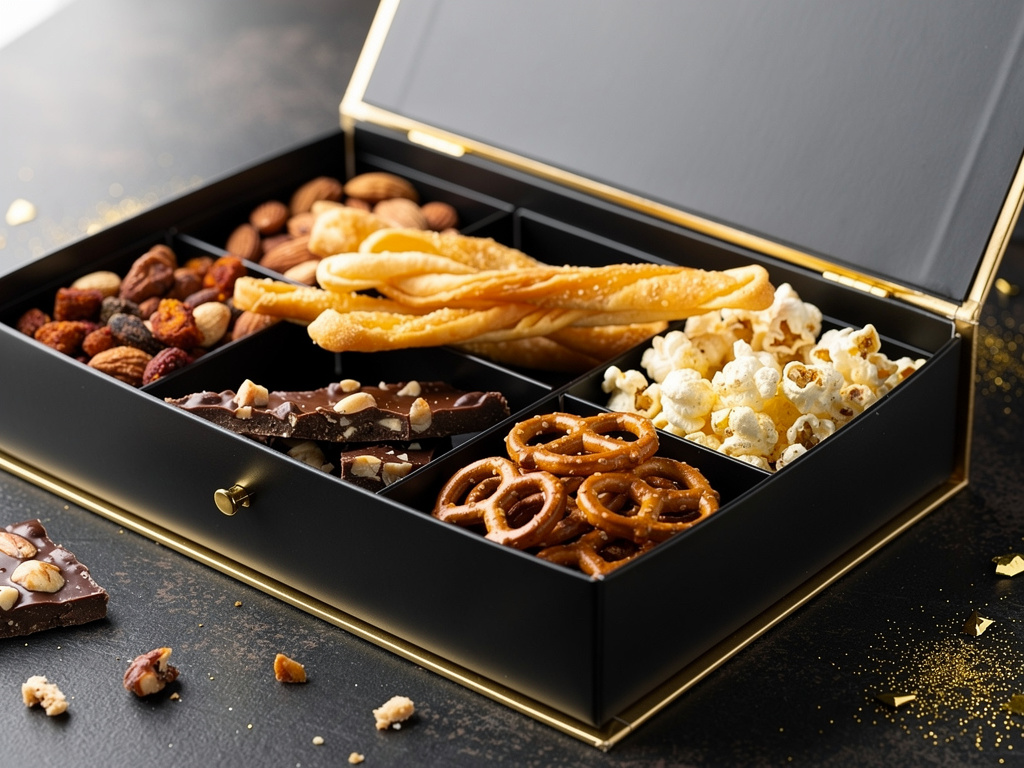


New Year's Eve is a party night, and a party night needs snacks. A curated New Year's Eve snack box, spiced nuts, cheese straws, gourmet popcorn, snack mix, and a little chocolate to finish, is exactly what hosts want to set out for guests, and it's a strong late-December seller for a home food vendor. Unlike a sweet treat box, a snack box leans savory and grown-up, which sets it apart in a crowded holiday market. Best of all, the snacks that fill it are largely shelf-stable and cottage-food eligible. This guide walks through how to sell a New Year's Eve snack box.
The short version: A New Year's Eve snack box is a curated, mostly savory party assortment, spiced nuts, cheese straws, gourmet popcorn, pretzels, snack mix, and a bit of chocolate, sold as a seasonal boxed product. The snacks are largely cottage-food eligible, since nuts, popcorn, trail and snack mixes, and baked goods are standard approved categories in most states. Because a box mixes many items and reaches party guests, allergen labeling matters. Launch pre-orders in mid-December, deliver just before New Year's Eve, price the curated box rather than the pieces, and lean into the grown-up, savory angle that sets it apart from sweet holiday boxes. Homegrown gives you the storefront to take pre-orders and offer box tiers. This is general information, not legal advice.
This guide covers what goes in the box, cottage food eligibility, allergen labeling, pricing, timing, packaging, and mistakes to avoid. This is general information, not legal or food-safety advice.
A New Year's Eve snack box is a curated, mostly savory assortment, spiced nuts, cheese straws, gourmet popcorn, pretzels, snack mix, and a touch of chocolate, chosen to look festive and please a party crowd. The grown-up, savory angle is what sets it apart.
What makes a strong box:
The takeaway: a great snack box curates savory party snacks with a small sweet finish and a grown-up, festive look. The rule is to lean into the savory, adult angle that distinguishes it from sweet holiday boxes, the same curation mindset behind holiday gift boxes.
Yes, most New Year's Eve snacks are cottage-food eligible, because nuts, popcorn, snack mixes, and baked goods are standard approved categories in most states. A shelf-stable snack box is a legally straightforward product.
Why the snacks qualify:
The takeaway: nuts, popcorn, snack mixes, and baked savory items are cottage-eligible in most states, so a shelf-stable snack box is straightforward. The rule is to build the box from shelf-stable snacks and confirm your state's rules, the same foundation as starting a cottage food business.
Allergen labeling matters because a snack box mixes many items and reaches a party full of guests, so clear allergen information protects the people who need it. A box heavy on nuts makes this especially important.
Why allergens matter here:
The takeaway: a snack box concentrates many allergens, especially nuts, in a product shared at parties, making allergen labeling essential. The rule is to label every snack and the whole box clearly, in line with the big allergens on a cottage food label.
You price a snack box for the full assortment, the packaging, and the labor of making and assembling several snacks, not by summing individual snack costs. The curation and grown-up presentation justify a premium.
A simple tier structure gives hosts a choice by party size:
| Box tier | Roughly what's inside | Best for |
|---|---|---|
| Small | 3-4 snacks, for a couple or small gathering | Intimate nights in |
| Standard | 5-6 snacks, a full savory assortment | The core seller, house parties |
| Party-size | 8+ snacks, generous portions | Big gatherings and hosts |
Pricing guidance:
The takeaway: price the curated box for its assortment, packaging, and multi-snack labor, using tiers and a modest seasonal premium. The rule is to price the party product, not the raw snacks, in line with a smart holiday pricing strategy.
You should open snack box pre-orders in mid-December and deliver in the final days before New Year's Eve, using a pre-order model to plan production. The window is short and concentrated, so timing is everything.
The seasonal timeline:
The takeaway: tease in early December, open pre-orders mid-month, cut off a few days before, and deliver right before New Year's Eve. The rule is to sell by pre-order with a capacity cap, since the window is short and unforgiving. Once the party boxes are picked up, the same pre-order list can carry you into January with a New Year's reset menu of granola, tea blends and soup mix jars that opens the week after Christmas.
You package a snack box to keep each snack fresh and separate, protect it in transit, and deliver the festive, grown-up look that sells it. Freshness and presentation both matter for a party product.
Packaging well:
The takeaway: package to keep each snack fresh and separate, protect it in transit, and deliver a festive, grown-up look. The rule is to make every box arrive fresh, intact, and party-ready, since presentation and crunch are much of what customers pay for.
The biggest mistakes are weak allergen labeling, snacks that go stale, underpricing the multi-item labor, and launching too late. Each is avoidable with planning.
Mistakes to avoid:
The takeaway: the mistakes that matter most are weak allergen labeling, stale snacks, underpricing, and late launches, all avoidable with planning. The rule is to label clearly, seal for freshness, price the labor, and launch early. The same nuts, popcorn and pretzels sell again about six weeks later, when Super Bowl Sunday snack orders come in by the tray for parties of 10 to 20.
A New Year's Eve snack box lives on pre-orders, tiers, and a tight delivery window, so you need a clean way to take orders, offer box options, and get paid, without losing a cut of every sale. That's what Homegrown is for.
Homegrown gives you an online storefront to sell your snack boxes as tiers, take scheduled pre-orders with a deadline, manage pickup or delivery, and collect payment, all for a flat $10 a month with no percentage fees beyond standard payment processing. For a concentrated seasonal push where most of your revenue lands in a few days, a per-order commission quietly skims your best sales of the season. A marketplace-style platform takes a percentage of every box, and a general website builder wasn't made for pre-orders with deadlines and pickup windows. Homegrown bundles the storefront, order scheduling, and tier options into one flat rate, so your New Year's margin stays yours. It won't suit everyone, if you make a couple of boxes for friends and take cash, you may not need a storefront yet, but the moment you're taking real pre-orders online, a flat monthly rate beats handing a percentage to a marketplace.
Ready to sell your New Year's Eve snack boxes online? Set up your Homegrown storefront and open your pre-orders.
In most states, yes, as long as the snacks are shelf-stable. Nuts, popcorn, snack and trail mixes, and baked goods like cheese straws are standard approved cottage food categories. Avoid perishable items like fresh dips or cheese that need refrigeration, confirm your state's rules, and follow its registration and labeling requirements.
Lean savory and grown-up: spiced or candied nuts, cheese straws or savory crackers, gourmet popcorn, seasoned pretzels, and a snack mix, with a small sweet finish like bark or chocolate-covered nuts. A black-and-gold or sparkle presentation signals a festive adult party box, which distinguishes it from a sweet treat box.
Very. A snack box often leans heavily on nuts, a major allergen, and mixes wheat, milk, and soy from crackers and mixes, so one box can carry several allergens. Party guests grazing the box rely entirely on your labeling. List ingredients and allergens for each snack and provide an overall allergen statement for the box.
Tease your box in early December, open pre-orders mid-month while shoppers are already buying for the holidays, set a firm cutoff a few days before New Year's Eve, and deliver December 30 or 31 so everything is fresh for the party. A pre-order model with a capacity cap keeps production manageable in a short window.
Bag or cup each snack separately and seal them, since nuts and popcorn go stale and crackers go soft when exposed to air. Keeping items separate also prevents flavors from mixing. Sturdy packaging protects the assortment in transit, and delivering close to New Year's Eve ensures everything arrives crisp and party-ready.
A snack box leans savory and grown-up, spiced nuts, cheese straws, gourmet popcorn, and snack mix with just a small sweet finish, while a treat box is sweet and dessert-focused. The savory, adult angle sets a New Year's Eve snack box apart in a holiday market crowded with cookies and candy, giving it a distinct appeal for party hosts.