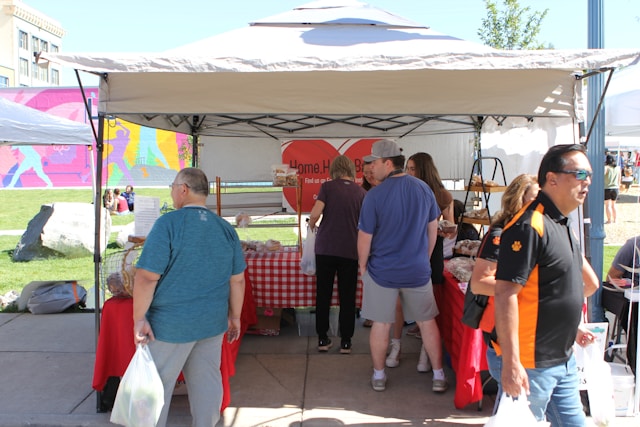
You packed 40 jars of jam for Saturday's market. You sold 22. Now you are driving home with 18 jars in the back seat, wondering if you made the wrong flavors, priced them too high, or just picked a bad day.
Next week you bring 25 jars. You sell 24 and run out of your best flavor by 10am. Customers are asking for it at noon. You left money on the table.
Selling out at the farmers market is not about luck. It is a system — one you build by tracking your numbers, adjusting what you bring, and creating demand before market day even starts. The vendors who sell out consistently are not magically better at making products. They are better at matching their supply to their demand.
The short version: Selling out every week at the farmers market comes down to five things: tracking what sells and what does not after every market day, adjusting your production to match actual demand, using pre-orders to guarantee sales before you show up, setting up your booth to create urgency, and building a repeat customer base that buys from you every week. Most vendors bring too much product and hope for the best. The ones who sell out treat their market booth like a business — they know their numbers, they plan their production, and they create demand instead of waiting for it.
Why Should Selling Out Every Week Be Your Goal?
Selling out means you brought the right amount of product and all of it found a buyer. That is the most efficient outcome for a farmers market vendor. Every jar, loaf, bag, or bundle that comes home with you is lost revenue — and for perishable products, it is often a total loss.
Here is what unsold product actually costs you:
- Ingredient and material costs — You already spent money making that product. If it does not sell, those costs come straight out of your pocket.
- Time — Every hour you spent making unsold product is an hour you could have spent on something that generates revenue.
- Storage and waste — Perishable products spoil. Even shelf-stable products take up storage space and may eventually go stale or need to be discounted.
- Motivation — Bringing home boxes of unsold product week after week is discouraging. It makes you question whether selling at the market is worth it.
But there is a tension here that experienced vendors understand: you do not want to show up with exactly 20 jars if you expect to sell 20. Customers are drawn to abundance. A full, overflowing table attracts buyers. A table with three lonely jars left on it by 9am looks like the leftovers nobody wanted.
The sweet spot is bringing about 10-15% more than you expect to sell. If your data says you consistently sell 30 units, bring 33-35. You get the full-table look early in the day, and you go home with very little left over. If you consistently sell out with nothing left by mid-morning, that is a signal to bring more — or raise your prices.
How Do You Track What Sells at the Farmers Market?
The single most important habit that separates vendors who sell out from vendors who guess is tracking. You cannot optimize what you do not measure.
What to Record After Every Market Day
After each market, spend five minutes writing down:
- Products brought — How many units of each product you brought to the booth
- Products sold — How many units of each product you actually sold
- Revenue per product — How much each product earned (total sales by product)
- Sell-through rate — Units sold divided by units brought, as a percentage
- Weather and conditions — Temperature, rain, overcast, windy
- Market events — Was there a special event, holiday weekend, or competing event in town?
- Time you sold out — If a product sold out, note what time
This data is the foundation of everything else in this article. Without it, you are guessing every week.
How to Use a Simple Sales Tracker
You do not need fancy software. A notebook works. A spreadsheet works. If you use a POS system like Square, it tracks some of this automatically.
The key is reviewing your data weekly, not just recording it. Before each market, look at the previous 3-4 weeks and ask:
- Which products sold out every week? (You probably need to bring more.)
- Which products had the lowest sell-through rate? (You probably need to bring less — or stop bringing them.)
- Did weather affect your sales? (Rainy days might mean fewer customers but bigger per-customer purchases.)
- Are there trends over time? (Maybe your banana bread sells great in fall but drops off in summer.)
Most vendors who start tracking are surprised by what they find. The product they thought was their bestseller might actually be their third-best product. The one they almost stopped making might have the highest sell-through rate.
How Do You Adjust Your Production Based on Demand?
Once you have 3-4 weeks of data, you can start making smarter production decisions.
Reading Your Sales Data
Look for patterns in your sell-through rate (units sold / units brought):
- 95-100% sell-through — You are selling out. Consider bringing 10-20% more or raising your price slightly.
- 80-95% sell-through — This is the sweet spot. You have enough to display well and you are bringing most of it home empty-handed.
- 60-80% sell-through — You are overproducing. Cut your quantities by 20-30% next week.
- Below 60% sell-through — This product may not be a fit for this market, or it needs a price adjustment, better placement, or a different approach.
The 80/20 Rule at the Farmers Market
Most vendors find that roughly 80% of their revenue comes from about 20% of their products. A jam maker with 12 flavors might find that strawberry, blueberry, and peach account for most of their sales while the exotic flavors barely move.
This does not mean you should only sell three flavors. Variety attracts customers. But it does mean you should produce heavily in your top-selling products and bring smaller quantities of everything else. If you make 40 jars for market day, maybe 25 of them should be your top three flavors and 15 should be spread across the rest.
How Much Product Should You Bring to the Farmers Market?
The right number depends on your sell-through data, but here are starting benchmarks if you are new or do not have enough data yet:
- First 2-3 markets — Bring what you can afford to lose. You are gathering data, not optimizing yet. Treat these markets as research.
- After 4-6 markets — You should have enough data to see patterns. Adjust quantities based on your average sell-through rates.
- Ongoing — Target an 85-95% sell-through rate. Bring about 10-15% more than your average sales, account for weather and seasonal changes, and adjust every week based on the most recent data.
If you are not sure what the most profitable products to sell at a farmers market are, figuring that out before optimizing quantities saves you a lot of trial and error.
How Do Pre-Orders Help You Sell Out Before Market Day?
Pre-orders are the most underused tool in a farmers market vendor's toolkit. A pre-order means a customer commits to buying your product before market day — and when you show up, part of your inventory is already spoken for.
Why Pre-Orders Change Everything
If you bring 40 jars to market and 15 of them are pre-ordered, you only need walk-up customers to buy 25 jars. That is a dramatically easier goal. Pre-orders give you:
- Guaranteed revenue — You know before you start baking, canning, or harvesting exactly how much of your product already has a buyer.
- Less waste — You produce to order for the pre-sold portion. No guessing.
- Better production planning — If you get 20 pre-orders for cinnamon rolls and 3 for banana bread, you know exactly how to spend your baking time.
- Customer commitment — A customer who pre-orders is more engaged than a walk-up browser. They are showing up specifically to get your product.
How to Set Up Pre-Orders
You do not need a complicated system. Here are three approaches, from simplest to most effective:
- Sign-up sheet at your booth — Put a clipboard at your table where customers can write their name and what they want for next week. Text or call them to confirm.
- Text or social media orders — Post your menu for next week on Instagram or in a text group. Customers reply with their orders. Simple but time-consuming to manage as you grow.
- Online storefront — The clipboard works at 5 pre-orders. At 15, you are calling people back all Thursday evening. The text group works until someone's order gets buried and they show up expecting a product you did not make. Homegrown is $10/month — customers see your menu, pick what they want, and pay before you start your production day. You know exactly how many cinnamon rolls to bake and how many jars of strawberry jam to pack. It does not manage your booth setup or print your price signs — but for the pre-order system that turns sellouts into next-week revenue, it costs less than losing two jars of unsold jam.
Balancing Pre-Orders and Walk-Up Sales
Do not pre-sell everything. If you sell all 40 jars through pre-orders, your booth looks empty and walk-up customers have nothing to buy. That hurts you in two ways: you miss impulse purchases, and new customers never discover you.
A good balance is pre-selling 30-50% of your expected production and reserving the rest for walk-up sales. As your pre-order volume grows, you can increase your total production to cover both channels.
What Display and Pricing Tactics Drive More Sales?
How you present your products directly affects how much you sell. Two vendors with identical products can have dramatically different sales based on how their booths look.
How to Set Up Your Booth to Sell More
These display tactics are proven to increase sales at the farmers market:
- Start with abundance — Pile your products high at the beginning of the day. Full tables with overflowing displays tell customers this booth is popular and worth stopping at. As inventory drops, consolidate onto fewer tables or into tighter arrangements so it still looks full. For more display strategies, see our guide on farmers market booth setup ideas.
- Bestsellers at eye level — Put your top-selling products where customers see them first. Eye-level, front of the table, facing outward.
- Price everything clearly — Customers who have to ask the price often walk away without buying. Use clear, legible price signs on every product. Include the product name, price, and one line about what makes it special ("made with local honey" or "small-batch, hand-stirred").
- Offer samples — Sampling converts browsers into buyers. If your product tastes great, let people try it. The conversion rate from a free sample to a purchase is significantly higher than from a visual display alone.
- Create a focal point — One standout item at the center of your display draws attention to the entire booth. A tall stack, an unusual product, a beautifully arranged basket — something that makes people stop walking and look.
Pricing Strategies That Help You Sell Through
Pricing is not just about covering your costs. It is a sales tool.
- Bundle pricing — "3 jars for $20" moves more product than "$8 each." Bundles increase the average transaction size and give customers the feeling of getting a deal. Even a slight discount on the bundle (versus buying individually) is enough to motivate larger purchases.
- Round pricing — Price in round numbers ($5, $10, $15) for faster cash transactions. At a busy farmers market, fumbling for change slows your line down and costs you sales.
- End-of-day deals — In the last hour of the market, offer a discount on remaining inventory. "Everything left is $5" or "Buy two, get one free." This is especially effective for perishable products you do not want to take home. Some vendors announce this on social media or a whiteboard at their booth to attract late shoppers.
- Value pricing, not race-to-the-bottom pricing — If you are not selling out, the answer is rarely "lower your prices." More often, the answer is "communicate your value better." Better signage, better display, better descriptions of what makes your product special. If your prices are fair and your product is good, the issue is usually visibility — not cost. For detailed pricing strategies, see our guide on how to price food products for a farmers market.
How Do You Build a Customer Base That Buys Every Week?
Walk-up traffic is unpredictable. Repeat customers are not. The vendors who sell out consistently have built a base of regulars who show up every week specifically to buy from them.
Turning First-Time Buyers Into Regulars
- Remember names — A customer who hears "Hi Sarah, back for the strawberry jam?" is far more likely to become a weekly buyer than one who gets a generic "Can I help you?" Personal recognition is the most powerful customer retention tool you have — and it costs nothing.
- Be consistent — Show up every market day. Have your core products available every week. If customers cannot count on you being there or having what they want, they stop looking for you. Consistency builds trust and routine.
- Collect contact information — Ask customers if they want to get a text or email when you are heading to market or have a new product. Even a simple text list of 20-30 loyal customers gives you a built-in audience every market day. For more on building this list, see our guide on how to get more customers at a farmers market.
- Follow up between markets — Send a quick message the day before market: "Heading to the Saturday market tomorrow with fresh cinnamon rolls and a new peach jam. Pre-orders open until 8pm tonight." This reminds customers you exist and gives them a reason to show up.
Creating Urgency and Loyalty
- Limited quantities (real scarcity, not fake) — If you only make 20 loaves of bread each week, that is real scarcity. Customers learn that if they want your bread, they need to show up early or pre-order. This drives urgency without being gimmicky.
- Weekly specials or rotating products — Bring one new or seasonal product each week alongside your core lineup. This gives regulars a reason to check in every market day. "What's the special this week?" becomes part of their routine.
- Loyalty rewards — A simple punch card (buy 10, get one free) encourages repeat purchases. Handwritten loyalty cards are cheap and effective. Some vendors also give their best regulars first access to pre-orders or new products.
What Should You Do When You Sell Out Too Early?
Selling out by 10am when the market runs until 1pm is a great problem to have — but it is still a problem. You are leaving money on the table for three hours. Late-arriving customers do not get to buy from you, and they may not come back next week.
Here is how to handle early sellouts:
- Raise your prices — If you consistently sell out early, your prices may be too low. A 10-15% price increase tests whether the demand holds. If you raise prices and still sell out, you are making more money per unit with the same amount of work.
- Increase production gradually — Do not double your production overnight. Add 15-20% more product and see if the demand absorbs it. Gradual scaling prevents overproduction.
- Add pre-orders for the overflow — If you cannot produce more (limited oven space, limited time, limited ingredients), use pre-orders to let customers secure products ahead of time. This way they get what they want, you get guaranteed sales, and you do not have to expand production beyond your capacity.
- Use sellout times as marketing — Post on social media: "Sold out of cinnamon rolls by 9:30am! Pre-order yours for next week." This creates urgency, promotes your pre-order system, and positions your product as in-demand.
- Take a waitlist — When you sell out, have a sign-up sheet where customers can leave their name for next week's pre-order list. Every sellout becomes a lead for next week's sales.
How Do You Plan for Seasonal Changes at the Farmers Market?
Demand shifts with the seasons, and the vendors who sell out year-round plan for those shifts in advance.
- Spring and early summer — Markets are just opening. Foot traffic builds slowly. Start with conservative quantities and increase as the season picks up. Fresh, light products do well — berries, greens, herb-infused items.
- Peak summer — The busiest market weeks. Highest foot traffic, most vendors, most competition. Bring your maximum quantities. This is when you should be selling out consistently if your system is working.
- Late summer and fall — Transitional period. Customers shift toward preserves, pickles, baked goods, and heartier products. Adjust your product mix to match seasonal cravings. Markets that overlap with fall harvest see strong demand for seasonal specialties.
- Holiday markets — If your market runs through November and December, gift-ready products (bundles, sampler packs, holiday packaging) see a spike. Price these higher — customers expect to pay more for gifts. Plan your holiday production weeks in advance because demand at holiday markets is often higher than regular season markets.
For tips on managing the tougher market days, see our guide on handling slow days at the farmers market.
What Mistakes Prevent You From Selling Out?
These are the patterns that keep vendors from reaching a consistent sellout:
- Bringing too much variety — Having 15 products means you are spreading your production thin across too many items. Customers get overwhelmed by choice, and you cannot make enough of any single product to meet demand. Focus on 5-8 core products and rotate 2-3 specials.
- Ignoring your data — If your raspberry jam sits on the table every week while your strawberry jam sells out by 10am, and you keep bringing equal quantities of both, you are ignoring what the market is telling you. Let the data drive your production decisions.
- Pricing too low — Underpricing feels safe ("at least it will sell"), but it devalues your product, attracts price-sensitive buyers who are less loyal, and cuts into your margins. If you sell out every week at low prices, you are working harder than you need to. Raise your prices until the sell-through rate settles into the 85-95% range.
- Not promoting before market day — If you only interact with customers at your booth, you are relying entirely on foot traffic. Vendors who sell out send pre-market messages, post on social media with a free scheduling tool like Buffer, take pre-orders, and build anticipation before the market opens. The best vendors have a line forming before the bell rings.
- Inconsistency — Skipping market days, changing your product lineup randomly, showing up late, or being unreliable with pre-orders breaks the trust your customers have in you. Regulars stop looking for you if you are not there when they expect you to be. As Penn State Extension notes in their vendor guide, consistency — both in attendance and product quality — is one of the most important factors in building a loyal customer base.
- Not learning from other vendors — The experienced vendors around you have already figured out many of the things you are struggling with. Building relationships with other vendors gives you access to insights about market dynamics, customer behavior, and selling strategies that you would take years to learn on your own.
Selling at markets or a farm stand? Let customers order ahead online. The easiest way to take local orders and get paid is an online storefront — see the best platform to sell food from home, or set up a Homegrown storefront in about 15 minutes ($10/mo, 0% commission).
Frequently Asked Questions
How Much Product Should I Bring to a Farmers Market?
Bring about 10-15% more than your average weekly sales. If you consistently sell 30 units, bring 33-35. This gives you enough for a full-looking display while minimizing leftovers. If you are brand new and have no sales data yet, start with a conservative amount you can afford to not sell and treat the first few markets as data-gathering sessions. Adjust your quantities weekly based on what actually sells.
Should I Lower My Prices to Sell Out Faster?
Usually not. If your product quality is good and your display is strong, the issue is more likely visibility, foot traffic, or product-market fit — not price. Lowering prices cuts into your margins and trains customers to expect cheap prices. Instead of cutting prices, try better signage, sampling, pre-market promotion, or adjusting your product mix. Only consider a price drop if you have strong evidence that your pricing is significantly above comparable products at the same market.
How Do I Handle Customers Who Arrive After I Sell Out?
Turn it into a future sale. Have a sign-up sheet or a card with your contact information so they can pre-order for next week. Say something like: "I'm sold out today, but I can save some for you next week if you want to pre-order." This converts a disappointed customer into a committed future buyer. You can also point them to your Homegrown storefront where they can order between market days. Customers choose pickup or local delivery at checkout.
Can I Take Pre-Orders at a Farmers Market?
Yes. Most farmers markets have no issue with vendors taking pre-orders as long as you follow the market's rules about selling. Pre-orders simply mean a customer orders in advance and picks up at the market. You can take pre-orders through a sign-up sheet, text messages, social media DMs, or an online storefront. Check with your market manager if you have questions about pre-order policies.
How Do I Know Which Products to Stop Making?
Look at your sell-through rate over at least 4-6 weeks. If a product consistently sells below 50% of what you bring — and you have already tried better placement, sampling, and adjusting quantities — it may not be a fit for this market. Before cutting it entirely, try reducing the quantity to the minimum and see if it sells out in smaller batches. Some products work as limited-quantity specials even if they do not work as high-volume items.
Is It Better to Sell Out or Have Leftover Product?
It depends on what you sell. For perishable products (baked goods, fresh produce), selling out is almost always better because leftovers lose quality or go to waste. For shelf-stable products (jams, pickles, honey), having a small amount left over is fine because it carries over to next week. The ideal target is selling 85-95% of what you bring — enough to sell nearly everything while keeping your booth looking full for most of the market day.
How Long Does It Take to Start Selling Out Consistently?
Most vendors who follow a data-driven approach start seeing consistent sellouts within 6-10 market days. The first 3-4 markets are about gathering data. The next 3-4 are about adjusting production based on what you learned. By market 8-10, you should have a solid sense of what to bring, how much, and how to sell it. The timeline depends on your market, your products, and how diligently you track and adjust — but vendors who track their numbers improve faster than vendors who guess.
How Do You Build a Sellout System Beyond the Booth?
The vendors who sell out every week are not working harder than everyone else. They are working smarter — tracking their numbers, adjusting their production, using pre-orders, and building a customer base that buys before they even set up their booth.
The best way to make that system work between markets is pre-orders. When part of your inventory is spoken for before you load the truck, you produce to order, waste less, and stop guessing how much to bring.