
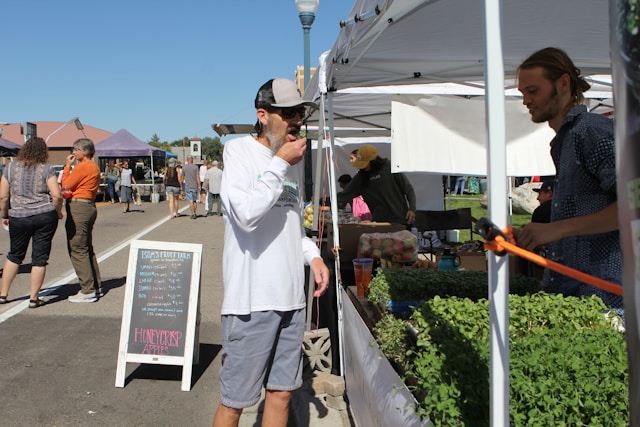


Most vendors think offering free samples means giving away product for nothing. It is actually the highest-ROI sales tactic available at a farmers market. An eight-state study of more than 3,400 farmers market shoppers found that 55 percent of people who tried a sample bought the sampled product that same day — even though they had not planned to buy it.
The difference between sampling that drives sales and sampling that drains your inventory is having a strategy. The right product, the right portion size, the right booth setup, and the right timing turn a few dollars' worth of samples into dozens of extra sales every market day.
The short version: Start by checking your state and market rules — some require permits, some do not. Sample your best-selling product (not your slowest), keep portions to 0.5 to 1 ounce, and position samples at the front of your booth where foot traffic flows. Total cost for most cottage food vendors is $8 to $15 per market day, and you only need two extra sales to break even. Stand up, face the aisle, and tell every person who tries a sample exactly what they are tasting and how much it costs.
The rules depend on where you sell. There is no single federal regulation for sampling at farmers markets. Every state handles it differently, and your county health department and market manager can each add their own requirements on top of that.
Some states make it simple. Texas does not require a permit to offer samples at a farmers market, and local governments cannot require one either. Minnesota does not require a license for sampling at markets or community events. Oregon does not require a license from the state or county to prepare and give out samples.
Other states require permits. Illinois charges $10 to $40 for a sampling permit depending on whether you already hold a food handler certification. California requires a local health department permit and a designated sampling area with a handwashing station. Massachusetts requires vendors to be permitted as Temporary Food Establishments with pre-approval of all sampled items at least 30 days before the event.
Before you buy any sampling supplies, make three calls:
One phone call to each of these three contacts saves you from buying equipment you cannot use or showing up with samples you are not allowed to serve.
Not every product works as a sample. The best sampling candidates are products that taste good in a single bite, do not require temperature-controlled equipment, and show their full flavor without needing to be cooked into something else.
The general rule: if a customer can taste it in one bite and immediately understand why they should buy it, it is a good sampling candidate. If it requires explanation, cooking, or special equipment to appreciate, skip it and sample something else.
Sampling costs far less than most vendors assume. For cottage food products, the total out-of-pocket cost is typically $8 to $15 per market day. Here is the math for the most common products.
Jam (8 oz jar selling for $9):
Honey (vendor-dispensed teaspoon from a bulk jar):
Baked goods (cookie at $1.50 retail, $0.35 cost of goods):
Disposable supplies (toothpicks, small cups, napkins): $5 to $10 per market day
Total sampling cost per market day: At 100 samples over a three-hour peak window, a jam vendor gives away about 6 to 12 ounces of product — less than two full jars. Combined with disposables, total cost lands between $8 and $15.
If your total sampling cost is $12 and your average sale is $9, you need just two extra sales to break even on sampling costs. That is it — two extra jars.
At a 25 percent conversion rate (one in four people who sample buy), sampling 100 people means 25 buyers and $225 in sales directly tied to sampling.
At the 55 percent conversion rate from the farmers market research, that same 100 people means 55 buyers and $495 in attributed sales.
Even at the conservative end, sampling pays for itself many times over. The question is not whether you can afford to sample. The question is whether you can afford not to. If you are tracking your farmers market booth ROI, sampling cost should be a line item in your per-market expenses — and it will almost always show a positive return.
Where you put your samples matters as much as what you are sampling. A sample tray hidden at the back of your booth converts far fewer people than one positioned where foot traffic naturally flows.
Getting the portion size and timing right means you serve more people with less product and catch them when they are most likely to buy.
Keep food samples between 0.5 and 1 ounce — a single bite. Beverage samples should be 0.5 to 1 fluid ounce. This is enough for a genuine flavor impression without giving away full servings.
Use a carrier to make the sample experience complete:
The carrier shows the product in a real-world use context and eliminates the awkward "is this any good by itself?" moment.
The peak conversion window at most farmers markets is 10 AM to 1 PM. This is when foot traffic is highest and customers have time to stop and engage.
Within that window:
Start sampling about one hour after the market opens. The initial rush of setup is over, tables are still full, and customers are settling into browsing mode.
Prepare samples in batches. Do not put out three hours' worth of samples at once. Most states require you to discard cut or prepared samples after two to four hours. Prepare small batches that stay fresh, and replenish as needed.
The difference between sampling that drives sales and sampling that wastes product usually comes down to a few common mistakes.
Several of these overlap with the broader list of farmers market vendor mistakes that cost you sales. If you are making sampling mistakes, you may be making other booth mistakes too.
Food safety is not optional when sampling. A single incident can shut down your booth for the season and damage your reputation at the market. These are the basics every vendor must follow.
Temperature control:
Handwashing:
Allergen signage:
Single-serve dispensing:
Surface sanitation:
Once you have the basics down — right product, right portion, right setup — these strategies can push your sampling results further.
One of the simplest ways to increase sampling impact is partnering with a neighboring vendor whose product complements yours.
Sampling is one of the best ways to introduce a new flavor or product line without the risk of producing a full batch that might not sell.
A business card or small flyer with your ordering page link next to the sample tray turns a one-time taster into a repeat buyer. Homegrown is $10/month with no percentage fees beyond standard payment processing and gives you an ordering page where sampling customers can browse your full product line and place pre-orders between markets. Compare that to handing out your Instagram handle (where they cannot buy anything) or your phone number (and hoping they text you next week). Homegrown does not create your sampling strategy — it gives you the page that converts Saturday samplers into Tuesday customers.
Selling at markets or a farm stand? Let customers order ahead online. The easiest way to take local orders and get paid is an online storefront — see the best platform to sell food from home, or set up a Homegrown storefront in about 15 minutes ($10/mo, 0% commission).
It depends on your state and county. Some states like Texas, Minnesota, and Oregon do not require a sampling permit for farmers market vendors. Others like Illinois, California, and Massachusetts require permits, food handler certifications, or pre-approval of sampled items. Always check with your state health department, county health department, and market manager before your first sampling day — all three can have different requirements.
Plan for approximately 100 samples during a three-hour peak window. For a product like jam, that means giving away 6 to 12 ounces total — less than two full jars. Prepare in small batches rather than putting everything out at once, since most states require you to discard prepared samples after two to four hours. Ask your market manager for average foot traffic numbers to calibrate your quantities.
Keep food samples between 0.5 and 1 ounce — a single bite. Beverage samples should be 0.5 to 1 fluid ounce. These small portions give a genuine flavor impression while allowing you to serve three to four times more customers per unit of product. Use a carrier like a cracker or chip to showcase the product in a real-world use context.
For most cottage food vendors, total sampling cost is $8 to $15 per market day. This includes $3 to $5 in product cost (at cost of goods, not retail price) and $5 to $10 in disposable supplies like cups, toothpicks, and napkins. You only need two extra sales at a typical price point to break even on sampling costs. The 55 percent same-day conversion rate from farmers market research means sampling consistently generates far more revenue than it costs.
Avoid sampling raw meat, poultry, and frozen items — they cannot be sampled raw and require cooking equipment and higher food handler certifications. Dairy products are restricted or prohibited for sampling in several states unless you hold a dairy license. Products that need cooking context (dry spice blends, raw ingredients) do not translate well as standalone samples. Stick to products where one bite tells the full story: jams, honey, baked goods, sauces, and pickles.
Yes. An eight-state study of over 3,400 farmers market shoppers found that 55 percent of people who tried a sample bought the product that same day, even though they had not planned to. Broader retail research shows sampled products see a 177 percent sales lift on the day of sampling and a 58 percent increase in the 20 weeks after. At a typical farmers market booth, the cost of sampling is $8 to $15 per day — you only need two additional sales to cover that cost completely.
Ready to turn your sampling customers into repeat buyers? Set up your ordering page and give market customers a way to reorder between Saturdays.



