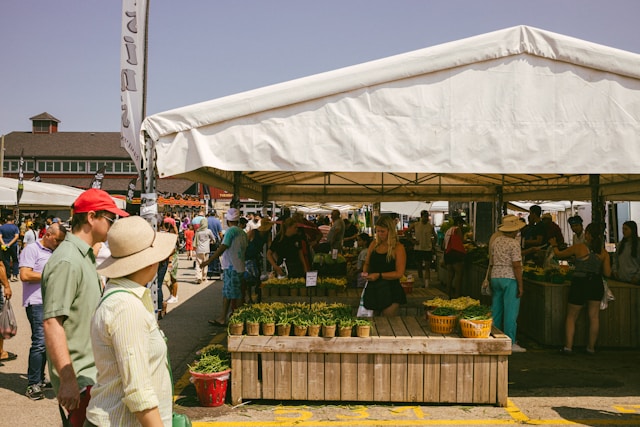
Most new vendors spend weeks perfecting their product, designing their booth, and choosing the right farmers market. Almost none of them spend any time learning the social rules that actually determine whether they survive their first season.
Farmers markets are small, recurring communities. The same vendors show up every week, stand next to the same neighbors, and interact with the same market manager for an entire season. The unwritten rules of this community are not posted anywhere. You learn them by breaking them — or by reading a list like this one before your first market day.
The short version: Show up on time every week — rain or shine — and keep everything inside your assigned 10x10 space. Introduce yourself to booth neighbors on day one, and never undercut them on price or copy their products. Stand up and face the aisle, communicate every absence to your market manager at least 36 to 72 hours in advance, and never pack up before official close. These rules are simple, but breaking even one of them can damage your reputation for an entire season.
What Are the Setup and Arrival Rules Every Vendor Should Follow?
Arrive early enough to be completely set up before the market opens to customers. "Setting up" while shoppers are already walking the aisle signals that you are not serious about the market — and it disrupts the clean, organized opening that managers and veteran vendors expect.
Here are the setup norms that experienced vendors follow without thinking:
- Back your vehicle to your space, unload fast, and move the car immediately. Blocking the loading area while you arrange your display is one of the most common irritants for other vendors. Unload, park elsewhere, then come back and set up.
- Never sell before the official opening time. Even if early-arriving customers ask, wait until the market opens. Early sales undermine the shared opening moment and can annoy both the market manager and your neighbors.
- Keep setup noise to a minimum. Hammering stakes, blasting music, or running a generator before other vendors are ready sets a bad tone. Be aware of the sound you create.
- Do not start teardown early. Packing up while neighboring booths are still serving customers is disruptive — the noise and commotion drive shoppers away from your neighbors. Wait until the official closing time.
The general principle behind all of these: you are part of a shared space, and your actions affect the vendors around you.
How Do You Stay in Your Assigned Booth Space?
Your assigned space is typically a 10-foot by 10-foot square. Everything — products, signage, display props, bags, coolers — must fit inside it. Spilling into the aisle narrows the walkway for customers. Spilling into a neighbor's space takes what they are paying for.
- Signs, banners, and A-frames must stay within your footprint. Some markets specify that signage cannot extend more than 3 feet beyond your tent boundary. Check your market's rules.
- Do not let your display creep forward over the course of the day. It happens gradually — a sample tray pushed a few inches out, a box of bags set on the ground outside the tent. By mid-morning, you are three feet into the aisle. Walk around your booth every hour and pull everything back in.
- Accept booth reassignment without complaint. Managers move vendors based on daily attendance, product mix, and space needs. If you are moved to a different spot, set up and sell. If you have a concern, raise it privately after the market — not publicly in front of customers or other vendors.
Most markets follow a progressive enforcement model for space violations: verbal warning, then a fine, then additional fines, then suspension or expulsion. What feels like a small infraction is being documented.
What Is the Etiquette for Vendor-to-Vendor Relationships?
The vendor next to you is not your competitor. They are your neighbor for an entire season — potentially 30 or more market days side by side. The relationship you build with them matters more than almost anything else at the market.
- Introduce yourself on your first day. Walk over, say your name, tell them what you sell, and ask about their products. This takes 60 seconds and sets the tone for the entire season.
- Be a practical neighbor. Lend change when someone runs out. Watch a neighbor's booth when they need a bathroom break. Help hold down a tarp in sudden wind. Have extra pens, receipt paper, and zip ties on hand — someone will always need one. These small gestures build the kind of goodwill that leads to customer referrals.
- Share information generously. Experienced vendors are often willing to share what they have learned — which products sell best, how to handle rainy days, which other markets are worth applying to. The vendors who hoard information tend to isolate themselves. The ones who share tend to get the most help in return.
- Cross-promote with complementary vendors. If you sell jam and the vendor three booths down sells bread, send customers to each other. A jam maker saying "try it on the sourdough from the booth near the entrance" costs nothing and builds a mutual referral loop that benefits both of you.
- Do not interrupt neighbors during peak selling periods. If their booth is busy with customers, save the conversation for a lull. Respect that everyone is there to earn a living.
Many of these etiquette mistakes overlap with the common farmers market vendor mistakes that cost you sales — the difference is that etiquette mistakes also cost you relationships, which are harder to repair than a slow sales day.
The social dynamic to understand: farmers markets have informal hierarchies. Vendors who have been at a market for three or more seasons know the manager's preferences, the market's rhythms, and the regular customers by name. A new vendor who arrives and immediately acts entitled — playing loud music, complaining about their booth spot, packing up early — will be noticed, talked about, and remembered. The flip side: a new vendor who is humble, prepared, and generous integrates quickly and gains allies who actively refer customers to them.
How Do You Handle Pricing and Competition With Other Vendors?
Compete on quality, story, and presentation — never on being the cheapest. Undercutting the vendor next to you on price is one of the fastest ways to make enemies at a market, and at many markets it is formally against the rules.
- Many markets formally prohibit predatory pricing. Pricing items far below production cost is treated as a rule violation, not just bad manners. If you are caught price dumping, the market manager can require you to raise your prices or remove you from the market.
- Do not copy a neighbor's products. If you notice the vendor next to you sells blueberry jam and you want to add blueberry jam to your lineup, talk to the market manager first. Most markets limit how many vendors can sell the same item, and adding a product that directly competes with an established neighbor without clearing it is poor form.
- Get every product approved before selling it. Showing up with items outside your approved product list is a rules violation at most markets. Even seasonal variations or new flavors should be cleared with the manager before you bring them.
- If you are entering a product category that already has vendors, differentiate. Three other bakers sell muffins? Focus on something different. Attempting to out-compete an established neighbor on their signature item is both poor strategy and poor etiquette.
The unwritten rule: your prices should reflect the real cost of your ingredients, labor, and overhead. 95 percent of farmers market shoppers perceive vendor prices as reasonable. You do not need to be cheap to sell — you need to be good.
What Are the Rules for Interacting With Customers?
Your customers are also your neighbors' customers. How you interact with them reflects on the entire market — not just your booth.
- Stand up and face the aisle. Sitting behind the table signals disinterest and discourages browsers from approaching. Vendors who stand, make eye contact, and actively engage convert significantly more traffic into sales.
- Move quickly during peak periods. Extended conversations during the rush hour create lines that drive customers to the next booth. Learning to chat while simultaneously packing a bag and taking payment is a real skill worth practicing.
- Handle hagglers firmly but politely. Your prices reflect real labor and ingredient costs. A simple "I keep my prices consistent for everyone" is direct and non-confrontational. If you want to accommodate price-sensitive customers, offer a smaller size option — a 4-ounce jar instead of an 8-ounce jar — rather than discounting your core product.
- Handle complaints and returns gracefully. Vendors who accept returns — even when it stings — preserve long-term customer trust. The general approach: accept the return, apologize, and replace or refund. Arguing publicly damages your reputation far more than the cost of the lost item.
- Set boundaries around product handling. If kids (or adults) are touching your products and putting them back, small signage that says "please ask before touching" is acceptable and common. For cottage food vendors especially, product that has been handled by a customer may be unsellable.
- Follow sampling etiquette if you offer free samples. Always dispense samples yourself — never let customers reach into a shared container. If you are planning to add sampling to your booth, read the full guide on farmers market sampling tips that drive sales before your first sampling day.
- Label allergens clearly. For cottage food vendors, missing allergen labeling for the nine major allergens (milk, egg, peanut, soy, wheat, tree nut, shellfish, fish, sesame) is both a legal issue and a customer trust issue. Post ingredient lists visibly at your booth.
How Should You Work With Your Market Manager?
Your market manager is effectively your landlord. They control your booth assignment, your continued participation in the market, and your access to the customer base that makes your business work. Treat the relationship accordingly.
- Follow rules even when you disagree. If you want to push back on a policy, do it privately and constructively — never in front of other vendors or customers. Frame your feedback around how a change would benefit the market, not just your booth.
- Communicate every absence in advance. Most markets require 36 to 72 hours' notice for planned absences. Emergency same-day absences require a call or text as early as possible. Ghosting a market day — not showing up with no notice — is the single fastest way to damage your standing. It leaves an empty gap in the market, forces the manager to scramble, and is remembered at renewal time.
- Request a better booth location through relationship, not demands. Attend any annual vendor meetings. Build a track record over multiple seasons of showing up reliably and following the rules. When you do ask, frame it around customer benefit: "I think moving me closer to the entrance would help shoppers find cottage foods they are already looking for" works better than "I want a better spot."
- Know that everything is documented. Markets keep records of vendor complaints, attendance, and rule violations. What feels like a minor infraction in the moment may be the third entry in your file. If you are tracking your farmers market booth ROI, remember that your relationship with the manager directly affects whether you get invited back next season — and that is the biggest ROI variable of all.
Beginning vendors attend roughly 59 percent of available market days on average, compared to 70 percent for established vendors. Lower attendance correlates with early dropout from the market. Showing up reliably — especially on bad-weather days — is one of the strongest signals you can send to a market manager that you are serious about your spot.
What Are the End-of-Day Rules?
How you close your market day matters as much as how you open it.
- Never pack up before the official closing time. Even if you have sold out of every product, keep your tent standing until close. Put up a "Sold Out — Thank You" sign so customers know. Packing up early creates an empty gap in the market that hurts foot traffic for every vendor around you.
- Leave your spot exactly as you found it. No trash, no stains, no tent stake holes left open. Markets are often held on public property, and the manager can be fined if the space is left dirty.
- Bring your own trash bags. Do not assume the market will have adequate bins. Pack out everything you bring in. This includes food scraps, packaging, tape, and broken display materials.
- Donate unsold perishables. Many markets partner with gleaning organizations or food banks like those in the Feeding America network. Ask your market manager if there is a donation program. Donating leftover produce and baked goods is widely appreciated by managers, helps the community, and is protected by federal law under the Bill Emerson Good Samaritan Food Donation Act.
- Do not rush out of the parking area. Other vendors are loading at the same time, and customers may still be walking through the lot. Move slowly and carefully.
The end of market day is also a good time to thank your booth neighbors, swap notes on what sold well, and confirm that you will both be back next week. These 60-second conversations build the relationships that make an entire season better.
Selling at markets or a farm stand? Let customers order ahead online. The easiest way to take local orders and get paid is an online storefront — see the best platform to sell food from home, or set up a Homegrown storefront in about 15 minutes ($10/mo, 0% commission).
Frequently Asked Questions
Is It Okay to Haggle With Other Vendors at the Farmers Market?
Vendor-to-vendor trades are common and welcomed — a jam maker swapping a jar with a cheese vendor, for example. But haggling over another vendor's prices the way a customer might is considered poor form. Vendors understand each other's costs better than anyone. If you want a deal, offer a trade of equal value rather than asking for a discount.
What Should You Do if Another Vendor Sells the Same Product as You?
Talk to your market manager first. Most markets limit the number of vendors selling the same item to prevent direct competition. If there is overlap, differentiate — different flavors, different packaging, a different story behind the product. Trying to out-compete an established vendor on their signature item by undercutting price or copying their exact lineup will damage your reputation with both the manager and other vendors.
How Far in Advance Should You Tell the Market Manager You Will Be Absent?
Most markets require 36 to 72 hours' notice for planned absences. For emergencies, contact the manager by phone or text as early as possible on the day before. The worst thing you can do is simply not show up with no communication — this is documented, affects your standing, and can result in non-renewal of your vendor spot.
Can You Leave a Farmers Market Early if You Sell Out?
You should not pack up and leave before the official closing time. Even if every product is sold, keep your tent standing with a "Sold Out" sign. Packing up early creates a gap in the market that hurts neighboring vendors' foot traffic and signals to the market manager that you are not committed to the community. Use the time to talk with customers, hand out business cards, or collect contact information for your email or text list using a free tool like Constant Contact. A sold-out booth with a sign pointing to your ordering page is actually a strong sales moment — Homegrown is $10/month with no percentage fees beyond standard payment processing and gives you an ordering page where disappointed customers can place a pre-order for next week right on the spot. Compare that to scribbling your phone number on a napkin and hoping they text you later. Homegrown does not help you bake more product — it captures the demand you are already creating. At checkout, customers pick pickup or local delivery.
What Happens if You Break a Market Rule?
Most markets follow a progressive enforcement model: verbal warning for the first offense, then fines, then suspension or expulsion for repeated violations. Common violations include exceeding your booth space, selling unapproved products, packing up early, and no-show absences without notice. Even minor infractions are typically documented, so what feels like a small mistake may be building a record.
Should You Donate Leftover Product at the End of Market Day?
Yes, if your market has a donation program. Many markets partner with gleaning organizations or local food banks to collect unsold produce and baked goods. Ask your market manager about the process. Donations are protected by the Bill Emerson Good Samaritan Food Donation Act, which shields donors from liability. Donating is good for the community, appreciated by market organizers, and reduces waste.
Ready to show your market customers that you are a professional vendor with staying power? Follow the unwritten rules, build real relationships, and give customers a way to buy from you between Saturdays.