


If you run your food business from home, you've probably heard you can deduct part of your home on your taxes, and there are two ways to do it. One is dead simple and capped, the other can be bigger but comes with real paperwork and a catch when you sell your house. But before you pick a method, there's a bigger question most food vendors get wrong: whether your space even qualifies, because a shared family kitchen usually doesn't. This guide compares the simplified and actual home office deduction methods for food vendors, and shows you the one path that actually works for a home kitchen operation.
The short version: The simplified method deducts $5 per square foot of qualifying business space, up to 300 square feet, for a maximum of $1,500 a year, with almost no paperwork. The actual method deducts the business-use percentage of your real home expenses, which can be larger but requires Form 8829, depreciation, and recapture when you sell. But both methods require the space to be used regularly and exclusively for business, so your everyday family kitchen generally doesn't qualify. The realistic path for most food vendors is the inventory storage exception, which covers a dedicated space used only to store what you sell.
This guide covers the two methods, how each works, which to choose, the exclusive-use catch, the storage exception, and switching. This is general information, not tax advice.
There are two ways to calculate a home office deduction: the simplified method, which multiplies a flat rate by your business square footage, and the actual method, which deducts the real percentage of your home expenses used for business. Both deduct the cost of using part of your home for business, they just calculate it differently.
At a high level:
The catch that applies to both, covered later, is that the space has to qualify in the first place. The takeaway: pick the method that fits your space and your appetite for paperwork, but only after you've confirmed your space is eligible. This builds on the basics in the home office deduction guide for cottage food vendors, and sits alongside your other tax deductions as a home food vendor.
The simplified method deducts $5 per square foot of the part of your home used for business, up to a maximum of 300 square feet, for a top deduction of $1,500 a year. It's designed to be easy, with no expense receipts and no depreciation to track.
What makes it simple:
One limit to know: the deduction can't exceed your business income for the year, and unlike the actual method, any unused amount can't carry forward. The takeaway: the simplified method trades a bigger possible deduction for simplicity and no future tax when you sell. For a small qualifying space, it's often the easiest right answer.
The actual method deducts the business-use percentage of your real home expenses, like rent or mortgage interest, utilities, insurance, and depreciation, calculated on Form 8829. It can produce a larger deduction than the simplified method, but it comes with far more work and a catch at sale time.
How it works:
The catch is depreciation recapture: the depreciation you claim on your home office is taxed as gain when you sell your home, even if your sale otherwise qualifies for the home-sale exclusion. The takeaway: the actual method can beat the simplified method for a larger space or an expensive home, but you pay for it in recordkeeping now and recapture later. Weigh both before committing.
Choose the simplified method for ease and a clean exit when you sell, or the actual method when your real expenses would produce a meaningfully larger deduction and you're willing to keep the records. The right choice depends on your space size, your home costs, and how much paperwork you'll tolerate.
Here's the head-to-head:
| Factor | Simplified | Actual (Regular) |
|---|---|---|
| Calculation | $5 x square feet (max 300) | Business-use % of real expenses |
| Max deduction | $1,500 per year | No cap; scales with home costs |
| Form required | None (goes on Schedule C) | Form 8829 |
| Recordkeeping | Minimal (just square footage) | Heavy (receipts, bills, depreciation) |
| Depreciation | None | Yes |
| Recapture when you sell | None | Yes, depreciation is taxed as gain |
| Carry forward unused | No | Yes |
| Best for | Small space, low home costs, simplicity | Larger space or high home costs |
The rule of thumb: if your qualifying space is small or your home costs are modest, the simplified method's ease and no-recapture advantage usually win. If you have a large dedicated space and high housing costs, run the actual method to see if the bigger deduction is worth the paperwork and the recapture. When in doubt, a tax preparer can compute both.
Probably not, and this is the part most food vendors get wrong: to claim either method, the space must be used regularly and exclusively for business, and a kitchen you also cook family meals in fails the exclusive-use test. Exclusive use means the space is used only for the business, never for anything personal.
Why the everyday kitchen usually doesn't qualify:
The honest takeaway: don't try to deduct your family kitchen as a home office, because it almost certainly fails the exclusive-use test. What can qualify is a space you truly use only for the business, which for most food vendors points to the storage exception below.
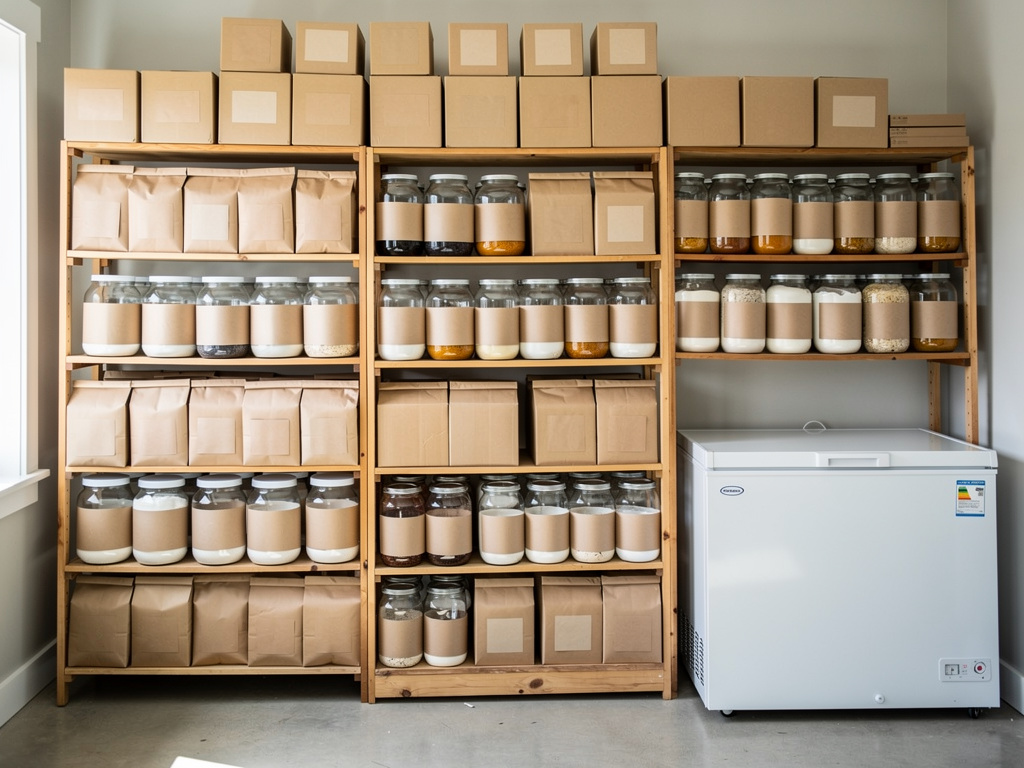
There's a specific exception that fits home-based food sellers: space used regularly to store inventory or product samples does not have to meet the exclusive-use test, as long as your home is the only fixed location of your business. This is the realistic path to a home deduction for a lot of vendors.
How the storage exception works:
So a home vendor storing product for sale can often claim the space that storage occupies, even without a walled-off office, provided they don't operate from another fixed location. The rule: the storage exception is the most likely legitimate home deduction for a food seller, but it hinges on your home being your only business location. Confirm your setup with a tax pro before claiming it.
Yes, you can choose the simplified or actual method fresh each year, though you can't change your choice for a year once you've filed. You make the election on your timely filed original return for that tax year, and you're free to pick the other method in a future year.
What this means in practice:
The takeaway: you're not locked into one method forever, so revisit it annually. The rule: choose per year on your original return, and let your actual numbers pick the winner each time rather than defaulting to last year's choice.
The storage exception is the home deduction most food vendors can actually use, and it applies specifically to the inventory of products you sell. Homegrown is a $10-per-month online storefront, with no percentage fees beyond standard payment processing, where your home is the base you sell from, so the space where you store the inventory you list and sell is exactly the kind of storage the exception is built around, as long as your home is your only fixed business location.
The other piece the deduction depends on is your income, since any home office deduction is limited to your business income for the year. Homegrown captures your sales as clean, dated records, so your preparer can see the business income the deduction is measured against, and match your storage claim to a real, documented selling operation. Compare that to trying to prove your home is an active business base from a scattered pile of payment-app history.
To be clear about what Homegrown does not do: it is not tax software, it does not calculate your home office deduction, determine whether your space qualifies, or complete Form 8829. Your tax preparer and IRS Publication 587 handle that. What Homegrown gives you is documented income and an active, home-based selling operation, which are the facts a home deduction rests on. If you want that foundation in place, set up your Homegrown storefront, and confirm your specific home deduction with a tax professional.
Usually not, because a kitchen you also use to cook family meals fails the exclusive-use test that both methods require. Exclusive use means the space is used only for business and never for anything personal. What can qualify instead is a space used solely for the business, like a dedicated packaging area, or storage space under the inventory exception. Don't claim your everyday family kitchen as a home office.
The simplified method deducts $5 per square foot of qualifying business space, capped at 300 square feet, for a maximum deduction of $1,500 per year. It requires no expense receipts and no depreciation, and you enter it directly on your Schedule C without a separate form. The tradeoff for that simplicity is the $1,500 ceiling and no ability to carry forward an unused amount.
It depends on your qualifying space and home costs. The simplified method is easier and avoids depreciation recapture when you sell, which often makes it the better pick for a small space or modest home costs. The actual method can yield a larger deduction for a big dedicated space or an expensive home, but requires Form 8829, detailed records, and recapture later. Run both if you're unsure.
Only if that specific area is used for nothing else, ever. Exclusive use is strict, so a kitchen or counter used for both business production and any personal cooking doesn't qualify. If you have a genuinely separate space used solely for the business, that can qualify, but a shared kitchen generally can't, no matter how much business cooking happens there.
Yes. The inventory storage exception lets you deduct space used regularly to store inventory or product samples you sell, without meeting the exclusive-use test, as long as your home is the sole fixed location of your business. A dedicated pantry, freezer, or closet used only for business inventory can qualify. If you also operate from a commissary or storefront, though, the exception likely won't apply.
Yes, through depreciation recapture. Under the actual method you claim depreciation on your home office, and that depreciation is taxed as gain when you sell, even if your home sale otherwise qualifies for the capital gains exclusion. The simplified method avoids this entirely, since it takes no depreciation, which is a meaningful reason some vendors prefer it despite the lower cap.
Choosing between the simplified and actual home office methods matters, but the first question is whether your space qualifies at all, and for most food vendors the honest answer points to the inventory storage exception rather than the family kitchen. Confirm your eligibility, then pick the method that fits. Start your Homegrown storefront so your home-based business is documented, and settle your home deduction with a tax professional and IRS Publication 587.



