
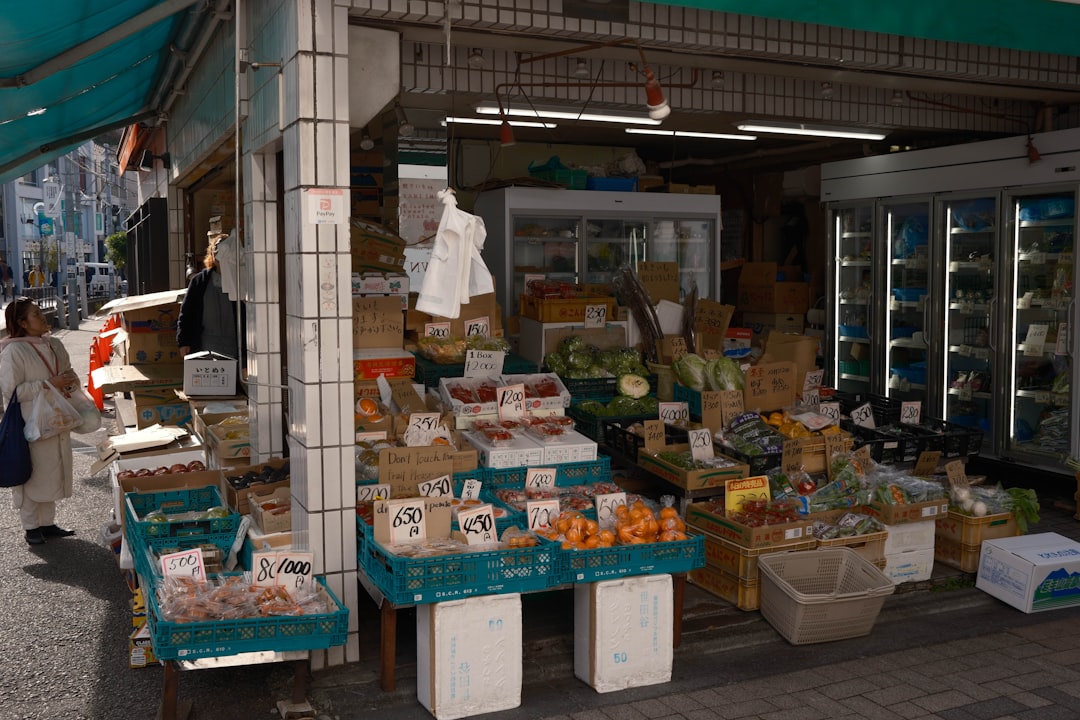


The most effective free marketing for a farm stand combines three channels: a Google Business Profile listing so nearby searchers find you, regular posts in local Facebook groups so community members know you exist, and a QR code at your stand that connects walk-in customers to your online ordering page for repeat purchases. Most farm stand vendors think traffic requires advertising. It does not. It requires visibility in the places where local food buyers already spend their time: Google, Facebook, and their neighborhood roads.
The short version: You do not need an advertising budget to drive traffic to your farm stand. You need a Google Maps listing (free, 15-minute setup), weekly posts in 2 to 3 local Facebook groups (free, 10 minutes per week), a clear road sign (one-time $30 to $60 investment), an Instagram presence with your ordering link (free), and business cards with a QR code to your online ordering page ($10 per month for the platform, $20 for cards). These five tactics cost under $100 total and reach every local customer channel that matters. The farm stands that struggle with traffic are not the ones with bad products — they are the ones that nobody knows about.
You opened a farm stand on your property. You put out products. And then you waited for customers to show up. Some did — neighbors who saw you setting up, friends you told, a few curious drivers. But the steady stream of 20 to 30 customers per day that you imagined has not materialized.
This is normal. A farm stand has no inherent visibility beyond the road it sits on. Unlike a store in a shopping center or a booth at a farmers market, you do not benefit from foot traffic generated by surrounding businesses. Every customer has to make a deliberate decision to visit your specific location. That decision requires knowing you exist, knowing what you sell, and knowing you are open right now.
Your job is to put that information in front of local buyers through every free channel available. Here are the seven best methods, ranked by effectiveness:
A Google Maps listing puts your farm stand in front of everyone searching "farm stand near me," "fresh bread near me," or "local honey [your city]." This is the single highest-impact free marketing tool because it targets people who are actively looking for what you sell.
Setup takes 15 minutes. The return lasts years. For a complete step-by-step guide, see our article on how to get your farm stand on Google Maps.
Key actions:
Facebook groups focused on your city, neighborhood, or local food community are where many cottage food customers actively browse for vendors. A single post in a "Buy Local in [Your City]" group can bring 3 to 10 new customers to your stand in a single week.
Key actions:
The Facebook group audience tends to be 35 and older, which aligns well with the typical farm stand customer demographic. These are homeowners, parents, and retirees who value local food and are willing to drive 10 to 20 minutes to a farm stand.
Your road sign is your 24/7 salesperson for every car that passes your property. A good sign with large text, high contrast, and a clear product message ("FRESH BREAD + HONEY") turns passing traffic into stopping traffic.
For complete sign guidance including sizing, placement, and wording, see our guide on farm stand signage.
Key actions:
Instagram reaches a different audience than Facebook and Google — typically younger (18 to 34), more visual, and more engaged with food content. Local hashtags make your posts discoverable to people in your area who do not already follow you.
Key actions:
Nextdoor reaches your immediate neighbors — the people most likely to visit a farm stand regularly because they live closest. A post on Nextdoor saying "I have a farm stand with fresh bread and jam on [Your Street], open Saturdays 9 AM to 1 PM" reaches every household in your neighborhood.
Key actions:
Business cards are the bridge between a one-time walk-up customer and a weekly pre-order customer. Every person who stops at your stand and takes a card has your ordering link in their pocket forever.
Key actions:
Every free marketing tactic above generates attention. The QR code converts that attention into repeat revenue. The question is where the code points. Homegrown costs $10/month with no commission, plus card processing of 2.9% + $0.30 per order, and gives you an ordering page that works as the destination for every QR code, every Facebook post link, and every Google listing URL. Customers land on one page, see what you are selling this week, order, and pay. Linking your QR code to your Instagram sends customers to a feed they have to scroll through to find product info — and there is no ordering built in. A Google Form collects names but does not collect payment, so you are still chasing people for money at pickup. Homegrown does not write your Facebook posts, print your business cards, or set up your Google listing — this guide covers those. What it does is give every marketing channel you build a single destination that turns attention into prepaid orders. At checkout, customers pick pickup or local delivery.
Your existing customers are your best advertisers. A customer who tells three friends about your farm stand is doing marketing that no ad can replicate because it comes with built-in trust.
Key actions:
Here is a realistic weekly marketing schedule for a farm stand vendor with zero advertising budget:
| Day | Action | Time Required |
|---|---|---|
| Monday | Post weekly menu in 2-3 Facebook groups + Instagram post | 20 minutes |
| Tuesday | Respond to comments and DMs from Monday's posts | 10 minutes |
| Wednesday | Post a behind-the-scenes Story on Instagram | 5 minutes |
| Thursday | Post a Nextdoor update if something new is available | 5 minutes |
| Friday | Post an Instagram Story reminder: "Open tomorrow, 9 AM-1 PM" | 5 minutes |
| Saturday | Sell at the stand. Hand out business cards. Ask for Google reviews. | Part of selling time |
| Sunday | Rest | 0 minutes |
| Total weekly marketing time: | 45 minutes |
Forty-five minutes of free marketing per week, consistently, builds a customer pipeline that compounds over time. Hootsuite's 2025 Facebook business guide recommends treating your page less like a billboard and more like a community hub — hyper-local targeting and Groups reach people within a few miles, which is exactly what a farm stand needs.. By month three, you have Google reviews pulling in searchers, Facebook group regulars who come weekly, Instagram followers who pre-order, and neighbors who stop by because they saw your Nextdoor post.
Here is a realistic timeline for a new farm stand using all seven methods:
| Month | New Customers Per Week | Source |
|---|---|---|
| Month 1 | 3-5 | Road sign, friends, neighbors |
| Month 2 | 5-10 | Facebook groups, Nextdoor |
| Month 3 | 10-15 | Google Maps, Instagram, word of mouth |
| Month 6 | 15-25 | All channels compounding |
| Month 12 | 25-40 | Established local presence |
These numbers assume consistent weekly effort across all channels. Vendors who only use one channel (like Instagram only or road sign only) will see slower growth. The power is in the combination — different channels reach different customer segments.
The total investment for all seven methods: $50 to $100 one-time (sign + cards) plus $10 per month for your ordering platform. Compare that to a single Facebook ad campaign ($50 to $200 per month) that stops working the moment you stop paying. Free marketing compounds. Paid marketing does not.
For more on comparing your farm stand to other sales channels, see our guide on farm stand vs farmers market. And to add pre-ordering so online customers can order for farm stand pickup, see our guide on the best platform to sell food from home.
Google Business Profile. It targets people actively searching for what you sell and works 24/7 without any ongoing effort beyond weekly posts and review responses. If you do nothing else, do this.
Facebook group posts generate results within days. Google Maps takes 1 to 3 months to build visibility. Instagram takes 4 to 8 weeks of consistent posting. Road signs work immediately for drive-by traffic. The combination of all channels shows compounding results after 2 to 3 months.
Not until your free marketing is fully optimized. If you have not set up Google Maps, posted in local groups, optimized your road sign, and built an Instagram presence, paying for ads is premature. Free channels should be your foundation. Ads are an accelerant you add after the foundation is solid.
Ask every new customer: "How did you find us?" Track the answers in a simple tally. After one month, you will know which channels are bringing the most customers and can focus your effort accordingly.
Low-traffic roads mean your road sign will reach fewer drivers, so you need to compensate with digital channels. Invest more time in Facebook groups, Google Maps, and Instagram. These channels drive customers to your location regardless of road traffic.
Yes. Partner with nearby vendors to refer customers to each other. "If you like our bread, check out [neighbor vendor] for incredible honey — they are just down the road." This creates a local food trail that benefits everyone. Some vendors create a shared social media post or flyer listing multiple farm stands in the area.
Market your opening date 2 to 4 weeks before the season starts. Post in Facebook groups and on Instagram: "Smith's Farm Stand opens May 3 — fresh produce, honey, and baked goods every Saturday." Update your Google listing with seasonal hours. The anticipation builds demand so you have customers waiting on day one.
Google reviews are the single most important factor in whether your farm stand shows up when someone searches "farm stand near me" — a listing with 10 reviews ranks dramatically higher than one with zero. Start with your existing customers. After every purchase in your first two weeks, say: "If you have 30 seconds, a Google review would really help other people find us. Just search our name on Google Maps and tap the stars." Hand them a business card with a QR code that links directly to your Google review page (not your ordering page — a separate QR code). Most customers are happy to leave a review if you ask in person and make it easy. Aim for 2 to 3 reviews per week. Do not ask everyone on the same day — Google's algorithm flags a sudden burst of reviews as suspicious. Steady, organic reviews over 3 to 4 weeks look natural and build lasting search visibility.
You do not need to be a content creator. You need 3 types of posts, rotated weekly. First, the product post: a clear photo of what you are selling this week with prices and your stand hours. "This Saturday: sourdough ($8), strawberry jam ($10), fresh eggs ($6/dozen). Open 9 AM to 1 PM." This is your bread-and-butter post — direct, useful, and gives people a reason to visit. Second, the behind-the-scenes post: a photo or short video of you making bread, pulling jam jars from a canning pot, or loading your stand. This builds trust because customers see the real person behind the products. Third, the customer moment: a photo of your stand with customers browsing (with permission), a screenshot of a nice review, or a repost of a customer's photo of your product. This is social proof that other people buy from you and love it. Three posts per week, one of each type, takes 15 to 20 minutes total and keeps your audience engaged without turning your farm stand into a full-time social media job.
If there are 3 or 4 farm stands within a 10-mile radius, you compete for the same local food customers. The stands that win are the ones that are easiest to find, easiest to buy from, and most consistent. "Easiest to find" means your Google listing is complete, your road sign is visible, and you post regularly in local Facebook groups. "Easiest to buy from" means you offer online pre-ordering so customers can order Monday and pick up Saturday without browsing your stand in person. "Most consistent" means you are open every Saturday at the same time with a reliable product lineup — customers learn they can count on you. Beyond these fundamentals, having one standout product that nobody else in your area sells gives customers a specific reason to choose you. If three stands sell tomatoes but only you sell handmade sourdough, the sourdough is your anchor product that drives traffic.



