
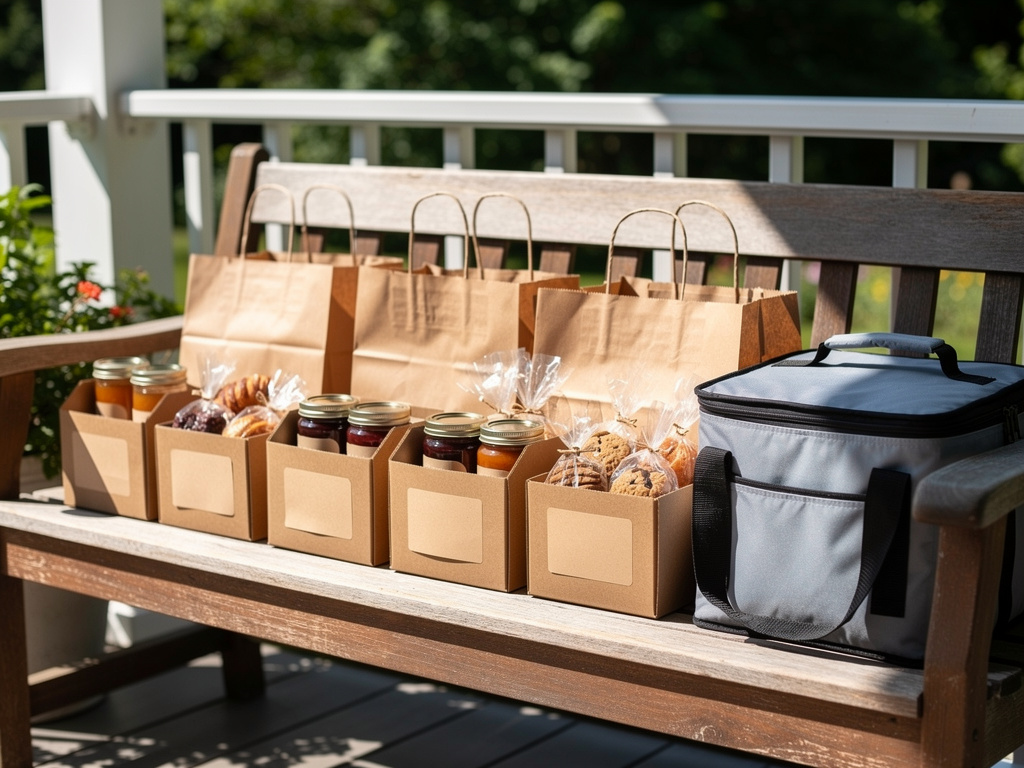


Offering both pickup and local delivery is one of the smartest ways a home food vendor can grow. Pickup keeps things simple and costs you nothing extra to run, while delivery reaches the customers who can't come to you, busy parents, workers, and anyone across town. Run together as a hybrid, they let every customer choose what works for them, which means more orders. There's a legal piece to get right first, though, because cottage food delivery rules vary by state. This guide walks through the delivery and pickup hybrid model for food vendors, from the rules to the logistics to the pricing.
The short version: A hybrid model offers customers both pickup and local delivery, so each chooses what suits them and you capture more orders. Pickup is simple and free to run; delivery expands your reach for a fee. The one thing to confirm first is your state's cottage food delivery rules, which vary. Michigan, for example, allows delivery through a third-party platform only if you give the customer a chance to interact with you before the sale, and only within the state. Run pickup with clear scheduled windows and a convenient spot, run delivery with set zones, days, and a fair fee, and package everything to travel well. Homegrown lets customers choose pickup or delivery at checkout. This is general information, not legal advice.
This guide covers why to offer both, the rules for cottage food delivery, running pickup, running delivery, pricing and scheduling, and mistakes to avoid. This is general information, not legal or food-safety advice.
You offer both pickup and delivery because they reach different customers and together capture more orders: pickup suits nearby, price-sensitive buyers, and delivery reaches those who value convenience or live farther out. Choice drives sales.
Here's how the two options compare:
| Option | Cost to run | Best for |
|---|---|---|
| Pickup | None beyond your time | Nearby, price-sensitive customers |
| Local delivery | Your time, fuel, packaging (a fee covers it) | Convenience-focused and farther customers |
| Both (hybrid) | Manageable when scheduled | Capturing the widest range of buyers |
Why the hybrid works:
The takeaway: a hybrid model serves nearby and farther customers alike, capturing more orders without giving up your simplest, most profitable pickups. The rule is to offer both and let customers choose, weighing the tradeoffs of delivery versus pickup as you learn how to sell food from home.
The rules for cottage food delivery vary by state, so confirm yours before offering it, because some states allow shipping and delivery, some require direct handoff, and some allow third-party delivery only under conditions. This is the legal piece to sort first.
What to know about the rules:
The takeaway: cottage food delivery rules vary by state, from third-party conditions to in-state limits, so confirm yours before offering delivery. The rule is to check your state's specific delivery rules first, alongside your cottage food labeling requirements.
You run pickup well with clear scheduled windows, a safe and convenient location, and good communication, so customers know exactly when and where to collect their order. Simple and predictable is the goal.
How to make pickup smooth:
The takeaway: clear windows, a convenient safe location, and good communication make pickup effortless for you and the customer. The rule is to keep pickup simple and predictable, which keeps your easiest orders your smoothest.
You run local delivery well with set delivery days, clear zones, efficient routing, and packaging that travels, so delivery stays manageable and your product arrives in great shape. Structure keeps delivery from taking over your week.
How to make delivery work:
The takeaway: set days, clear zones, efficient routing, and transit-ready packaging keep local delivery manageable and your product pristine. The rule is to structure delivery around set days and zones, using strong packaging so orders travel well.
You price delivery to cover your time, fuel, and packaging with a flat fee or by zone, set an order minimum, and schedule it on batched days. Delivery should add convenience for the customer and cover its real cost for you.
Pricing and scheduling guidance:
The takeaway: price delivery with a fair flat or zone fee and a minimum, and batch it on set days for efficient routing. The rule is to make delivery cover its real cost and stay scheduled, so it grows your reach without eating your week, a companion to smart delivery fee pricing.
The biggest mistakes are ignoring your state's delivery rules, underpricing delivery, no schedule or zones, and weak transit packaging. Each is avoidable with structure.
Mistakes to avoid:
The takeaway: the mistakes that matter most are ignoring the rules, underpricing delivery, no schedule, and weak packaging, all avoidable with structure. The rule is to confirm your rules, price delivery fairly, schedule it, and package for transit, while always keeping a pickup option.
A hybrid model only works if customers can easily choose pickup or delivery when they order, so you need a storefront that handles both, without losing a cut of every sale. That's what Homegrown is for.
Homegrown gives you an online storefront where customers choose pickup or local delivery at checkout, with your zones, fees, and schedule built in, and you collect payment, all for a flat $10 a month with no percentage fees beyond standard payment processing. For a small vendor, a per-order commission takes a cut of every pickup and delivery you worked to earn. A general website builder wasn't made for offering pickup windows and delivery zones, and juggling it all through DMs and payment apps gets messy fast. Homegrown bundles the storefront, pickup and delivery options, and payment into one flat rate, so your margin stays yours and every order stays organized. It won't suit everyone, if you sell a little to neighbors for cash, you may not need a storefront yet, but the moment you're offering pickup and delivery online, a flat monthly rate beats losing a percentage to a marketplace.
Ready to offer pickup and delivery online? Set up your Homegrown storefront and let customers choose.
It depends on your state. Cottage food delivery rules vary widely: some states allow shipping and delivery, some require direct in-person handoff, and some allow third-party delivery only under conditions. Michigan, for example, allows third-party delivery only if you give the customer a chance to interact with you before the sale, and only in-state. Confirm your state's rules before offering delivery.
Because they reach different customers. Pickup suits nearby, price-sensitive buyers and costs you nothing extra to run, keeping those orders your most profitable. Delivery reaches customers across town who value convenience or can't make the trip, expanding your market. Offering both removes the friction that loses sales, so you capture more orders overall.
Charge a fair fee, flat or by zone, that covers your time, fuel, and any added packaging, and set an order minimum so each trip is worth your time. Pricing by distance zone keeps far deliveries from costing you money. Batching delivery on set days lets you plan efficient routes, which keeps the fee reasonable and your time protected.
Structure it. Offer delivery only on one or two set days a week to defined local zones, then batch and route your orders efficiently by area. Set an order minimum and a clear delivery window. This keeps delivery manageable and predictable alongside your pickups, instead of having you drive all over town whenever an order comes in.
Use sturdy, sealed, transit-ready packaging that protects your product on the road so it arrives looking as good as it left. Label each order clearly with the customer's name. For shelf-stable cottage foods, the focus is protecting against damage and leaks; the same complete cottage food labels apply whether the order is picked up or delivered.
Yes, keep both. Many customers prefer to pick up to save on a delivery fee or because it's convenient, and pickup costs you nothing extra to run, making those your simplest, most profitable orders. Offering only delivery loses those customers. A hybrid model that offers both captures the widest range of buyers.



