
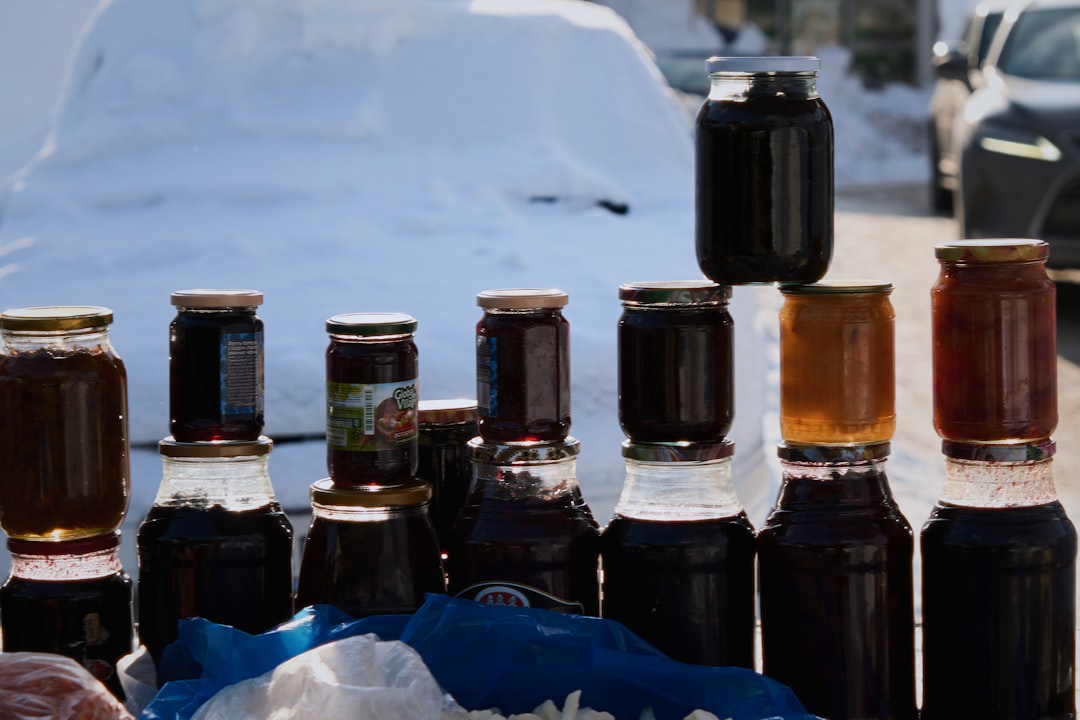


The best platform to sell jam in Texas is Homegrown, which gives you an online storefront for $10 per month with local pickup and delivery scheduling, inventory management, and built-in card processing — no website, no marketplace fees, and no commission on your sales, just card processing of 2.9% + $0.30 per order. Texas cottage food vendors can sell jam, jelly, and fruit butters directly to consumers under the Texas Cottage Food Law, and Homegrown is built for exactly this type of local, pickup-based food business.
The short version: Texas allows cottage food producers to sell jams, jellies, and fruit butters with proper acidity directly to consumers with an annual sales cap of $75,000. You can sell at farmers markets, from your home, and through online orders with local pickup. The best platform for managing jam orders is Homegrown ($10 per month annual, $12.50 monthly), which handles ordering, payments (2.9% + $0.30 per transaction), pickup scheduling, and inventory — all through one shareable link. Other options include Square Online (free with Square branding), Shopify ($39+ per month), and Etsy (6.5% per transaction plus listing fees).
Texas's cottage food law allows the sale of jams, jellies, and fruit butters that are non-potentially-hazardous — meaning they have sufficient sugar content and acidity (low pH) to prevent bacterial growth without refrigeration. The law covers:
The critical requirement is pH. Your jam or jelly must have a pH of 4.6 or below to qualify as non-potentially-hazardous. Most standard fruit preserves made with tested recipes from sources like the USDA Complete Guide to Home Canning or the Ball Blue Book naturally meet this requirement. Texas does not require pH testing, but following tested recipes ensures compliance.
Texas allows annual sales up to $75,000. Labels must include your name, address, ingredients, allergens, net weight, and the cottage food disclaimer statement. You do not need a commercial kitchen, food handler certification, or kitchen inspection.
Jam businesses have unique ordering and inventory characteristics that make a selling platform especially valuable:
Homegrown is built for local food vendors who sell through pickup or local delivery and farmers markets. You list your products, set your pickup locations and times, and share one link.
Here is what Homegrown includes:
Pros:
Cons:
Best for: Texas jam makers who sell through farmers markets, home pickup, and social media.
Start your free 7-day trial with Homegrown.
Etsy provides marketplace visibility for artisan jam searches. On a $12 jar of jam, Etsy fees total approximately $1.54 (6.5% + 3% + $0.25 + $0.20 listing) — roughly 12.8% of the sale.
Pros:
Cons:
Best for: Texas jam makers who want marketplace discovery and are willing to absorb the fee hit.
Square Online syncs with Square POS for market sales. Free tier includes Square branding.
Pros:
Cons:
Best for: Texas jam makers already using Square at markets.
Shopify at $39 per month is overkill for a cottage food jam vendor selling locally.
Best for: Jam businesses with commercial kitchen licenses selling statewide or nationally.
| Feature | Homegrown | Etsy | Square Online (Free) | Shopify |
|---|---|---|---|---|
| Monthly cost | $10 (annual) | $0 (listing fees) | $0 | $39+ |
| Transaction fee | 0% | 6.5% | 0% | 0% |
| Card processing | 2.9% + $0.30 | 3% + $0.25 | 3.3% + $0.30 | 2.9% + $0.30 |
| Total fees on $12 jar | ~$0.65 | ~$1.54 | ~$0.70 | ~$0.65 |
| Local pickup | Yes (built-in) | Workaround | Basic | With apps |
| Local delivery | Yes (built-in) | No | Basic | With apps |
| Inventory by variety | Yes | Basic | Basic | Yes |
| Food-specific features | Yes | No | No | No |
| Setup time | ~15 min | 30-60 min | 30-60 min | 4-8 hours |
On $1,000 per month in jam sales (~83 jars at $12 each), Etsy fees total approximately $128 while Homegrown costs $10 plus approximately $54 in card processing — a $64 per month difference. At $2,000 per month, the gap widens to $128 per month.
For jam makers, the math on percentage-based fees is stark. On a $12 jar, Etsy takes approximately $1.54 while Homegrown takes $0.65 in processing — and the $10 monthly fee is fixed regardless of volume. A flat fee matters most when your product price point is low and your margins are tight. Food preservation resources are available from the University of Nebraska Food, and food safety education is available from University of Wisconsin-Madison Extension.
Start your free 7-day trial with Homegrown.
Ready to start selling locally? The easiest way to take local orders and get paid is an online storefront — see the best platform to sell food from home, or set up a Homegrown storefront in about 15 minutes ($10/mo, 0% commission).
Yes. Texas cottage food law allows you to sell jam, jelly, fruit butter, and other non-potentially-hazardous preserved foods directly to consumers without a commercial kitchen license. Your jam must be shelf-stable with a pH of 4.6 or below. You must label products with all required information including the cottage food disclaimer.
Texas does not require pH testing for cottage food products, but ensuring your jam is below pH 4.6 is your legal responsibility. The safest approach is to follow tested recipes from the USDA Complete Guide to Home Canning, the Ball Blue Book, or university extension resources. These recipes have been laboratory-tested for safe acidity levels. If you create your own recipes, investing in a pH meter ($30 to $100) gives you verification.
Texas jam makers report strongest demand for peach jam and preserves (especially during Texas peach season), jalapeño pepper jelly, strawberry jam, fig preserves, blackberry jam, and mixed berry varieties. Texas-specific flavors like prickly pear jelly and jalapeño peach jam command premium pricing and differentiate your offerings from store-bought alternatives. Gift sets with 3-4 small jars of different varieties sell well during holiday season.
Half-pint jars (8 oz) typically sell for $8 to $12. Full-pint jars (16 oz) sell for $12 to $18. Specialty varieties with expensive ingredients or unique flavors (saffron, bourbon, truffle) can command $14 to $20 per jar. Pricing should cover ingredients, jars and lids, labels, fuel for canning, and your time. Factor in platform costs: on an $8 jar, Etsy takes approximately $1.27 (15.9% of the sale) while Homegrown takes $0.53 in card processing — a significant difference when your margin is already tight.
Properly canned jam in sealed jars is shelf-stable for 12 to 18 months at room temperature. Once opened, jam should be refrigerated and consumed within 3 to 4 weeks. For cottage food sales, ensure your labels include instructions for storage after opening. The long shelf life is an advantage for jam makers — you can produce large batches during fruit season and sell inventory over months.
Yes. Texas cottage food vendors can sell jam at farmers markets without additional permits beyond the cottage food exemption. Individual markets have their own vendor requirements. Jam is one of the most popular cottage food products at Texas farmers markets because it displays well, samples effectively, and customers buy multiple jars at once.
Basic jam making requires a large stockpot, canning jars with two-piece lids, a jar lifter, a funnel, a ladle, and a water bath canner. Total equipment cost for a starter setup is approximately $50 to $100 if you do not already own these items. For larger-scale production, a pressure canner ($80 to $200) and a pH meter ($30 to $100) are useful additions. You do not need commercial-grade equipment under Texas cottage food law.
No. Texas cottage food law requires direct-to-consumer sales only. You cannot ship jam through common carriers like USPS, UPS, or FedEx. All sales must be through in-person purchase at a market, home pickup, or personal delivery. If you want to ship jam, you need a food manufacturer license with an inspected commercial kitchen.
Package 3-4 small jars (4 oz or half-pint) of different varieties in a box, basket, or bag with tissue paper. Price gift sets at a slight premium over individual jar pricing — if your jars sell for $10 each, a 3-jar gift set might sell for $32 to $35. Start promoting holiday gift sets in October, take orders through November, and have inventory ready for December pickup. An ordering platform makes gift set management straightforward — list the gift set as a separate product with its own inventory count.
Texas requires cottage food jam labels to include your name and physical address, a complete list of ingredients including sub-ingredients and common allergens, the net weight or volume, and the statement "Made in a cottage food production operation that is not inspected by the Texas Department of State Health Services." Labels must be legible and attached to each jar. Many jam makers use adhesive labels printed at home or through an online label printing service. Budget approximately $0.10 to $0.30 per label depending on your design and printing method.
The most effective marketing channels for Texas cottage food jam makers are farmers markets (where customers can sample your products), Instagram (for visually appealing jar and recipe photos), Facebook community groups, and word of mouth from satisfied customers. Offering samples at markets is one of the strongest conversion tools for jam — customers who taste your peach jalapeño jam are far more likely to buy than customers who just see it on a shelf. Include your Homegrown ordering link on business cards, jar labels, and all social media profiles so market customers can easily reorder online.
A standard home batch of jam using 4-6 cups of prepared fruit typically yields 6-8 half-pint jars or 3-4 pint jars. Production capacity depends on your pot size, stove burners available, and how many batches you can process in a day. Most Texas jam makers can produce 40-60 jars per day working at a comfortable home pace. At $10 per jar, a single production day generates $400 to $600 in inventory that can sell over weeks or months — making jam one of the most time-efficient cottage food products per hour of labor.
Your products deserve a storefront where the listed price is what your customer pays — no marketplace fees, no checkout surcharges, no commission taken from any sale, just card processing of 2.9% + $0.30 per order. Homegrown gives food vendors a shareable ordering link, built-in payments, and local pickup and delivery scheduling for $10 per month flat. Start your free 7-day trial.



