
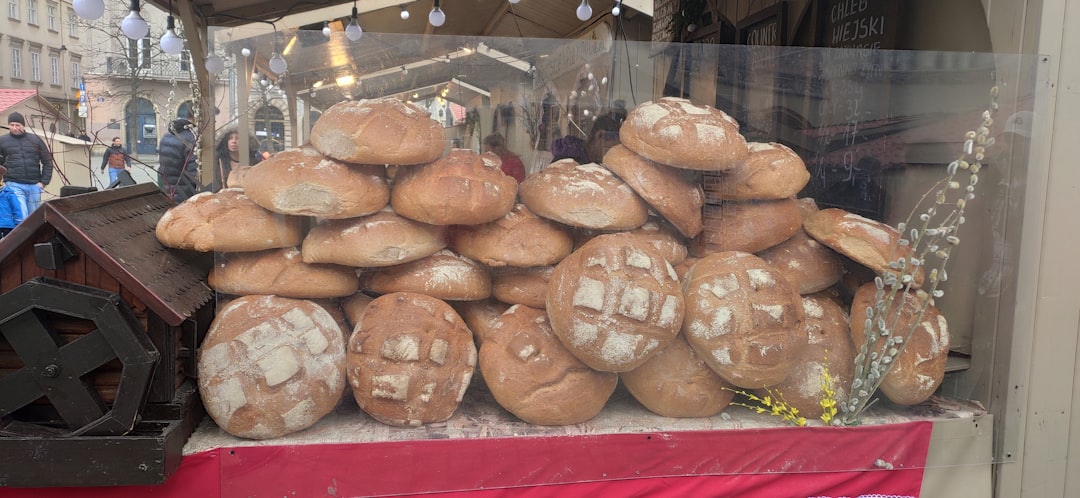


You showed up at the farmers market at 6 a.m. You baked 40 loaves of banana bread, three dozen cookies, and a batch of cinnamon rolls. It rained. Foot traffic was half of what you expected. You drove home with a trunk full of unsold products and a sinking feeling in your stomach.
That is the reality for a lot of small, part-time home bakers. Some weeks you sell out in two hours. Other weeks you barely break even. The revenue swings make it nearly impossible to plan your time, your grocery runs, or your life.
A weekly subscription baked goods model fixes that. Instead of guessing how much to bake and hoping people show up, you know exactly how many customers you have, exactly what to bake, and exactly how much money is coming in before you even turn on the oven. This guide is written specifically for small home bakers and cottage food vendors doing 20 to 50 products per week out of a home kitchen. No commercial lease. No warehouse. No six-figure e-commerce operation. Just you, your kitchen, and a handful of loyal customers who love what you bake.
The short version: A weekly baked goods subscription means customers pay you a set price each week for a box of your baked products. You start by picking 3 to 5 products per box, pricing between $25 and $35 per week, and recruiting your first 10 subscribers from your existing farmers market customers. The entire system runs on one bake day per week, a simple online storefront, and porch pickup or short-distance delivery. Start with 5 to 10 subscribers and scale from there.
A weekly baked goods subscription is a recurring order where customers pay you each week (or get billed automatically) for a curated box of your baked products. You decide what goes in the box. They pick it up or you drop it off. That is the whole model.
This works especially well for home bakers and cottage food vendors because it solves the three biggest problems you face:
Compare that to a farmers market where you might sell 100 percent of your products one Saturday and 40 percent the next. A weekly subscription baked goods model turns your side baking business into something you can actually count on.
The subscription model also deepens your relationship with customers. Instead of seeing them once at the farmers market and hoping they come back, you are showing up in their life every week. That builds loyalty faster than any social media post ever will.
Most home bakers can earn $300 to $875 per week with just 15 to 25 subscribers. That is real, consistent income without needing a storefront, employees, or a commercial kitchen.
Here is the math. If you charge $25 per week and have 15 subscribers, that is $375 per week or $1,500 per month. At 25 subscribers paying $35 per week, you are looking at $875 per week or $3,500 per month.
Now compare that to the farmers market:
| Metric | Farmers Market | Weekly Subscription (20 subscribers) |
|---|---|---|
| Weekly revenue | $150 - $600 (variable) | $500 - $700 (consistent) |
| Products wasted | 10 - 30% typical | Near zero |
| Hours at market | 6 - 8 hours | 0 (pickup/delivery only) |
| Revenue predictability | Low | High |
| Customer retention | Hope they return | Automatic recurring |
The subscription model does not replace the farmers market entirely. Many vendors run both. The subscription gives you a guaranteed revenue floor, and the market gives you visibility and new subscribers. That combination is powerful.
| Scale | Price/Week | Weekly Revenue | Monthly Revenue |
|---|---|---|---|
| 10 subscribers | $25 | $250 | $1,000 |
| 15 subscribers | $30 | $450 | $1,800 |
| 20 subscribers | $30 | $600 | $2,400 |
| 25 subscribers | $35 | $875 | $3,500 |
Keep each box simple: 3 to 5 products that showcase variety without overcomplicating your bake day. You do not need to fill a massive box. A well-curated small box feels special and keeps your production manageable.
Here is what works:
Do not bake the same exact lineup every week. Instead, rotate through a menu of 10 to 15 products you are confident in, swapping 1 to 2 products each week to keep things interesting.
A typical box might include:
Lean into what is fresh and available each season. This keeps your costs down (seasonal ingredients are cheaper) and gives subscribers something to look forward to.
Not every baked product ships or stores well. Stick to products that hold up for 1 to 2 days after baking:
Avoid anything that needs refrigeration unless you can guarantee a cold chain, which most home bakers cannot. One baker who built a subscription box business from scratch sold out 125 subscription slots within hours of launch by sticking to shelf-stable baked products her customers already loved.
Price your weekly box between $25 and $35 for most home bakers. That range covers your costs, pays you fairly for your time, and feels like a good value to the customer.
Start by calculating the true cost of each box:
If you have not calculated your actual cost per product yet, calculate your real cost per item before setting subscription prices. Most bakers undercharge because they forget to count their own time.
Offering 2 to 3 tiers gives customers a choice and increases your average order value:
| Tier | What's Included | Price Range |
|---|---|---|
| Small Box | 3 products (1 bread, 1 cookie pack, 1 specialty) | $20 - $25/week |
| Standard Box | 4-5 products (full rotation) | $28 - $35/week |
| Family Box | 6-8 products (double portions) | $40 - $50/week |
The $25 to $35 per week sweet spot works because it is low enough to feel like a small weekly treat but high enough to make the math work for you. Most subscribers will not think twice about $30 a week for fresh, homemade baked products delivered to their door.
Use an online storefront that handles recurring orders and payments automatically. Taking orders through DMs, texts, or spreadsheets might work for your first 3 subscribers, but it falls apart fast.
Here is what happens when you try to manage subscriptions manually:
Homegrown is $10/month with no commission, plus card processing of 2.9% + $0.30 per order. Subscribers see your weekly menu, place their order, and pay before you start baking. You open one dashboard on Monday, see exactly who ordered what, and shop accordingly. When your subscriber cap is full, the listing closes automatically — no awkward "sorry, I'm at capacity" texts.
Square Subscriptions is free to set up but charges processing fees on every transaction and does not give you a dedicated ordering page subscribers can bookmark. At 20 subscribers paying $30/week, those per-transaction fees add up to more than Homegrown's flat $10/month by week two. Manual methods — texts, DMs, Venmo — are free until they cost you an hour every Monday chasing payment confirmations and reconciling who ordered what against three different message threads.
Homegrown will not plan your weekly menu rotation or remind you to buy flour — that is your checklist and your grocery list. But for the step between "I have 15 subscribers" and "I know exactly what to bake this Thursday," it is the ordering system that replaces the Notes app.
Porch pickup is the most common and easiest model for small bakers running a weekly subscription baked goods program. You set the boxes on your porch (or a designated spot), and subscribers swing by during a pickup window to grab theirs.
This is the simplest option and works for most vendors:
If you do not want people coming to your house, use an alternative location:
If you want to deliver, keep it tight. Limit delivery to a 5 to 10 mile radius to keep your time and gas costs reasonable.
For a deeper look at making delivery work as a one-person operation, read how to offer local food delivery without burning out.
Start with the people who already buy from you. Your farmers market regulars are the easiest first subscribers because they already know and love your baking.
Here is your playbook for getting to 10 subscribers:
You do not need 50 subscribers to start. Five is enough. Ten is great. Get to 10, dial in your system, and then grow from there.
Run your entire subscription on one bake day per week. That is the key to making this sustainable as a part-time baker. Pick one day, bake everything, package it, and have it ready for pickup or delivery the next day.
Here is what a typical subscription week looks like for a vendor with 15 subscribers:
| Day | Task | Time |
|---|---|---|
| Monday | Finalize menu, update storefront if needed | 30 min |
| Tuesday | Grocery shop for ingredients | 1 - 1.5 hours |
| Wednesday | Prep day (measure, chop, mix doughs that benefit from resting) | 1 - 2 hours |
| Thursday | Bake day (all products, package, label) | 4 - 6 hours |
| Friday | Pickup day or delivery route | 1 - 2 hours |
Total weekly time commitment: 8 to 12 hours including shopping, baking, packaging, and delivery. That is very doable for a part-time operation.
Once you know your subscriber count and your menu, build a master ingredient list that scales:
Bake in this order to maximize oven efficiency:
Write your production plan down every week. A simple checklist on paper or in your phone keeps you from forgetting a batch mid-bake day.
Variety and personal connection are what keep subscribers coming back month after month. The number one reason people cancel a food subscription is boredom. The number two reason is they feel like just a transaction.
Here is how to keep your churn rate low:
For more ideas on running a subscription that keeps people engaged, check out the full guide on how to start a food subscription box from your home kitchen.
The average well-run food subscription retains subscribers for 4 to 6 months. Your goal is to keep that number climbing by making every box feel personal and worth the money.
In most states, cottage food laws cover baked products sold directly to consumers. A weekly subscription baked goods program falls under this as long as you are selling directly to your subscribers and staying within your state's annual revenue cap. Check your specific state's cottage food laws to confirm, because rules vary on what products you can sell and how much you can earn.
Five subscribers is enough to start. At $30 per week, that is $150 per week or $600 per month. It is not life-changing income, but it covers your ingredient costs, pays you for your time, and gives you a system to build on. Most vendors find the model really clicks at 15 to 20 subscribers.
Absolutely. Many vendors do both. Your subscription handles your base revenue, and the farmers market brings in extra sales plus new subscribers. Bake a little extra on your production day to cover both the subscription boxes and your market booth inventory.
Keep it simple. Offer one standard box and clearly list every ingredient on your packaging or in your order confirmation. If you want to accommodate common requests (nut-free, for example), you can offer that as a separate box option. But do not try to customize every single box for every subscriber, or your production day will become unmanageable.
Set a weekly cutoff for new orders or changes. Most vendors use a Monday or Tuesday cutoff for a Thursday or Friday pickup. This gives you time to shop, prep, and bake without scrambling. An ordering platform like Homegrown can handle this cutoff automatically so you do not have to track it yourself.
Kraft paper boxes, bakery bags, or simple cardboard boxes all work well. Line them with tissue paper or parchment for a clean look. Label each box with the subscriber's name and a list of what is inside. Budget $1 to $2 per box for packaging and factor that into your pricing. This bakery subscription box guide breaks down packaging options and costs for different box sizes.
Build in flexibility from the start. Let subscribers know you will take occasional weeks off (holidays, vacations, emergencies). Give them at least a week's notice, and do not charge for skip weeks. Most subscribers are completely understanding as long as you communicate early.
You do not need 50 subscribers, a commercial kitchen, or a fancy website to launch a weekly subscription baked goods program. You need 5 to 10 people who already love your baking, a simple box of 3 to 5 products, and a system for taking orders and collecting payment.
Pick your bake day. Set your price. Text your best farmers market customers this week and ask if they want in.
The hardest part is not the baking. It is deciding to start. And you already know how to bake.



