
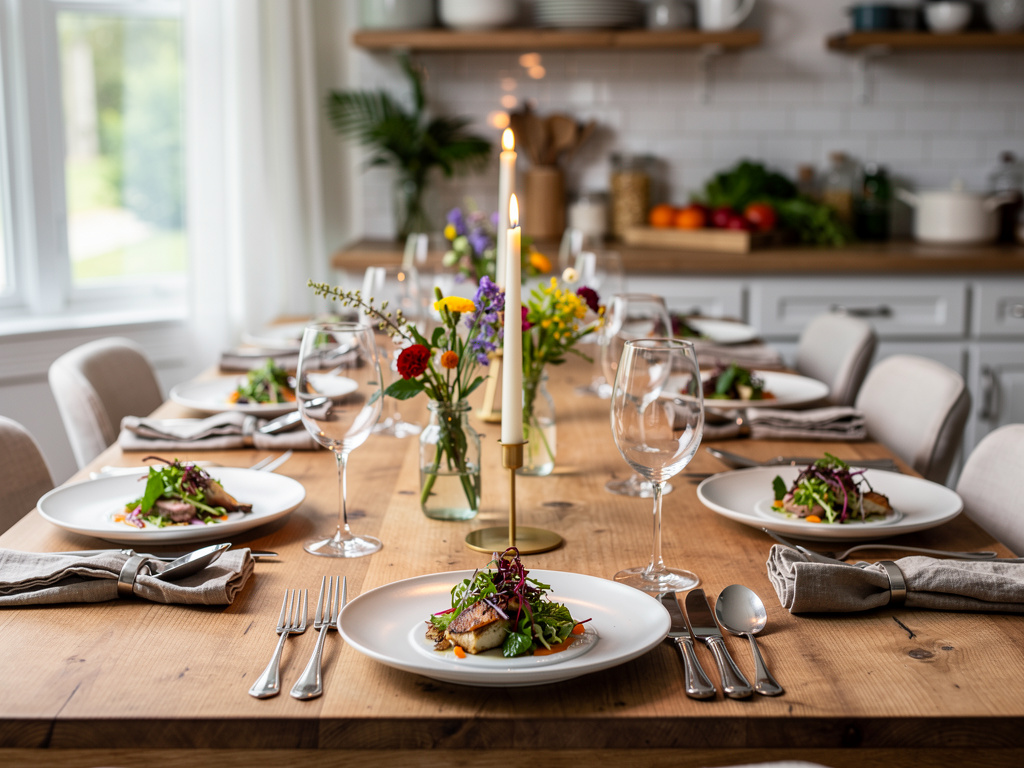


A supper club, hosting paying guests for a memorable meal at a communal table in your home, is one of the most rewarding food businesses you can run. It's intimate, creative, and builds a loyal following fast. It's also, legally, a small restaurant, which means it lives on a completely different track from cottage food. Understanding that from the start is what separates a supper club that thrives from one that gets shut down. This guide walks through how to run a supper club as a side business, the legal path, and how to price and build it.
The short version: A supper club serves prepared meals to paying guests, which makes it a small restaurant, not a cottage food business. Cottage food covers only shelf-stable, non-perishable items, so a served, perishable meal needs a licensed path. In California, a MEHKO (Microenterprise Home Kitchen Operation) permit is designed for exactly this, a home restaurant serving meals same-day, with meal and revenue caps. Elsewhere, you'll need a licensed or permitted food facility, or you partner with a licensed venue. Get the permit right, then focus on what makes a supper club special: a great menu, a warm communal experience, smart ticketing, and pricing that covers your food, labor, and the experience itself. Homegrown gives you the storefront to sell tickets and take reservations. This is general information, not legal advice.
This guide covers what a supper club is, why it isn't cottage food, the legal path, pricing and ticketing, building the experience, and mistakes to avoid. This is general information, not legal or food-safety advice.
A supper club is a hosted dining experience where paying guests gather, often at a communal table in your home, for a set menu you prepare and serve. It's part meal, part event, and part community.
What defines a supper club:
The takeaway: a supper club is a ticketed, hosted dining experience built around a set menu and a communal table. The rule is to treat it as an event and a small restaurant combined, a very different model from selling packaged goods like in starting a cottage food business.
No, you can't run a supper club as a cottage food, because you're serving prepared, perishable meals to guests, and cottage food covers only shelf-stable, non-perishable products. A served meal is restaurant activity, not cottage food.
Why a supper club isn't cottage food:
The takeaway: a supper club serves prepared, perishable meals, which is restaurant activity and outside cottage food entirely. The rule is to plan for a licensed path from day one, treating food safety as central, the same discipline covered in food safety rules.
The legal path for a supper club is a permit built for serving meals: a California MEHKO where available, or a licensed or permitted food facility elsewhere. Unlike a frozen-meal business, a supper club's same-day served meals fit the home-restaurant permit well.
Here's how the paths compare:
| Path | Fits a supper club? | Note |
|---|---|---|
| Cottage food | No | Shelf-stable only; excludes served meals |
| California MEHKO | Yes, where adopted | Built for a home restaurant serving same-day meals |
| Licensed/permitted food facility | Yes | The reliable path in any state |
The options to understand:
The takeaway: a supper club fits a California MEHKO where available, or a licensed food facility elsewhere, since its same-day served meals suit a home-restaurant permit. The rule is to secure the right permit before hosting, and if you're exploring MEHKO, start with how MEHKO laws work.
You price a supper club ticket to cover your ingredients, your labor, the permit and overhead, and the value of the experience, then sell tickets in advance to lock in your headcount. Advance ticketing is what makes the model work.
Pricing and ticketing guidance:
The takeaway: price the ticket to cover the full meal, labor, overhead, and experience, and sell in advance to lock your headcount. The rule is to cost everything and pre-sell tickets, so each dinner is profitable and predictable, a step up from casual home food selling.
You build a supper club following with a memorable menu and atmosphere, a clear theme or story, and a way for guests to book the next one. The experience is what turns first-timers into regulars. A menu built from farms you can name is one of the easiest themes to start with, and our guide to hosting a farm-to-table dinner from your home kitchen prices a 12-guest farm menu at $17.99 a plate from real farm listings.
How to build it:
The takeaway: a memorable menu, a warm atmosphere, a clear theme, and an easy way to rebook build a loyal supper club following. The rule is to make each dinner an experience worth returning to, then make rebooking effortless.
The biggest mistakes are treating a supper club as cottage food, skipping the permit, underpricing the labor and experience, and not managing headcount. Each is avoidable with planning.
Mistakes to avoid:
The takeaway: the mistakes that matter most are treating it as cottage food, skipping the permit, and underpricing, all avoidable with the right setup. The rule is to secure your permit, price the full experience, and control your headcount before your first dinner.
Once your permit is set, a supper club runs on advance ticket sales and a loyal list of guests, so you need a clean way to sell seats and take payment, without losing a cut of every ticket. That's what Homegrown is for.
Homegrown gives you an online storefront to sell your supper club tickets, take reservations and deposits, manage your guest list, and collect payment, all for a flat $10 a month with no percentage fees beyond standard payment processing. For an intimate business where every seat counts, a per-ticket commission takes a real bite out of a carefully priced dinner. A ticketing marketplace charges a percentage of every seat, and a general website builder wasn't made for selling dated, capacity-limited events. Homegrown bundles the storefront, ticketing, and payment into one flat rate, so your supper club margin stays yours. It won't suit everyone, and a supper club especially requires getting your permit sorted first, but once you're set up, a flat monthly rate beats handing a percentage of every seat to a marketplace.
Ready to sell your supper club tickets online? Set up your Homegrown storefront once your permit is in place.
No. A supper club serves prepared, perishable meals to guests, which is restaurant activity, while cottage food covers only shelf-stable, non-perishable products. Serving a multi-course meal falls under food facility permitting or a home-restaurant permit like California's MEHKO, not cottage food. Plan for a licensed path from the start.
It depends on your state. In California, a MEHKO (Microenterprise Home Kitchen Operation) permit is designed for a home restaurant serving same-day meals and fits a supper club well, where your county has adopted it. Elsewhere, you'll typically need a licensed or permitted commercial food facility, sometimes by partnering with a licensed venue. Confirm your exact path with your local health department.
Yes, where it's available. A MEHKO is built for a small home restaurant serving meals same-day, with limits like 30 meals a day and 90 a week in some counties, which suits a supper club's model of serving guests a meal on the night. Unlike a frozen-meals business, a supper club's same-day served meals fit the MEHKO framework. MEHKOs are county-by-county, so confirm yours offers it.
Price each ticket to cover the full cost of the meal, ingredients for every course, your prep and cooking labor, your permit and overhead, and the value of the experience itself. A supper club sells atmosphere and hospitality, not just food, so price it as the special event it is, and sell tickets in advance to lock in your headcount.
Only as many as you can cook for and host well in your space, which for many home supper clubs is a single communal table of eight to twelve or so. Decide your realistic capacity, cap ticket sales there, and use a deposit or clear cancellation policy so last-minute no-shows don't leave you having overbought food.
Craft a memorable, distinctive menu, set a warm atmosphere, and give each dinner a theme or story guests want to be part of. A communal table builds community, and sharing photos and stories fills your next tables. Most important, make it easy for guests to book your next dinner and join your list, turning a great night into a standing reservation.



