
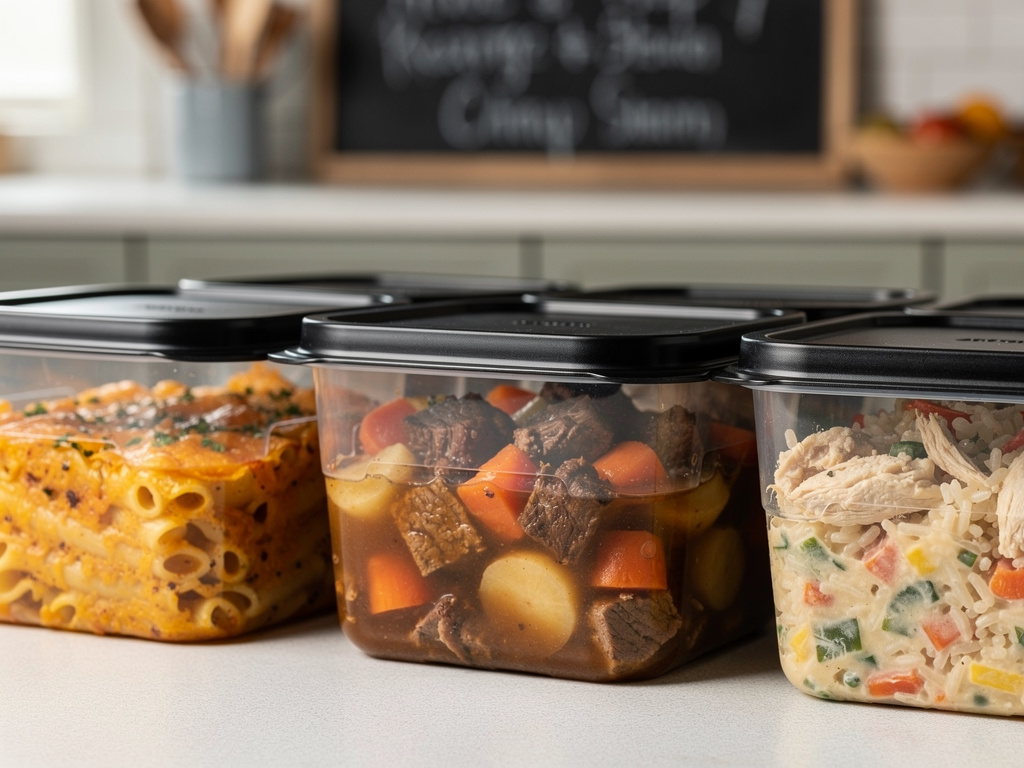


A line of heat-and-eat freezer meals, homemade casseroles, soups, enchiladas, and family dinners a customer just thaws and reheats, is one of the most in-demand home food products there is. Busy families, new parents, and seniors will happily pay for good frozen meals from a local cook. There's a hard legal reality to understand first, though: freezer meals are not a cottage food. They're perishable, prepared foods, which puts them on the licensed-kitchen track from day one. This guide walks through how to sell a heat-and-eat freezer meal line, why it needs a licensed path, and how to run the cold chain and the business.
The short version: Heat-and-eat freezer meals are a strong home-food business, but they are not cottage food. Cottage food covers only shelf-stable items, and a frozen prepared meal, typically containing meat, dairy, and other perishable ingredients that require refrigeration, is a potentially hazardous food. That means you need a licensed commercial or commissary kitchen, not a cottage food registration, and a California MEHKO doesn't fit either since it's built for same-day ready-to-eat food, not frozen-for-later meals. Plan for a licensed kitchen, a real cold chain from production through delivery, and proper frozen-meal labeling with reheating instructions. Homegrown gives you the storefront to take freezer-meal orders once your licensed path is set. This is general information, not legal advice.
This guide covers why freezer meals aren't cottage food, the legal path, the cold chain, labeling, the menu and pricing, and mistakes to avoid. This is general information, not legal or food-safety advice.
No, you can't sell frozen heat-and-eat meals as a cottage food, because they're perishable prepared foods and cottage food covers only shelf-stable items. This is the fundamental fact to build your plan around.
Why freezer meals fall outside cottage food:
The takeaway: frozen prepared meals are perishable, often meat-containing foods, so they're outside cottage food in every state. The rule is to treat a freezer meal line as a licensed-kitchen business from the start, a different track from the shelf-stable products in starting a cottage food business.
Prepared meals aren't cottage food because they're potentially hazardous, time-and-temperature-controlled foods that depend on refrigeration or freezing to stay safe, which is exactly what cottage food excludes. The perishability is the whole issue.
Why prepared meals are higher-risk:
The takeaway: prepared meals are potentially hazardous, cold-dependent foods with no shelf-stable safeguard, which is precisely why cottage food excludes them. The rule is to plan for licensed-kitchen food safety from the start, treating the cold chain as central, the same discipline covered in food safety rules.
The legal path for a freezer meal line is a licensed commercial or commissary kitchen with the appropriate food facility or food processing permit, not cottage food and not a same-day home-kitchen permit. There's a clear way to do this, it just requires a licensed setting.
Here's how the paths compare:
| Path | Fits freezer meals? | Note |
|---|---|---|
| Cottage food | No | Shelf-stable only; excludes perishable meals |
| California MEHKO | No | Built for same-day ready-to-eat, not frozen-for-later |
| Licensed commercial/commissary kitchen | Yes | The reliable path for prepared frozen meals |
The options to understand:
The takeaway: freezer meals need a licensed commercial or commissary kitchen, since cottage food and same-day home permits don't cover perishable frozen meals. The rule is to secure your licensed kitchen and confirm your state's frozen-food rules before you take a single order.
You handle the cold chain by cooling, freezing, storing, and transporting meals at safe temperatures the whole way, from production to the customer's freezer, since the meal's safety depends entirely on staying cold. The cold chain is the core operational challenge.
Managing the cold chain:
The takeaway: the cold chain must stay unbroken from production through delivery to the customer's freezer, since cold is the meal's only safeguard. The rule is to build cold-chain control into every step, because a thawed meal is both a safety risk and a ruined product.
You should label freezer meals with the ingredients, a clear allergen statement, safe reheating instructions, storage guidance, a use-by date, and your business information. Because the customer reheats the meal, clear instructions are a safety essential.
What the label needs:
The takeaway: freezer meals need complete ingredient and allergen labeling plus clear reheating, storage, and use-by information, because the customer finishes the cooking. The rule is to make reheating and storage foolproof on the label, alongside proper labeling of your products to your state's standard.
You should build a menu of freezer-friendly, reheatable meals that hold up well frozen, casseroles, soups, pasta bakes, and hearty entrees, and price them to cover ingredients, licensed-kitchen costs, packaging, and real labor. Freezer suitability and honest pricing drive the business.
Menu and pricing guidance:
The takeaway: build the menu from freezer-friendly dishes and price for ingredients, licensed-kitchen costs, packaging, and heavy labor, using bundles to lift order value. The rule is to cost every input, including your kitchen and your time, then sell in bundles for steady revenue.
The biggest mistakes are treating freezer meals as cottage food, breaking the cold chain, weak reheating labels, and underpricing the labor and kitchen costs. The cottage food assumption is the one that ends businesses.
Mistakes to avoid:
The takeaway: the mistakes that matter most are treating meals as cottage food, breaking the cold chain, and underpricing, all avoidable with the right setup. The rule is to secure a licensed kitchen, protect the cold chain, and price the real costs before your first order.
Once your licensed kitchen is set, a freezer meal line runs on repeat orders, bundles, and local pickup or delivery, so you need a clean way to take orders and get paid, without losing a cut of every sale. That's what Homegrown is for.
Homegrown gives you an online storefront to sell your freezer meals as single meals, family bundles, and subscriptions, take scheduled orders, manage local pickup or delivery, and collect payment, all for a flat $10 a month with no percentage fees beyond standard payment processing. For a meal business already carrying real kitchen and ingredient costs, a per-order commission takes another bite out of a working margin. A marketplace-style platform charges a percentage of every order, and a general website builder wasn't made for meal bundles with pickup and delivery windows. Homegrown bundles the storefront, order scheduling, and subscription options into one flat rate, so your meal margin stays yours. It won't suit everyone, and freezer meals especially require getting your licensed kitchen sorted first, but once you're set up, a flat monthly rate beats handing a percentage to a marketplace on a labor-heavy product.
Ready to sell your freezer meals online? Set up your Homegrown storefront once your licensed path is in place.
No. Freezer meals are perishable prepared foods, typically containing meat, dairy, and other refrigeration-dependent ingredients, and cottage food covers only shelf-stable items. California's guidance, for example, states that foods containing meat and any food requiring refrigeration are not cottage foods. You need a licensed commercial or commissary kitchen to sell frozen prepared meals.
No. A Microenterprise Home Kitchen Operation is designed for food that's prepared, cooked, and served the same day, so it doesn't cover meals frozen and sold for later reheating. Frozen-for-later meals need a licensed commercial or commissary kitchen with the appropriate food facility or processing permit, not a same-day home-kitchen permit.
A licensed commercial or commissary kitchen with the appropriate food facility or food processing permit for your state. Many home cooks start by renting commissary kitchen time by the hour, which keeps startup costs down while giving you a licensed, inspected space to produce legally. Confirm your state's specific requirements for packaged frozen food.
Maintain the cold chain: cool and freeze meals promptly and fully, store them frozen solid, use freezer-grade leak-proof packaging, and transport them frozen in insulated coolers with cold packs so they never thaw in transit. Tell customers to get meals into their freezer immediately. An unbroken cold chain is what keeps the meals safe.
List all ingredients, declare major allergens clearly, provide precise thaw and reheating instructions with a safe target temperature, state that the meal must stay frozen with a use-by date, and include your licensed business information. Because the customer reheats the meal, clear and complete reheating and storage instructions are a safety essential, not optional.
Casseroles, soups, stews, pasta bakes, braises, and hearty saucy entrees freeze and reheat far better than delicate, crisp, or fresh dishes. Building your menu around freezer-friendly comfort foods keeps quality high and reduces waste. Offering both single-serve and family-size portions lets you serve seniors, busy families, and everyone in between.



